
Chef Dean
Horiatiki (Greek Village Salad)
The authentic Greek village salad with chunky summer vegetables, briny Kalamata olives, and a proud slab of feta, dressed simply with the finest olive oil you own. No lettuce required, none wanted.
A cooking platform built around craft, culture, and the stories behind what we eat.
Created by
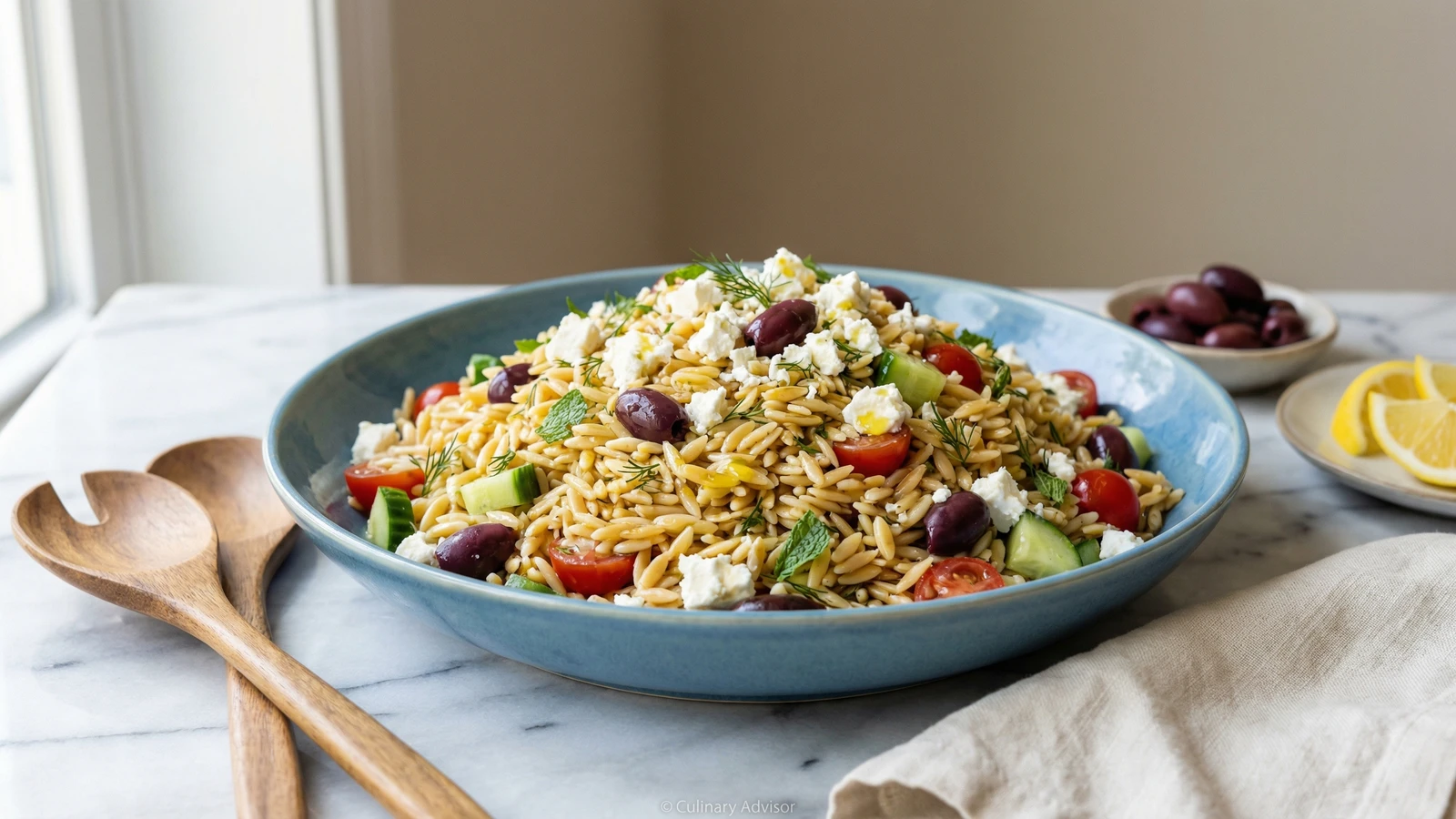
Toasted orzo grains tossed with bright Mediterranean vegetables, briny olives, and generous tumbles of creamy feta, all bound by a lemony dressing that improves by the hour. This is the potluck dish people remember.
The Greeks understood something fundamental about summer eating: cold dishes made ahead taste better than frantic last-minute preparations. This salad embodies that wisdom. You make it hours before your guests arrive, and it repays your patience with deeper flavor.
Toasting the orzo before boiling transforms it. Those little grains develop a nutty complexity that elevates this from competent pasta salad to something people request the recipe for. The technique takes five extra minutes and makes all the difference. I learned this from an Italian grandmother in the Bronx who toasted her pastina the same way.
The dressing matters more than most cooks realize. A proper emulsification creates a creamy coating that clings to every grain rather than pooling at the bottom of your bowl. The Dijon mustard does the heavy lifting here, binding oil and lemon into a unified whole. Make the dressing first and taste it boldly. It should be bright, almost aggressively lemony, because the orzo will mute everything as it absorbs.
This is potluck food at its finest: travels well, serves a crowd, tastes better after sitting in the car, and requires no reheating. Pack the feta separately if you're transporting it, and toss together at your destination for the freshest presentation.
Quantity
1 pound
Quantity
3 tablespoons, divided
Quantity
1
diced
Quantity
1 pint
halved
Quantity
1/2 cup
drained and julienned
Quantity
1 cup
pitted and halved
Quantity
1/2 medium
finely diced
Quantity
8 ounces
crumbled into large pieces
Quantity
1/3 cup
roughly chopped
Quantity
1/4 cup
torn
Quantity
1/4 cup
roughly chopped
Quantity
1/4 cup (about 2 lemons)
Quantity
1 tablespoon
Quantity
1 small clove
minced to a paste
Quantity
1 teaspoon
Quantity
1 teaspoon
Quantity
1/2 teaspoon
Quantity
1/2 cup
Quantity
to taste
Quantity
to taste
freshly cracked
| Ingredient | Quantity |
|---|---|
| orzo pasta | 1 pound |
| extra-virgin olive oil (for toasting) | 3 tablespoons, divided |
| English cucumberdiced | 1 |
| cherry tomatoeshalved | 1 pint |
| oil-packed sun-dried tomatoesdrained and julienned | 1/2 cup |
| kalamata olivespitted and halved | 1 cup |
| red onionfinely diced | 1/2 medium |
| feta cheesecrumbled into large pieces | 8 ounces |
| fresh dillroughly chopped | 1/3 cup |
| fresh mint leavestorn | 1/4 cup |
| fresh flat-leaf parsleyroughly chopped | 1/4 cup |
| fresh lemon juice | 1/4 cup (about 2 lemons) |
| red wine vinegar | 1 tablespoon |
| garlicminced to a paste | 1 small clove |
| Dijon mustard | 1 teaspoon |
| dried oregano | 1 teaspoon |
| honey | 1/2 teaspoon |
| extra-virgin olive oil (for dressing) | 1/2 cup |
| kosher salt | to taste |
| black pepperfreshly cracked | to taste |
Heat two tablespoons of olive oil in a large skillet over medium heat. Add the dry orzo and stir constantly for four to five minutes until the grains turn golden and smell nutty, like popcorn just before it burns. This toasting step transforms the salad entirely. The grains develop a depth that plain boiled pasta cannot achieve, and they hold their shape better once dressed.
Bring a large pot of generously salted water to a rolling boil. The water should taste like the sea. Add the toasted orzo directly from the skillet and cook for two minutes less than the package directions suggest. You want the pasta just shy of al dente because it will continue absorbing liquid from the dressing. Drain thoroughly and spread on a rimmed baking sheet. Drizzle with the remaining tablespoon of olive oil and toss to coat. Let it cool to room temperature, stirring occasionally to prevent clumping.
In a medium bowl, combine the lemon juice, red wine vinegar, garlic paste, Dijon mustard, dried oregano, honey, and a generous pinch of salt. Whisk until the salt dissolves. The mustard is your emulsifier here. It contains compounds that help oil and acid become friends instead of enemies. Now add the olive oil in a thin, steady stream while whisking constantly. The dressing should thicken slightly and turn creamy and opaque. Taste and adjust: more salt, more lemon, more oil. Trust your palate.
Dice the cucumber into half-inch pieces. No need to peel an English cucumber, but do scrape out the seeds if they seem watery. Halve the cherry tomatoes through their equators. Slice the sun-dried tomatoes into thin ribbons. Halve the olives lengthwise. Dice the red onion fine. Soak the onion in cold water for ten minutes to tame its bite, then drain and pat dry. Each component should be bite-sized and relatively uniform so every forkful delivers the full experience.
Transfer the cooled orzo to your largest mixing bowl. Add the cucumber, cherry tomatoes, sun-dried tomatoes, olives, and drained red onion. Pour three quarters of the dressing over the salad and toss thoroughly. The orzo is thirsty. It will absorb more dressing than you expect. Add the dill, mint, and parsley. Toss again gently. Taste a spoonful. Adjust the seasoning now, while everything can mingle.
Crumble the feta into generous pieces over the salad. You want chunks large enough to provide creamy contrast, not fine crumbles that disappear into the grains. Fold gently to distribute without pulverizing the cheese. Cover and refrigerate for at least thirty minutes, or up to overnight. This salad improves with time. The flavors marry, the orzo absorbs the dressing, the herbs perfume everything. Before serving, taste again and add the reserved dressing if needed. A final drizzle of good olive oil never hurts.
1 serving (about 285g)
Culinary guides, cultural storytelling, and the editorial depth that makes cooking meaningful.
Discover Culinary ExplorerChef Dean
The authentic Greek village salad with chunky summer vegetables, briny Kalamata olives, and a proud slab of feta, dressed simply with the finest olive oil you own. No lettuce required, none wanted.
Chef Juliette
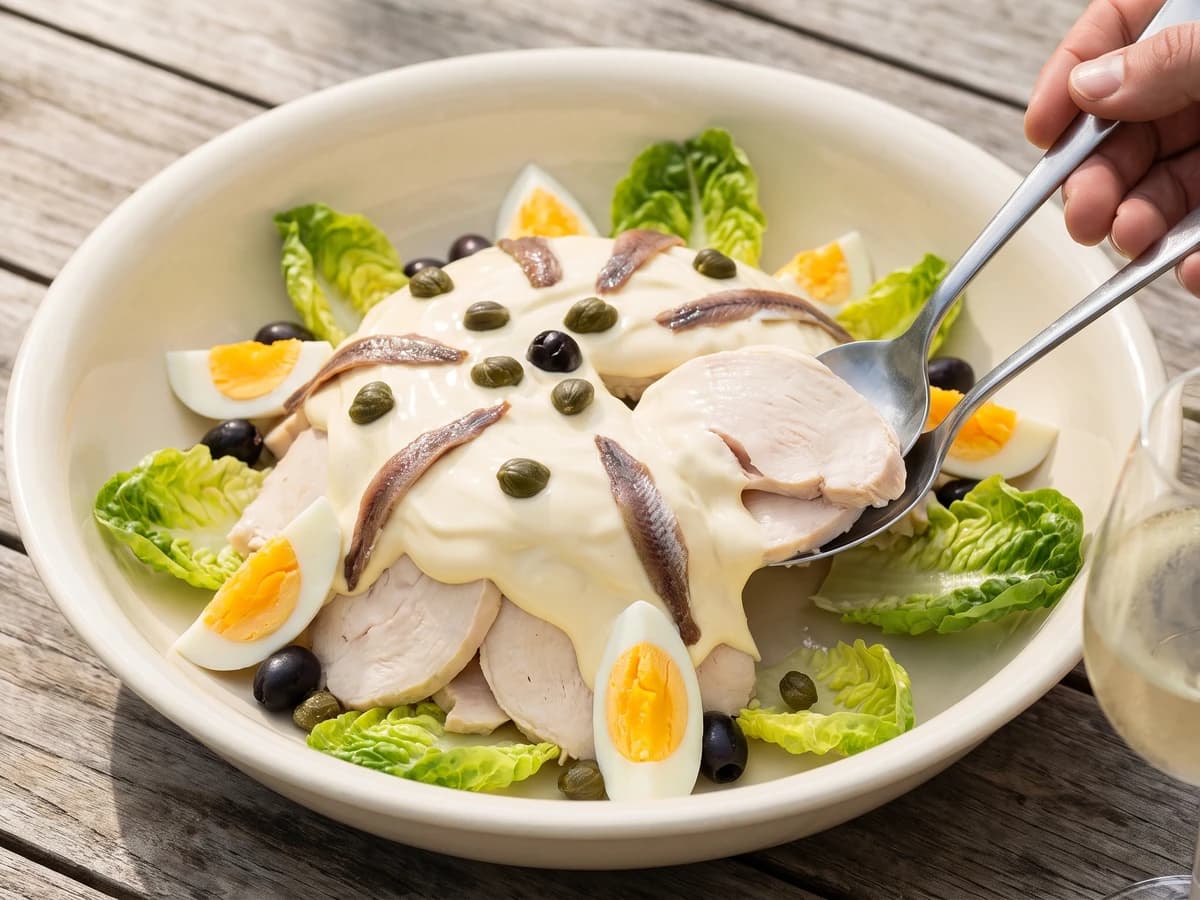
Cold roast chicken, ciseled lettuce, and a shining coat of homemade mayonnaise, arranged with capers, olives, anchovies, eggs, and lettuce hearts, then tossed at the table as the canon intends.

Chef Juliette
Cold roast or poached chicken with fine ribbons of lettuce, dressed at the final moment with oil and vinegar: a composed salad whose freshness depends entirely on timing.

Chef Juliette
Five leaves, one living rule: laitue, romaine, chicorée, mâche, or pissenlit must be washed, dried, and dressed only as they go to the table, while every leaf still carries its light vinaigrette.