Culinary Explorer

A cooking platform built around craft, culture, and the stories behind what we eat.
Discover Culinary Explorer
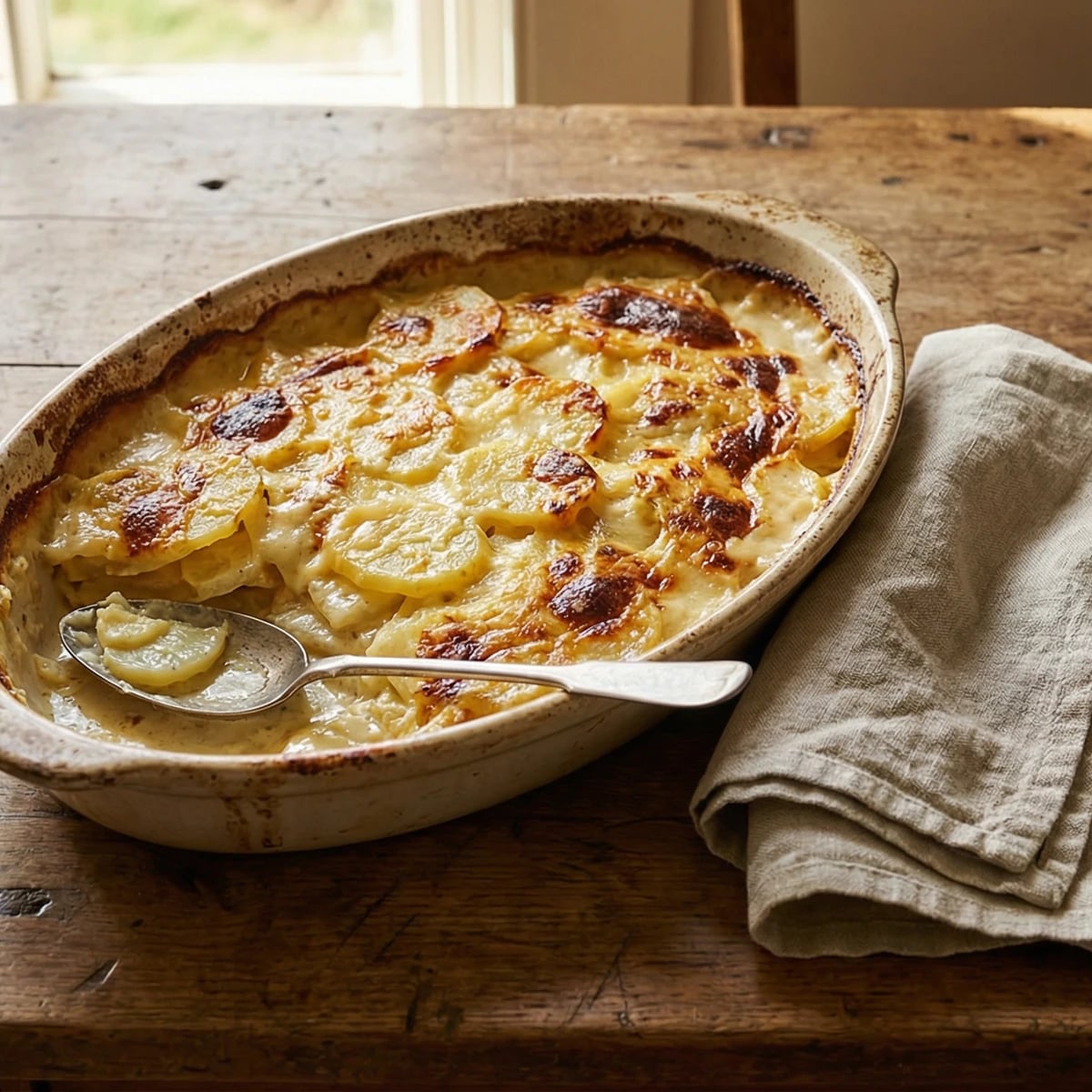
Gratin Dauphinois

Gratin Dauphinois

Created by

Thin-sliced potatoes layered in garlicky cream, baked low and slow until the top turns golden and the center yields like silk. This is the dish that needs nothing but perfect ingredients and time.

Side Dishes
French
Dinner Party
Holiday
Special Occasion
30 min
Active Time
1 hr 30 min cook2 hr total
Yield6 to 8 servings

Start with the potatoes. They should feel heavy in your hand, firm-skinned, with no green spots or soft eyes. Find a waxy variety: Yukon Gold, fingerling, or whatever your farmer grows that holds its shape when sliced thin. This dish rises or falls on the quality of that one ingredient.

Gratin Dauphinois comes from the alpine region of France where winters are long and root cellars are full. It is peasant food in the best sense: humble ingredients transformed through patience. No cheese, despite what you may have seen elsewhere. The original contains only potatoes, cream, garlic, and time. Adding cheese is a different dish entirely.

The cream matters. Seek out cream from a local dairy if you can find it. The difference between industrial cream and cream from pastured cows is the difference between adequate and alive. You will taste the grass, the season, the care. This is not precious thinking. It is simply true.

Every meal is a meaningful choice. When you buy potatoes from a farmer you know, cream from a dairy you trust, you are building something larger than dinner. The gratin will taste better for it, and so will everything that follows.

The technique, the tradition, and the story behind every dish.

Discover Culinary Explorer

Ingredients

waxy potatoes

Quantity

2 pounds

Yukon Gold or similar

heavy cream

Quantity

2 cups

whole milk

Quantity

1 cup

garlic cloves

Quantity

3

minced

unsalted butter

Quantity

1 tablespoon

softened

fine sea salt

Quantity

1 teaspoon

nutmeg

Quantity

1/4 teaspoon

freshly grated

black pepper

Quantity

to taste

freshly ground

garlic clove

Quantity

1

halved, for rubbing dish

Equipment Needed

  • Shallow 2-quart baking dish (ceramic or enameled cast iron)
  • Mandoline or sharp knife
  • Small saucepan
  • Rimmed baking sheet

Instructions

  1. 1

    Prepare the baking dish

    Rub the inside of a shallow baking dish (about 2-quart capacity) with the cut side of a halved garlic clove. Press firmly and cover every surface. The garlic should leave a faint sheen. Coat the dish with the softened butter, using your fingers to reach the corners. This combination creates a fragrant, golden crust where the gratin meets the dish.

    A shallow dish works better than a deep one. You want a high ratio of golden crust to creamy center.
  2. 2

    Slice the potatoes

    Peel the potatoes and slice them into rounds about 1/8 inch thick. A mandoline makes this quick and uniform, but a sharp knife and steady hand work fine. The slices should be thin enough to see light through but sturdy enough to handle. Do not rinse them. The starch helps the layers bind together.

    Slice directly into water if you must work ahead, but dry the potatoes completely before layering. Wet potatoes dilute the cream.
  3. 3

    Warm the cream mixture

    Combine the cream, milk, minced garlic, salt, nutmeg, and several grinds of black pepper in a small saucepan. Warm over medium-low heat until steam rises and small bubbles form at the edges. Do not boil. Taste the warm cream. It should be well-seasoned, fragrant with garlic and nutmeg. The potatoes will absorb this flavor, so adjust now.

  4. 4

    Layer the potatoes

    Heat your oven to 325 degrees. Arrange a single layer of potato slices in the prepared dish, overlapping them like fallen leaves. Pour a thin stream of warm cream over this layer. Repeat: potatoes, cream, potatoes, cream. End with a final layer of potatoes arranged in neat, overlapping circles. Pour the remaining cream over everything. The liquid should come just to the top of the potatoes without submerging them.

  5. 5

    Bake low and slow

    Place the dish on a rimmed baking sheet to catch any bubbling cream. Bake uncovered for 1 hour and 15 minutes to 1 hour and 30 minutes. The gratin is ready when the top is deeply golden, the edges are bubbling and slightly caramelized, and a knife slides through the center with no resistance. The potatoes should feel silky, not starchy.

    If the top browns before the center is tender, cover loosely with foil for the final 20 minutes.
  6. 6

    Rest before serving

    Remove the gratin from the oven and let it rest for 10 to 15 minutes. This is not optional. The cream needs time to settle and thicken. The layers will hold together when you cut into them. The flavors will deepen. Patience made this dish. A little more will not hurt.

Chef Tips

  • Look for potatoes at the farmers market that were dug recently and stored properly. Old, sprouting potatoes taste tired and cook unevenly. Fresh storage potatoes have tight skin and firm flesh.
  • Grate the nutmeg fresh. Pre-ground nutmeg tastes like dust. A whole nutmeg and a microplane take seconds and transform the dish.
  • The gratin reheats beautifully. Cover with foil and warm in a 300-degree oven until heated through. The flavors meld even more on the second day.
  • If you cannot find good cream locally, look for cream that lists only cream on the ingredient label. Avoid anything with stabilizers or thickeners.

Advance Preparation

  • The gratin can be assembled up to 4 hours ahead, covered, and refrigerated. Add 15 minutes to the baking time if starting cold.
  • Leftovers keep refrigerated for 3 days. Reheat covered at 300 degrees until warmed through, about 25 minutes.

Frequently Asked Questions

Nutrition Information

1 serving (about 200g)

Calories
370 calories
Total Fat
28 g
Saturated Fat
17 g
Trans Fat
0 g
Unsaturated Fat
11 g
Cholesterol
100 mg
Sodium
375 mg
Total Carbohydrates
26 g
Dietary Fiber
3 g
Sugars
5 g
Protein
5 g

Note: Chef personas and recipes are created with AI assistance. Cook with care: follow safe food-handling practices, check doneness with a thermometer when needed, and adapt for allergies and your kitchen.

Where cooking meets culture.

Culinary guides, cultural storytelling, and the editorial depth that makes cooking meaningful.

Discover Culinary Explorer

More from Chef Ally's Side Dishes

Browse the full collection