Chef Elsa
Almjause (Alpine Hut Snack Board)
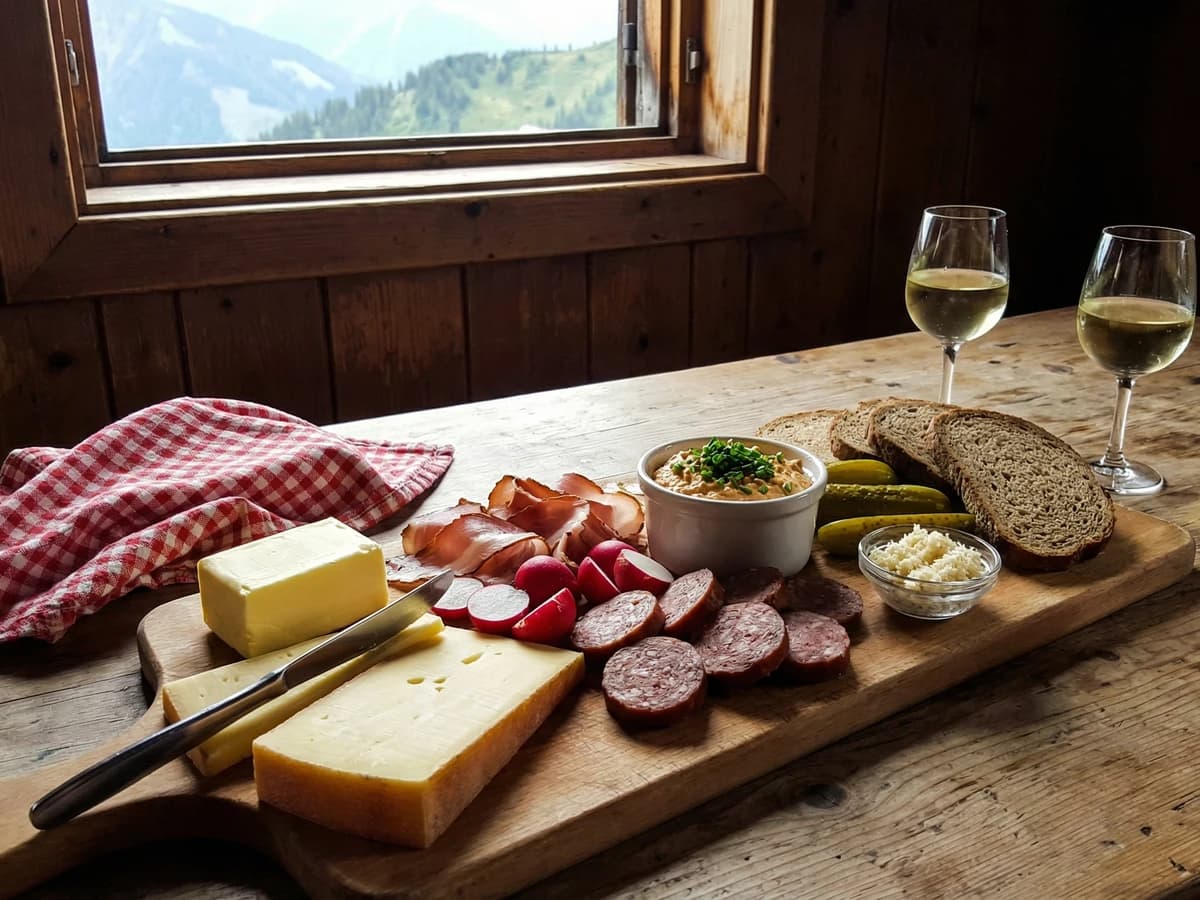
A wooden board loaded with mountain cheese, juniper-smoked Speck, air-dried Hauswürstel, handmade Liptauer, fresh Kren, and thick-cut Bauernbrot, the way Austrian Almhütten have fed hikers for generations.
A cooking platform built around craft, culture, and the stories behind what we eat.

Created by
Burgenland's crispy crackling pastries, golden and peppery from the oven, torn open at the Heuriger table and eaten warm with a cold spoonful of sour cream and an Achterl of Grüner Veltliner.
On our summer trips through Austria, Gretel and my grandmother Eva always made sure we stopped in Burgenland. Not just for the wine, though the wine was reason enough. For the food at the Heurigen. Those vine-covered terraces where the winemaker's wife would bring out boards of cured meats, fresh horseradish, dark bread, and always, always a basket of Pogatscherl still warm from the oven. I remember tearing one open and seeing the little golden flecks of Grammeln, the rendered pork cracklings, baked right into the dough. Gretel always said Burgenland understood something the rest of Austria sometimes forgot: the simplest food, made with the best ingredients, needs nothing else.
Grammelpogatscherl are small yeast pastries, round and plump, with a soft crumb shot through with crispy bits of pork crackling and a good hit of black pepper. The name comes from Hungarian, pogácsa, because Burgenland spent centuries as part of Hungary and the cooking shows it. You find these at every Heuriger and Buschenschank in the region, served in baskets alongside cold cuts and pickled vegetables, meant to be eaten with your hands while you drink the local wine.
The dough is straightforward. Flour, yeast, milk, a little lard or butter, an egg. You fold the chopped Grammeln through the risen dough so they're distributed evenly, then cut rounds, brush with egg wash, and bake until golden. The cracklings render slightly in the oven, leaving little pockets of savory richness through the soft bread. The smell that comes out of your kitchen will make everyone in the house appear without being called.
I serve these at my restaurant in Salzburg when we do Heuriger evenings. A warm basket on every table, sour cream in an earthenware crock, a glass of Veltliner. That's Gemütlichkeit. That's good Austrian home cooking at its most honest.
Pogatscherl descend from the Hungarian pogácsa, a round flatbread that entered Austrian cooking through Burgenland, which belonged to the Kingdom of Hungary until 1921 when it was ceded to Austria after the First World War. The tradition of enriching the dough with Grammeln, the crispy residue left from rendering pork lard, reflects the pig-farming culture of the Pannonian plain. Burgenland's Heurigen and Buschenschanken have served Grammelpogatscherl alongside their own wines for generations, making this pastry inseparable from the region's wine culture.
Quantity
500g
Quantity
25g
Quantity
200ml
lukewarm
Quantity
1 large
Quantity
80g
softened
Quantity
1½ teaspoons
Quantity
generous amount
freshly ground
Quantity
200g
roughly chopped
Quantity
1
mixed with 1 tablespoon milk for egg wash
Quantity
for topping
Quantity
for topping
Quantity
for serving
| Ingredient | Quantity |
|---|---|
| glattes Mehl (plain flour) | 500g |
| fresh yeast | 25g |
| whole milklukewarm | 200ml |
| egg | 1 large |
| lard or unsalted buttersoftened | 80g |
| fine salt | 1½ teaspoons |
| black pepperfreshly ground | generous amount |
| Grammeln (pork cracklings)roughly chopped | 200g |
| egg yolkmixed with 1 tablespoon milk for egg wash | 1 |
| coarse salt | for topping |
| caraway seeds (optional) | for topping |
| sour cream | for serving |
Warm the milk until it feels like bathwater against your wrist. Crumble the fresh yeast into the milk and stir until dissolved. Add a pinch of sugar if your yeast is sluggish, just enough to give it something to eat. Let it sit for five to ten minutes until the surface turns frothy and alive. If nothing happens, your yeast is dead and you need to start over with a fresh packet. Better to find out now than after you've made the dough.
Put the flour in a large bowl and make a well in the center. Pour in the yeast mixture, then add the egg, softened lard or butter, salt, and a generous grinding of black pepper. I mean generous. Pogatscherl should have a warm, peppery bite that stands up to the richness of the cracklings. Work everything together with your hands, then turn it out onto a floured surface and knead for eight to ten minutes. The dough should become smooth, elastic, and slightly tacky but not sticky. It will feel alive under your hands when it's right.
Place the dough in a lightly oiled bowl, cover with a clean tea towel, and set it somewhere warm. The top of the stove while the oven preheats works well, or a sunny windowsill. Let it rise for forty-five minutes to an hour until it has doubled in size. When you poke it with your finger, the indent should fill back slowly. If it springs right back, it needs more time.
While the dough rises, chop your Grammeln into rough pieces, about the size of a small pea. You want variation: some larger chunks that will give you a proper crackly bite, some smaller bits that will melt into the dough. If your Grammeln come in a solid block, break it apart first, then chop. Taste one. It should be deeply savory, porky, and crisp. If it tastes stale or rancid, don't use it. The Grammeln are the soul of this pastry. Everything depends on their quality.
Punch down the risen dough and turn it out onto your work surface. Flatten it into a rough rectangle with your hands. Scatter the chopped Grammeln evenly across the surface, then fold the dough over itself and knead gently for two or three minutes to distribute the cracklings throughout. Don't overwork it. You're not trying to make them disappear into the dough. You want to see them, golden flecks and chunks studded through the crumb. Add another grinding of black pepper as you knead.
Roll the dough out on a lightly floured surface to about two centimeters thick. Not thinner. These are meant to be plump little rounds, not crackers. Cut circles with a glass or a round cutter, about five centimeters across. Gather the scraps, press them together gently, and cut again. Place the rounds on a baking tray lined with parchment, leaving a little room between each one. They'll puff as they bake.
Cover the tray loosely with a tea towel and let the Pogatscherl rise for twenty minutes. They won't double, but they'll puff up noticeably and look softer. Preheat your oven to 190°C (375°F) while they rest. Brush each round generously with the egg yolk and milk wash. This is what gives them that deep, glossy golden finish. Sprinkle with coarse salt and, if you like, a few caraway seeds. The caraway is optional, but it's traditional in Burgenland and it pairs beautifully with the pork.
Bake in the center of the oven for eighteen to twenty minutes until the tops are a deep, burnished gold and the bottoms sound hollow when you tap them. The kitchen will smell like a Heuriger on a Saturday afternoon. Pull them out and let them cool on the tray for just five minutes, no longer. These are meant to be eaten warm. Pile them in a basket lined with a cloth napkin, put a crock of cold sour cream on the table, pour the wine, and call everyone. Mahlzeit!
1 serving (about 55g)
Culinary guides, cultural storytelling, and the editorial depth that makes cooking meaningful.
Discover Culinary ExplorerChef Elsa
A wooden board loaded with mountain cheese, juniper-smoked Speck, air-dried Hauswürstel, handmade Liptauer, fresh Kren, and thick-cut Bauernbrot, the way Austrian Almhütten have fed hikers for generations.

Chef Elsa
Dark, spiced, and wickedly good: Blunzn mashed with onion, mustard, and marjoram into the kind of spread that disappears first from every Heuriger Brettl, scooped up on torn hunks of dark bread.

Chef Elsa
A silky potato and sour cream spread with raw onion and paprika, piled onto dark rye bread the way they serve it at every Heuriger in Lower Austria. No cheese, despite the name. Just good potatoes and honest cooking.
Chef Elsa
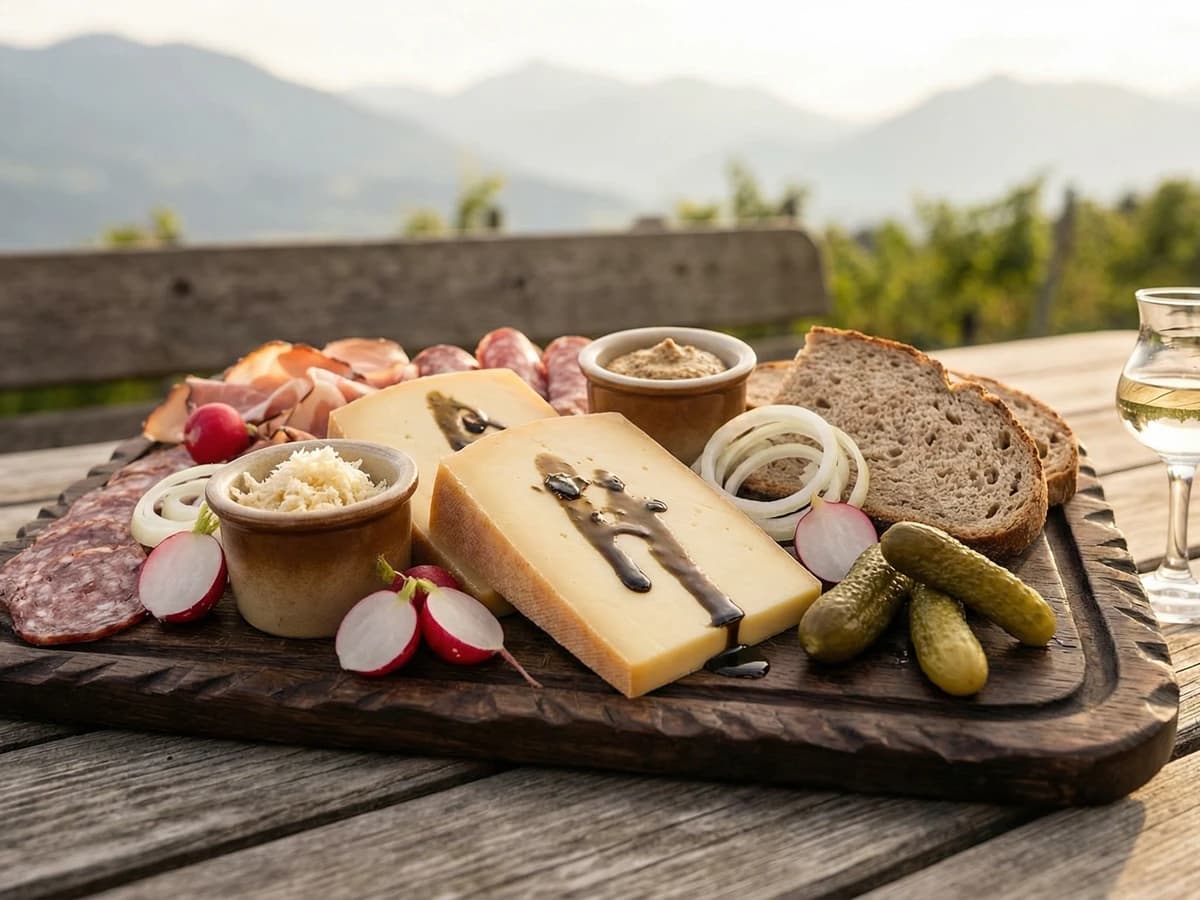
A proper Carinthian Brettljause built around PDO Gailtaler Almkäse, nutty raw-milk alpine cheese served with Speck, dark Bauernbrot, pickles, fresh horseradish, and everything you need for an afternoon on an Almhütte terrace.