Chef Joost
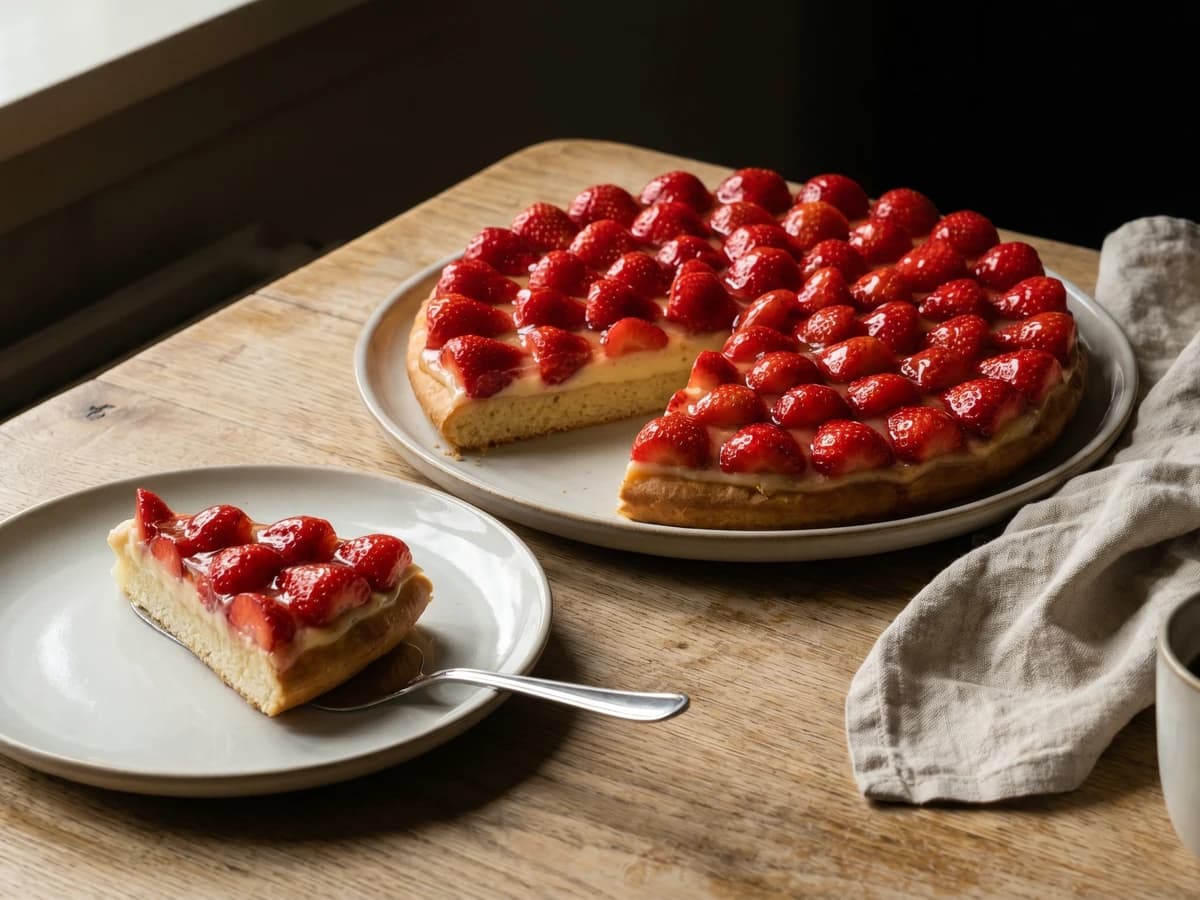
Aardbeienvlaai (Limburg Strawberry Vlaai)
The summer vlaai that politely breaks Limburg's baked-fruit rule: soft gistdeeg, cool pastry cream, and strawberries left fresh because June knows better than the oven.
A cooking platform built around craft, culture, and the stories behind what we eat.
Created by
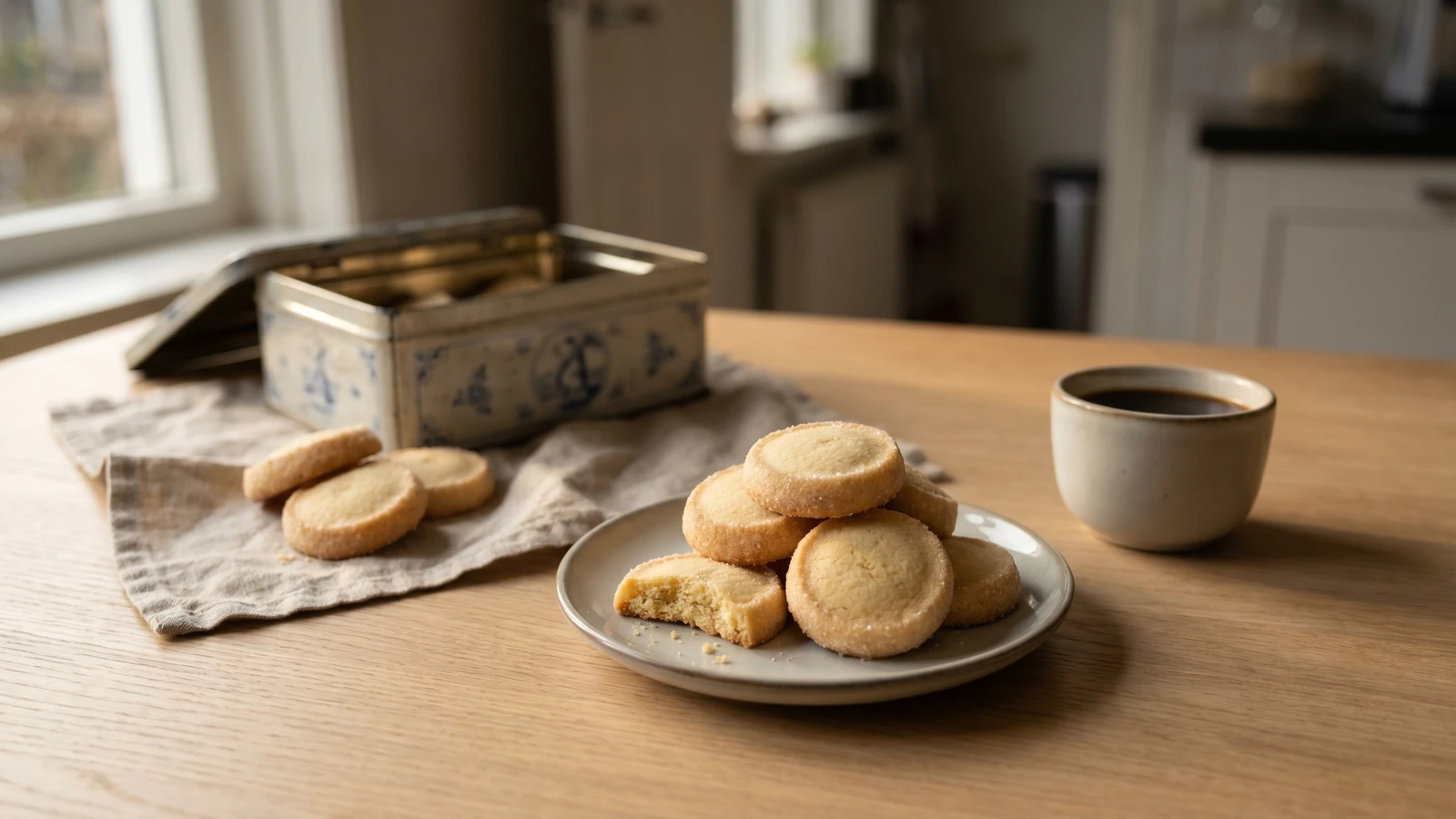
A small Gouda butter cookie with a sugar-crisp edge, made for the koektrommel, the Dutch biscuit tin that has settled more visits than diplomacy ever did.
In my grandmother's second notebook, the grand recipes have careful titles and the everyday ones often have only quantities. Butter, sugar, flour, a little egg, a roll in coarse sugar. That is how you know a cookie has truly entered the household: nobody thinks to explain it because everyone assumes it will always be there.
But let me tell you a secret. Goudse moppen look too simple to defend themselves, which is exactly how Dutch baking likes to mislead you. The name points first to Gouda, the South Holland town the world knows for cheese and syrup waffles, but a mop in old bakery usage is also a small, round biscuit. Not a joke, though the Dutch language enjoys the accident. We are a frugal country, but our biscuit tins have always understood butter.
The method is the lesson. Cream the butter properly, rest the dough until it cuts cleanly, and roll the outside in sugar so the edge bakes crisp while the middle stays tender and sandy. Hou het altijd simpel, always keep it simple. These are not show biscuits; they are the kind you make by the dozen before Oud en Nieuw, then hide in the koektrommel, the biscuit tin, as if that ever stopped anyone.
Goudse moppen belong to the South Holland tradition of small butter-rich bakery cookies associated with Gouda, a city better known internationally for cheese but historically crowded with bakers serving market traffic and feast days. The word mop was used in Dutch bakery language for a small round biscuit, while botermop, butter mop, names the same family of rich short cookies. Their place in the koektrommel, the Dutch biscuit tin, reflects a domestic habit that became especially strong in the nineteenth and twentieth centuries: baking economical batches that kept well for callers, Sundays, and the long visiting season around Oud en Nieuw.
Quantity
250g
Quantity
175g
softened
Quantity
125g
Quantity
1
Quantity
1 teaspoon
finely grated
Quantity
1/2 teaspoon
Quantity
1 teaspoon vanilla sugar or 1/2 teaspoon extract
Quantity
3 tablespoons
for rolling
| Ingredient | Quantity |
|---|---|
| plain flour | 250g |
| unsalted buttersoftened | 175g |
| caster sugar | 125g |
| egg yolk | 1 |
| lemon zestfinely grated | 1 teaspoon |
| fine salt | 1/2 teaspoon |
| vanilla sugar or vanilla extract | 1 teaspoon vanilla sugar or 1/2 teaspoon extract |
| coarse sugar or pearl sugarfor rolling | 3 tablespoons |
Beat the softened butter with the caster sugar, vanilla, salt, and lemon zest until pale and smooth, about three minutes by hand with a wooden spoon or two minutes with a mixer. Don't whip it into a cloud; these cookies should be short and sandy, not puffy. Beat in the egg yolk until the mixture looks glossy.
Add the flour and mix just until no dry streaks remain. The dough will look crumbly for a moment, then come together under your hands. Stop there. If you knead it like bread, the cookie will argue back under your teeth.
Divide the dough in two and roll each piece into a neat log about 4 centimetres wide. Scatter the coarse sugar on the work surface and roll the logs through it until the outside is well coated. Wrap and chill for at least one hour, until firm enough to slice cleanly.
Heat the oven to 180C and line two baking trays with parchment. Slice the chilled logs into rounds about 8 millimetres thick and set them on the trays with a little space between them. If the knife drags, wait five minutes; if the rounds soften, return them to the cold.
Bake for 12 to 14 minutes, until the edges are pale gold and the sugar rim looks dry and crisp. The centres should stay light. Let the cookies sit on the tray for five minutes, then move them to a rack; they firm as they cool, which is the quiet final step of every good butter cookie.
1 serving (about 20g)
Culinary guides, cultural storytelling, and the editorial depth that makes cooking meaningful.
Discover Culinary ExplorerChef Joost
The summer vlaai that politely breaks Limburg's baked-fruit rule: soft gistdeeg, cool pastry cream, and strawberries left fresh because June knows better than the oven.

Chef Joost
A Limburg vlaai is not a pie trying to be grand. It is a thin yeast-dough round, fruit-bright and generous, made for birthdays, coffee, and second slices.

Chef Joost
The December bakery counter made small: cold leafed pastry wrapped around lemon-scented amandelspijs, brushed gold, and scattered with almonds so one person gets the whole holiday in both hands.
Chef Joost
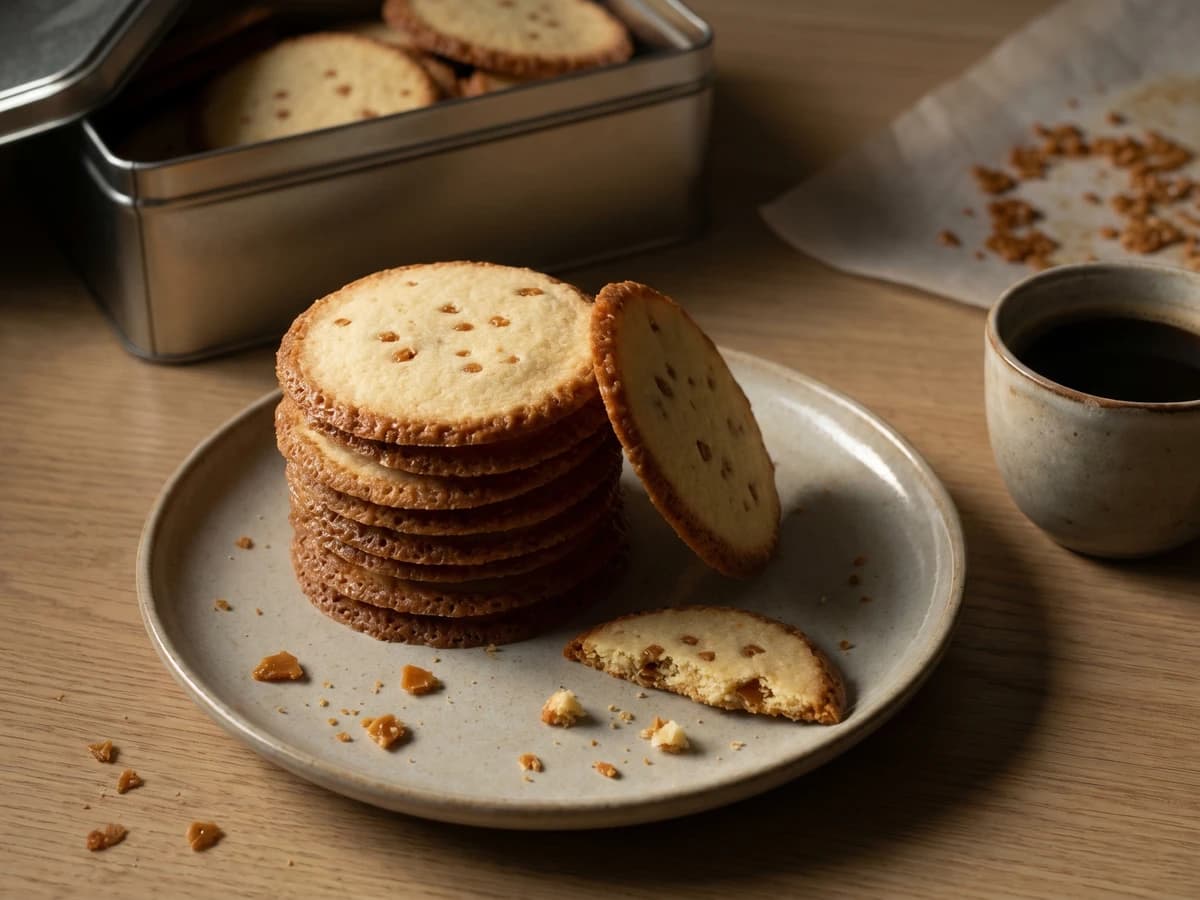
A thin Amsterdam cookie carrying a cog ship in its name: caramelized butter dough, almond nougatine, and a 1934 contest that turned municipal pride into something for coffee.