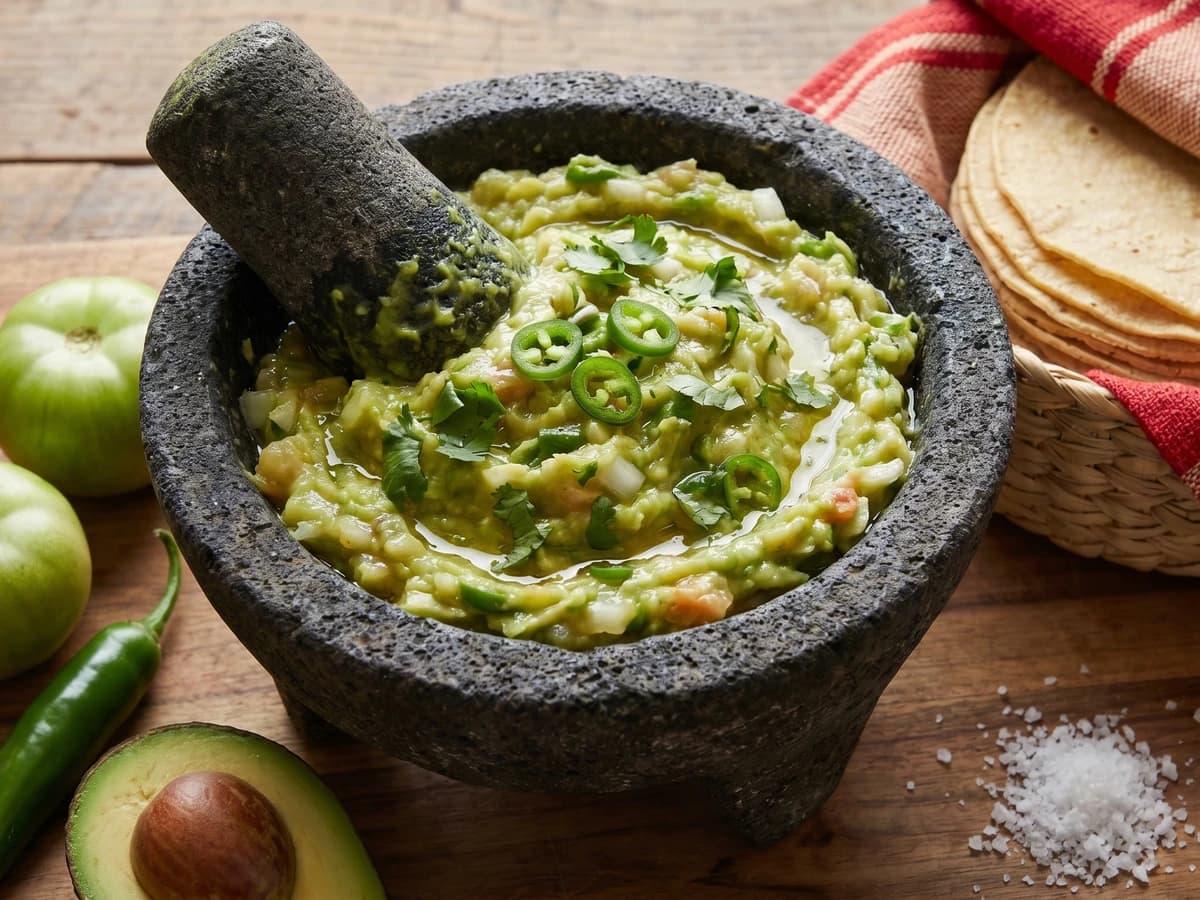
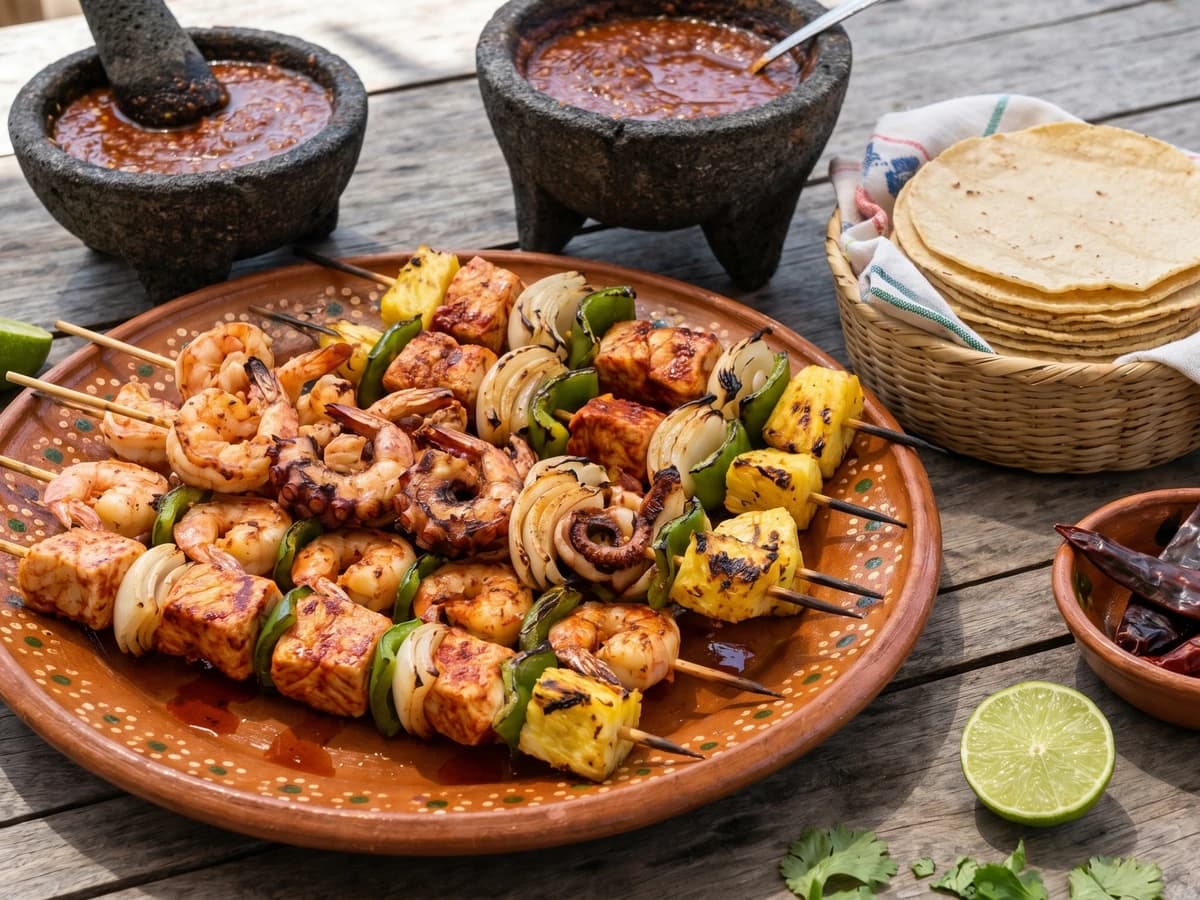
Querétaro's Mercado Escobedo gordita, a thick corn masa pocket packed with carnitas migajas, browned in manteca de cerdo, then opened for nopalitos, queso fresco, and a chile de árbol salsa.
Appetizers & Snacks
Mexican
Weeknight
Comfort Food
Budget Friendly
45 min
Active Time
45 min cook•1 hr 30 min total
Yield12 gorditas, 4 to 6 servings
Querétaro, the Bajío queretano, puts this gordita in the markets of Santiago de Querétaro before it puts it on any restaurant menu. At Mercado Escobedo, the women at the comal know the weight of the masa by hand: thick enough to hold migajas, thin enough to cook through before the outside turns hard.
The migajas are not bread crumbs. In Querétaro, they are the crisp, salty scraps from the carnitas cazo, the browned pieces left after pork has cooked in manteca until the fat gives back flavor. Fold those into fresh nixtamal masa and you have a dish that tells the truth about household economy: nothing from the cazo is waste if a good cook is working.
Use fresh masa if you can. The gordita should crack just a little at the edge when pressed, then seal around the filling without splitting. The salsa is chile de árbol and serrano with jitomate, blunt and bright, not a contest of heat. The nopales get epazote because Querétaro is still central Mexico and the herb belongs there.
I learned this version watching a señora near the Mercado Escobedo stalls open fried gorditas with a small knife and pack in nopalitos like she was closing a purse. She didn't measure. She watched the masa. You will measure until your hands learn. Saber cocinar es saber vivir.
Gorditas belong to the broad family of nixtamal masa antojitos that predates the conquest, but Querétaro's migajas version reflects the Bajío's colonial-era pork economy after pigs and lard arrived with Spanish settlers in the 16th century. Because Santiago de Querétaro sat on the Camino Real de Tierra Adentro, its markets became crossroads between central corn cooking and the pork traditions that fed travelers, laborers, and city workers. By the 20th century, Mercado Escobedo and other capital markets had fixed gorditas de migajas as the state's recognizable antojito, with migajas meaning carnitas scraps, not crumbs of bread.
The technique, the tradition, and the story behind every dish.
finely chopped, the crispy pork scraps from a carnitas cazo
manteca de cerdo
Quantity
1 tablespoon
for re-crisping the migajas
manteca de cerdo
Quantity
1 1/2 cups
for shallow frying
Roma tomatoes
Quantity
5
dried chile de árbol
Quantity
6
stemmed
fresh chile serrano
Quantity
2
stemmed
garlic cloves
Quantity
2
unpeeled
white onion
Quantity
1/4 medium
nopales paddles
Quantity
4
cleaned and diced
white onion
Quantity
1/2 small
thinly sliced
fresh epazote
Quantity
1 sprig
queso fresco
Quantity
6 ounces
crumbled
limes (optional)
Quantity
2
halved, for serving
Ingredient
Quantity
fresh nixtamal masa for tortillasat room temperature
2 pounds
manteca de cerdosoftened, for the masa
3 tablespoons
fine sea salt
1 1/2 teaspoons, divided, plus more to taste
warm wateras needed
1/2 to 3/4 cup
carnitas migajasfinely chopped, the crispy pork scraps from a carnitas cazo
2 cups
manteca de cerdofor re-crisping the migajas
1 tablespoon
manteca de cerdofor shallow frying
1 1/2 cups
Roma tomatoes
5
dried chile de árbolstemmed
6
fresh chile serranostemmed
2
garlic clovesunpeeled
2
white onion
1/4 medium
nopales paddlescleaned and diced
4
white onionthinly sliced
1/2 small
fresh epazote
1 sprig
queso frescocrumbled
6 ounces
limes (optional)halved, for serving
2
Equipment Needed
•Cast iron comal for roasting tomatoes and chiles
•Volcanic stone molcajete or blender used in short pulses
•Tortilla press lined with plastic
•Wide heavy skillet or shallow clay cazuela for frying
•Cooling rack set over a sheet pan
Instructions
1
Toast the salsa
Heat a dry comal over medium. Set the tomatoes, serranos, garlic, and onion on it. Turn them until the tomato skins blister, the onion softens at the edges, and the garlic feels tender inside its peel. Toast the chile de árbol separately for 10 to 15 seconds per side, just until fragrant. It burns fast. Burned chile turns bitter and then you are punished for looking away.
If one chile de árbol goes black, throw it out. Do not hide burned chile in salsa and hope nobody notices. They will notice.
2
Martajar the salsa
Peel the garlic. In a molcajete, crush the garlic with 1/2 teaspoon salt until it becomes a paste. Add the toasted chile de árbol and serrano, then the onion and tomatoes. Crush until rough and juicy, not smooth. If you use a blender, pulse only a few times. This salsa should have pieces of tomato and chile. A market salsa is not baby food.
3
Cook the nopales
Put the diced nopales, sliced onion, 1/2 teaspoon salt, and 2 tablespoons water in a wide skillet over medium heat. Cook, stirring often, until the nopales release their sticky liquid and then cook it off, about 12 to 15 minutes. Add the epazote for the last 3 minutes. The nopales should be glossy, tender, and no longer weeping liquid. Pull out the epazote stem and set the nopales aside.
4
Season the masa
Put the fresh masa in a bowl with the softened manteca de cerdo and the remaining 1/2 teaspoon salt. Knead with your hand, adding warm water a tablespoon at a time, until the masa feels soft, hydrated, and pliable. Press a little ball between your palms. If the edges crack wide, it needs more water. If it sticks like paste, knead in a little more masa. Cover with a damp towel and rest 15 minutes.
5
Crisp the migajas
Melt 1 tablespoon manteca de cerdo in a skillet over medium heat. Add the carnitas migajas and cook for 4 to 5 minutes, stirring, until the dark pieces smell roasted and the fat glistens on the surface. They should sound dry against the pan, not soggy. Let them cool just enough to handle. This is the flavor of the cazo. Respect it.
6
Shape the pockets
Divide the masa into 12 balls. Keep them covered. Take one ball, press a deep well in the center with your thumb, and spoon in about 1 1/2 tablespoons of migajas. Close the masa over the filling and pinch to seal. Press between plastic in a tortilla press, or pat by hand, into a gordita about 4 inches wide and 1/2 inch thick. The filling should stay hidden. If migajas break through, patch with a little masa. Así se hace y punto.
7
Fry the gorditas
Heat 1 1/2 cups manteca de cerdo in a wide heavy skillet over medium heat. The fat should be about 1/4 inch deep. Drop in a pea-sized piece of masa. It should bubble steadily and rise without turning dark right away. Fry 2 or 3 gorditas at a time, about 3 minutes per side, until they are golden in patches, firm at the edges, and cooked through. Do not crowd the pan. Crowding drops the temperature and the masa drinks fat instead of sealing.
Oil will fry them, yes. Manteca de cerdo makes them taste like Querétaro. La manteca es el sabor. No me vengas con atajos.
8
Open and fill
Drain the gorditas on a rack for 2 minutes. While they are still hot, hold each one with a clean towel and cut a slit along the side with a small knife. Open the pocket without tearing it apart. Spoon in nopalitos, crumble in queso fresco, and finish with salsa roja. Add lime at the table. Eat them while the edges are still crisp and the migajas taste of the cazo. Recetas probadas y garantizadas.
Chef Tips
•Ask the carnitas vendor for migajas from the bottom of the cazo. At Mercado Escobedo, they know exactly what you mean. If they hand you lean chopped carnitas, say no. You need the dark, salty, crisp bits.
•Fresh masa from a tortillería is the first choice. If you only have masa harina, use 2 1/2 cups masa harina with about 2 cups warm water, rest it 20 minutes, then knead in the lard and salt. It works, but it will not taste like the market. A substitution is a compromise, not an upgrade.
•Do not overfill the gorditas. Migajas are powerful: pork, salt, browned fat. Too much and the masa splits in the lard. A good gordita tastes balanced, not stuffed until it fails.
•The salsa is chile de árbol and serrano, not a bottle from the refrigerator door. Toast the chiles, roast the tomatoes, crush them rough. Si no conoces el mercado, no conoces la cocina.
•Keep purchased migajas refrigerated and use them within two days. Re-crisp them before filling so the fat wakes up and the pork tastes alive again.
Advance Preparation
•The salsa roja can be made one day ahead and refrigerated. Bring it to room temperature before serving so the chile and tomato taste clear.
•The nopalitos can be cooked up to two days ahead. Rewarm them gently in a skillet before filling the gorditas.
•The masa can be seasoned up to two hours ahead and kept covered with a damp towel. Do not shape the gorditas too early or the edges will dry and split.
•Fried gorditas are best eaten immediately. To reheat leftovers, use a dry comal over medium heat until the edges firm again. Do not use a microwave unless you enjoy disappointing yourself.
Frequently Asked Questions
Nutrition Information
1 serving (about 355g)
Calories
750 calories
Total Fat
44 g
Saturated Fat
17 g
Trans Fat
0 g
Unsaturated Fat
25 g
Cholesterol
80 mg
Sodium
1150 mg
Total Carbohydrates
66 g
Dietary Fiber
9 g
Sugars
4 g
Protein
23 g
Where cooking meets culture.
Culinary guides, cultural storytelling, and the editorial depth that makes cooking meaningful.