Culinary Explorer

A cooking platform built around craft, culture, and the stories behind what we eat.
Discover Culinary Explorer
Gooseberry Fool

Gooseberry Fool

Created by Chef Thomas

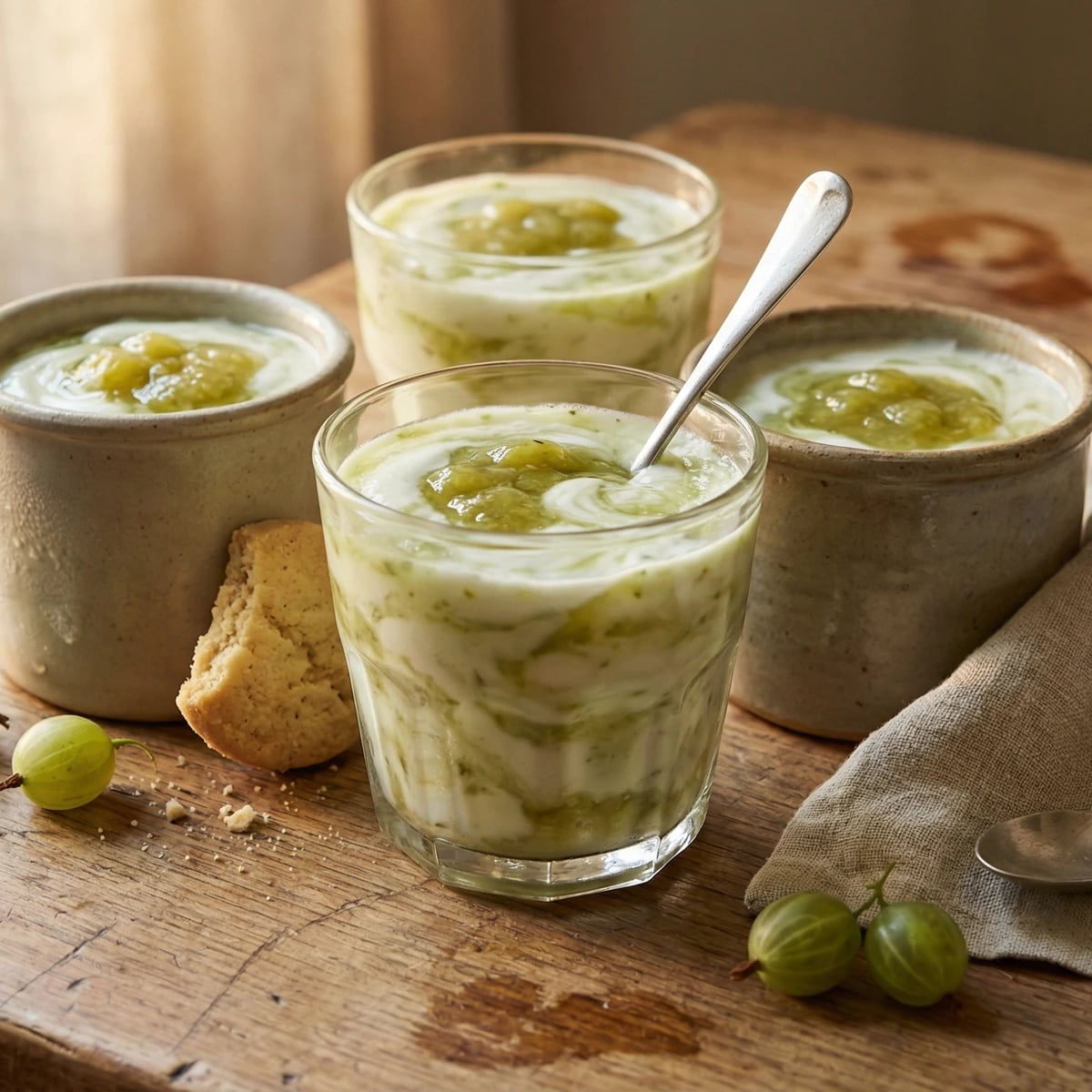
Stewed green gooseberries folded through softly whipped cream, a British pudding from the 1500s that tastes of early summer and asks almost nothing of you except a quiet half hour.

Desserts
British
Dinner Party
15 min
Active Time
15 min cookPT30M plus chilling total
Yield4 servings

Gooseberries arrive in a narrow window. A few weeks in June, sometimes stretching into early July, when the bushes are heavy with hard, sour, green fruit that almost nobody eats raw and almost everybody has forgotten how to use. The market decides, and in June, for a little while, the market decides gooseberries.

A fool is the oldest and best answer to a glut of them. Stew the fruit with sugar until it collapses, let it cool, fold it through cream that's been whipped just to the point of softness, and stop there. That's the recipe. It dates back to the 1500s and it hasn't needed improving since, which tells you everything about how right it is.

The pleasure of a fool is in the contrast. Sharp against soft, green against white, the cold cream carrying the tartness of the fruit without smothering it. You want the gooseberries almost aggressive on their own, because the cream is going to take the edge off them and you need something left to taste. Season and taste, then taste again. If an elderflower head is within reach, drop one in while the fruit stews. Gooseberry and elderflower is one of those pairings the English countryside worked out long before anyone wrote it down.

I wrote it down in the notebook one June: gooseberries, cream, a handful of minutes, a cold bowl. Right food, right evening. Few puddings give back more than they ask.

The technique, the tradition, and the story behind every dish.

Discover Culinary Explorer

Ingredients

green gooseberries

Quantity

500g

topped and tailed

caster sugar

Quantity

100g

plus extra to taste

water

Quantity

1 tablespoon

elderflower head (optional)

Quantity

1

shaken clean

double cream

Quantity

300ml

well chilled

icing sugar

Quantity

1 tablespoon

shortbread biscuits

Quantity

a few

to serve

Equipment Needed

  • Heavy-bottomed saucepan
  • Large mixing bowl
  • Balloon whisk
  • Large metal spoon for folding
  • Small glasses, teacups or stoneware pots for serving

Instructions

  1. 1

    Top and tail the fruit

    Sit down at the table with a bowl and a pair of scissors, or a small sharp knife, and work through the gooseberries one by one. Snip off the dry stalk at one end and the little papery flower at the other. It's a quiet job. Put the radio on. The fruit will be hard and faintly hairy, green as a pond, and will squeak a little between your fingers.

    Don't skip this step. The tails go soft when cooked but they never quite disappear, and you'll find them later.
  2. 2

    Stew the gooseberries

    Tip the fruit into a heavy-bottomed saucepan with the sugar and the tablespoon of water. If you've got an elderflower head, give it a shake to dislodge any small creatures and lay it on top. Set the pan over a low heat and put the lid on. After a few minutes you'll hear the fruit start to pop and sigh. Stir gently. You want the gooseberries to burst and collapse into a rough, silvery-green compote, about eight to ten minutes. Taste it. It should be sharp, almost too sharp, with the sweetness just taking the edge off. A fool needs that sharpness or the cream has nothing to push against.

  3. 3

    Cool the compote

    Fish out the elderflower head and discard it. Tip the fruit into a shallow bowl and let it cool completely. Don't hurry this. Warm fruit will slump the cream into soup. If you're in a rush, spread it thin on a plate and put it somewhere cool. The colour will deepen as it sits, from bright acid green to something softer and more thoughtful.

    Keep back a couple of spoonfuls of the compote to spoon over the top of the finished fools. The ripples look lovely and the extra tartness is welcome.
  4. 4

    Whip the cream softly

    Pour the cold cream into a large bowl with the icing sugar. Whip it, by hand if you can manage, until it holds soft, drooping peaks. Not stiff. Not buttery. The moment the whisk starts leaving trails that don't quite hold their shape, stop. Over-whipped cream in a fool is a small tragedy. It should still flop when you tilt the bowl.

  5. 5

    Fold, don't mix

    Spoon most of the cooled gooseberries into the cream. Fold them through with a large metal spoon, turning the cream over from the bottom, just a few times. You're not trying to make it one colour. You want streaks and ribbons, pale green drifting into white, the odd whole-ish gooseberry hiding in the folds. This is what a fool should look like. Mix it smooth and you've lost the point.

  6. 6

    Spoon into glasses and chill

    Spoon the fool into whatever you've got that feels right. Small glasses, teacups, little stoneware pots, anything that holds a generous portion. Top each one with a spoonful of the reserved compote. Cover and chill for at least an hour, longer if you can. The flavour settles and deepens as it sits. Serve cold, with a shortbread biscuit on the side for digging in.

Chef Tips

  • Gooseberries are a June fruit. Don't try to make this in November with something imported and tired. If gooseberries aren't in, wait. Rhubarb fools beautifully in early spring, and blackberries do the job in late summer. The method is the same; the fruit is whatever's actually good.
  • Taste the compote before you fold it in. Cream mutes sharpness considerably, so the fruit on its own should make you pull a face slightly. If it's already sweet and mild, the finished fool will taste of nothing much.
  • Use real double cream, and whip it by hand if you can. An electric whisk moves too fast and you'll find yourself at stiff peaks before you've registered the soft ones. A balloon whisk and two minutes of attention give you the texture that makes a fool feel like a fool and not a mousse.
  • A shortbread biscuit on the side is traditional and correct. The buttery crumb is the thing you need against the cream. Don't overthink it.

Advance Preparation

  • The gooseberry compote can be made up to three days ahead and kept covered in the fridge. In fact it's better for a day's rest.
  • The fool itself is best assembled a few hours before serving, no more than a day ahead. Any longer and the cream starts to weep and the fruit bleeds through.

Frequently Asked Questions

Nutrition Information

1 serving (about 245g)

Calories
565 calories
Total Fat
39 g
Saturated Fat
24 g
Trans Fat
0 g
Unsaturated Fat
13 g
Cholesterol
110 mg
Sodium
65 mg
Total Carbohydrates
51 g
Dietary Fiber
5 g
Sugars
40 g
Protein
3 g

Note: Chef personas and recipes are created with AI assistance. Cook with care: follow safe food-handling practices, check doneness with a thermometer when needed, and adapt for allergies and your kitchen.

Where cooking meets culture.

Culinary guides, cultural storytelling, and the editorial depth that makes cooking meaningful.

Discover Culinary Explorer

More from British Puddings & Crumbles

Browse the full collection