
Chef Takumi
Ago Dashi (あごだし, grilled flying fish stock)
Ago dashi is quiet luxury: roasted flying fish, konbu, and patient water. Steep it slowly and you get a clear stock that tastes sweet, clean, and full without heaviness.
A cooking platform built around craft, culture, and the stories behind what we eat.
Created by
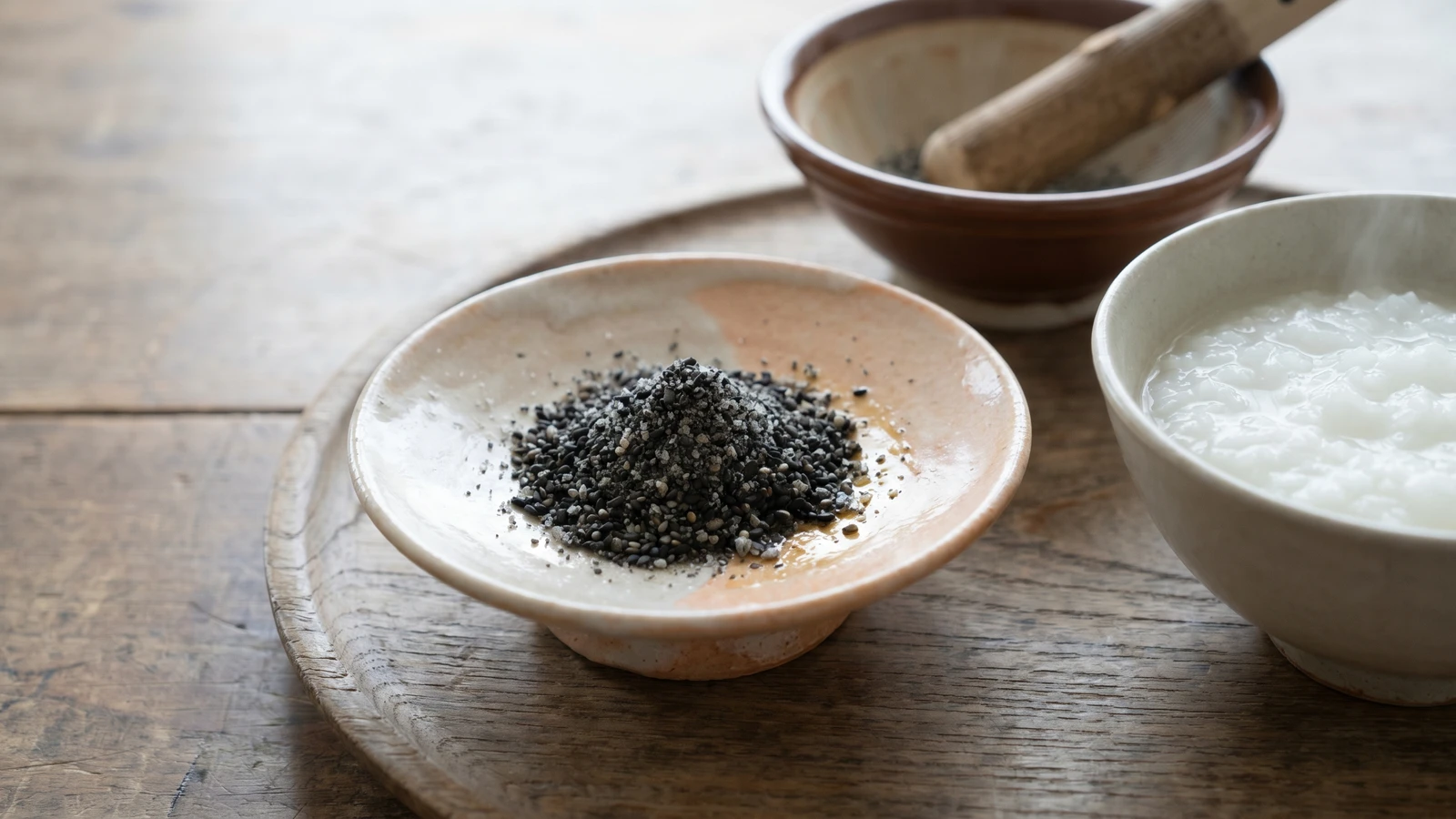
Black sesame, parched until fragrant, ground just halfway, then mixed with dry-warmed salt. Keep it small and fresh, and a spoonful gives rice or porridge a quiet, nutty lift.
Gomashio looks like the smallest possible recipe: sesame and salt. Good. Small things make strict teachers. There is no sauce here, no long simmer, nothing hidden. If the sesame is stale, the whole thing tastes tired. If it is freshly parched and ground, one pinch can wake a bowl of rice without bullying it.
The one detail that decides it is the grind. Whole sesame slips away from the salt, and powdered sesame turns heavy and oily. We stop in the middle: half cracked, half fine, with just enough oil released to catch the salt and carry the fragrance. This is why the suribachi, the ridged Japanese mortar, earns its shelf space. A plain mortar works too, if your hand is patient.
Parch the salt as well. That sounds fussy until you see damp salt clump against the seed and drag the mixture dull. A minute in the dry pan leaves it loose, clean, and ready to scatter. Make gomashio in a small batch, the way we do for a few days of rice, okayu, or simply cooked greens. The real thing is not difficult. It only asks you not to make a heroic jar and forget it in the cupboard.
Gomashio's name is direct: goma means sesame and shio means salt, a reminder that the condiment was never meant to be elaborate. It is closely associated with shōjin ryōri, Buddhist temple cooking, and at Eihei-ji in Fukui, the Sōtō Zen head temple founded by Dōgen in 1244, sesame salt is served with morning rice porridge. In the twentieth century, macrobiotic writers carried gomashio abroad, often preserving the Japanese habit of using many parts sesame to one part salt rather than making it simply salty.
Quantity
1/2 cup (70g)
picked over for grit, preferably unhulled
Quantity
1 teaspoon (5g)
use 3/4 teaspoon for a gentler sprinkle
Quantity
as needed
| Ingredient | Quantity |
|---|---|
| raw black sesame seedspicked over for grit, preferably unhulled | 1/2 cup (70g) |
| fine sea saltuse 3/4 teaspoon for a gentler sprinkle | 1 teaspoon (5g) |
| cooked rice, okayu, or simply cooked greens (optional) | as needed |
Spread the sesame seeds on a pale plate and look them over for grit or broken bits. Black sesame hides its condition, so use your nose too. It should smell clean and faintly nutty, not oily, dusty, or like an old cupboard. No amount of careful grinding will rescue rancid seed.
Put the sesame in a dry skillet over low to medium-low heat. Shake the pan and stir steadily for 6 to 8 minutes, until the seeds smell deeply nutty, look a little satin-bright, and a few begin to tick and jump. Black sesame will not show browning kindly, so listen and smell. Tip the seeds onto a plate at once so the stored heat of the pan doesn't take them from fragrant to bitter.
Wipe the skillet clean and add the salt. Warm it over low heat for 1 to 2 minutes, stirring, until it flows freely and looks dry. Salt carries moisture from the air, and that moisture makes gomashio clump and taste flat. Let the salt cool before it meets the sesame.
Put the cooled sesame in a suribachi and work it with the surikogi in steady circles. Stop when roughly half the seeds are cracked and sandy and half remain mostly whole. Do not grind it to paste. A little oil released from the seed helps the salt cling, but too much oil makes the mixture heavy and shortens its fresh life.
Add the cooled parched salt to the ground sesame and turn the pestle through the mixture only a few times, just until the salt is evenly scattered. Taste a pinch on plain rice before changing the salt. Store in a dry airtight jar once everything is fully cool, and use within a week for the best fragrance.
1 serving (about 3g)
Culinary guides, cultural storytelling, and the editorial depth that makes cooking meaningful.
Discover Culinary ExplorerChef Takumi
Ago dashi is quiet luxury: roasted flying fish, konbu, and patient water. Steep it slowly and you get a clear stock that tastes sweet, clean, and full without heaviness.
Chef Takumi
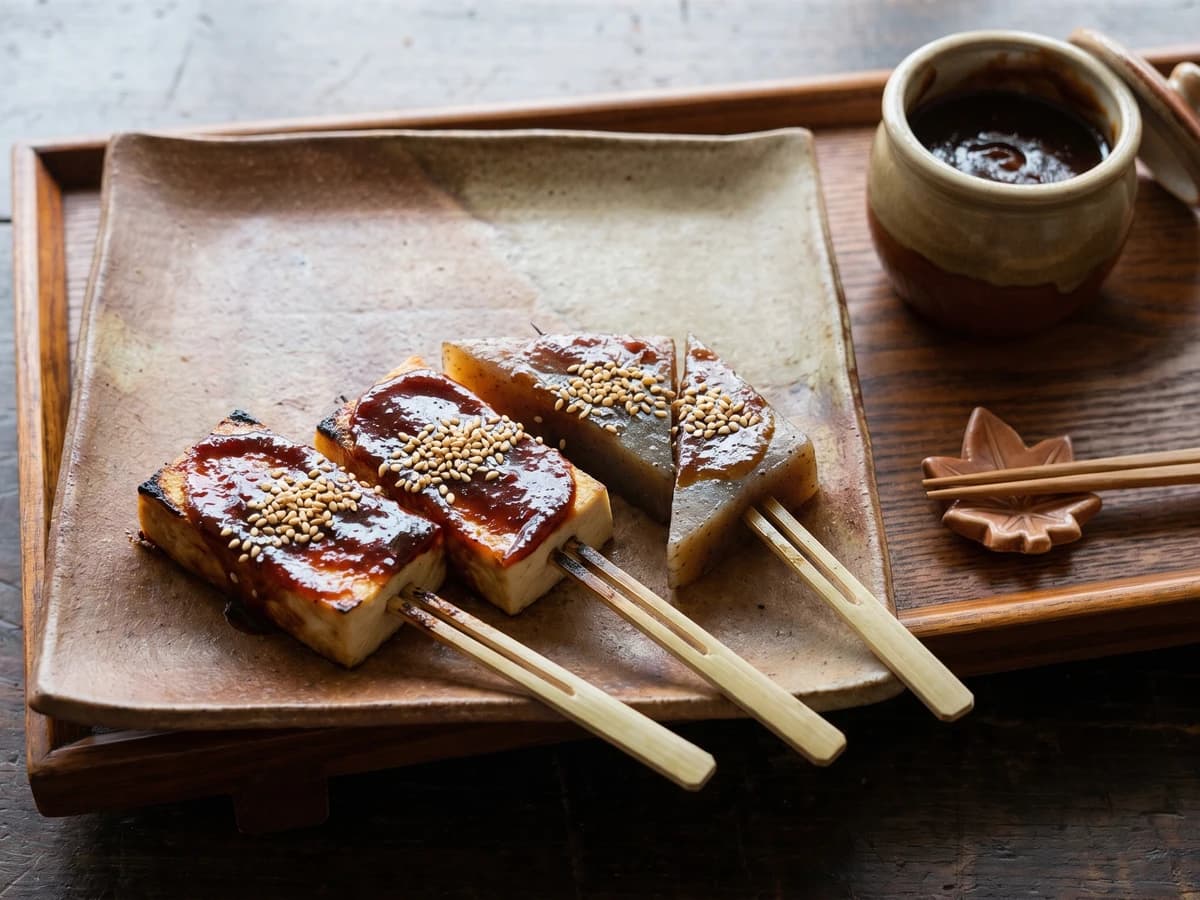
Akamiso dengaku-miso is plain work: bean miso, sweetness, sake, and patient stirring until the glaze turns dark, glossy, and thick enough to cling to the grill.
Chef Takumi
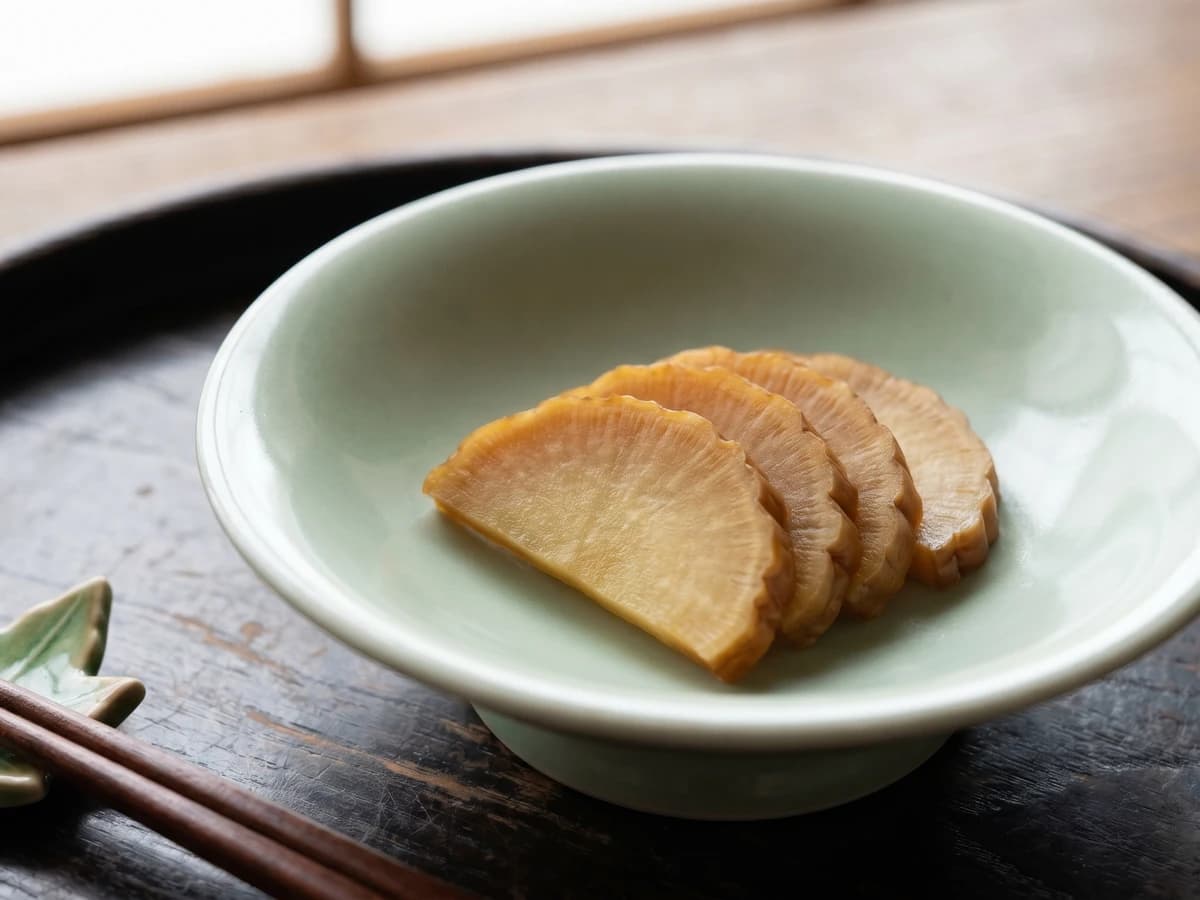
Snow-country takuan begins with smoke. Hang the daikon, dry it gently, then let rice bran, salt, and time turn it into Akita's amber pickle.

Chef Takumi
Aso takanazuke is spring caught in salt: sharp mustard greens pressed until they soften, fermented until their edge turns round, then fried briefly with sesame for rice.