
Chef Juliana
Ambrosia Mineira
You think curdled milk means failure. Not here. Milk, yolks, sugar, and lemon cook into golden curds in amber whey, a Minas sweet where the ponto teaches the whole recipe.
A cooking platform built around craft, culture, and the stories behind what we eat.
Created by
You don't need a copper tacho or a Mineira grandmother on call. You need ripe guavas, sugar, a heavy pot, and the patience to learn the ponto.
You see the word ponto and your hand starts backing away from the stove. Isso não é pra mim, you think. Anota aí: this is exactly for you. Cooking isn't a gift, it's something you learn, and sweets are not the exception where everyone suddenly needs a copper tacho and a blessing from a Mineira aunt.
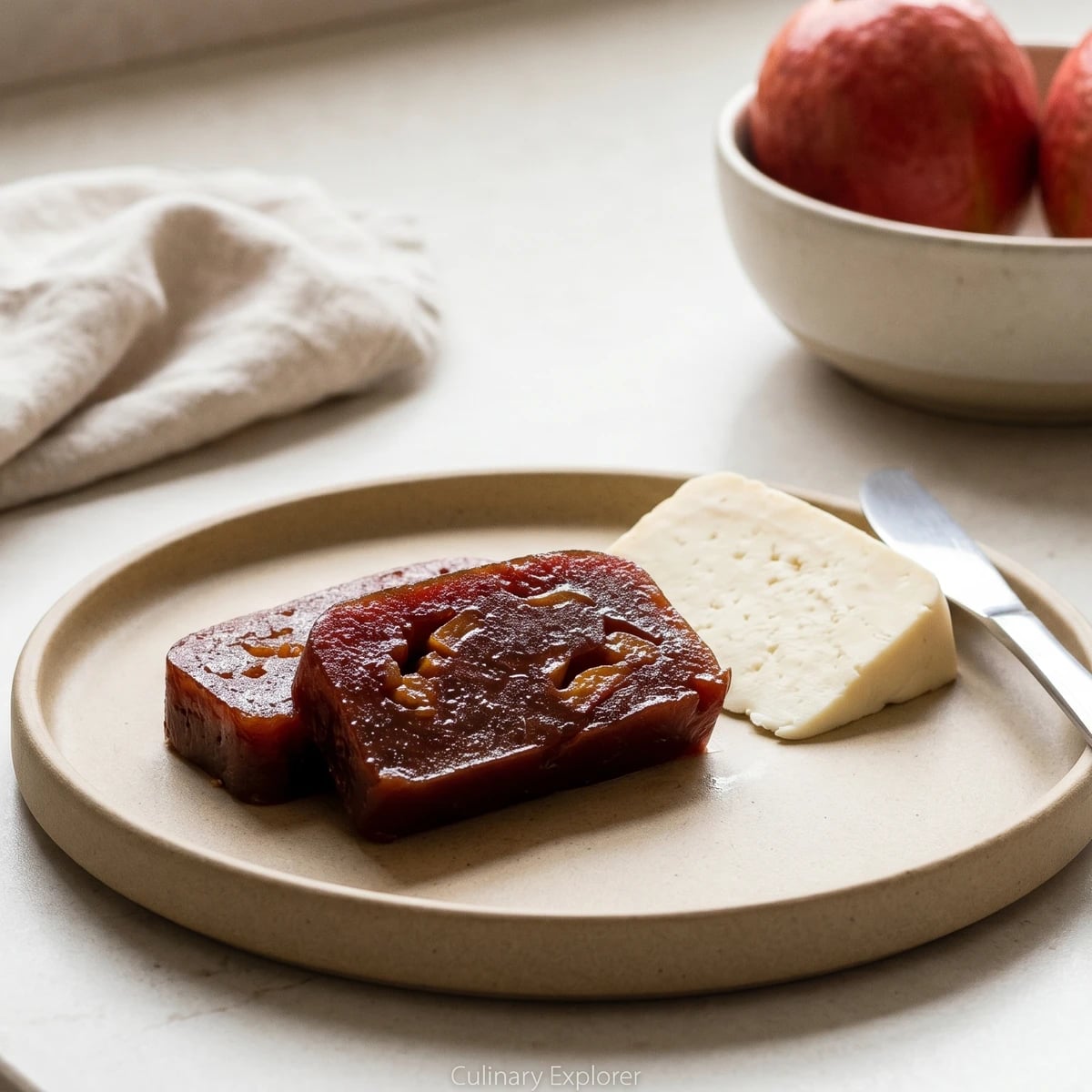
After a proper pê-efe, arroz soltinho, feijão cremoso, a bit of chicken or an egg, something green, a square of goiabada with queijo Minas is not a fancy dessert. It is pantry intelligence. Fruit when fruit is good, sugar when sugar preserves, a year of little slices waiting for coffee and for the person who says there is nothing in the house.
The method is plain. Keep the peel because this is cascão. Cook the seedy centers with water because that's where pulp and pectin hide. Strain the seeds because they have no business cracking your teeth. Then cook the guava with sugar until it pulls back from the pan in a thick, glossy mass. That's the ponto. Not mystique. Observation.
The doceiras of São Bartolomeu, Sabará, Serra da Canastra, and Araxá carry traditions deeper than my home pot, and I don't pretend otherwise. This version is for your heavy pot and gas stove, with cups and spoons, because receitas que funcionam are how a gente gets people into the kitchen and keeps them there.
Goiabada cascão is tied to the preserve culture of Minas Gerais, where old gold-rush farm pantries turned harvests into doces, compotes, and fruit pastes that could last beyond the season. São Bartolomeu, a district of Ouro Preto, is especially known for doce de goiaba cascão, while Sabará, Serra da Canastra, and Araxá carry related Mineira sweet and queijo traditions that make Romeu e Julieta feel inevitable. The word cascão points to the peel left in the paste: not decoration, not rustic theater, but the texture that separates it from smooth guava blocks.
Quantity
2 pounds, about 8 to 10 medium
washed and left unpeeled
Quantity
1 cup, plus 1/4 cup more if needed
Quantity
3 cups
or 3/4 cup sugar for each cup of seedless guava pulp and peel
Quantity
1 tablespoon
Quantity
1/8 teaspoon
Quantity
1 teaspoon
for greasing the mold
Quantity
6 ounces
for serving
| Ingredient | Quantity |
|---|---|
| ripe red guavaswashed and left unpeeled | 2 pounds, about 8 to 10 medium |
| water | 1 cup, plus 1/4 cup more if needed |
| granulated sugaror 3/4 cup sugar for each cup of seedless guava pulp and peel | 3 cups |
| fresh lime juice | 1 tablespoon |
| fine salt | 1/8 teaspoon |
| neutral oilfor greasing the mold | 1 teaspoon |
| queijo Minas (optional)for serving | 6 ounces |
Trim the ends from the guavas and cut each fruit into quarters. Scoop the seedy centers into a small pot, then chop the peel and flesh into small pieces, about 1/2 inch. Keep the peel. Cascão means the peel stays, and that peel is what gives every slice its little chewy bits instead of turning the sweet into a smooth factory block.
Add 1 cup water to the pot with the seedy centers. Simmer over medium heat for 10 to 15 minutes, stirring and mashing, until the mixture looks soft, pink, and pulpy. Strain through a fine sieve, pressing hard with a spoon, then discard the seeds. You're not being precious here. The pulp and pectin help the goiabada set, but the seeds stay hard and annoying, and a gente is not cooking dental work.
Put the strained pulp and the chopped guava peel and flesh into a heavy pot. Measure what you have; you want about 4 cups. Add 3/4 cup sugar for each cup of guava mixture, then add the lime juice and salt. Stir until everything looks wet and grainy. The sugar pulls juice from the fruit, the lime brightens the flavor and helps the set, and the salt keeps the sweetness from going flat.
Set the pot over medium heat and stir until the sugar melts and the mixture loosens into a thick sauce, about 8 minutes. When it starts bubbling steadily, lower the heat to medium-low. Keep it moving with a wooden spoon, especially across the bottom and corners. Sugar and fruit burn where the spoon doesn't reach, and burnt guava tastes bitter in a way no amount of pretending will fix.
Cook, stirring more often as it thickens, until the color deepens to dark red-brown and the paste falls from the spoon in heavy folds, 45 to 60 minutes. Drag the spoon across the bottom of the pot. When the paste pulls back and leaves a clean path that stays open for 2 to 3 seconds before slowly closing, you're there. This is the whole game. Stop too early and it won't slice. Push too far and it turns stiff and dry.
Lightly oil an 8 x 4 inch loaf pan and line it with parchment, leaving a little overhang. Scrape the hot goiabada into the pan and press it into the corners with a lightly oiled spatula. Smooth the top. It should sit thick and glossy, not run like jam. Let it cool uncovered until firm, at least 6 hours, or overnight if you have the good sense to go to bed and stop poking it.
Lift the block from the pan and slice it with a lightly oiled knife. Serve a small square with queijo Minas. The cheese should be pale, fresh, and a little salty, so the sweet guava has something honest to lean on. That's Romeu e Julieta, and it solves dessert after rice, beans, something green, and whatever you cooked in the middle of the plate.
1 slice (about 34g)
Culinary guides, cultural storytelling, and the editorial depth that makes cooking meaningful.
Discover Culinary Explorer
Chef Juliana
You think curdled milk means failure. Not here. Milk, yolks, sugar, and lemon cook into golden curds in amber whey, a Minas sweet where the ponto teaches the whole recipe.

Chef Juliana
You think preserves belong to grandmothers and copper pots. Wrong. A heavy pot, ripe pumpkin, sugar, coconut, and attention to the ponto get you there.

Chef Juliana
You don't need a copper pan or a grandmother watching your elbow. Green figs, sugar, cloves, and patience make a glossy preserve that waits in the fridge for the next pê-efe.

Chef Juliana
You don't need a copper pot or a grandmother watching over your shoulder. You need ripe jabuticabas, a heavy pan, and the patience to learn the ponto.