
Chef Jeong-sun
Agwi-jjim (Braised Monkfish with Bean Sprouts)
Firm monkfish buried under crisp soybean sprouts, minari, and a red gochugaru sauce thickened at the end; Masan's market dish asks for heat, timing, and a steady hand.
A cooking platform built around craft, culture, and the stories behind what we eat.
Created by
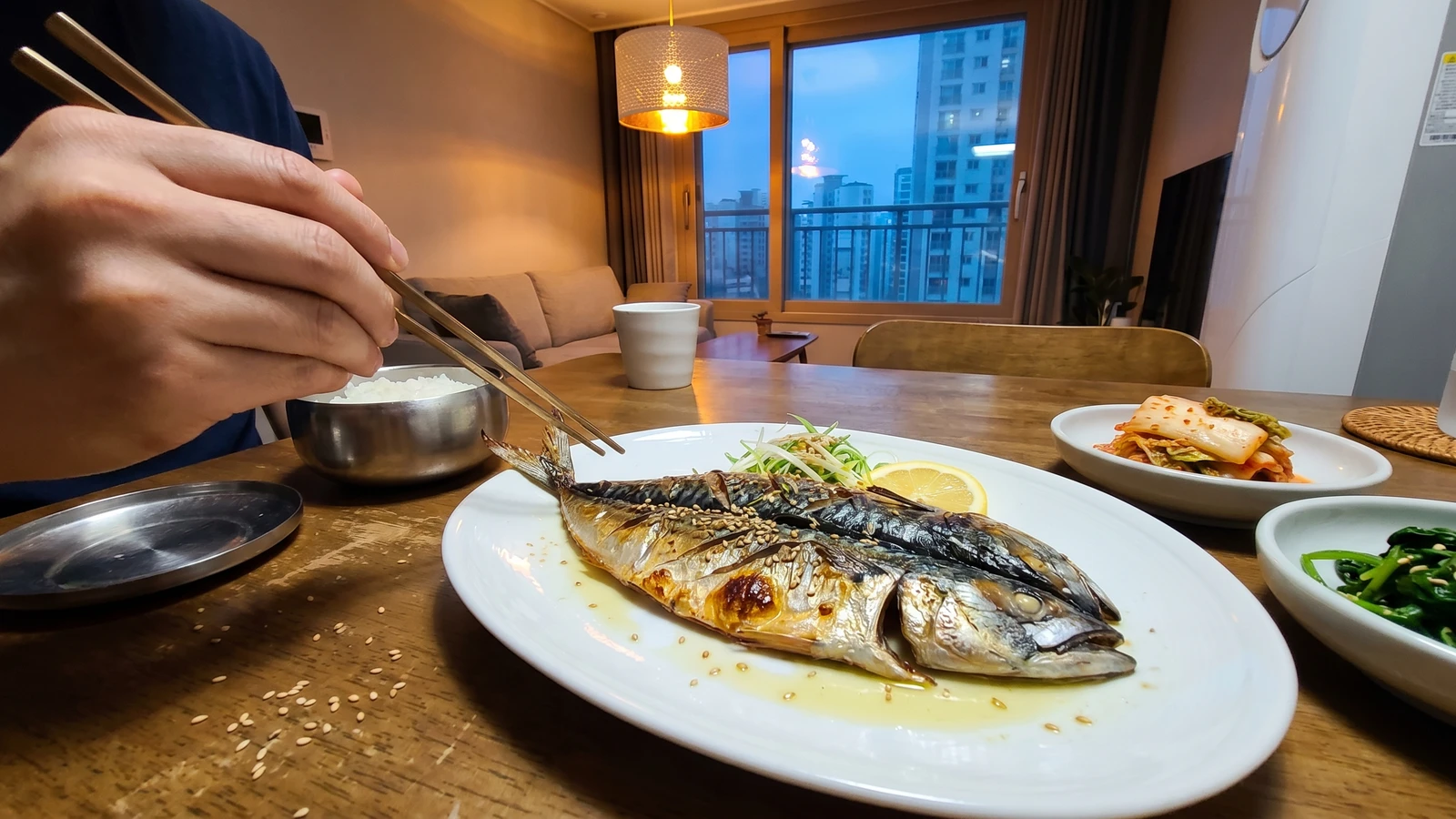
Fatty mackerel salted ahead, dried well, and grilled skin-side down until crisp at the edges; a plain Korean home-table fish that asks only for timing and restraint.
Mackerel is a fish for the market and the month. Buy it when the flesh looks firm, the skin shines blue-silver, and the fishmonger has not had to work hard to sell it. In autumn and early winter it carries more fat, and that fat is why godeungeo-gui is loved. Salt, dry heat, and rice are enough.
This dish lives or dies by drying the fish. Salt pulls out surface moisture and seasons the flesh through; wiping it dry lets the skin blister instead of tearing and steaming against the pan. People blame the fish for smelling strong when the fault is often a wet fillet in a lukewarm pan. Heat the pan properly. Lay the skin down. Then leave it alone longer than your nervous hand wants to.
My teacher, Master Seong-nyeo, measured salt even for fish, which older cooks often waved over with their fingers. Notebook 18 says 1 1/4 teaspoons fine sea salt for 500 grams cleaned mackerel, rested one hour. 손맛 is real. I still measure it, so it can be handed on. Tonight this asks for rice ready before the fish is done, because godeungeo-gui waits badly and a hungry table waits worse.
Mackerel has long been one of Korea's most important everyday fish, especially along the southern and eastern coasts, where it could be eaten fresh near the ports or salted for travel inland. Andong gan-godeungeo, the well-known salted mackerel of inland Gyeongsangbuk-do, developed because fish carried from the coast needed salt to survive the road before refrigeration. Godeungeo-gui belongs to that practical history: preservation, thrift, and a hot grill turning an inexpensive oily fish into the center of a rice table.
Quantity
1, about 500g
cleaned, butterflied, head removed or left on
Quantity
1 1/4 teaspoons
Quantity
1 tablespoon
Quantity
1 teaspoon
Quantity
1 teaspoon
Quantity
1
Quantity
1
thinly sliced
Quantity
1 teaspoon
Quantity
to serve
Quantity
to serve
| Ingredient | Quantity |
|---|---|
| whole mackerelcleaned, butterflied, head removed or left on | 1, about 500g |
| fine sea salt | 1 1/4 teaspoons |
| rice wine, cheongju, or soju | 1 tablespoon |
| neutral oil | 1 teaspoon |
| toasted sesame oil (optional) | 1 teaspoon |
| lemon wedge or Korean citron wedge (optional) | 1 |
| scallion (optional)thinly sliced | 1 |
| toasted sesame seeds (optional) | 1 teaspoon |
| cooked short-grain rice | to serve |
| kimchi and simple banchan | to serve |
Check that the mackerel smells clean and marine, not sour or harsh. The flesh should be firm, the skin glossy, and the bloodline dark but not muddy. If the market gives you poor fish, cook something else tonight. This dish is too plain to hide bad seafood.
Lay the butterflied mackerel skin-side down on a tray. Sprinkle 3/4 teaspoon salt over the flesh side and 1/2 teaspoon over the skin side, using your fingers to reach the thicker shoulder meat. Rest uncovered in the refrigerator for 1 hour. The salt seasons the fish and draws out moisture so the skin can crisp.
Quickly rinse off the surface salt under cold water, then pat the fish very dry with towels. Rub the flesh with the rice wine and let it sit 5 minutes, then pat dry again. Do not leave the fish wet. Wet fish sticks, tears, and smells stronger in the pan.
Set a heavy skillet or grill pan over medium-high heat for 3 minutes. Add the neutral oil and, if using, the sesame oil. The pan should be hot enough that the fish sizzles the moment it lands, but not so hot that the skin blackens before the flesh cooks.
Lay the mackerel in skin-side down, pressing it gently for the first 10 seconds so the skin meets the pan evenly. Cook 5 to 6 minutes without moving it. This is the discipline of the dish. If you keep checking, the skin will tear before it has made its own crust.
Flip the fish once with a wide spatula and cook the flesh side 3 to 4 minutes, until the thickest part flakes easily but still looks moist. If your fish is thick, lower the heat and cook 1 to 2 minutes more. Mackerel is rich, but overcook it and that richness turns dry and metallic.
Move the fish to a plate, skin-side up so it stays crisp. Scatter scallion and sesame only if you are using them, and serve with rice, kimchi, and a small wedge of lemon or citron. Taste the fish before adding anything else. Let it taste like itself.
1 serving (about 390g)
Culinary guides, cultural storytelling, and the editorial depth that makes cooking meaningful.
Discover Culinary ExplorerChef Jeong-sun
Firm monkfish buried under crisp soybean sprouts, minari, and a red gochugaru sauce thickened at the end; Masan's market dish asks for heat, timing, and a steady hand.

Chef Jeong-sun
A quick Korean rice bowl built on contrast: warm rice, cold popping flying-fish roe, chopped vegetables, gim, sesame oil, and the crisp rice bottom a hot stone bowl gives you.
Chef Jeong-sun
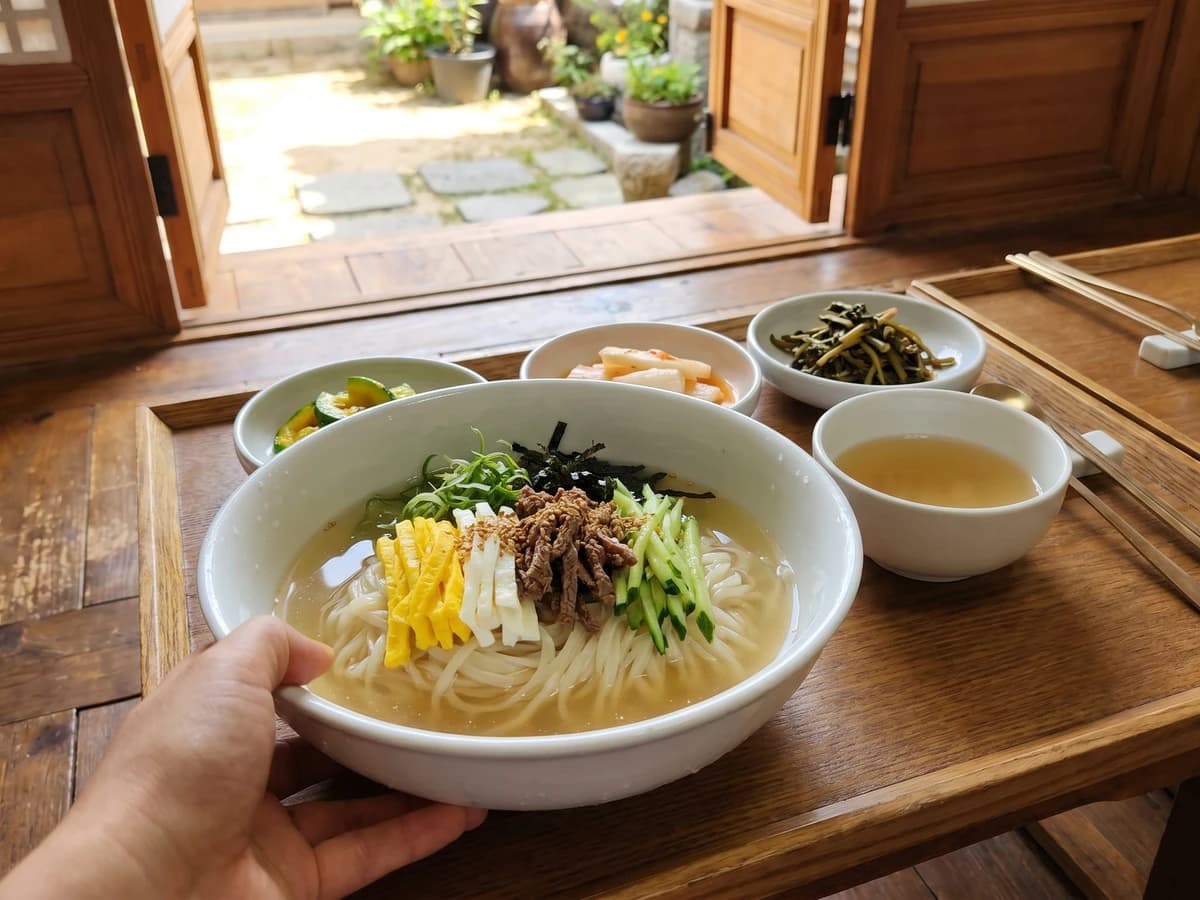
Andong's guest noodles, wheat and roasted soybean flour rolled thin, boiled and rinsed cold, then set in a clear chilled anchovy broth with careful strips of beef, egg, and cucumber.

Chef Jeong-sun
Andong's ritual-table rice served on an ordinary day: separate soy-sesame namul, warm rice, and clear radish soup, mixed without gochujang so every vegetable keeps its own voice.