Chef Jeong-sun
Baechu-jeon (배추전, Napa Cabbage Pancake)
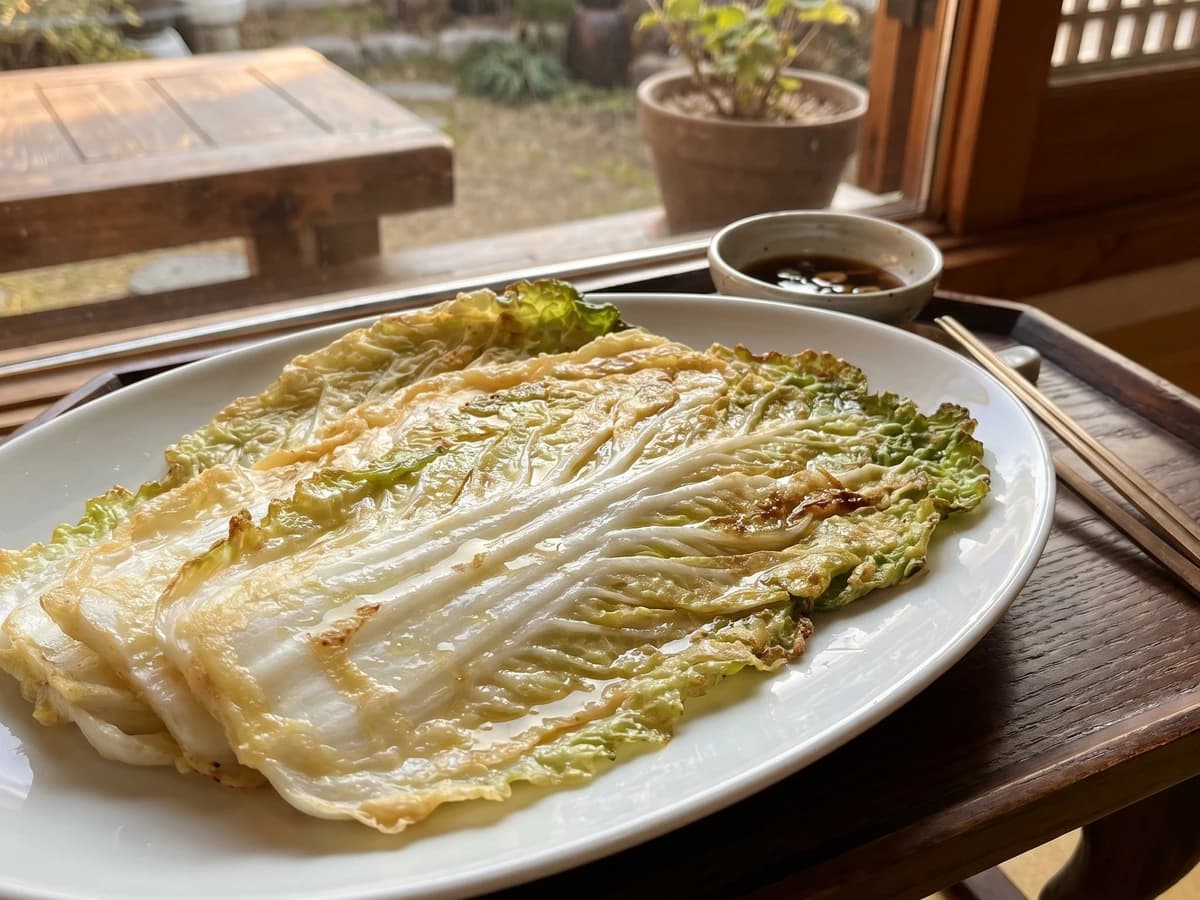
A Gyeongsang home pancake made from one whole napa cabbage leaf at a time, flattened at the rib, brushed in thin salted batter, and fried until sweet, tender, and quietly crisp at the edges.
A cooking platform built around craft, culture, and the stories behind what we eat.

Created by
Mild green chilies split and filled with a measured pork-tofu stuffing, coated in flour and egg, then pan-fried meat side down until the filling firms and the pepper stays bright.
Gochu-jeon lives or dies before it reaches the pan, with the knife and the drying cloth. Split the chili cleanly, scrape out the seeds and ribs, pat the inside dry, and dust it with just enough flour so the filling grips. Skip that little white dust and the meat slips out like a child avoiding chores. My teacher would look at the plate once and know who was lazy.
Use mild Korean put-gochu (green chilies) or oi-gochu (crisp cucumber chilies), the long green ones you can eat raw without pain. This is holiday jeon, the kind that sits beside dongtae-jeon (pan-fried pollock) and wanjajeon (small meat patties) at Chuseok or Seollal, but it also belongs in a lunch box or at a potluck because it travels neatly and tastes good warm or at room temperature. The pepper should still taste green. The filling seasons the meat without making the whole bite taste like soy.
Notebook 41 says 14 peppers for 400 grams of filling, and that is the number I trust when the table is full. Tonight it asks you for patient prep, not difficult work: seed carefully, squeeze the tofu dry, press the filling flat, fry meat-side down first, then turn once. Write it down. Memory is a borrowed bowl.
Jeon (전), foods lightly coated in flour and egg and pan-fried, has long belonged to Korean holiday, jesa (ancestral rite), and banquet tables, where many small fried pieces can be shared and arranged by color. Chili peppers entered Korea after the late sixteenth-century Imjin War era, so gochu-jeon is later than older jeon made from fish, meat, mushrooms, or squash. The stuffed version reflects a practical home-kitchen habit: make a modest amount of meat feed a crowd by tucking it into vegetables and frying each piece carefully.
Quantity
14
12 to 14cm long
Quantity
250g
not too lean
Quantity
150g before squeezing, about 90g after
drained and squeezed dry
Quantity
3 tablespoons
finely minced and squeezed dry
Quantity
2
finely minced
Quantity
2 cloves
minced
Quantity
1 teaspoon
Quantity
1 teaspoon
Quantity
1/2 teaspoon
Quantity
1/4 teaspoon
Quantity
2
beaten, 1 tablespoon used in filling and the rest for coating
Quantity
1/2 cup
for dusting
Quantity
3 tablespoons, plus more as needed
Quantity
2 tablespoons
for dipping sauce
Quantity
1 tablespoon
for dipping sauce
Quantity
1 tablespoon
for dipping sauce
Quantity
1 teaspoon
finely sliced, for dipping sauce
Quantity
1/2 teaspoon
for dipping sauce
Quantity
1 small pinch
for dipping sauce
| Ingredient | Quantity |
|---|---|
| mild Korean green chilies (put-gochu or oi-gochu)12 to 14cm long | 14 |
| ground porknot too lean | 250g |
| firm tofudrained and squeezed dry | 150g before squeezing, about 90g after |
| onionfinely minced and squeezed dry | 3 tablespoons |
| scallionsfinely minced | 2 |
| garlicminced | 2 cloves |
| soy sauce | 1 teaspoon |
| toasted sesame oil | 1 teaspoon |
| kosher salt | 1/2 teaspoon |
| ground black pepper | 1/4 teaspoon |
| large eggsbeaten, 1 tablespoon used in filling and the rest for coating | 2 |
| all-purpose flourfor dusting | 1/2 cup |
| neutral oil | 3 tablespoons, plus more as needed |
| soy saucefor dipping sauce | 2 tablespoons |
| rice vinegarfor dipping sauce | 1 tablespoon |
| waterfor dipping sauce | 1 tablespoon |
| scallionfinely sliced, for dipping sauce | 1 teaspoon |
| toasted sesame seedsfor dipping sauce | 1/2 teaspoon |
| gochugaru (Korean chili flakes) (optional)for dipping sauce | 1 small pinch |
Taste the tip of one raw chili first. If it bites back with real heat, save those chilies for something else; gochu-jeon wants mild green flavor, not a dare. Slice each chili lengthwise through one side, keeping the stem attached if you want the holiday-table look. Scrape out the seeds and pale ribs with a small spoon, then pat the inside and outside dry. Water makes the flour clump and the egg slide.
Squeeze the tofu in a clean towel until it drops from 150g to about 90g. Put it in a bowl with the pork, onion, scallions, garlic, soy sauce, sesame oil, salt, pepper, and 1 tablespoon of the beaten egg. Mix with your hand or chopsticks for about 30 firm turns, just until the filling turns tacky and holds together. That tackiness is the bind; wet tofu and loose mixing make the filling fall out.
Put the flour in a shallow dish. Dust the inside of each chili lightly, especially the cut edges, then tap out the excess. You are not making a batter here. The flour is glue between pepper and meat, and too much turns pasty under the egg.
Press about 1 level tablespoon of filling, 14 to 16g, into each chili half. Push it into the corners and scrape it nearly flat with the cut edge, no high mound. A thick mound browns outside before the center cooks. Dust the filled side with a whisper of flour and tap again.
Beat the remaining egg with a pinch of salt. Heat a wide skillet over medium-low heat and add enough oil to leave a thin, even film. Dip only as many filled chilies in egg as will fit in one batch. If egg-coated pieces wait on the tray, the flour turns gummy and the coating gets heavy.
Lay the chilies meat-side down in the skillet, with a little space between them. Cook 4 to 5 minutes, adjusting the heat so the egg sets golden and the meat has time to cook. High heat gives you a pretty surface and raw pork underneath. That is not a bargain worth making.
Turn each piece once and cook the pepper side 1 to 2 minutes, just until the green skin softens and shines. The filling should reach 71 C at the center. Transfer to a rack or a paper-lined tray in a single layer. Do not stack them while they are still hot, or the egg coating softens.
Stir together the dipping sauce: 2 tablespoons soy sauce, 1 tablespoon rice vinegar, 1 tablespoon water, sliced scallion, sesame seeds, and a small pinch of gochugaru if you want it. Serve the gochu-jeon warm or at room temperature. Good jeon does not need to scorch the mouth; it needs a clean pepper bite, tender filling, and egg coating that stayed where you put it.
1 serving (about 150g)
Culinary guides, cultural storytelling, and the editorial depth that makes cooking meaningful.
Discover Culinary ExplorerChef Jeong-sun
A Gyeongsang home pancake made from one whole napa cabbage leaf at a time, flattened at the rib, brushed in thin salted batter, and fried until sweet, tender, and quietly crisp at the edges.

Chef Jeong-sun
A holiday jeon of fresh shiitake or oyster mushrooms, salted lightly, dusted thinly, and carried through egg in a quiet pan until the mushroom stays earthy and the coating stays tender.

Chef Jeong-sun
Soaked mung beans ground coarse, folded with pork, bracken, sprouts, and kimchi, then fried thick until the edges crisp and the center stays tender enough for a shared table.

Chef Jeong-sun
A summer garlic chive pancake fried thin, crisp at the edges and chewy in the center, with just enough batter to hold the green pile together and a sharp soy-vinegar dip.