
Chef Dean
Ma'amoul
Fragrant semolina cookies with tender, sandy shells encasing warmly spiced date paste, pressed into decorative molds and dusted with powdered sugar. These ancient treats connect generations across the Middle East.
A cooking platform built around craft, culture, and the stories behind what we eat.

Created by
Impossibly tender Middle Eastern shortbread that dissolves on the tongue, made from just three ingredients and a thousand years of tradition. Each bite explains why the name means swooning.
The first time I tasted ghraybeh, I understood immediately why Arabs named this cookie after the sensation of fainting. It dissolves. There is no chewing involved. The moment it touches your tongue, it surrenders completely, leaving behind nothing but the pure taste of butter and a whisper of sweetness. This is pastry reduced to its essence.
Ghraybeh dates to at least the 10th century, appearing in medieval Arabic cookbooks that predate European pastry traditions by centuries. While Scottish shortbread gets the attention in Western kitchens, this Levantine ancestor achieves an even more delicate texture through one critical difference: clarified butter. By removing the milk solids and water from butter, you create a cookie with no structure to fight against. It crumbles at a glance.
The technique requires patience but no skill beyond following instructions. You'll cream the butter and sugar longer than feels necessary. You'll handle the dough gently. You'll bake at a temperature so low the cookies barely color. Trust the process. Generations of home bakers across Lebanon, Syria, Jordan, and Palestine have perfected this method. Your job is simply to follow their lead.
These cookies appear at every celebration in the Middle East: Eid feasts, Christmas gatherings, wedding trays, and any occasion worthy of something beautiful. They keep for weeks in a tin, making them ideal for holiday baking when you need gifts ready before the season truly begins.
Quantity
1 cup (225g)
at room temperature
Quantity
1 cup (120g)
sifted
Quantity
2 cups (250g)
sifted
Quantity
36
for decoration
| Ingredient | Quantity |
|---|---|
| ghee or clarified butterat room temperature | 1 cup (225g) |
| powdered sugarsifted | 1 cup (120g) |
| all-purpose floursifted | 2 cups (250g) |
| blanched almonds or raw pistachiosfor decoration | 36 |
Sift the powdered sugar and flour separately into bowls. This step is not optional. Lumps in either ingredient will create dense pockets in your finished cookies, destroying the delicate texture that defines ghraybeh. Your ghee should be soft enough to hold a fingerprint but not melted or oily. If it's too cold, leave it at room temperature for 30 minutes. If it's too warm, refrigerate briefly until it firms slightly.
Place the room temperature ghee in the bowl of a stand mixer fitted with the paddle attachment. Beat on medium speed for a full 5 minutes. The ghee will transform from yellow and dense to pale ivory and impossibly fluffy. Scrape down the bowl twice during this process. This extended creaming incorporates air that gives the cookies their characteristic lightness. Do not shortcut this step.
With the mixer running on low speed, add the sifted powdered sugar in three additions. After each addition, increase to medium speed and beat for 1 minute before adding more. Once all sugar is incorporated, continue beating for another 3 minutes. The mixture should be white, fluffy, and hold soft peaks when you lift the paddle. This is your foundation. Rush it and your cookies will be dense.
Add the sifted flour all at once. Mix on the lowest speed just until the flour disappears into the butter mixture. Stop the moment you no longer see dry patches. Overmixing develops gluten, which toughens these delicate cookies. The dough will be soft, smooth, and slightly sticky. It should hold together when pressed but feel almost like modeling clay.
Line two baking sheets with parchment paper. Pinch off tablespoon-sized pieces of dough and roll each between your palms into a smooth ball. Place on the prepared sheets with 1 inch of space between cookies. They spread minimally. Working quickly, use your thumb or the back of a small spoon to create a shallow indent in the center of each ball. The depression should be deep enough to cradle a nut but not so deep it cracks the sides. Press one blanched almond or pistachio into each indent.
Place the shaped cookies in the refrigerator for 15 minutes. This brief chill firms the butter just enough to help the cookies hold their shape in the oven. While they rest, position your oven rack in the center and preheat to 300°F (150°C). Yes, this temperature seems low. That is exactly the point. Ghraybeh should not brown. Color means dryness.
Bake one sheet at a time for 18 to 22 minutes. The cookies are done when they feel set to the touch and the bottoms show the faintest hint of golden color when you lift one with a spatula. The tops should remain completely pale, almost white. Do not wait for browning. If your cookies color on top, your oven runs hot. Reduce temperature by 15 degrees for the next batch.
Let the cookies rest on the baking sheet for 10 full minutes. They are extremely fragile when warm and will crumble if moved too soon. After 10 minutes, transfer carefully to a wire rack using a thin spatula. Allow to cool completely before serving or storing. The texture continues to develop as they cool, becoming even more tender as the butter solidifies.
1 cookie (about 18g)
Culinary guides, cultural storytelling, and the editorial depth that makes cooking meaningful.
Discover Culinary ExplorerChef Dean
Fragrant semolina cookies with tender, sandy shells encasing warmly spiced date paste, pressed into decorative molds and dusted with powdered sugar. These ancient treats connect generations across the Middle East.

Chef Juliette
A pale short-paste shell holds silken, lightly sweet carrot purée beneath neat glazed half-discs, their butter syrup catching the light: a classical tart poised between vegetable course and sweet.
Chef Juliette
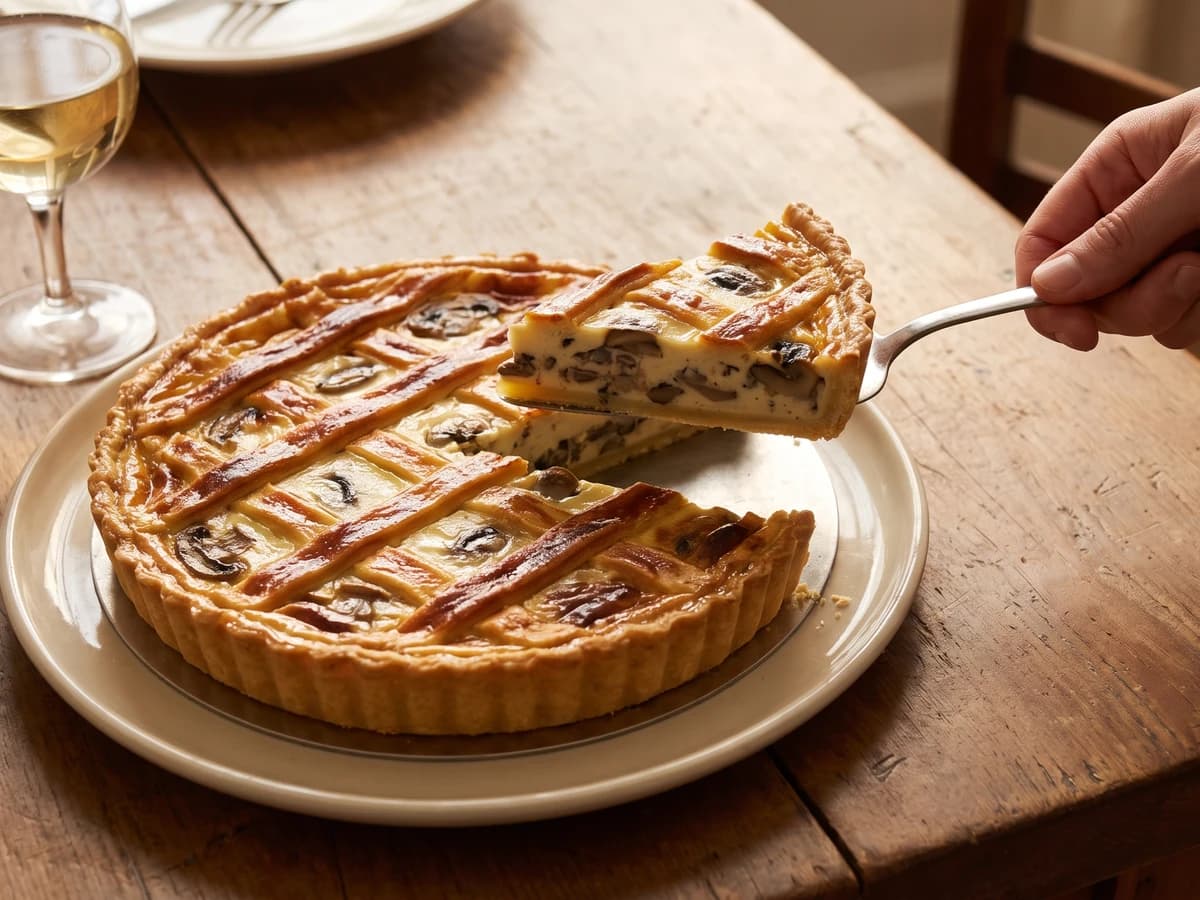
A hot mushroom flan under a butter-gold lattice, with cream reduced close around barely opened caps and a crisp short-paste base protected by one discipline: cool the filling completely.

Chef Juliette
Four little mushroom flans, latticed and gilded, baked hard and fast until butter-gold: a classical garnish scaled to the meat it accompanies and served before its crispness has time to fade.