Chef Joost
Amsterdamse Ossenworst
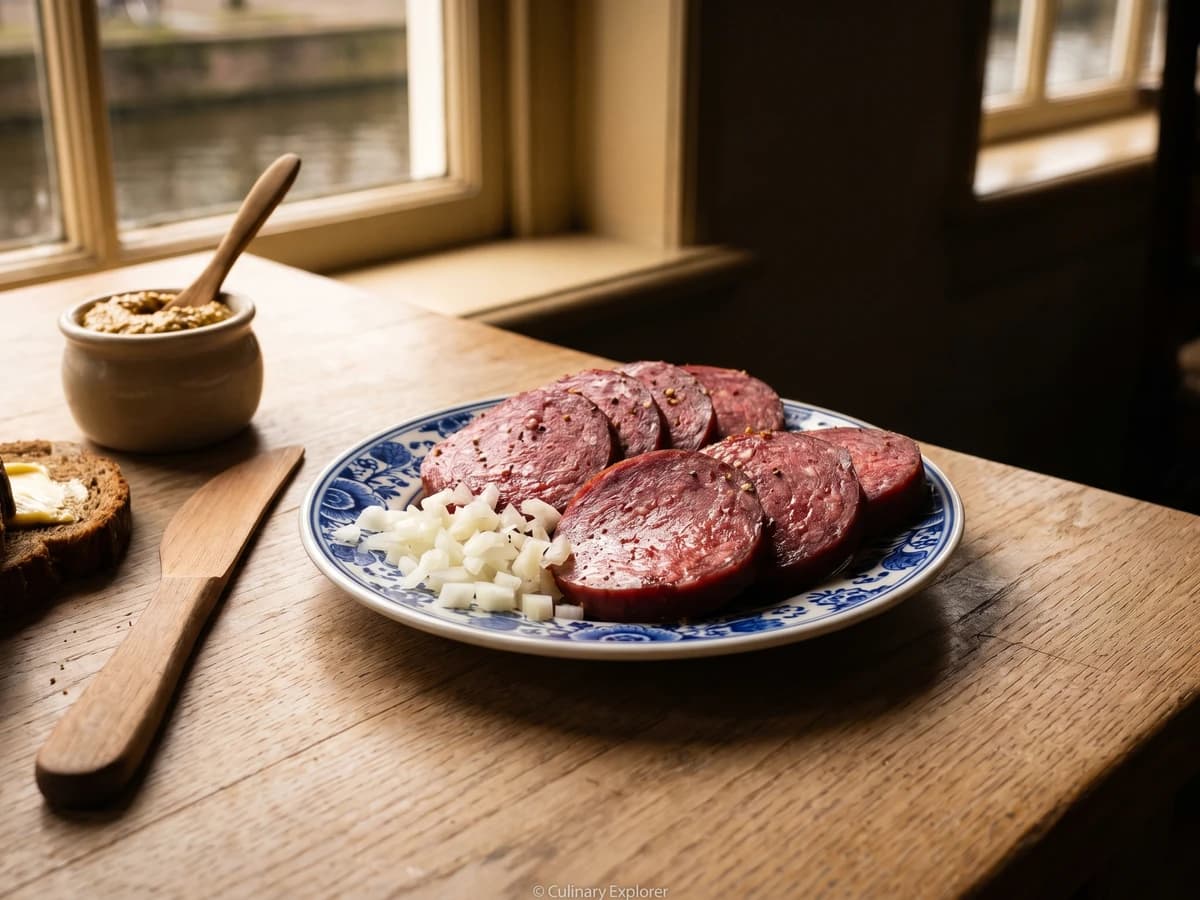
The name means ox sausage, but the real story is Amsterdam itself: cattle trade, Jewish butchers, VOC spices, and raw beef sliced thin with onion.
A cooking platform built around craft, culture, and the stories behind what we eat.
Created by
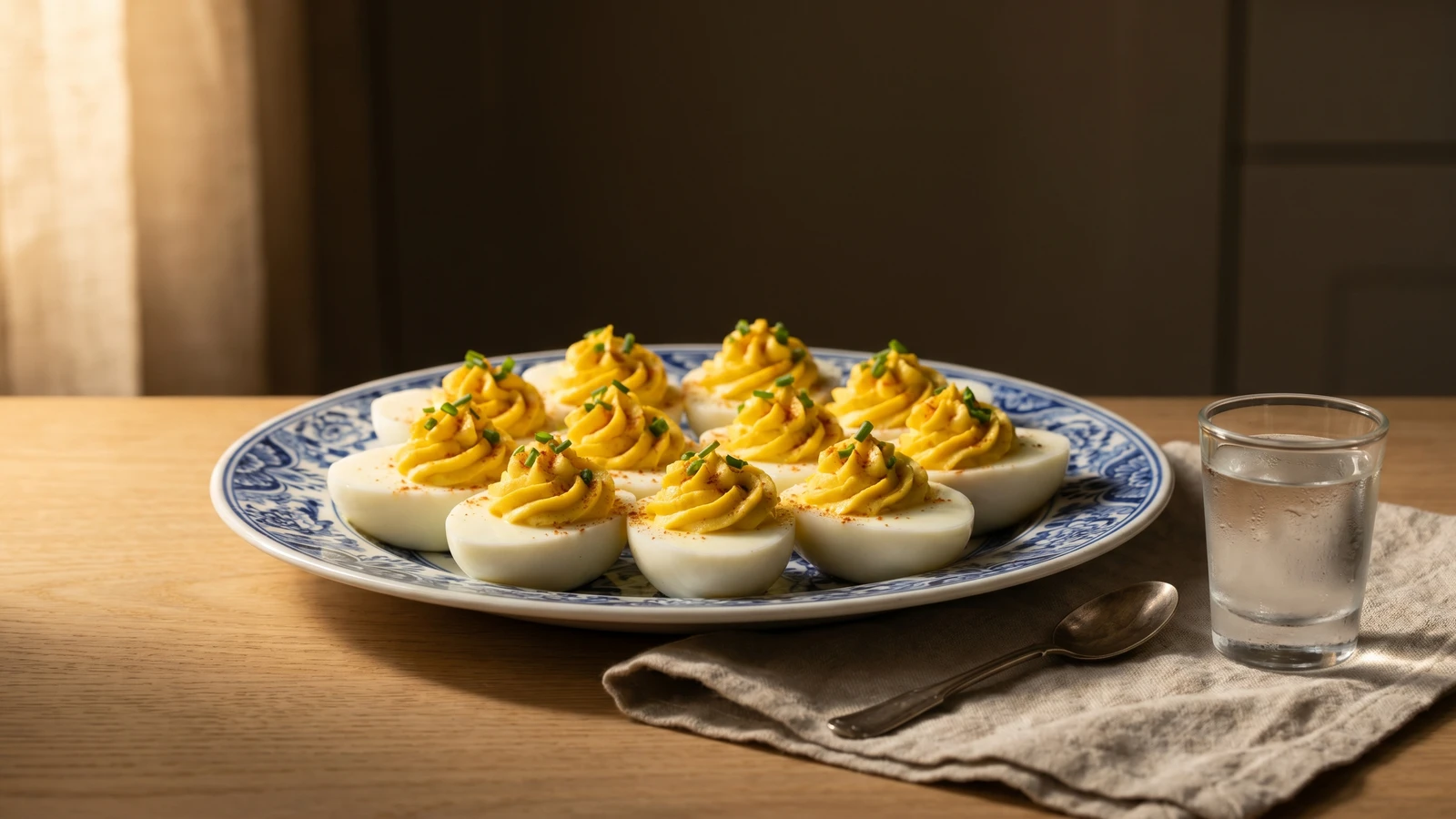
The name says it plainly: filled eggs, carried to every Dutch birthday table with mustard, mayonnaise, a little kerrie, and the cheerful modesty of a dish that always disappears first.
Every Dutch birthday has its geography. The chairs form a circle, the coffee comes first, the cake follows, and somewhere between the second round of congratulations and the aunt who has opinions about traffic, a plate of gevulde eieren appears. Nobody announces them. They don't need announcing. Hands simply move toward the plate.
The name already tells you the whole trick: gevulde eieren, filled eggs. No hidden Latin procession here, no grand voyage in the word itself. But let me tell you a secret: the little spoonful of kerrie, curry powder, is where the Dutch cupboard begins whispering about older routes. This is the birthday version of our spice history, not a grand feast, just a yellow pinch folded into yolk and mayonnaise because somebody's grandmother knew it made the filling warmer, rounder, less timid.
The method is simple, and it should stay that way. Hou het altijd simpel, always keep it simple. Boil the eggs gently so the yolks stay clean and yellow, mash them while they're still cooperative, sharpen them with mustard, loosen them with mayonnaise, then pipe or spoon the filling back into the whites. The paprika on top is not theatre. It's the small red flag that tells every Dutch guest: yes, these are the proper ones.
Stuffed eggs have a long European history, with seasoned yolk mixtures appearing in medieval and early modern cookery, but the Dutch gevulde ei became a familiar household party dish in the twentieth century as mayonnaise, refrigerators, and cold buffets entered ordinary kitchens. The Dutch version often includes kerriepoeder, curry powder, a quiet trace of the colonial and Indo-Dutch spice cupboard settling into everyday food. By the postwar decades, gevulde eieren had become a standard hapje, a small bite, for birthdays, potlucks, and family gatherings where food had to be made ahead and carried proudly on a plate.
Quantity
12
Quantity
6 tablespoons
Quantity
2 teaspoons
Quantity
1 teaspoon
Quantity
1 teaspoon
Quantity
1/4 teaspoon
plus more to taste
Quantity
to taste
freshly ground
Quantity
as needed
for dusting
Quantity
1 tablespoon
finely chopped
| Ingredient | Quantity |
|---|---|
| large eggs | 12 |
| mayonnaise | 6 tablespoons |
| Dutch mustard or Dijon mustard | 2 teaspoons |
| curry powder (kerriepoeder) | 1 teaspoon |
| white wine vinegar or pickle juice | 1 teaspoon |
| fine saltplus more to taste | 1/4 teaspoon |
| white pepperfreshly ground | to taste |
| sweet paprikafor dusting | as needed |
| chives (optional)finely chopped | 1 tablespoon |
Put the eggs in a saucepan in a single layer and cover with cold water by two centimetres. Bring to a gentle boil, then lower the heat and simmer for 10 minutes. Don't let them clatter about like loose change; rough boiling cracks shells and gives the yolks that sulking grey edge.
Lift the eggs into a bowl of cold water and leave them for 10 minutes. Tap each egg all over, then peel under a thin trickle of water if the shell is stubborn. A smooth white half is not vanity here; it gives the filling a proper little boat to sit in.
Halve the eggs lengthwise with a sharp knife, wiping the blade between cuts if you want tidy edges. Pop the yolks into a bowl and set the whites on a serving plate or in a covered container. If a white tears, fill it anyway. Dutch birthday food is judged by whether it gets eaten, not whether it poses.
Mash the yolks with a fork until fine, then stir in the mayonnaise, mustard, curry powder, vinegar or pickle juice, salt, and white pepper. Taste before you add more salt. The mustard should wake the yolk, the vinegar should keep the mayonnaise from feeling heavy, and the kerrie should hum in the background rather than take the room.
Spoon the yolk cream into the egg whites, or pipe it with a star nozzle if the family expects ceremony. Fill generously, but don't mound it so high that the eggs roll over on the plate. A gevulde ei should be picked up with confidence.
Dust the eggs lightly with sweet paprika and scatter over chives if you're using them. Cover and chill for at least 15 minutes before serving. Cold firms the filling and lets the curry and mustard settle into the yolk, which is why these are better made before the doorbell starts ringing.
1 serving (about 30g)
Culinary guides, cultural storytelling, and the editorial depth that makes cooking meaningful.
Discover Culinary ExplorerChef Joost
The name means ox sausage, but the real story is Amsterdam itself: cattle trade, Jewish butchers, VOC spices, and raw beef sliced thin with onion.

Chef Joost
The little yellow onion on the Amsterdam borrel board looks modest, until vinegar, turmeric, and patience turn it into the sharp bite that wakes cheese, herring, and sausage.

Chef Joost
The bear's claw of the northern snackbar: a seasoned gehaktbal, Dutch meatball, cut into thick discs, skewered with onion, fried until the edges catch, then dragged through peanut sauce.

Chef Joost
The name points to the drink, not the mood: bitterballen are crisp little balls of beef ragout made for the borrel table, mustard beside them, fingers slightly burned by impatience.