Culinary Explorer

A cooking platform built around craft, culture, and the stories behind what we eat.
Discover Culinary Explorer
Gerupfter

Gerupfter

Created by

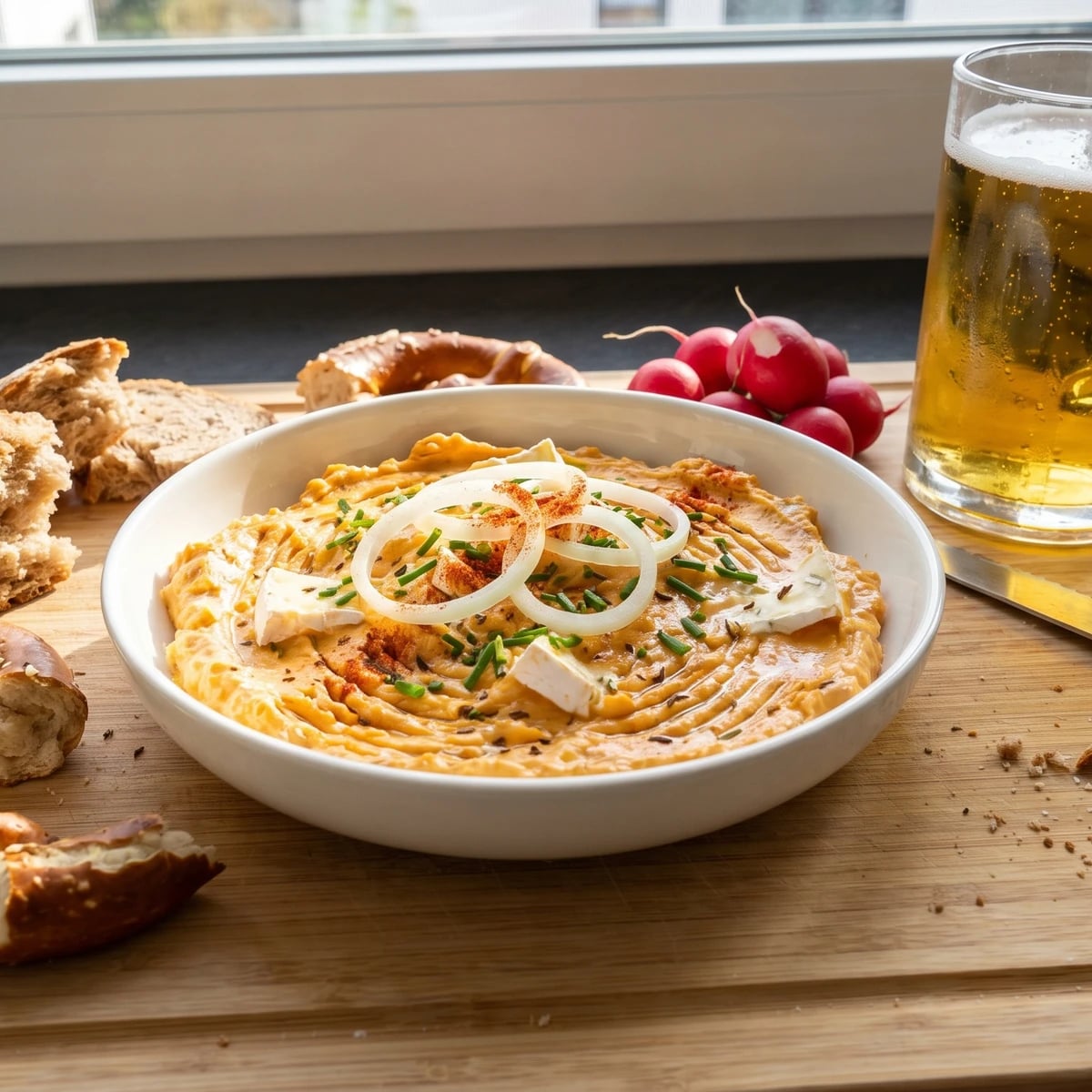
Franconia's cheese spread starts with ripe Camembert and your hands, not a machine: pull it apart, mash it gently, and leave some body in it.

Appetizers & Snacks
German
Game Day
Picnic
Make Ahead
20 min
Active Time
0 min cook50 min total
Yield6 servings

Gerupfter belongs to Franconia's Brotzeit table, the bread-and-cold-plate meal that does the honest work between lunch and supper. It sits beside rye bread, radishes, onions, and a Seidla, the Franconian half-litre beer. Bavaria has Obatzda. Franconia has Gerupfter. Same family, different hand.

The name tells you the method: gerupft, plucked apart. I don't put the cheese in a food processor. You pull ripe Camembert apart with a fork or your fingers, then mash it with soft butter until it spreads but still has small pieces of rind and cheese running through it. Make it smooth like factory paste and you've lost the dish. Nicht aus dem Glas.

The regions split on the glass of beer and the softness. Around Munich, Obatzda often takes a splash of beer and sometimes cream cheese. In Franconia I keep it tighter, cheese-forward, with onion, paprika, and caraway doing their work without drowning the Camembert. Im Norden anders, im Süden anders, and even the cheese spread has borders.

The rule is simple: the cheese and butter must be at room temperature before you start. Cold butter smears in lumps and cold Camembert breaks greasy instead of binding; warm enough, the fat takes the paprika and caraway evenly, and the onion stays sharp on top instead of turning the whole bowl sour. Rest it briefly, taste it, then serve it with bread that can stand up to it. Schön ist, was schmeckt.

Gerupfter is the Franconian relative of Bavaria's Obatzda, a beer-garden cheese spread that became widely associated with Katharina Eisenreich of the Bräustüberl in Weihenstephan near Freising in the 1920s. The older beer-garden custom was shaped by King Maximilian I Joseph's 1812 rules for Munich beer cellars, which allowed beer service under the chestnut trees while guests brought their own bread and cold food. Franconia kept its own name and texture: Gerupfter means plucked or pulled apart, and the hand-torn cheese is the point.

The technique, the tradition, and the story behind every dish.

Discover Culinary Explorer

Ingredients

ripe Camembert

Quantity

300g

at room temperature

unsalted butter

Quantity

80g

softened

yellow onion

Quantity

1 small

very finely chopped, plus extra rings to serve

sweet paprika

Quantity

1 teaspoon

hot paprika (optional)

Quantity

1/4 teaspoon

caraway seeds

Quantity

1/2 teaspoon

lightly crushed

Franconian lager or wheat beer (optional)

Quantity

1 tablespoon

mild mustard

Quantity

1 teaspoon

black pepper

Quantity

to taste

freshly ground

salt

Quantity

to taste

chives (optional)

Quantity

small handful

snipped

radishes, rye bread, and pretzels

Quantity

to serve

Equipment Needed

  • Medium mixing bowl
  • Fork or potato masher
  • Small knife for onion

Instructions

  1. 1

    Warm the cheese

    Take the Camembert and butter out of the refrigerator 45 to 60 minutes before mixing. They should be soft but not oily. Cold cheese breaks into hard crumbs and cold butter stays in pale streaks; room-temperature fat binds the spread without turning it greasy.

    Use ripe Camembert that gives slightly under the thumb and smells full, not sharp with ammonia. A young cheese tastes flat; an overripe one bullies the onion and paprika.
  2. 2

    Pluck the Camembert

    Pull the Camembert apart into a bowl with a fork or clean fingers, rind and all. The rind belongs in the bowl because it carries flavour and gives the finished spread its Franconian texture. Weggeworfen wird nichts.

  3. 3

    Mash with butter

    Add the softened butter and mash with a fork until the mixture spreads but still shows small pieces of cheese. Stop before it becomes smooth. Gerupfter is plucked and mashed, not whipped; too much force turns good cheese into canteen paste.

  4. 4

    Season the bowl

    Work in the sweet paprika, hot paprika if using, crushed caraway, mustard, black pepper, and a small pinch of salt. Add the beer only if the mixture is too stiff, one spoon is enough. Beer loosens the fat and carries the paprika, but too much makes the spread slump on the bread.

  5. 5

    Fold in onion

    Fold in the finely chopped onion last, gently and evenly. Onion goes in late because salt and time pull water from it; mix it too early and the bowl turns wet and harsh before it reaches the table. Würzen, Fett, Salz zum Schluss.

  6. 6

    Rest and serve

    Let the Gerupfter stand 20 to 30 minutes at cool room temperature so the paprika stains the butter orange and the caraway opens up. Taste once more for salt, then pile it into a low bowl and finish with onion rings and chives. Serve with rye bread, pretzels, radishes, and a cold beer.

Chef Tips

  • Don't use low-fat cheese. The fat is the carrier for paprika, caraway, and onion, and without it the spread tastes thin and chalky.
  • Chop the onion very fine and add it late. Big pieces taste raw and wet; fine onion cuts through the cheese without taking over the bowl.
  • If making it ahead, keep the chopped onion separate and fold it in before serving. The cheese can rest, the onion should stay sharp.
  • Serve it with serious bread. Dark rye, Bauernbrot, or a proper pretzel gives the salt and chew this spread needs; soft sandwich bread gives up immediately.

Advance Preparation

  • Mash the cheese, butter, paprika, caraway, mustard, and pepper up to one day ahead, then cover and refrigerate.
  • Bring the spread back to room temperature for 45 minutes before serving, then fold in the onion. Cold Gerupfter tastes muted and tears the bread.
  • Leftovers keep one day in the refrigerator, covered. After that the onion takes over, and not in a helpful way.

Frequently Asked Questions

Nutrition Information

1 serving (about 150g)

Calories
375 calories
Total Fat
25 g
Saturated Fat
16 g
Trans Fat
1 g
Unsaturated Fat
8 g
Cholesterol
70 mg
Sodium
655 mg
Total Carbohydrates
25 g
Dietary Fiber
2 g
Sugars
3 g
Protein
12 g

Note: Chef personas and recipes are created with AI assistance. Cook with care: follow safe food-handling practices, check doneness with a thermometer when needed, and adapt for allergies and your kitchen.

Where cooking meets culture.

Culinary guides, cultural storytelling, and the editorial depth that makes cooking meaningful.

Discover Culinary Explorer

More from Brotzeit: The Bavarian Grazing Board

Browse the full collection