
Chef Dean
German Braised Red Cabbage
Silky ribbons of red cabbage braised with tart apples, warm spices, and a splash of vinegar until they surrender into a glossy, sweet-sour masterpiece worthy of any holiday table.
A cooking platform built around craft, culture, and the stories behind what we eat.
Created by
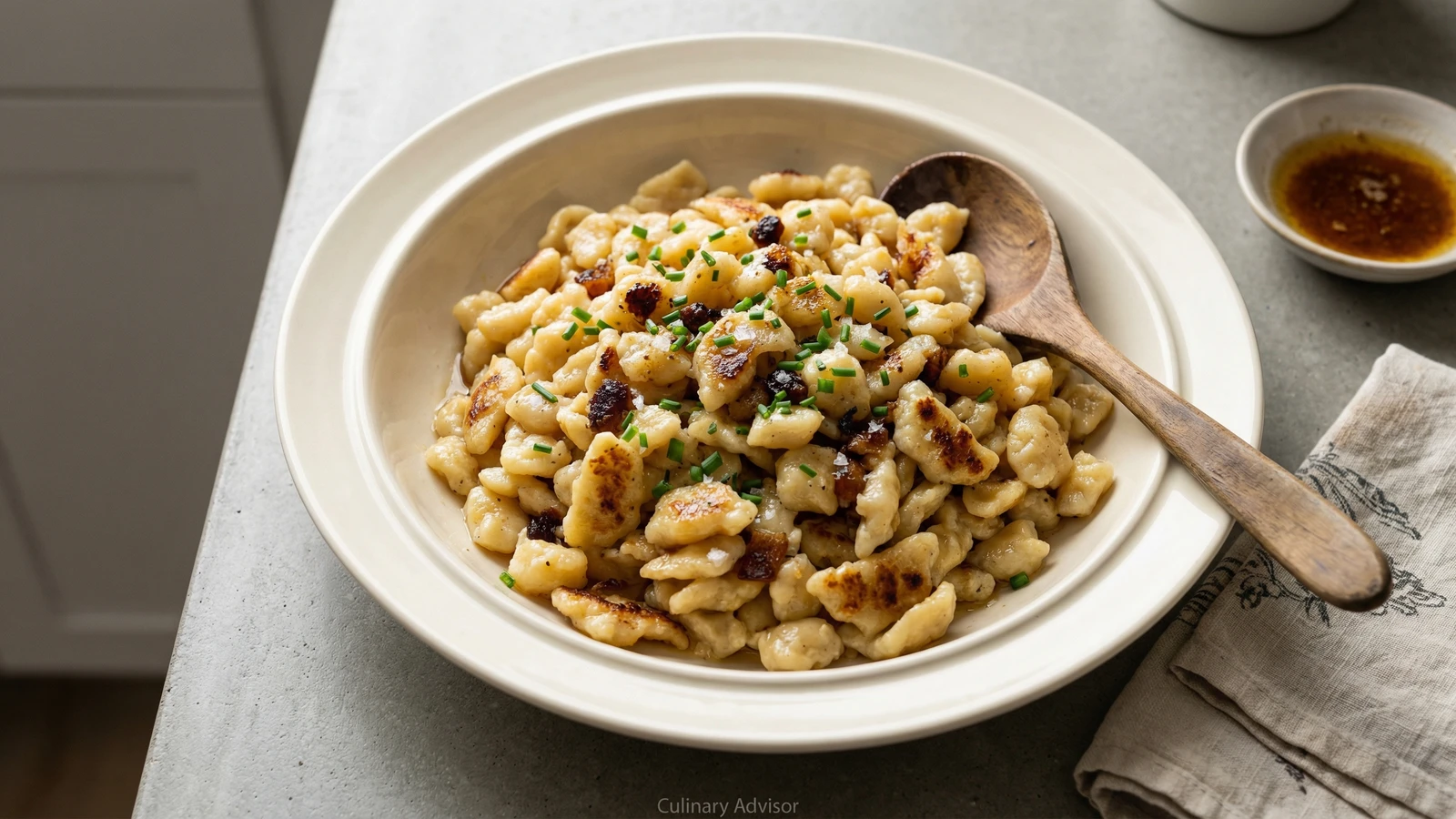
Pillowy German egg dumplings kissed golden in nutty browned butter, their edges crisped while centers stay impossibly tender. The pride of Milwaukee supper clubs and the side dish that steals the show.
Walk into any supper club from Milwaukee to Madison and you'll find spaetzle on the menu, often hiding in the shadow of the Friday fish fry or the Saturday prime rib. This is immigrant food made good, the dish that German settlers carried in their memories across the Atlantic and planted firmly in Wisconsin soil.
The word means 'little sparrows' in German, though I've never understood why. These dumplings look nothing like birds. They're irregular, rustic, shaped by the holes of whatever implement you push them through. That imperfection is their beauty. No two batches look exactly alike, and that's precisely the point.
Brown butter transforms humble spaetzle into something transcendent. Those milk solids toasting in the pan create a nuttiness that plain melted butter cannot replicate. When the dumplings hit that amber liquid and begin to crisp at the edges while staying soft within, you've achieved something worth driving to Wisconsin for.
I've watched church ladies in Milwaukee make these by the hundreds for potluck dinners, their hands working the batter with the confidence of generations. They don't measure. They feel when the batter is right. You'll get there too, after your third or fourth batch. Until then, trust the recipe. Trust your eyes and nose. Trust that this dish, which has fed families through depression and war and ordinary Tuesday nights, will not let you down.
Quantity
2 cups (250g)
Quantity
1 teaspoon
Quantity
1/4 teaspoon
freshly grated
Quantity
4
at room temperature
Quantity
1/2 cup
at room temperature
Quantity
8 tablespoons (1 stick/113g)
Quantity
2 tablespoons
finely snipped
Quantity
for finishing
Quantity
to taste
freshly cracked
| Ingredient | Quantity |
|---|---|
| all-purpose flour | 2 cups (250g) |
| fine sea salt | 1 teaspoon |
| nutmegfreshly grated | 1/4 teaspoon |
| large eggsat room temperature | 4 |
| whole milkat room temperature | 1/2 cup |
| unsalted butter | 8 tablespoons (1 stick/113g) |
| fresh chivesfinely snipped | 2 tablespoons |
| flaky sea salt | for finishing |
| black pepperfreshly cracked | to taste |
Whisk together the flour, salt, and nutmeg in a large bowl. Create a well in the center. In a separate bowl, beat the eggs with the milk until uniform. Pour the wet ingredients into the well and stir vigorously with a wooden spoon until the batter is smooth, elastic, and pulls away from the sides of the bowl. It should be thick enough to hold its shape briefly on a spoon, but loose enough to drip slowly. This takes about three minutes of determined stirring.
Cover the bowl with a kitchen towel and let the batter rest for fifteen minutes at room temperature. This allows the gluten to relax and the flour to fully hydrate, producing more tender dumplings. Don't skip this. Impatience here costs you texture.
Bring a large pot of generously salted water to a rolling boil. The water should taste pleasantly salty, like the sea. Set a large bowl of ice water beside the stove. Have your spaetzle maker, colander with large holes, or a flat wooden cutting board ready at the stovetop.
Working in batches, press the batter through a spaetzle maker directly into the boiling water, or use a colander with quarter-inch holes held over the pot, pushing the batter through with a rubber spatula. The dumplings will sink, then float to the surface within sixty to ninety seconds. That float tells you they're done.
As each batch floats, use a slotted spoon or spider strainer to transfer the spaetzle immediately to the ice bath. This stops the cooking and prevents the dumplings from becoming gummy. Once cooled, about thirty seconds, transfer to a clean kitchen towel to drain. Repeat with remaining batter.
Cut the butter into tablespoon-sized pieces and place in a large skillet over medium heat. Swirl occasionally as the butter melts, foams, and the milk solids begin to toast on the bottom of the pan. Watch carefully. The butter will progress from pale yellow to golden to a rich amber, releasing an aroma of toasted hazelnuts. This takes about four minutes. The moment you see brown flecks and smell that nutty perfume, you're there.
Add all the drained spaetzle to the brown butter. Toss to coat, then spread in a single layer and let them sit undisturbed for two minutes to develop golden spots on the bottom. Toss again and repeat. You want some dumplings crispy at the edges, others soft and pillowy in the center. This contrast is the whole point. Total pan time is about five minutes.
Remove from heat and shower with the snipped chives. Season with flaky sea salt and several grinds of black pepper. Taste one dumpling. Adjust seasoning if needed. Transfer to a warm serving bowl and bring immediately to the table. Spaetzle waits for no one.
1 serving (about 200g)
Culinary guides, cultural storytelling, and the editorial depth that makes cooking meaningful.
Discover Culinary ExplorerChef Dean
Silky ribbons of red cabbage braised with tart apples, warm spices, and a splash of vinegar until they surrender into a glossy, sweet-sour masterpiece worthy of any holiday table.
Chef Juliette
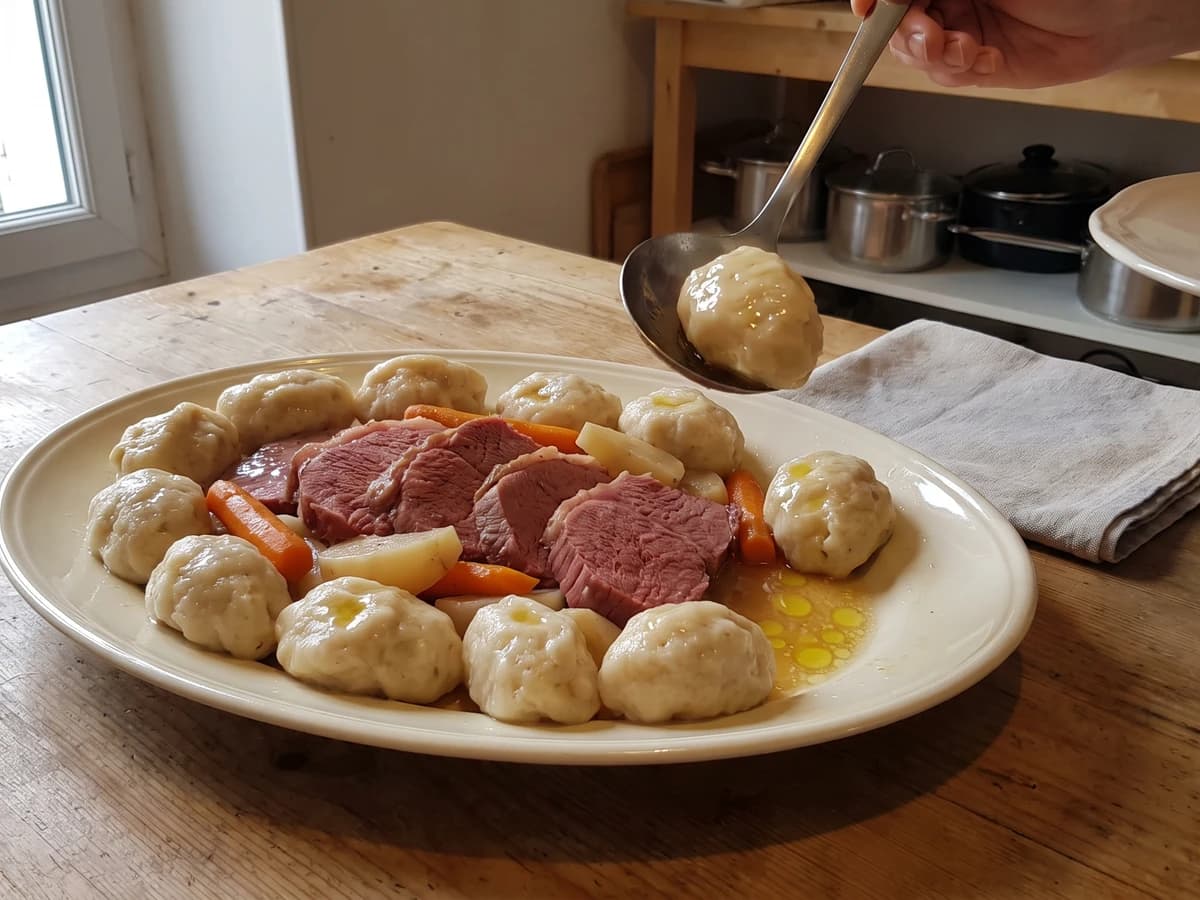
Boulettes au suif, poached beside salt beef, turn equal weights of flour and finely chopped suet into tender, rich dumplings. Keep the beef liquor at a bare tremble and the old garnish works beautifully at home.

Chef Juliette
Bread, flour, frangipane, and rice become four cool, supple panades for binding forcemeats, each changing body and flavor while preserving tenderness. The finest Mousselines need none, and knowing that distinction is the lesson.

Chef Juliette
Panade au pain is bread, milk, salt, heat, and attention: stir until the paste releases cleanly, butter it against a skin, and you have the quiet binder behind tender French farces.