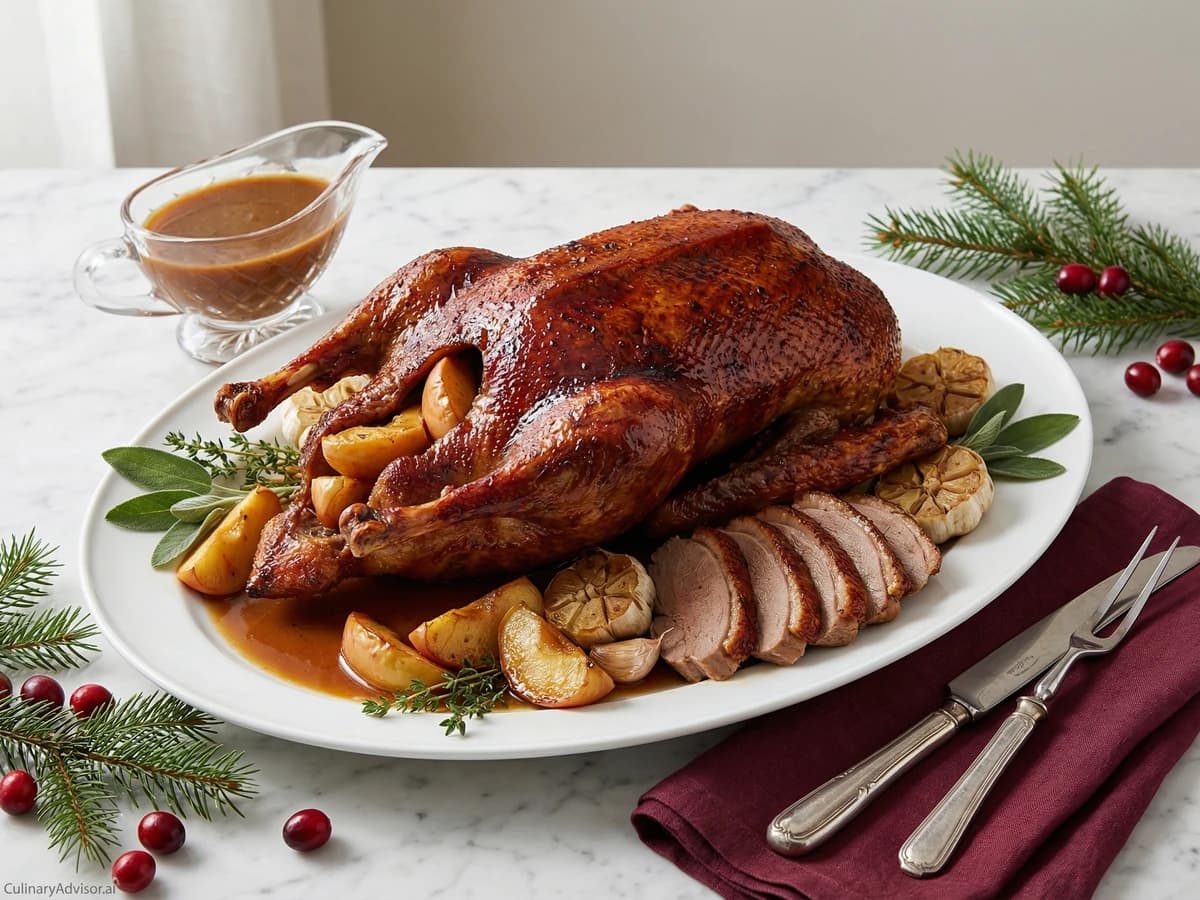
A magnificent pot roast transformed by days of vinegar-spice marination into fork-tender slices bathed in dark, glossy gingersnap gravy. This is the centerpiece your Christmas table deserves.
Main Dishes
German
Christmas
45 min
Active Time
3 hr 30 min cook•PT5D4H15M total
Yield8-10 servings
Sauerbraten translates to 'sour roast,' and that acidity is the whole point. German cooks discovered centuries ago that tough cuts of beef, submerged in spiced vinegar for days, emerge transformed. The acid breaks down collagen. The spices penetrate deep. What starts as an unforgiving bottom round becomes something you can cut with a fork.
This dish requires patience, not skill. You'll spend twenty minutes assembling a marinade, then walk away for three to seven days while chemistry does the work. The braising takes another three hours, largely unattended. Your reward is a roast that feeds a crowd, improves when made ahead, and delivers the kind of complex, tangy-sweet flavor that makes guests ask what your secret is.
I've served this at Christmas gatherings for decades. The tradition runs deep in German households, where Sauerbraten anchors the holiday table alongside red cabbage and potato dumplings. The gingersnap gravy is non-negotiable. Those cookies crumbled into the braising liquid create a sauce of impossible richness: sour, sweet, warm with spice, dark as mahogany. Nothing else tastes quite like it.
Make the full commitment. Start your marinade five days before you plan to serve. The transformation is worth every hour of waiting.
The technique, the tradition, and the story behind every dish.
Combine the vinegar, wine, and water in a large saucepan. Add the sliced onions, carrots, celery, bay leaves, peppercorns, cloves, juniper berries, allspice, mustard seeds, salt, and sugar. Bring to a boil, then reduce heat and simmer for five minutes. Remove from heat and let cool completely. This step blooms the spices and integrates their flavors. The marinade must be cold before it touches the meat, or you'll begin cooking the exterior prematurely.
Crush juniper berries with the flat of a knife to release their piney, gin-like fragrance. If you can't find them, add a splash of gin to the marinade instead.
2
Submerge the beef
Place the roast in a deep ceramic, glass, or food-safe plastic container. Pour the cooled marinade over the meat. The liquid should cover at least two-thirds of the roast. If it doesn't, add equal parts vinegar and water until it does. Cover tightly and refrigerate. Turn the roast once daily, spooning marinade over any exposed surfaces. The meat will darken and firm slightly as the acid works. This is exactly what you want.
Never use aluminum or reactive metal containers. The acid will leach metallic flavors into your roast and potentially damage the vessel.
3
Marinate for 3-7 days
The minimum is three days. Five is ideal. Seven is the outer limit before the texture becomes mealy. Patience here is the entire point of the dish. Each day you'll notice the meat taking on a deeper color and the aroma in your refrigerator becoming more complex. Trust the process. This slow transformation is what separates authentic Sauerbraten from an ordinary pot roast.
4
Remove and dry the beef
Lift the roast from the marinade and pat it thoroughly dry with paper towels. This step is crucial. Wet meat steams rather than sears. Reserve the marinade and strain it, separating the liquid from the vegetables and spices. Keep both. The liquid becomes your braising medium. The vegetables add body to your gravy.
5
Sear the roast
Heat the oil or lard in a large Dutch oven over high heat until shimmering and nearly smoking. Season the roast generously with salt and pepper. Sear on all sides until a deep brown crust develops, about four minutes per side. Don't rush this. The Maillard reaction happening on the surface builds flavor that carries through the entire dish. When properly seared, the meat should release easily from the pot without sticking. Transfer to a plate.
Lard was traditional and remains superior for this sear. The high smoke point and subtle richness complement the tangy meat beautifully.
6
Build the braising base
Reduce heat to medium. Add the reserved vegetables from the marinade to the pot. Cook, stirring occasionally, until they take on some color and begin to soften, about eight minutes. Add the tomato paste and stir for one minute until it darkens slightly and loses its raw edge. The tomato paste adds depth and helps the gravy achieve that characteristic mahogany color.
7
Add liquids and return beef
Pour in the reserved marinade liquid and the beef stock. Bring to a simmer, scraping up any browned bits stuck to the bottom of the pot. These fond remnants are concentrated flavor. Return the seared roast to the pot. The liquid should come about halfway up the sides of the meat. If it doesn't, add more stock. Cover with a tight-fitting lid.
8
Braise low and slow
Transfer the pot to a 300°F oven. Braise for three to three and a half hours, turning the roast once at the halfway mark. The meat is done when a fork slides in and out with almost no resistance. The internal temperature should reach 195-205°F for proper collagen breakdown. Remove the roast to a cutting board and tent loosely with foil. Let it rest for at least twenty minutes while you finish the gravy.
Low oven temperature matters. Above 325°F, the exterior toughens before the interior becomes tender. Patience yields silk.
9
Strain and reduce the braising liquid
Pour the braising liquid through a fine-mesh strainer into a large saucepan, pressing on the solids to extract every drop of flavor. Discard the spent vegetables. Skim off as much surface fat as you can with a ladle or fat separator. Bring the liquid to a simmer over medium heat.
10
Add the gingersnaps
Whisk in the crushed gingersnap cookies and brown sugar. The cookies will dissolve and thicken the gravy while adding their signature sweet-spice character. Simmer for ten minutes, whisking occasionally, until the gravy coats the back of a spoon. Taste and adjust seasoning. The flavor should balance sour, sweet, and savory in equal measure. Add a splash of vinegar if it needs more tang, or a pinch more brown sugar if it's too sharp.
Use proper gingersnaps, crisp and heavily spiced. Soft ginger cookies won't dissolve properly and lack the intensity this gravy demands.
11
Slice and serve
Slice the rested roast against the grain into half-inch slices. Arrange on a warm platter and spoon the gingersnap gravy generously over the top. Serve the remaining gravy in a boat alongside. In German tradition, this anchors a plate with braised red cabbage and potato dumplings. The sweet-sour cabbage echoes the roast's acidity, while the dumplings soak up every drop of that remarkable gravy.
Chef Tips
•Bottom round and rump roast are traditional cuts because they're tough, lean, and benefit enormously from the acid marinade. Don't substitute a tender cut like tenderloin, which will turn to mush.
•The gravy freezes beautifully. Make a double batch of the gingersnap sauce to store for future pot roasts or pork dishes.
•German cooks traditionally serve Sauerbraten with Kartoffelklöße (potato dumplings) and Rotkohl (braised red cabbage). Spätzle makes an excellent alternative if dumplings feel too ambitious.
•A medium-bodied German Spätburgunder (Pinot Noir) complements the tangy gravy beautifully. For beer, reach for a Märzen or Dunkel.
•Leftover sliced Sauerbraten makes exceptional sandwiches on dark rye bread with a smear of grainy mustard and a spoonful of the reheated gravy.
Advance Preparation
•The marinade can be made up to one week ahead and refrigerated until ready to use.
•The fully cooked roast improves dramatically when made one to two days before serving. Cool completely, slice, arrange in a baking dish, cover with gravy, and refrigerate. Reheat covered at 300°F for 45 minutes.
•Gravy can be made separately up to five days ahead and refrigerated, or frozen for up to three months.
•For Christmas dinner, start your marinade the Saturday before. Braise on Wednesday or Thursday. Slice, store with gravy, and simply reheat on the day.
Frequently Asked Questions
Nutrition Information
1 serving (about 220g)
Calories
745 calories
Total Fat
39 g
Saturated Fat
13 g
Trans Fat
0 g
Unsaturated Fat
22 g
Cholesterol
170 mg
Sodium
2250 mg
Total Carbohydrates
18 g
Dietary Fiber
1.5 g
Sugars
9 g
Protein
61 g
Where cooking meets culture.
Culinary guides, cultural storytelling, and the editorial depth that makes cooking meaningful.