
Chef Lupita
Acitrón de Cidra Conventual
Puebla's convent-style acitrón, made from cidra peel instead of endangered biznaga, built through repeated syrup soakings until the cubes turn firm, translucent, and ready for rosca or chiles en nogada.
A cooking platform built around craft, culture, and the stories behind what we eat.
Created by
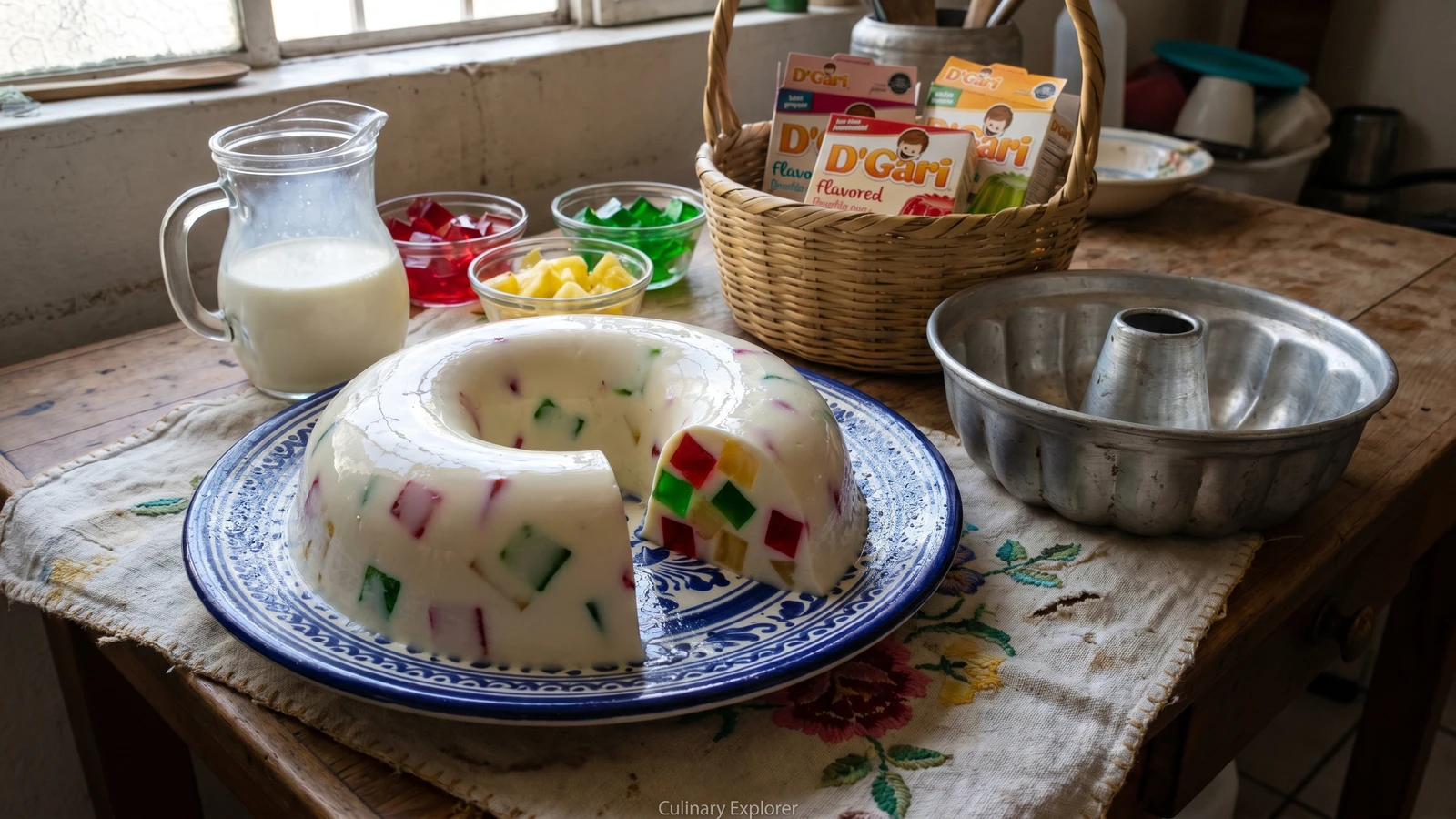
Ciudad de Mexico's birthday-table gelatin, built from jewel-colored fruit cubes and a creamy milk base, the cold dessert every aunt brings because it feeds many and disappears fast.
Ciudad de Mexico, Valle de Mexico, owns this version of gelatina de mosaico: bright cubes of fruit gelatin held inside a white milk gelatin, unmolded at the table for birthdays, school parties, baptisms, and neighborhood potlucks. This is comida de fiesta capitalina, not a chile dish, not a mole, not a taco. This is also Mexican food. This is a 32-state cuisine.
The defining ingredient is grenetina, plain gelatin, handled with patience. You bloom it in cold water first so it hydrates evenly, then dissolve it gently. If you throw dry grenetina into hot milk, it clumps like a bad decision. The colored cubes should be firm enough to cut cleanly, and the milk base should taste of evaporated milk, condensed milk, and vanilla, sweet but not foolish.
I learned this from women in Ciudad de Mexico who could feed forty children from one ring mold and still have coffee ready for the adults. At La Merced, the señoras selling gelatin molds will tell you the same thing: chill each layer properly, oil the mold lightly, and don't rush the unmolding. No me vengas con atajos. Cold desserts have discipline too.
My mother kept a version in her notebook, written under 'cumpleaños.' She used strawberry, lime, and pineapple because those boxes were always at the tienda. She underlined one sentence twice: 'Cubos bien fríos antes de la leche.' The cubes must be cold before the milk goes in. Así se hace y punto.
Gelatina de mosaico became common in Mexican urban homes in the mid-20th century, especially after powdered flavored gelatin and canned milks became widely available through neighborhood tiendas and supermarkets in the 1940s and 1950s. In Ciudad de Mexico, it fit perfectly into the capital's party economy: inexpensive, colorful, made ahead, easy to transport, and able to feed many people from one mold. Regional versions later spread across the country, with some families adding rompope, canned fruit, or yogurt, but the capitalina version remains tied to the milk base and clean-cut colored cubes.
Quantity
1 box (3 ounces)
Quantity
1 box (3 ounces)
Quantity
1 box (3 ounces)
Quantity
3 cups
divided
Quantity
3 cups
divided
Quantity
1 can (12 ounces)
Quantity
1 can (14 ounces)
Quantity
1 cup
Quantity
1 cup
Quantity
1 tablespoon
Quantity
3 tablespoons
Quantity
1/2 cup
Quantity
a few drops
for the mold
| Ingredient | Quantity |
|---|---|
| strawberry flavored gelatin | 1 box (3 ounces) |
| lime flavored gelatin | 1 box (3 ounces) |
| pineapple flavored gelatin | 1 box (3 ounces) |
| boiling waterdivided | 3 cups |
| cold waterdivided | 3 cups |
| evaporated milk | 1 can (12 ounces) |
| sweetened condensed milk | 1 can (14 ounces) |
| media crema or heavy cream | 1 cup |
| whole milk | 1 cup |
| Mexican vanilla extract | 1 tablespoon |
| unflavored gelatin powder (grenetina) | 3 tablespoons |
| cold water for blooming | 1/2 cup |
| neutral oilfor the mold | a few drops |
Prepare each flavored gelatin in its own shallow container. For each box, dissolve the powder in 1 cup boiling water, stirring until no grains remain, then stir in 1 cup cold water. Use less water than some box directions say because you need firm cubes, not trembling pieces that collapse. Refrigerate until fully set, at least 3 hours.
Run a thin knife through each set gelatin to make 1-inch cubes. Lift them gently with a spatula and keep the colors separate or lightly mixed in a cold bowl. The cubes should have clean edges and bounce lightly when moved. If they smear, they are not cold enough. Put them back in the refrigerator.
Sprinkle the unflavored gelatin powder evenly over 1/2 cup cold water in a small bowl. Let it sit for 8 to 10 minutes until it swells and looks like wet sand. This is blooming. It is not decoration. It prevents hard little grains from showing up in the milk base later.
In a blender, combine evaporated milk, sweetened condensed milk, media crema, whole milk, and Mexican vanilla. Blend until smooth. Taste it now. It should be sweet and milky because the colored cubes are mostly water and will soften the sweetness once everything sets together.
Set the bloomed grenetina over a small pan of barely simmering water or microwave it in short 10-second bursts, stirring between each one, until completely liquid. Do not boil it. Boiled grenetina loses strength and leaves a dull taste. Pour the liquid grenetina into the blender with the milk base and blend for 15 seconds.
Rub a few drops of neutral oil inside a 10-cup ring mold, then wipe it almost dry with a paper towel. You want release, not oil flavor. Scatter the cold colored cubes into the mold, mixing the red, green, and yellow so every slice looks like stained glass. Pour the milk base slowly over the cubes. Tap the mold gently on the counter to settle the liquid into the gaps.
Cover the mold and refrigerate until fully set, at least 3 hours and preferably overnight. The center should feel firm when pressed lightly. Do not unmold early because you are impatient. Gelatina punishes impatience.
Dip the outside of the mold in warm water for 5 to 8 seconds, then dry it. Place a serving platter over the mold and invert in one confident motion. Shake gently until the gelatina releases. If it resists, dip again for 3 seconds. Slice with a thin knife and serve cold, with the colored cubes suspended cleanly in the creamy base. Recetas probadas y garantizadas.
1 serving (about 255g)
Culinary guides, cultural storytelling, and the editorial depth that makes cooking meaningful.
Discover Culinary ExplorerChef Lupita
Puebla's convent-style acitrón, made from cidra peel instead of endangered biznaga, built through repeated syrup soakings until the cubes turn firm, translucent, and ready for rosca or chiles en nogada.

Chef Lupita
Ciudad de México's Tulyehualco alegría is popped huautli folded into piloncillo honey, pressed with peanuts, pepitas, and raisins, then cut into the rectangular bars that built a pueblo's identity.

Chef Lupita
Oaxaca's pre-Columbian amaranth bar, popped on a hot comal and bound with piloncillo, honey, and the sacred Zapotec grain that the Spanish tried, and failed, to outlaw.

Chef Lupita
Querétaro's mercado candy of popped amaranto pressed with dark piloncillo syrup, pepitas, pecans, and cacahuate, a Bajío sweet that respects the seed before it decorates the table.