
Chef Klaus
Ahle Wurst
North Hesse's old sausage is cured, not cooked: coarse pork, pepper, garlic, and cold weeks in a chamber until the slice turns firm enough for rye and cider.
A cooking platform built around craft, culture, and the stories behind what we eat.

Created by
The Bavarian stuffed egg belongs on the Brotzeit board: firm whites, a buttery Bergkaese yolk filling, chives, mustard, and a radish slice for snap.
Gefüllte Eier bayerischer Art sit on the cold table: Brotzeit, the bread-and-snack meal, picnics, parish potlucks, and the Sunday spread before anyone starts pretending they only came for one. In Bavaria I make them with butter, Bergkäse, chives, mustard, and radish. In the north they lean sharper with fish, pickle, or more mayonnaise; in the Rhineland you may see remoulade. Im Norden anders, im Süden anders.
The egg decides the dish before the filling does. Start the eggs in cold water, bring them up gently, then cool them hard in cold water, because a shocked egg stops cooking and peels cleanly. Let them sit hot and the yolk rims green, the white turns rubbery, and you've made punishment in an eggshell.
The filling has one rule: mash the yolks while they're still fine and dry, then work in soft butter before the wetter things. Butter coats the yolk and carries the Bergkäse, so the filling tastes round without turning loose. Mayonnaise alone makes it slack. Nicht aus dem Glas is for sauce, but the point holds: don't let a packet or a bottle do the cook's work.
Pipe it if you like, spoon it if you don't. Finish with chives and thin radish, because the bite needs green and peppery red against the pale egg. Schön ist, was schmeckt.
Stuffed eggs entered German household cooking through the cold supper and buffet tradition of the 19th and early 20th centuries, when boiled eggs, butter, mustard, herbs, and cheese were practical larder foods for a table set ahead of time. The Bavarian version fits the Brotzeit culture of inns, farms, and beer gardens, where bread, cheese, radishes, cold meats, and eggs could make a meal without lighting the stove. Its regional mark is not excess, but the Alpine dairy note: butter and Bergkäse give the filling its Bavarian direction while radish ties it back to the beer-garden table.
Quantity
6
Quantity
35g
softened
Quantity
45g
finely grated
Quantity
2 teaspoons
Quantity
1 teaspoon
Quantity
1 tablespoon
Quantity
2 tablespoons, plus more
finely snipped
Quantity
1 small bunch
very thinly sliced
Quantity
to taste
Quantity
to taste
| Ingredient | Quantity |
|---|---|
| large eggs | 6 |
| unsalted buttersoftened | 35g |
| Bergkäsefinely grated | 45g |
| Bavarian sweet mustard or medium German mustard | 2 teaspoons |
| apple cider vinegar or white wine vinegar | 1 teaspoon |
| sour cream | 1 tablespoon |
| chivesfinely snipped | 2 tablespoons, plus more |
| radishesvery thinly sliced | 1 small bunch |
| fine salt | to taste |
| freshly ground black pepper | to taste |
Set the eggs in a single layer in a saucepan and cover them with cold water by 2cm. Bring the water just to a boil, cover the pan, take it off the heat, and leave the eggs 10 minutes. The gentle climb keeps the whites tender, while the covered rest sets the yolks without beating them grey.
Move the eggs straight into a bowl of very cold water and leave them 10 minutes. Cold stops the cooking and firms the white against the shell, so the peel comes away clean instead of tearing the egg. Tap all over, peel under a thin trickle of water, and dry them well.
Halve the eggs lengthwise and push the yolks through a sieve or mash them very fine with a fork. Work in the soft butter first, because fat coats the dry yolk and keeps the filling smooth before the mustard and sour cream loosen it. Stir in the Bergkäse, mustard, vinegar, sour cream, chives, salt, and pepper. Taste it now. Würzen, Fett, Salz zum Schluss.
Spoon or pipe the filling back into the egg whites, mounding it neatly but not fussing over it. If it feels stiff, stir in half a teaspoon of sour cream; if it feels loose, add a little more grated Bergkäse. The filling should hold a ridge, because a stuffed egg that slumps on the board has already lost the argument.
Top each egg half with a thin radish slice, more chives, and a small grind of black pepper. Chill at least 20 minutes before serving, because the butter firms and the filling sits properly in the white. Serve cold on a Brotzeit board with rye bread, cucumber, and a small dish of mustard.
1 serving (about 43g)
Culinary guides, cultural storytelling, and the editorial depth that makes cooking meaningful.
Discover Culinary ExplorerChef Klaus
North Hesse's old sausage is cured, not cooked: coarse pork, pepper, garlic, and cold weeks in a chamber until the slice turns firm enough for rye and cider.

Chef Klaus
Baden's Vesper spread is nothing more than quark, cream, onion, and chives, but the whole dish depends on controlling the whey so the bowl stays spoonable beside hot potatoes.
Chef Klaus
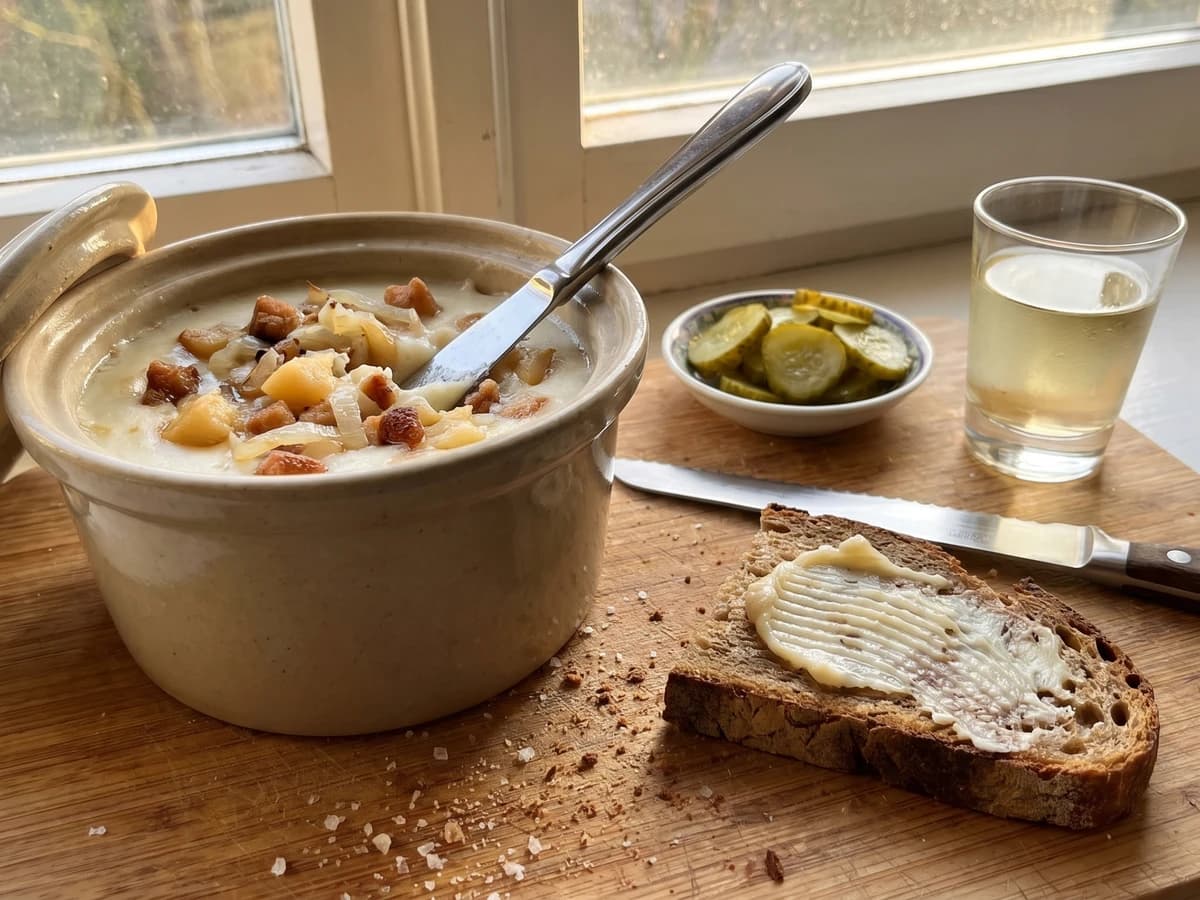
Baden's lard spread is thrift in a crock: pork fat rendered slowly, onion and apple added when the water is gone, and the crisp Grieben stirred back before it sets.

Chef Klaus
The Bavarian beer-garden salad that lives by the cut: thin sausage strips, raw onion, vinegar and oil, no cheese, rested long enough to taste like supper.