Chef Joost
Aardappelgratin
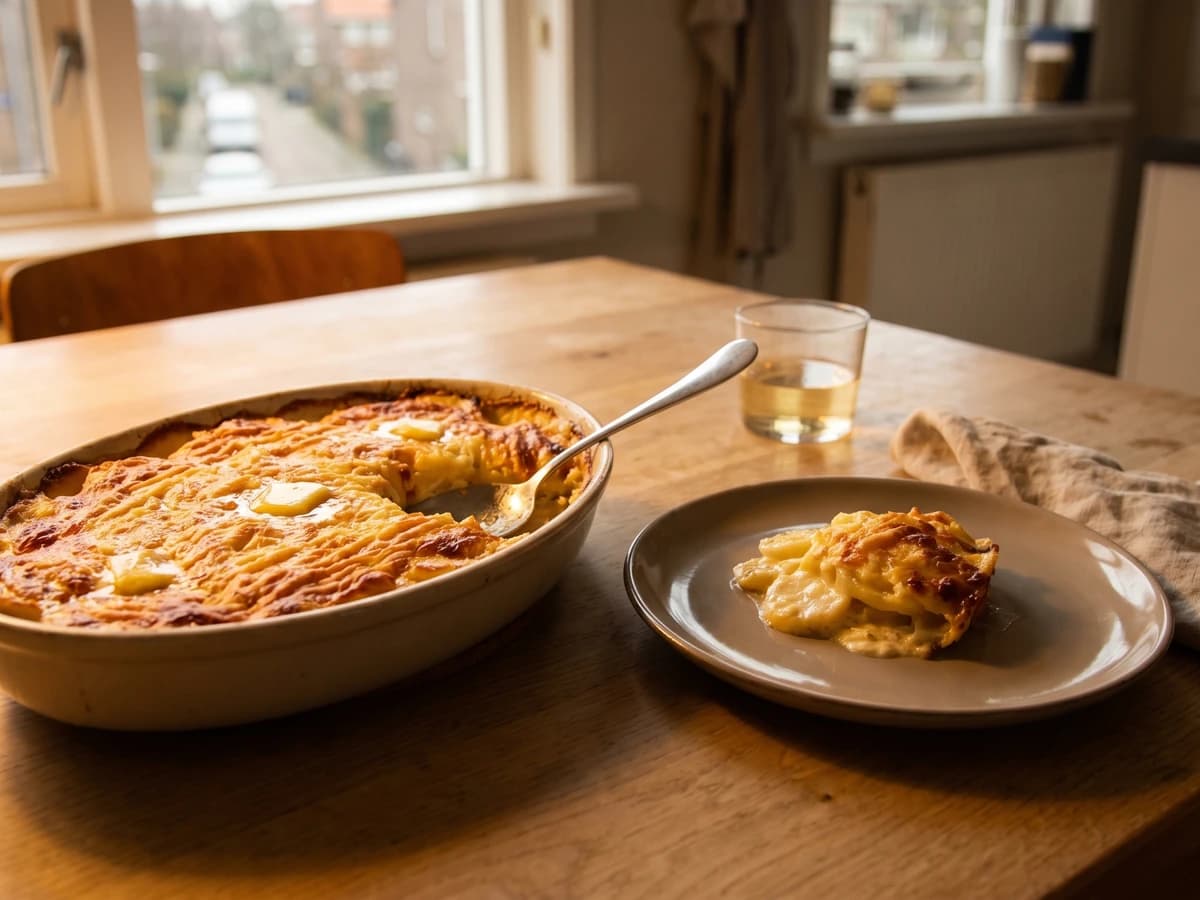
A French name, a Dutch potato, and a Sunday table: aardappelgratin is what happens when a frugal kitchen borrows richness and behaves as if it had always belonged.
A cooking platform built around craft, culture, and the stories behind what we eat.
Created by
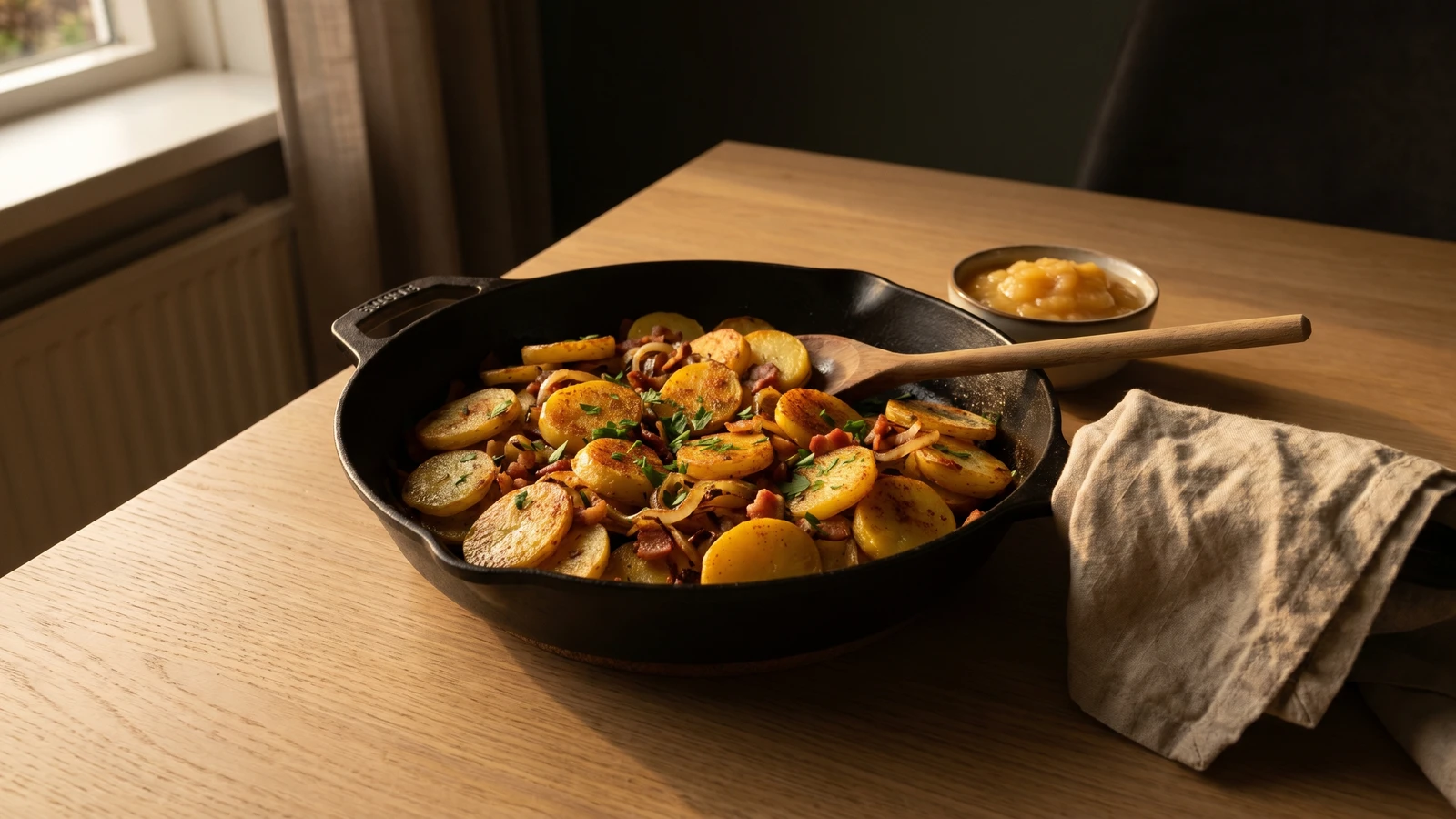
Yesterday's boiled potatoes become tonight's golden side dish: crisp-edged, soft-hearted, browned with onion and spek, and proof that Dutch thrift knows exactly where the good flavour hides.
My grandmother never called leftovers leftovers. In her kitchen they were morgenwerk, tomorrow's work, which is a more civilized way to speak about cold boiled potatoes sitting under a cloth. Gebakken aardappelen, fried potatoes, belonged to the evening after the proper potato meal, when the pan came out, the onion was cut small, and the house learned that thrift has a smell: butter, spek, and browning starch.
The name already tells you most of it, and that is its honesty. Aardappel means earth-apple, the Dutch name given to the potato when Europe was still deciding what to make of this strange tuber from across the Atlantic. Gebakken only means fried or baked, no poetry there. But let me tell you a secret: the poetry is in the second use. A boiled potato sliced cold fries better than a fresh one, because its starch has set overnight and its surface dries enough to take colour.
So don't fuss. Hou het altijd simpel, always keep it simple. Use a wide pan, give the slices room, and resist the deeply human urge to stir every twenty seconds. The crust forms while you leave things alone, which is a lesson Dutch kitchens have been teaching longer than most books have been advising otherwise. Paprika is not ancient here, but it is now very much at home, a little red warmth in a frugal pan.
The potato reached the Netherlands in the late sixteenth century and became common food for ordinary households during the eighteenth century, especially in the provinces where poor soil made grain less reliable. Dutch weekday meals long centered on boiled potatoes, vegetables, and a little meat or gravy, so frying the next day's cold potatoes in fat was a practical household economy rather than a separate grand dish. The use of paprika in gebakken aardappelen is a modern Dutch home-kitchen habit, likely strengthened through Central European influence and twentieth-century pantry cooking, not a Golden Age spice-route inheritance.
Quantity
800g
cooked the day before and sliced 5mm thick
Quantity
150g
Quantity
1 large
thinly sliced
Quantity
2 tablespoons
Quantity
1 tablespoon
Quantity
1 teaspoon
Quantity
1/2 teaspoon, plus more to taste
Quantity
to taste
Quantity
2 tablespoons
chopped
| Ingredient | Quantity |
|---|---|
| cold boiled waxy potatoescooked the day before and sliced 5mm thick | 800g |
| spek or smoked bacon lardons | 150g |
| onionthinly sliced | 1 large |
| unsalted butter | 2 tablespoons |
| neutral oil | 1 tablespoon |
| sweet paprika | 1 teaspoon |
| fine salt | 1/2 teaspoon, plus more to taste |
| freshly ground black pepper | to taste |
| flat-leaf parsley (optional)chopped | 2 tablespoons |
Slice the cold boiled potatoes into rounds about 5mm thick. If they feel damp, lay them on a clean tea towel for a few minutes. Dry potatoes brown; wet potatoes sulk in the pan and call it cooking.
Put the spek in a wide heavy frying pan over medium heat and cook for 5 to 7 minutes, until the fat has run and the edges are browned. Lift the spek to a plate with a slotted spoon, leaving the fat in the pan. This is not garnish, this is the foundation.
Add the onion to the spek fat with a small pinch of salt and cook for 5 minutes, stirring now and then, until soft and lightly golden. Move the onion to the plate with the spek before it goes dark; burnt onion is a loud guest at a quiet table.
Add the butter and oil to the pan. When the butter foams and settles, lay in the potato slices in as close to a single layer as your pan allows. Leave them alone for 4 to 5 minutes before turning. You are listening for a steady gentle sizzle and looking for golden edges, not pale softness.
Turn the potatoes carefully and brown the second side for another 4 to 5 minutes. Sprinkle over the paprika, salt, and black pepper, then return the onion and spek to the pan. Toss gently for 1 minute, just enough for the paprika to stain the fat brick-red and cling to the potatoes. Finish with parsley if you like, and serve straight from the pan.
1 serving (about 250g)
Culinary guides, cultural storytelling, and the editorial depth that makes cooking meaningful.
Discover Culinary ExplorerChef Joost
A French name, a Dutch potato, and a Sunday table: aardappelgratin is what happens when a frugal kitchen borrows richness and behaves as if it had always belonged.
Chef Joost
Aardappelpuree is the quiet heart of the Dutch AVG'tje: floury potatoes, warm milk, butter, nutmeg, and a small kuiltje, little well, built for the jus.

Chef Joost
Flower cabbage under old Gouda sauce: the quiet Dutch side dish that turns one boiled vegetable into the reason everyone reaches for the spoon twice.

Chef Joost
White beans peeking through green snijbonen give this old Dutch side its nursery-table joke: bare little children in the grass, sweet garden thrift with butter, nutmeg, and no apology.