
Chef Isabel
Aguaillo de la Sierra de Cadiz
Aguaillo is from the Sierra de Cadiz: cold water, stale bread, garlic, oil and vinegar, closer to a field drink than a bowl of soup, and sharp enough to wake you in the heat.
A cooking platform built around craft, culture, and the stories behind what we eat.
Created by
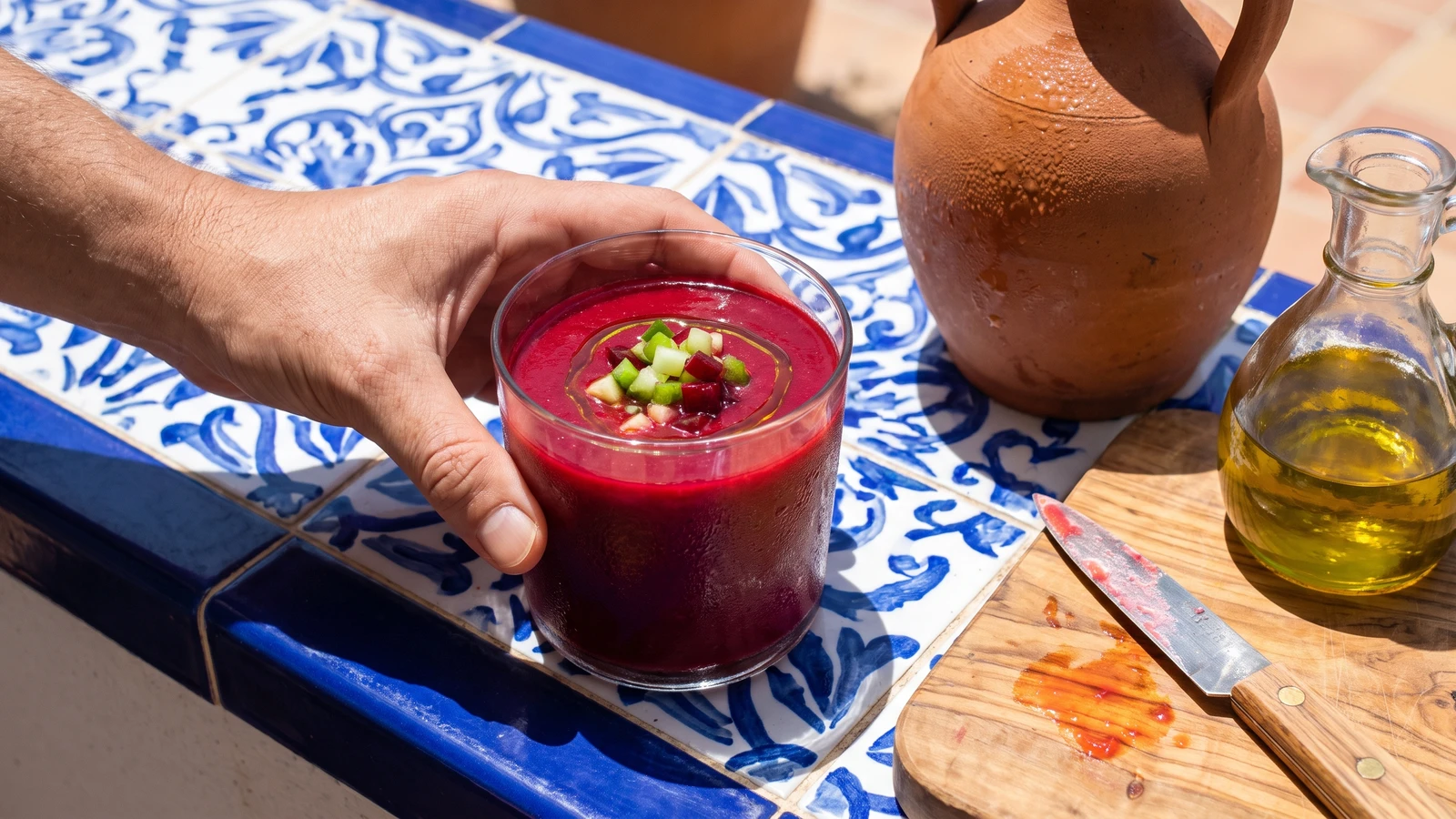
Gazpacho de remolacha is Andaluz by its method: ripe raw tomato, cooked beetroot, garlic, sherry vinegar, and olive oil blended smooth, then chilled hard until the glass beads.
Gazpacho de remolacha is Andaluz, a summer gazpacho built on ripe raw tomato, garlic, vinagre de Jerez, bread, olive oil, and cooked beetroot that stains it a deep crimson. It is still gazpacho because the tomato and oil carry the soup; the beetroot sweetens and darkens it, it does not take over. If the beetroot takes over and the tomato disappears, that is not this dish. It is cold beetroot puree.
Make it only when the tomatoes are worth eating raw. The method that decides it is the oil: blend the vegetables first until they are completely smooth, then pour the oil in slowly with the blender running. That slow pour makes the oil part of the soup, so the texture turns silky instead of thin, and the beetroot's earthiness stays clean.
If you're far from Andalusia, use plain cooked beetroot from a vacuum pack, the kind without vinegar, and the best ripe tomatoes your market gives you. No vinagre de Jerez? Use a good red wine vinegar and know it will be less rounded. Chill it hard, taste it cold, and correct the salt and vinegar then. Pésalo, no lo adivines. Siempre sale, si lo sigues.
Gazpacho belongs to Andalusia, where field workers made cold sustenance from stale bread, garlic, olive oil, vinegar, salt, and water before tomato and pepper joined the mortar. The tomato-red gazpacho known today grew from the same hot-country logic: bread gave body, vinegar kept the flavour sharp, and oil made it filling. Gazpacho de remolacha is a household variation on that Andalusian method, using cooked beetroot from the market for colour and sweetness while ripe tomato, sherry vinegar, and olive oil keep it in the gazpacho family.
Quantity
800g
cored and roughly chopped
Quantity
300g
260g roughly chopped, 40g finely diced to serve
Quantity
200g
150g peeled and roughly chopped, 50g finely diced to serve
Quantity
100g
seeded, 70g roughly chopped, 30g finely diced to serve
Quantity
1 small clove, about 4g
germ removed
Quantity
40g
crust removed
Quantity
45ml
Quantity
90ml, plus 15ml to finish
Quantity
8g, plus more to taste
Quantity
100-150ml
| Ingredient | Quantity |
|---|---|
| ripe tomatoescored and roughly chopped | 800g |
| cooked beetroot, not pickled260g roughly chopped, 40g finely diced to serve | 300g |
| cucumber150g peeled and roughly chopped, 50g finely diced to serve | 200g |
| pimiento verde italiano or mild green bell pepperseeded, 70g roughly chopped, 30g finely diced to serve | 100g |
| garlicgerm removed | 1 small clove, about 4g |
| day-old rustic breadcrust removed | 40g |
| vinagre de Jerez (sherry vinegar) | 45ml |
| extra virgin olive oil | 90ml, plus 15ml to finish |
| fine sea salt | 8g, plus more to taste |
| very cold water (optional) | 100-150ml |
Make this only when the tomatoes are heavy, fragrant, and worth eating raw. Put the chopped tomatoes, 260g of the beetroot, 150g of the cucumber, 70g of the pepper, the garlic, and the salt in a large bowl and toss well. Leave it for 10 minutes while the bread soaks in 50ml cold water; the salt pulls juice from the tomato so the blender catches without drowning the soup.
Squeeze the bread just enough that it is wet but not dripping. Add it to the blender with the salted vegetables and the sherry vinegar, then blend for 2 full minutes, scraping once if needed, until no skins or pale flecks remain. Beetroot can feel heavy if left coarse, so let the machine do its work.
With the blender running, pour in the 90ml olive oil in a thin, steady stream. This is the step that decides the soup: the oil emulsifies into the tomato and beetroot, turning it glossy and smooth instead of separated and watery. Pass it through a fine sieve if you want a clean Andalusian finish, then loosen with 100 to 150ml very cold water until it pours like light cream.
Cover and chill for at least 2 hours, longer if you can. Taste it again when it is properly cold; cold dulls salt and vinegar, and beetroot asks for a firm hand with both. Add a few more drops of sherry vinegar if it tastes sweet before it tastes bright.
Pour into chilled glasses or small bowls. Finish with a thin thread of olive oil and the reserved diced cucumber, green pepper, and beetroot. Serve at once, cold enough to bead the glass, with bread on the side if this is lunch and not just a sip before it.
1 serving (about 345g)
Culinary guides, cultural storytelling, and the editorial depth that makes cooking meaningful.
Discover Culinary ExplorerChef Isabel
Aguaillo is from the Sierra de Cadiz: cold water, stale bread, garlic, oil and vinegar, closer to a field drink than a bowl of soup, and sharp enough to wake you in the heat.

Chef Isabel
Ajilimojili is Jaen's tomato-free cold soup: potato, roasted red pepper, garlic, olive oil, and vinegar pounded into a cool, silky spoonful.

Chef Isabel
Ajo carretero is Soriano, from the pine country of Soria: lamb cooked in a plain garlicky broth, then served the old way, meat first and bread-soaked soup after.

Chef Isabel
Ajoblanco Extremeño is the poor-kitchen cold soup of Extremadura: bread, garlic, oil, egg yolk, vinegar, and icy water, with no almonds. Whisk it slowly and serve it bien fresquito.