
Chef Jeong-sun
Aehobak-guk (애호박국, Korean Zucchini Soup)
A clean summer soup of Korean zucchini and salted shrimp, built on quick anchovy-kelp broth and finished before the half-moons lose their shape on a weeknight table.
A cooking platform built around craft, culture, and the stories behind what we eat.
Created by
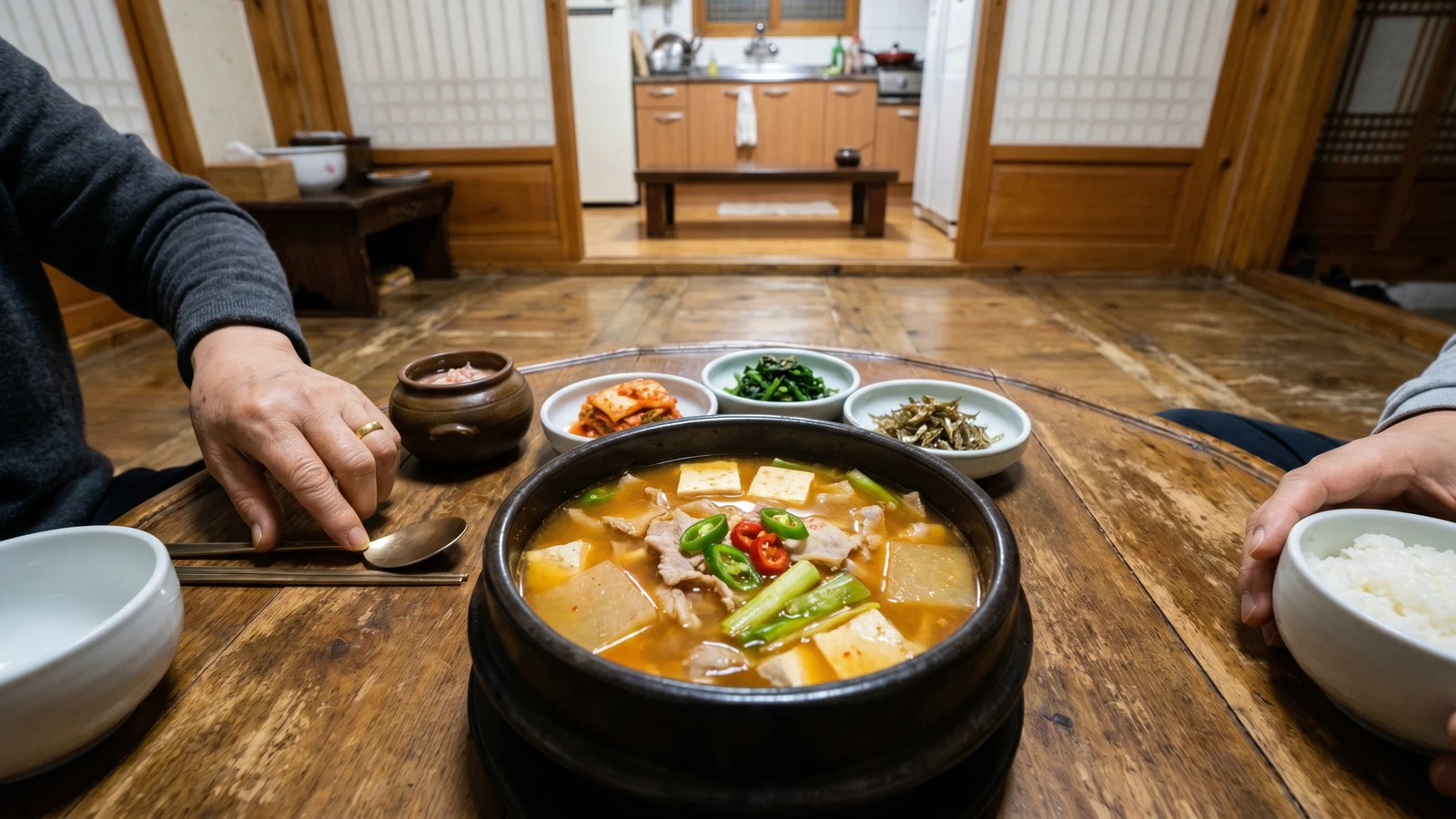
A nearly forgotten Seoul stew where fine fermented shrimp relish does the salting, pork gives the broth body, and tofu carries it quietly, rich enough for a special table and plain enough for rice.
Most cooks know saeujeot (salted fermented shrimp) as the spoon beside bossam or the salt that wakes up kimchi paste. Gamdongjeot-jjigae asks more of it. Here the fermented shrimp is not a side note. It is chopped fine, seasoned with care, and made to carry the whole pot.
Notebook 37 says this dish taught me restraint. A young cook wants to add doenjang, gochujang, anchovies, anything loud enough to prove the stew has flavor. My teacher Master Seong-nyeo stopped my hand and said, taste the shrimp first. Good gamdongjeot is already salt, sweetness, sea, and time. If you bury it, you have made another stew wearing this one's name.
Tonight this dish asks you to mince carefully, simmer gently, and season in spoonfuls instead of handfuls. Pork gives the broth a round body, tofu softens the salt, and scallion and chili finish it without turning it noisy. 손맛 is real. I still measure it, so it can be handed on.
Gamdongjeot is an old Seoul-style seasoned salted-shrimp relish, made by chopping fermented shrimp fine and seasoning it so it dissolves into rice or stew instead of sitting in coarse pieces. Gamdongjeot-jjigae is preserved in Korean traditional-food encyclopedic records as both a Seoul local dish and a Joseon royal-kitchen preparation, which fits the capital's habit of turning jeotgal (salted seafood) into precise table seasonings. It is rare today because prepared gamdongjeot nearly disappeared from ordinary markets; most cooks now know saeujeot as a kimchi seasoning or bossam condiment, not as the main seasoning of a jjigae.
Quantity
3 tablespoons, including 1 tablespoon brine
finely chopped
Quantity
1 tablespoon
preferably mild
Quantity
1 teaspoon
minced
Quantity
1/2 teaspoon
grated
Quantity
1 teaspoon
finely minced
Quantity
1 teaspoon
for the gamdongjeot base
Quantity
180g
sliced 1/4 inch thick and cut into bite-size pieces
Quantity
1 teaspoon
Quantity
1 tablespoon
Quantity
3 cups
Quantity
120g
sliced into thin 1-inch squares
Quantity
300g
cut into 3/4-inch cubes
Quantity
2
cut into 1-inch lengths
Quantity
1
sliced on the diagonal
Quantity
1
sliced on the diagonal
Quantity
1/8 teaspoon
| Ingredient | Quantity |
|---|---|
| saeujeot (Korean salted fermented shrimp)finely chopped | 3 tablespoons, including 1 tablespoon brine |
| gochugaru (Korean chili flakes)preferably mild | 1 tablespoon |
| garlicminced | 1 teaspoon |
| gingergrated | 1/2 teaspoon |
| scallion whitefinely minced | 1 teaspoon |
| toasted sesame oilfor the gamdongjeot base | 1 teaspoon |
| pork belly or pork shouldersliced 1/4 inch thick and cut into bite-size pieces | 180g |
| neutral oil | 1 teaspoon |
| rice wine or soju | 1 tablespoon |
| second rice-rinsing water or unsalted light stock | 3 cups |
| Korean radishsliced into thin 1-inch squares | 120g |
| medium-firm tofucut into 3/4-inch cubes | 300g |
| scallionscut into 1-inch lengths | 2 |
| green chilisliced on the diagonal | 1 |
| red chili (optional)sliced on the diagonal | 1 |
| fine sea salt (optional) | 1/8 teaspoon |
Chop the saeujeot and its brine until the shrimp are fine, almost a rough paste. Mix with the gochugaru, garlic, ginger, minced scallion white, and sesame oil. Let it stand 10 minutes. Whole shrimp leave sharp little pockets of salt in the stew; minced fine, they season the broth evenly.
Set a small ttukbaegi or heavy 2-quart pot over medium heat. Add the neutral oil and pork, then cook 3 to 4 minutes until the edges turn opaque and a little fat loosens into the pot. Do not brown it hard. This stew wants clean pork body, not grilled-meat flavor.
Add 2 tablespoons of the gamdongjeot base and the rice wine. Stir for 30 seconds, just until the pork is coated and the relish smells rounded. Do not fry it dark. Fermented shrimp turns bitter if it scorches, and then the whole pot remembers your impatience.
Pour in the rice-rinsing water and add the radish. Bring to a steady simmer, then cook 10 minutes, skimming once or twice if foam gathers. Rice-rinsing water softens the salt and gives the broth a little body; plain water works, but the stew will taste thinner.
Slide in the tofu and simmer 5 minutes. Keep the heat steady, not violent, so the tofu warms through without breaking apart. Taste the broth now before adding anything else. It should be savory enough to season rice, not salty enough to tire your tongue.
Add the remaining gamdongjeot base 1 teaspoon at a time, tasting after each addition. Most pots need 1 to 2 teaspoons more, not the whole bowl. If your saeujeot was mild, add the last bit; if it was strong, stop early. Use the 1/8 teaspoon salt only if the broth still tastes flat after the relish is used.
Scatter in the scallion lengths, green chili, and red chili if using. Simmer 1 minute, then turn off the heat and let the pot sit 2 minutes so the tofu settles into the broth. Carry it to the table with plain rice and mild banchan. This is not a stew that wants competition.
1 serving (about 235g)
Culinary guides, cultural storytelling, and the editorial depth that makes cooking meaningful.
Discover Culinary ExplorerChef Jeong-sun
A clean summer soup of Korean zucchini and salted shrimp, built on quick anchovy-kelp broth and finished before the half-moons lose their shape on a weeknight table.
Chef Jeong-sun
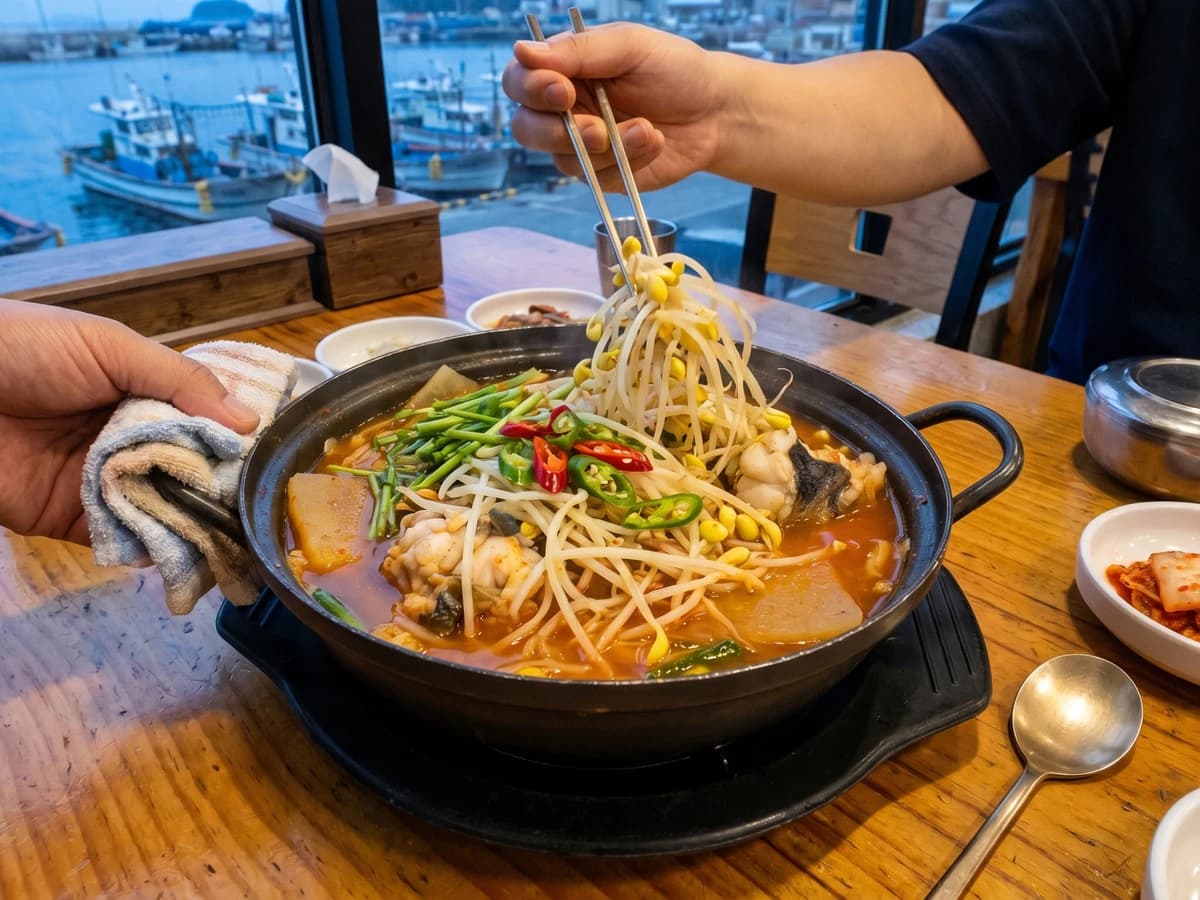
A Masan coast monkfish stew with firm white meat, gelatin at the bones, soybean sprouts for crunch, and a red broth seasoned to carry the fish, not bury it.

Chef Jeong-sun
A weeknight fish roe stew with radish and crown daisy in a clean spicy broth, where the whole success depends on adding the roe late enough that it sets tender, not chalky.

Chef Jeong-sun
Late-summer mallow leaves rubbed with salt until the bitter green water runs off, then simmered in a clean doenjang broth with dried shrimp, the quiet soup a Korean weeknight deserves.