
Chef Juliana
Açaí com Camarão do Pará
You think açaí belongs with banana and granola because that's the version that traveled. In Pará, thick unsweetened açaí sits beside shrimp, rice, and farinha. Anota aí: same fruit, different meal.
A cooking platform built around craft, culture, and the stories behind what we eat.
Created by
You think blood in the pot means isso não é pra mim. It's not mystery, it's timing: vinegar first, low heat, patient simmer, and a molho that teaches you to trust your eyes.
You may have looked at a chicken-blood stew and quietly decided, isso não é pra mim. I know. Blood makes people nervous, especially people who were taught that cooking should come sealed, powdered, and polite. But cooking isn't a gift, it's something you learn. This is learnable too.
A gente vai do começo: catch the blood in vinegar so it stays pourable, brown the chicken so the pot has flavor before the liquid arrives, build a real refogado with onion, garlic, tomato, and pepper, then let the chicken cook until it gives in. Only at the end does the blood go back into the broth, slowly, with low heat, because boiled hard it can grain and turn sulky. Anota aí: the molho should darken, gloss over, and coat the spoon.
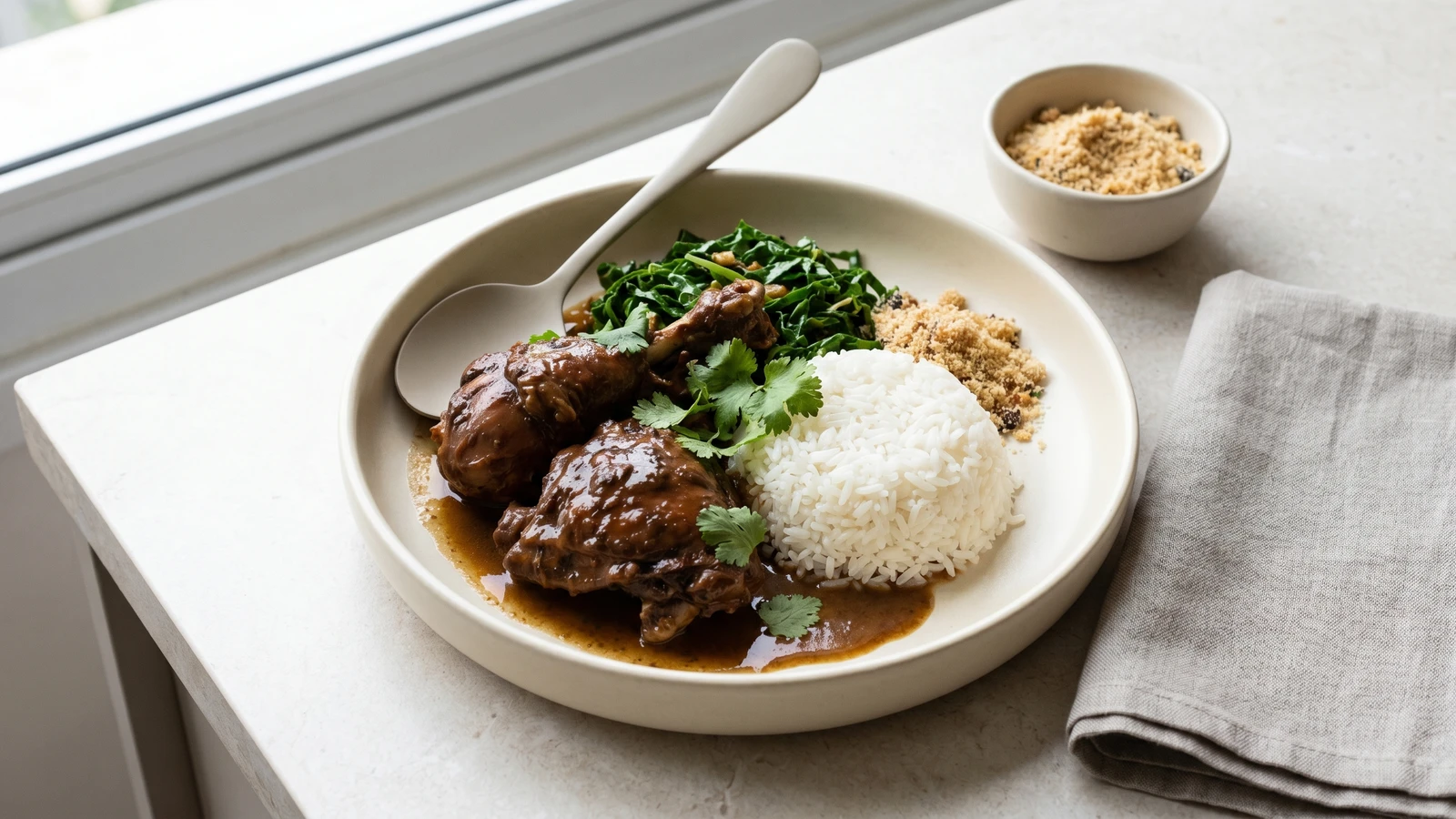
This is not a weeknight shortcut dinner unless the blood is already waiting for you, mixed with vinegar and chilled. But it is comida de verdade, the kind that belongs beside arroz soltinho, feijão, and something green. The pê-efe can be daily and still carry a dish with history, nerve, and a little ceremony. Rice catches the molho. Beans hold the plate steady. Couve brings the green bite. Dinner solved.
And no, we are not replacing the blood with a packet, a cube, cocoa, or some clever little lie. If you don't have fresh food-safe chicken blood, make a good galinha ensopada today and come back to cabidela when the ingredient is right. The recipe didn't fail you. The market did.
Galinha à cabidela is part of the Portuguese and Brazilian family of cabidela dishes, where poultry blood is mixed with vinegar and cooked back into the sauce so it darkens and thickens the stew. In Pernambuco and across parts of the Nordeste, it is also known as galinha ao molho pardo, a country and home-kitchen dish tied to using the whole bird when a chicken was slaughtered for the table. The vinegar is not decoration: it keeps the fresh blood from clotting before it reaches the pot and gives the finished molho its sharp edge.
Quantity
1/2 cup
Quantity
1/4 cup
Quantity
1 whole, about 1.6 kg to 1.8 kg
cut into 10 to 12 pieces
Quantity
2 teaspoons, divided, plus more to taste
Quantity
1/2 teaspoon
Quantity
2 tablespoons
Quantity
3 tablespoons
Quantity
1 large
finely chopped
Quantity
1 small
finely chopped
Quantity
1 small
finely chopped
Quantity
4 cloves
minced
Quantity
2 medium
chopped
Quantity
2 tablespoons
chopped, leaves reserved for finishing
Quantity
2
Quantity
1 teaspoon
Quantity
1/2 teaspoon
Quantity
2 cups, plus more as needed
Quantity
1 tablespoon
optional, only if the sauce needs help thickening
Quantity
for serving
Quantity
for serving
Quantity
for serving
Quantity
for serving
| Ingredient | Quantity |
|---|---|
| fresh chicken blood | 1/2 cup |
| white vinegar | 1/4 cup |
| whole chickencut into 10 to 12 pieces | 1 whole, about 1.6 kg to 1.8 kg |
| fine salt | 2 teaspoons, divided, plus more to taste |
| freshly ground black pepper | 1/2 teaspoon |
| lime juice | 2 tablespoons |
| neutral oil or lard | 3 tablespoons |
| onionfinely chopped | 1 large |
| green bell pepperfinely chopped | 1 small |
| red bell pepperfinely chopped | 1 small |
| garlicminced | 4 cloves |
| ripe tomatoeschopped | 2 medium |
| cilantro stemschopped, leaves reserved for finishing | 2 tablespoons |
| bay leaves | 2 |
| sweet paprika or colorau | 1 teaspoon |
| ground cumin | 1/2 teaspoon |
| hot water or unsalted homemade chicken broth | 2 cups, plus more as needed |
| cassava flour (optional)optional, only if the sauce needs help thickening | 1 tablespoon |
| cooked white rice | for serving |
| cooked beans | for serving |
| sautéed couve | for serving |
| farofa (optional) | for serving |
Put the vinegar in a clean bowl before the chicken is butchered. Catch the fresh blood directly into the vinegar, whisking as it falls, then strain out any clots and keep it covered in the refrigerator. The vinegar keeps the blood pourable instead of letting it seize into lumps, and the cold keeps it safe while you cook the chicken.
Pat the chicken pieces dry, then season them with 1 1/2 teaspoons salt, the black pepper, and the lime juice. Let them sit for 20 minutes while you chop the refogado. Dry skin and surface seasoning help the pieces brown; wet chicken hits the pot and steams, and then you get pale meat wondering where dinner went.
Warm the oil or lard in a heavy pot over medium-high heat. Brown the chicken in batches, skin side down first, until the pieces take on deep golden spots, about 4 to 5 minutes per side. Don't crowd the pot. If the pieces sit on top of each other, they release water, the heat drops, and you're boiling chicken instead of building flavor.
Lower the heat to medium and add the onion and both peppers to the same pot. Cook, stirring and scraping the browned bits from the bottom, until the onion softens and goes see-through, about 6 minutes. Those browned bits are not dirt and not failure. They are the flavor the chicken left behind for the molho.
Add the garlic, cilantro stems, bay leaves, colorau, and cumin. Stir for 1 minute, just until the garlic smells good, then add the tomatoes and the remaining 1/2 teaspoon salt. Cook until the tomatoes slump and turn saucy, about 5 minutes. Garlic burns fast and gets bitter, so give it fragrance, not punishment.
Return the browned chicken and any juices to the pot. Add 2 cups hot water or homemade broth, just enough to come halfway up the chicken, not drown it. Bring to a lively bubble, then lower the heat, cover partly, and simmer until the chicken is tender and pulls easily near the bone, about 45 to 55 minutes. Turn the pieces once or twice so every piece tastes like the pot.
Take the vinegar-blood mixture from the refrigerator and whisk it smooth. Ladle 1/2 cup of hot broth from the pot into the bowl slowly, whisking the whole time, then repeat with another 1/2 cup. This warms the blood gently before it hits the pot, so it thickens the molho instead of curdling into grainy bits.
Lower the pot to the gentlest heat and stir in the tempered blood mixture in a thin stream. Keep stirring until the sauce turns deep brown, glossy, and coats the spoon, about 6 to 8 minutes. Do not let it boil hard. Hard boiling can split the sauce, and then the texture goes rough. If the molho is still thin, sprinkle in the cassava flour through your fingers and simmer 2 minutes more.
Taste the molho and adjust the salt. Pull out the bay leaves, scatter cilantro leaves over the top if you're using them, and serve with arroz soltinho, feijão, sautéed couve, and farofa if the table asks for it. The sauce should be dark, sharp from the vinegar, savory from the refogado, and thick enough to cling to the rice.
1 serving (about 550g)
Culinary guides, cultural storytelling, and the editorial depth that makes cooking meaningful.
Discover Culinary ExplorerChef Juliana
You think açaí belongs with banana and granola because that's the version that traveled. In Pará, thick unsweetened açaí sits beside shrimp, rice, and farinha. Anota aí: same fruit, different meal.

Chef Juliana
You think savory açaí is not for you. I understand. Then you taste the cold, dark bowl beside hot fried fish, rice, greens, and farinha, and dinner gets very quiet.

Chef Juliana
You think salted beef and rice sound like trouble. Anota aí: soak the charque, brown it properly, build the refogado, and this one pot resolves dinner.

Chef Juliana
You think a Maranhão green rice belongs to somebody else's clever hands. It doesn't. Wilt the vinagreira, build the refogado, fold it through arroz soltinho, and dinner gets bright, coastal, and yours.