
Chef Juliana
Açaí com Camarão do Pará
You think açaí belongs with banana and granola because that's the version that traveled. In Pará, thick unsweetened açaí sits beside shrimp, rice, and farinha. Anota aí: same fruit, different meal.
A cooking platform built around craft, culture, and the stories behind what we eat.
Created by
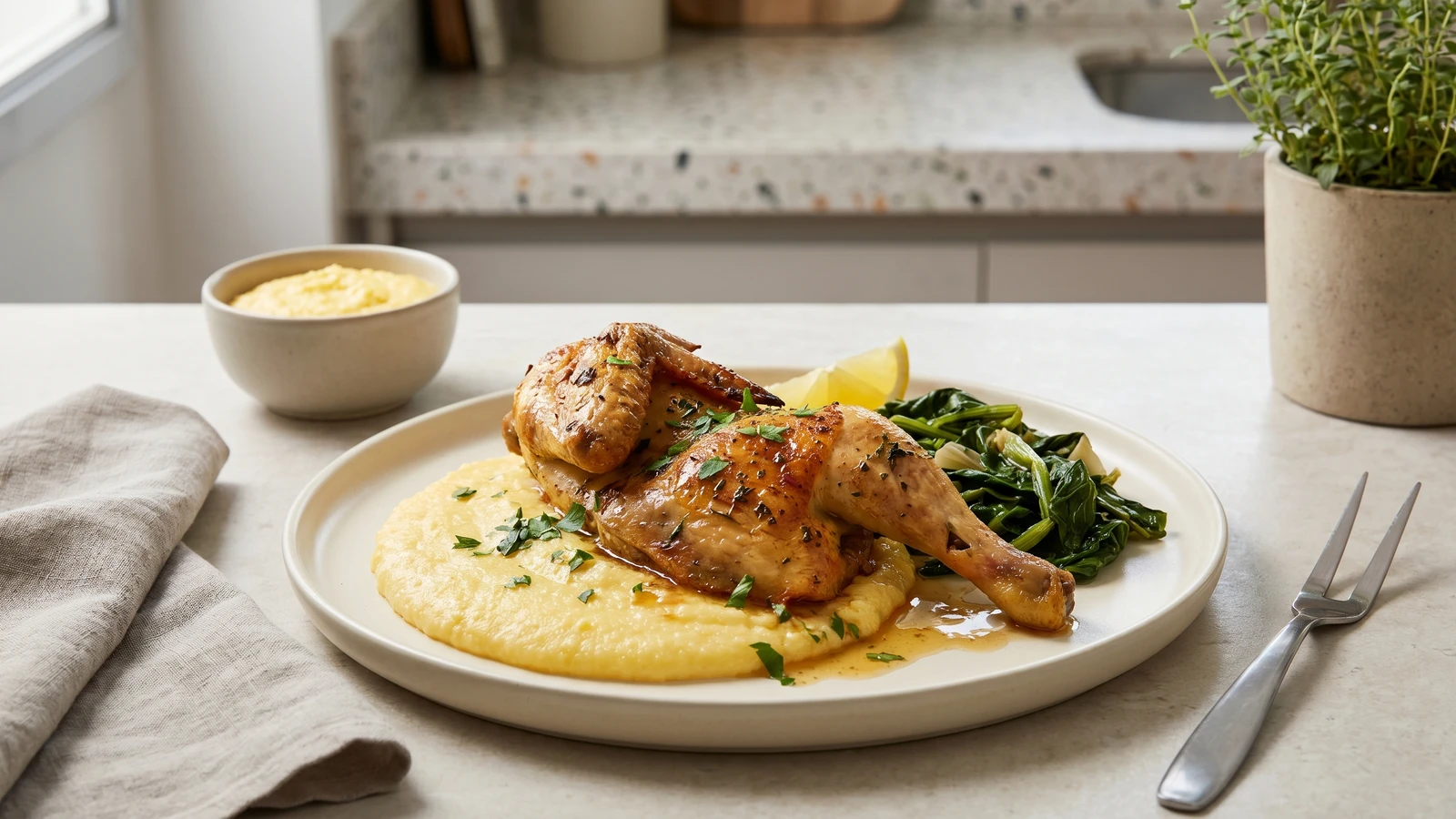
You don't need a rotisserie fantasy to make this chicken. Wine, garlic, herbs, a patient oven, and polenta turn a small bird into a Serra Gaúcha dinner.
You see the words spit-roast and already hear that little voice: isso não é pra mim. Good. Let it talk, then put it to work washing the herbs. Cozinhar não é dom, é um aprendizado, and this is a small chicken sitting in wine, garlic, onion, and time until the meat learns to taste like dinner.
At my grandmother's counter in São Paulo, I loved the warmth of the kitchen long before I understood any of it. Later, with my cheap caderno and many ridiculous onions behind me, I learned the boring truth: receitas que funcionam are built from steps you can see. Dry the bird so it browns. Roast it gently so the breast doesn't dry before the thigh gives in. Brush with its own fat so the skin turns gold and crisp under your teeth.
Serra Gaúcha serves galeto with polenta because corn and chicken make generous, affordable food out of ordinary things. On a Sunday, it feels special. On a Monday, the leftovers slide right into the pê-efe with arroz soltinho, feijão from scratch, and something green. That's how a country stays itself at the table: not by mystery, by people cooking comida de verdade.
Galeto al primo canto is traced to Caxias do Sul in the 1950s, when a local cook in the Italian-settled Serra Gaúcha began serving very young chickens marinated in wine and herbs, then roasted on rotating spits. The name comes from Italian, 'at the first crow,' meaning the bird was young, before the rooster's first full call, a practical marker of tenderness, not kitchen romance. The Serra table around it usually brings polenta, radicci, pasta, and salad alongside the bird, food from Italian immigrant communities that became unmistakably Brazilian in the mountains.
Quantity
2 birds, 1 1/4 to 1 1/2 pounds each
backbones removed and split in half
Quantity
1 cup
Quantity
1/4 cup, plus 1 tablespoon
for marinade and rack
Quantity
3 tablespoons
Quantity
8
finely minced
Quantity
1 small, about 1/2 cup
grated or finely chopped
Quantity
1/4 cup, plus 1 tablespoon
chopped
Quantity
1 tablespoon
chopped
Quantity
2
torn
Quantity
2 1/2 teaspoons
for the chicken
Quantity
1 teaspoon
Quantity
2 tablespoons
for brushing
Quantity
1 cup
Quantity
4 cups, divided
Quantity
1 teaspoon, plus more to taste
for polenta and greens
Quantity
1 tablespoon
for the polenta
Quantity
4 cups
thinly sliced
Quantity
1 tablespoon
for the greens
Quantity
1 tablespoon
for the greens
Quantity
1
cut into wedges
| Ingredient | Quantity |
|---|---|
| small young chickens or Cornish hensbackbones removed and split in half | 2 birds, 1 1/4 to 1 1/2 pounds each |
| dry white wine | 1 cup |
| neutral oil or olive oilfor marinade and rack | 1/4 cup, plus 1 tablespoon |
| white wine vinegar or fresh lemon juice | 3 tablespoons |
| garlic clovesfinely minced | 8 |
| oniongrated or finely chopped | 1 small, about 1/2 cup |
| fresh parsleychopped | 1/4 cup, plus 1 tablespoon |
| fresh sage or fresh marjoramchopped | 1 tablespoon |
| bay leavestorn | 2 |
| fine saltfor the chicken | 2 1/2 teaspoons |
| freshly ground black pepper | 1 teaspoon |
| melted butter or olive oilfor brushing | 2 tablespoons |
| fine yellow cornmeal (fubá mimoso) | 1 cup |
| water | 4 cups, divided |
| fine saltfor polenta and greens | 1 teaspoon, plus more to taste |
| butter or olive oilfor the polenta | 1 tablespoon |
| couve, radicchio, or escarolethinly sliced | 4 cups |
| olive oilfor the greens | 1 tablespoon |
| fresh lemon juice or vinegarfor the greens | 1 tablespoon |
| lemon (optional)cut into wedges | 1 |
If the birds are not already split, cut out the backbones with kitchen shears, press each bird flat, then cut through the breastbone so you have four halves. Pat them dry and set them in a shallow dish. Smaller birds are the point here: they cook through before the skin gets tired and the meat stays tender.
Stir together the wine, 1/4 cup oil, vinegar or lemon juice, garlic, onion, parsley, sage or marjoram, bay leaves, salt, and pepper. It should smell sharp, green, and garlicky. Wine and vinegar wake the meat, but they are not magic. The salt needs time to move inward, so give it time.
Pour the marinade over the chicken and rub it all over, including the little pockets between skin and meat where your fingers can reach without tearing. Cover and refrigerate for at least 8 hours and up to 24, turning once if you remember. Overnight seasoning is what makes the meat taste seasoned all the way through, not just salty on the surface.
Take the chicken out of the fridge 30 minutes before roasting, no longer. Heat the oven to 180°C (350°F). Lift the chicken from the marinade, scrape off big bits of onion and garlic so they don't burn, and pat the skin mostly dry. Pour the marinade into a small saucepan and boil it hard for 5 minutes if you want to use it for basting. Raw chicken marinade doesn't get brushed on cooked food. Anota aí.
Brush a wire rack with 1 tablespoon oil and set it over a rimmed sheet pan. Arrange the chicken halves skin side up with space between them, then add 1/2 cup water to the pan underneath, not touching the chicken. The rack lets hot air move around the skin so it browns instead of sitting in wet juices, and the water keeps the drips from scorching before the bird is done.
Roast for 35 minutes at 180°C (350°F). The skin will tighten and turn pale gold, and the meat will warm through without rushing. This first gentle stretch matters because the breast dries faster than the thigh cooks, and a gente wants dinner, not dry little punishment.
Brush the chicken with the boiled marinade and the melted butter or olive oil. Raise the oven to 220°C (425°F) and roast 15 to 25 minutes more, until the skin is deep golden, the edges are browned, and an instant-read thermometer in the thickest part of the thigh reads 74°C (165°F). No thermometer? Pierce the thigh near the bone and look for clear juices, not pink. A thermometer is not a personality test. Use it if you have it.
While the chicken roasts, stir the cornmeal with 1 cup cold water in a bowl until smooth. Bring the remaining 3 cups water and 1 teaspoon salt to a boil in a heavy pot, then whisk in the cornmeal mixture. Lower the heat and cook, stirring often, 25 to 30 minutes, until thick, glossy, and no longer smelling raw. Starting with cold water prevents lumps; cooking it properly makes polenta creamy instead of gritty. Stir in the butter or olive oil at the end.
Toss the sliced greens with 1 tablespoon olive oil, 1 tablespoon lemon juice or vinegar, and a pinch of salt, or murchar couve quickly in a hot pan until bright green and just tender. That bitter, fresh edge cuts through the roasted chicken and the soft polenta. The plate needs something green. It always does.
Rest the chicken for 10 minutes before serving. Spoon any glossy pan juices over the top, scatter the extra parsley, and serve with polenta, greens, and lemon wedges if you like. Resting keeps the juices in the meat instead of all over the board. Add arroz soltinho and feijão tomorrow and the leftovers become a proper pê-efe: grain, beans, chicken, green, dinner solved.
1 serving (about 460g)
Culinary guides, cultural storytelling, and the editorial depth that makes cooking meaningful.
Discover Culinary ExplorerChef Juliana
You think açaí belongs with banana and granola because that's the version that traveled. In Pará, thick unsweetened açaí sits beside shrimp, rice, and farinha. Anota aí: same fruit, different meal.

Chef Juliana
You think savory açaí is not for you. I understand. Then you taste the cold, dark bowl beside hot fried fish, rice, greens, and farinha, and dinner gets very quiet.

Chef Juliana
You think salted beef and rice sound like trouble. Anota aí: soak the charque, brown it properly, build the refogado, and this one pot resolves dinner.

Chef Juliana
You think a Maranhão green rice belongs to somebody else's clever hands. It doesn't. Wilt the vinagreira, build the refogado, fold it through arroz soltinho, and dinner gets bright, coastal, and yours.