
Chef Jeong-sun
Aehobak-guk (애호박국, Korean Zucchini Soup)
A clean summer soup of Korean zucchini and salted shrimp, built on quick anchovy-kelp broth and finished before the half-moons lose their shape on a weeknight table.
A cooking platform built around craft, culture, and the stories behind what we eat.
Created by
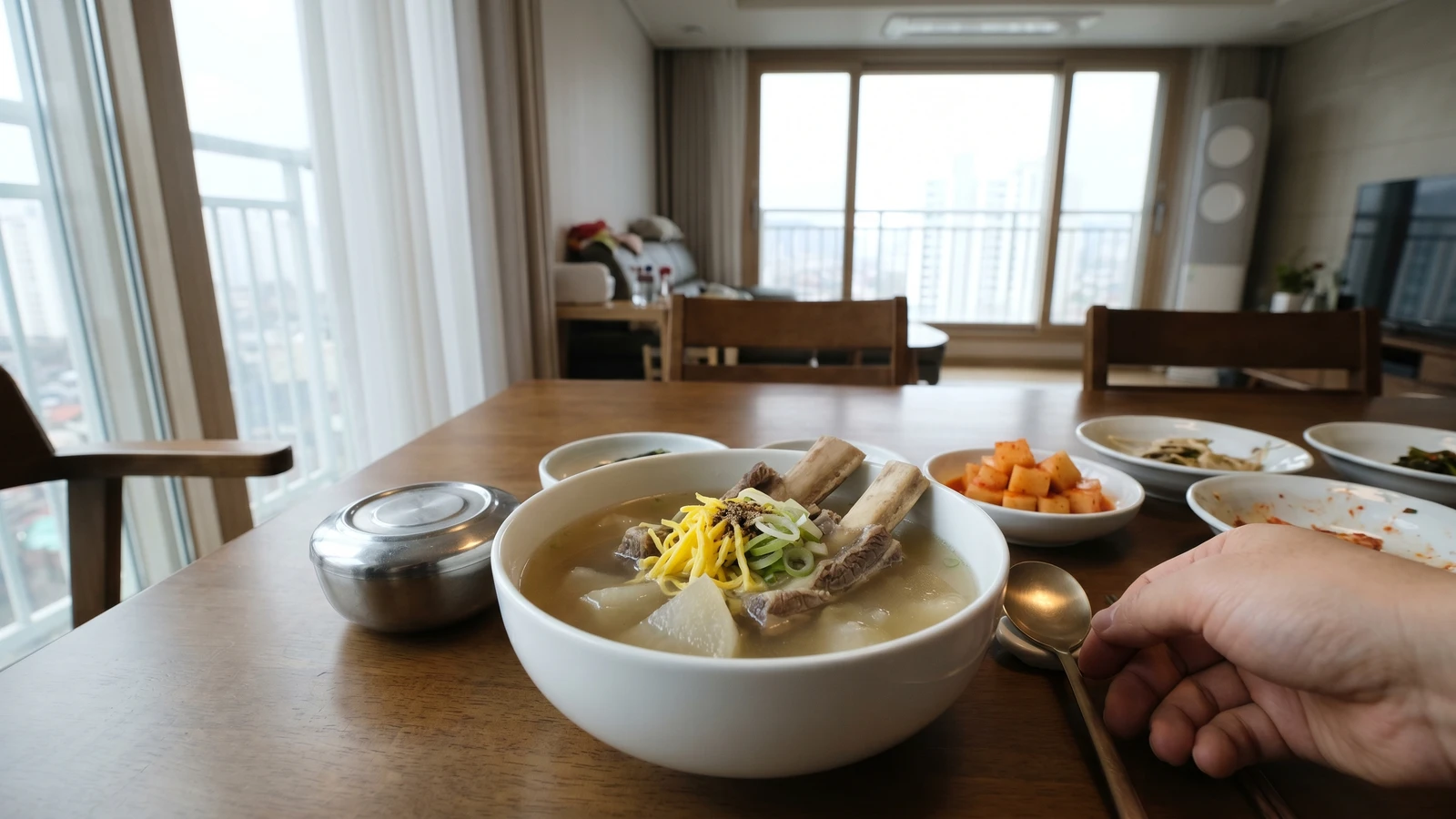
A clear short rib soup for the celebration table, built by soaking, blanching, and slow skimming until beef, radish, and broth taste clean enough to need only salt.
Galbitang lives or dies before the long simmer begins. Soak the ribs, blanch them hard, wash the pot, then simmer quietly. People want to call this fussy. My teacher called it respect for the broth. If you leave the first blood and gray foam in the pot, no amount of radish sweetness will make the soup clear.
This is not a spicy soup. Galbitang belongs to the celebration and comfort side of the Korean table, the bowl set down when someone is recovering, when children come home, when a birthday or holiday meal needs something generous but calm. The short ribs give body, the mu (Korean radish) gives sweetness, and the seasoning stays restrained: a little soup soy sauce, salt, black pepper, scallion, maybe jidan (egg garnish) if the table wants to look cared for.
Tonight it asks for time more than cleverness. You will spend the first hour cleaning and correcting, then the pot will work while you skim and taste. Measure the salt after you know how many cups of broth remain. That is how you avoid a soup that tastes flat one day and harsh the next. Write it down. Memory is a borrowed bowl.
Galbitang belongs to Korea's family of clear beef tang (soups), and its cost tells part of its history: cattle were protected as draft animals through much of the Joseon period, so beef rib soup was not ordinary weekday food. After the Korean War, urban beef restaurants and galbi houses helped make rib cuts more familiar to families eating out for birthdays, weddings, and recovery meals. The clear broth, radish, scallion, and optional dangmyeon (sweet potato starch noodles) are the modern form most home cooks recognize today.
Quantity
3 1/2 pounds (1.6kg)
English-cut into 2-inch pieces, excess surface fat trimmed
Quantity
about 3 quarts for soaking, plus enough to cover for blanching
Quantity
12 cups
Quantity
1 pound (450g)
peeled and cut into 2-inch chunks
Quantity
1 medium
halved
Quantity
1 large leek or 4 scallions
white parts bruised
Quantity
10
peeled
Quantity
3 thin slices (about 10g)
Quantity
1 teaspoon
Quantity
1 tablespoon
Quantity
1 1/2 teaspoons, or 1 teaspoon fine sea salt
plus more to serve
Quantity
120g
soaked in warm water 30 minutes
Quantity
2 large
separated, for jidan egg garnish
Quantity
1 teaspoon
for jidan egg garnish
Quantity
2
thinly sliced
Quantity
to serve
| Ingredient | Quantity |
|---|---|
| beef short ribsEnglish-cut into 2-inch pieces, excess surface fat trimmed | 3 1/2 pounds (1.6kg) |
| cold water | about 3 quarts for soaking, plus enough to cover for blanching |
| water for soup | 12 cups |
| Korean radish (mu)peeled and cut into 2-inch chunks | 1 pound (450g) |
| onionhalved | 1 medium |
| Korean leek (daepa), or scallionswhite parts bruised | 1 large leek or 4 scallions |
| garlic clovespeeled | 10 |
| fresh ginger | 3 thin slices (about 10g) |
| whole black peppercorns | 1 teaspoon |
| soup soy sauce (guk-ganjang) | 1 tablespoon |
| kosher saltplus more to serve | 1 1/2 teaspoons, or 1 teaspoon fine sea salt |
| dangmyeon (sweet potato starch noodles) (optional)soaked in warm water 30 minutes | 120g |
| eggs (optional)separated, for jidan egg garnish | 2 large |
| neutral oil (optional)for jidan egg garnish | 1 teaspoon |
| scallionsthinly sliced | 2 |
| freshly ground black pepper | to serve |
Put the short ribs in a large bowl and cover them with cold water by 2 inches. Soak 1 hour, changing the water after 30 minutes, and rub the cut bone ends with your fingers to loosen any bone dust. This first washing is not decoration. It pulls out the blood that clouds the broth later.
Drain the soaked ribs, put them in a large pot, and cover with fresh cold water by 2 inches. Bring to a hard boil and boil 7 minutes. Drain, rinse each rib under warm running water, and scrub the pot clean before anything goes back in. My teacher made us wash the pot as carefully as the meat. She was right.
Return the clean ribs to the clean pot with 12 cups water. Bring to a boil over medium-high heat, skimming any foam that rises, then add the onion, daepa or scallions, garlic, ginger, and peppercorns. Lower the heat to a quiet simmer and partly cover the pot. Cook 1 hour 15 minutes. A rolling boil beats the broth cloudy; a steady simmer draws out the beef without roughing it up.
Add the radish chunks and simmer 35 to 45 minutes more, until the ribs are tender enough to pull at with chopsticks and the radish is translucent at the edges. If the radish becomes tender before the meat, lift it out and hold it in a bowl. Radish gives sweetness, but if you cook it to collapse, the soup loses its clean shape.
Lift the ribs and radish into a bowl. Strain the broth through a fine sieve and discard the aromatics. Measure the broth: you want about 8 cups. If you have less, add water to reach 8 cups; if you have much more, boil it down a little. This number matters because the salt belongs to the broth you actually made, not the one the recipe imagined.
Skim the surface fat with a ladle until the broth looks clear and glossy, not greasy. For the cleanest bowl, chill the strained broth until the fat firms on top, then lift it off and reheat. Same-day soup is fine, but patient skimming is the difference between rich and heavy.
Return the broth, ribs, and radish to the pot. For 8 cups broth, add 1 tablespoon soup soy sauce and 1 1/2 teaspoons kosher salt, or 1 teaspoon fine sea salt. Simmer 10 minutes, then taste. It should be clean and gently seasoned, with room for each person to add salt and black pepper at the table. Too much soy sauce darkens the broth and makes it taste more of soy than beef.
If using dangmyeon, boil the soaked noodles in a separate pot of water for 4 to 5 minutes, until clear and springy, then drain and divide among serving bowls. Cooking the noodles separately keeps their starch out of the soup. If making jidan, beat the yolks and whites separately with a pinch of salt, cook each in a lightly oiled pan as a thin sheet, and slice into fine threads.
Place 2 or 3 rib pieces and several radish chunks in each bowl, with noodles underneath if using. Ladle the clear broth over them and finish with sliced scallion, jidan if you made it, and a little black pepper. Serve with rice, kkakdugi (radish kimchi), and a small dish of salt. 손맛 is real. I still measure it, so it can be handed on.
1 serving (about 520g)
Culinary guides, cultural storytelling, and the editorial depth that makes cooking meaningful.
Discover Culinary ExplorerChef Jeong-sun
A clean summer soup of Korean zucchini and salted shrimp, built on quick anchovy-kelp broth and finished before the half-moons lose their shape on a weeknight table.
Chef Jeong-sun
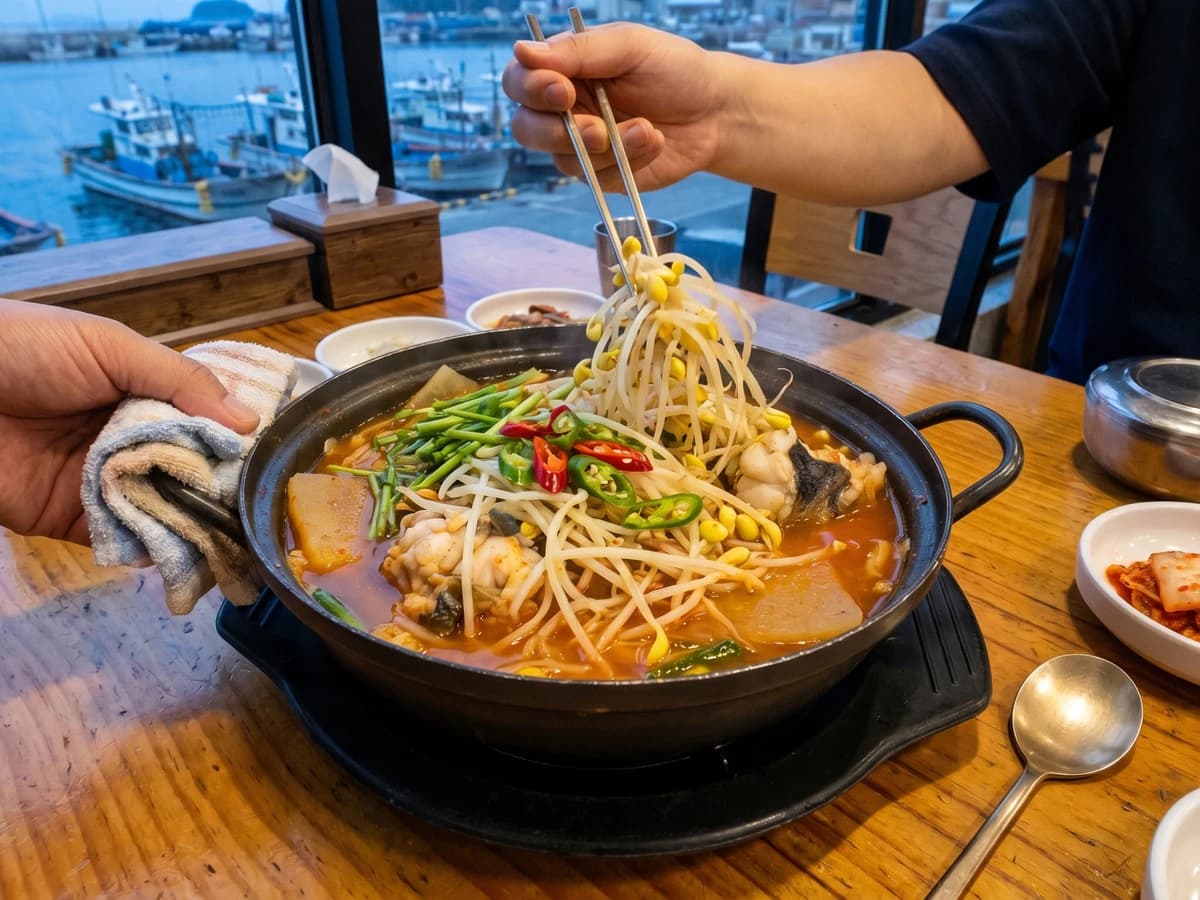
A Masan coast monkfish stew with firm white meat, gelatin at the bones, soybean sprouts for crunch, and a red broth seasoned to carry the fish, not bury it.

Chef Jeong-sun
A weeknight fish roe stew with radish and crown daisy in a clean spicy broth, where the whole success depends on adding the roe late enough that it sets tender, not chalky.

Chef Jeong-sun
Late-summer mallow leaves rubbed with salt until the bitter green water runs off, then simmered in a clean doenjang broth with dried shrimp, the quiet soup a Korean weeknight deserves.