Culinary Explorer
A cooking platform built around craft, culture, and the stories behind what we eat.
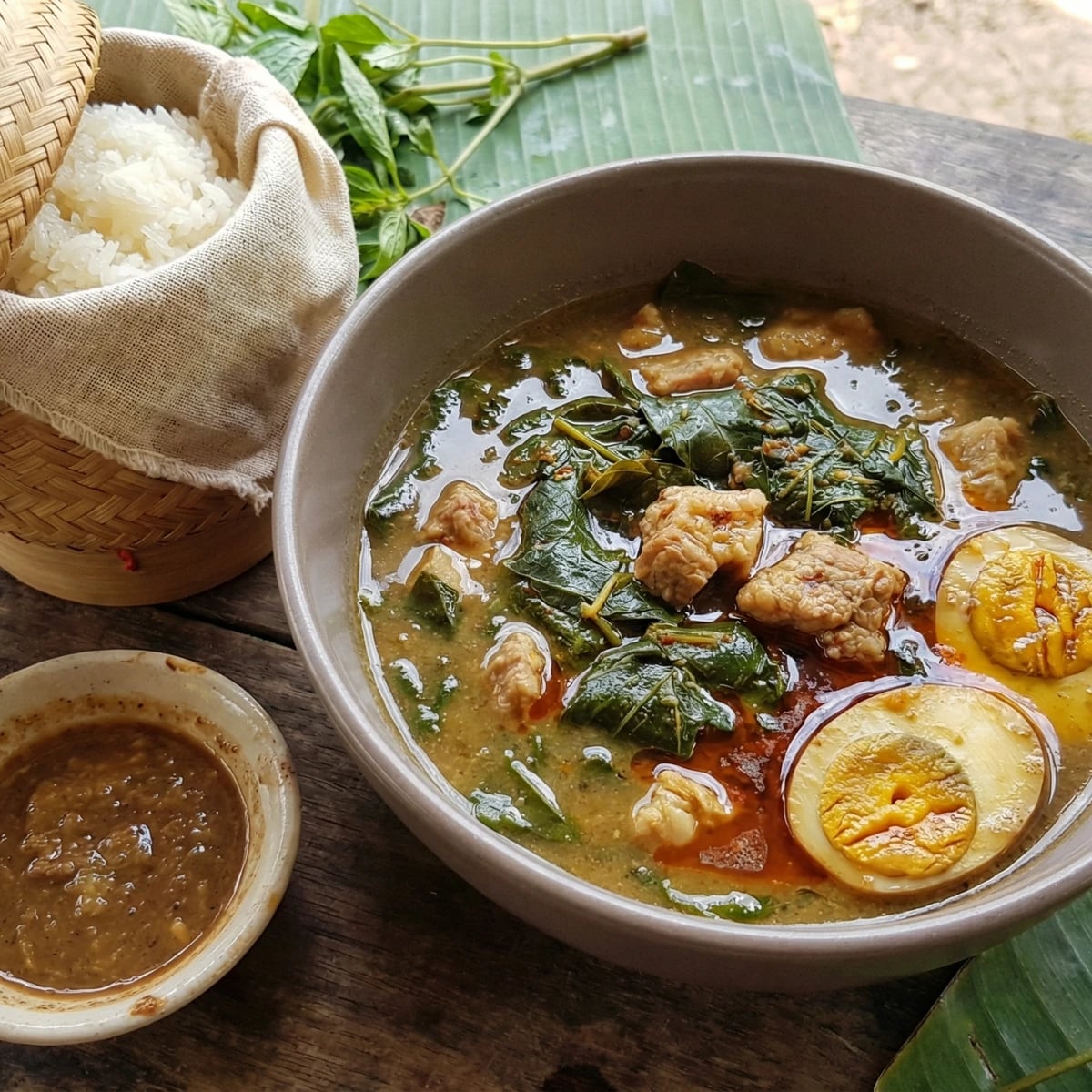
Cassia Leaf Curry (Gaeng Khi Lek)
Created by Chef Fai
Isan's bitter curry built on foraged cassia leaves, padaek funk, and a kreung tam that proves bitterness is a feature, not a flaw. The flavor dimension most of the world is too timid to embrace.
Bitterness. That's the flavor most people run from. Central Thai cooking balances salty, sweet, sour, and spicy. Isan takes all four and adds a fifth: bitter. Not as an accident. As a principle.
Gaeng khi lek is the dish that teaches this lesson. Cassia leaves (bai khi lek, ใบขี้เหล็ก) are foraged from trees that grow wild across the Isan plateau. They're bitter. Unapologetically bitter. And Isan cooks don't try to hide it. They blanch the leaves to take the edge off, then let that gentle, vegetal bitterness sit right at the center of the curry, balanced by the sour punch of tamarind and the deep, funky salinity of padaek (ปลาแดก). That's the Isan system: water-based, herb-forward, fermented-fish-driven. No coconut cream. No Central Thai sweetness. No apologies.
Ajarn always said the kreung tam is everything. Even in Isan, where the curries look nothing like a Bangkok gaeng, the foundation is still a pounded paste. Dried chilies, shallots, garlic, lemongrass, galangal, kapi. Pound it in the krok, fry it until fragrant, build the curry from there. The method is the same. The ingredients shift with the region. That's how a principled system works: the framework holds, the expression changes.
This is forager's food. My mother's people in Isan didn't go to the market for bai khi lek. They walked out to the tree in the yard, picked the young leaves and tender shoots, and made gaeng. The pork came from whatever was available. The eggs went in whole, soaking up the bitter-sour broth until they turned golden brown. You eat this with sticky rice (khao niew, ข้าวเหนียว), pinching off a piece, scooping up the curry, getting a bit of leaf and pork and egg in every bite. That's the design. Jasmine rice has no place at this table.
Ingredients
cassia leaves (bai khi lek)
Quantity
200g
young leaves and tender shoots, picked from stems
pork ribs or pork belly
Quantity
300g
cut into bite-sized pieces
eggs
Quantity
4
hard-boiled and peeled
| Ingredient | Quantity |
|---|---|
| cassia leaves (bai khi lek)young leaves and tender shoots, picked from stems | 200g |
| pork ribs or pork bellycut into bite-sized pieces | 300g |
| eggshard-boiled and peeled | 4 |
Where cooking meets culture.
Culinary guides, cultural storytelling, and the editorial depth that makes cooking meaningful.
Discover Culinary Explorer