
Chef Freja
Butterdejs-Tarteletskaller
Danish puff pastry tartelet shells folded and chilled in patient layers, baked tall and golden until they shatter at the first bite. The architecture that holds a hundred different fillings.
A cooking platform built around craft, culture, and the stories behind what we eat.
Created by Chef Freja
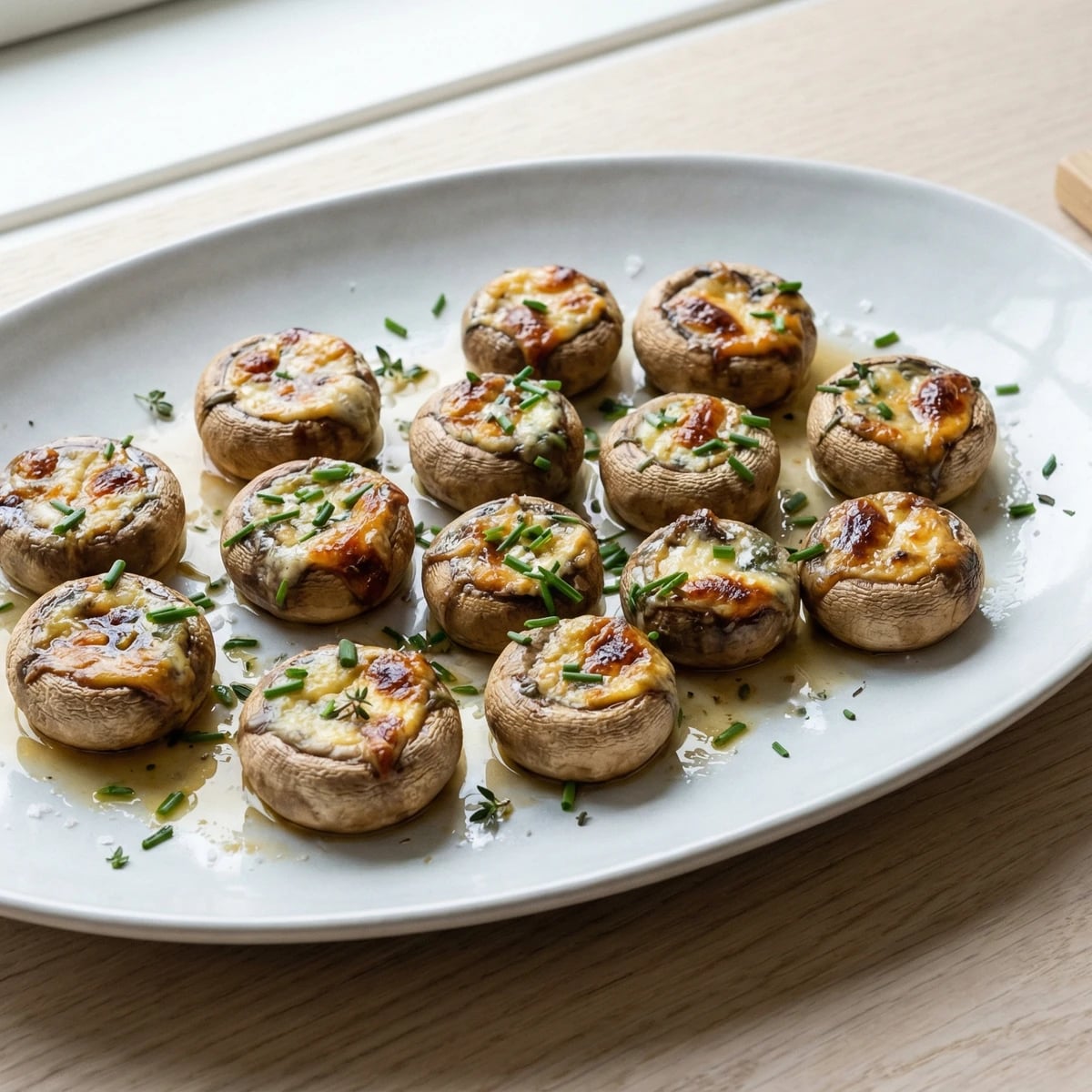
Walnut-sized mushroom caps stuffed with Danablu, butter, and chives, baked until the cheese melts into the gills and the tops turn deep amber. The Danish party bite that disappears first.
Mushroom season in Denmark begins in late August and runs through October, when the forests of Sjaelland and Jutland turn cool and damp and the foragers come back with baskets full of karl johan and trompeter. Most home cooks aren't out hunting in the woods, but the season still announces itself at the markets, where the cultivated champignons suddenly look better, firmer, denser, and the urge to do something with them follows. This is when fyldte champignoner come back to the table.
The dish belongs to the world of forretter, the small starters that begin a Danish dinner party before the main course arrives. It's the kind of bite you make when friends are coming over and you want something warm to put in their hands while they take off their coats. Danablu, Denmark's great blue cheese, is the heart of the filling, and it does most of the work for you. Mash it with butter, stir in some softened shallot and chives, mound it into the caps, and bake until the tops go amber. That's the whole technique.
There are two things to pay attention to. The first is the moisture in the mushrooms, which is the difference between a filling that holds and a filling that weeps. The second is the temperature of the cheese before you mix it. I'll walk you through both. The season decides when to make this, but once the mushrooms are good, the rest is easy. Tak for mad before you've even sat down.
Danablu was created in 1927 by Marius Boel, a Danish cheesemaker from Funen who set out to make a domestic answer to French Roquefort after Denmark's wartime trade with France collapsed. He used cow's milk instead of sheep's milk and inoculated it with Penicillium roqueforti, producing a sharper, creamier blue that quickly became one of Denmark's most exported foods. By mid-century Danablu had earned a place at the cheese end of every proper smorrebrod table, and the home-cook tradition of stuffing it into mushroom caps for parties grew alongside it, a way to put a celebrated Danish ingredient into the simplest possible vehicle.
Quantity
16, about the size of a walnut
stems removed and reserved
Quantity
150g
at room temperature
Quantity
75g
softened
Quantity
1 small
very finely minced
Quantity
1 small
grated
Quantity
2 tablespoons
Quantity
small bunch
snipped, plus extra to finish
Quantity
1 teaspoon
Quantity
freshly ground, to taste
Quantity
a few drops
Quantity
to finish
Quantity
thin slices, to serve
| Ingredient | Quantity |
|---|---|
| large white mushroomsstems removed and reserved | 16, about the size of a walnut |
| Danablu blue cheeseat room temperature | 150g |
| unsalted buttersoftened | 75g |
| shallotvery finely minced | 1 small |
| garlic clovegrated | 1 small |
| fine dry breadcrumbs | 2 tablespoons |
| chivessnipped, plus extra to finish | small bunch |
| fresh thyme leaves | 1 teaspoon |
| black pepper | freshly ground, to taste |
| lemon juice | a few drops |
| flaky sea salt | to finish |
| dark rugbrod (optional) | thin slices, to serve |
Heat the oven to 200C. Wipe the mushrooms clean with a slightly damp cloth. Don't rinse them under the tap. Mushrooms drink water like sponges, and waterlogged caps weep liquid in the oven and turn the filling into soup. Twist out the stems with a gentle pull and set them aside. You'll use them. Arrange the caps gill-side up on a baking tray lined with parchment.
Chop the reserved mushroom stems as finely as you can. Melt a small knob of the butter (taken from your 75g) in a little frying pan over medium heat. Add the minced stems with the shallot and a small pinch of salt. Cook for about four minutes, stirring, until the shallot turns translucent and the mushroom liquid has cooked off completely. You want them dry, almost dry-fried at the end. Wet stems mean a watery filling. Stir in the grated garlic for the last thirty seconds, just enough to lose its rawness, then tip everything into a bowl to cool.
In a separate bowl, mash the Danablu and the remaining softened butter together with a fork. The two should come together into a rough, marbled paste with streaks of blue running through pale gold. Don't try to make it smooth. The character of this filling lives in the unevenness, in the moments where you bite through butter and then through pure cheese. Danablu is sharper and saltier than most blue cheeses, so trust it to carry the flavor on its own.
Add the cooled shallot and mushroom mixture to the Danablu butter, along with the breadcrumbs, snipped chives, thyme leaves, a generous grind of black pepper, and a few drops of lemon juice. Fold everything together gently with the fork. Don't add salt. Danablu brings all the salt this filling needs, and more would be a mistake. Taste a tiny bit on the tip of your finger. The lemon should brighten the cheese without showing itself. If it tastes flat, add another drop or two.
Spoon the filling into the mushroom caps, mounding it slightly above the rim. A teaspoon works fine, but your fingers work better. The filling should sit proud of the cap, almost too generous. As the mushrooms cook, the caps will shrink slightly and the filling will settle into the gills, melting through them. If you fill them flush, you'll lose that golden crown on top.
Bake the mushrooms in the centre of the oven for fifteen to eighteen minutes. You're looking for two things at once: the caps should darken slightly and release a little juice around the base, and the tops of the filling should turn deep amber where the butter and cheese have caramelised. The kitchen will smell of toasted dairy and forest. That's the smell that tells you they're nearly there. You'll know when it's right.
Take the tray out and let the mushrooms rest for three minutes before moving them. The filling is volcanic straight from the oven, and the resting time also lets the caps firm up so they don't tear when you lift them. Transfer to a serving plate, scatter with extra chives and a small pinch of flaky sea salt, and serve while still warm. A few thin slices of rugbrod alongside are traditional, more useful than they sound, because the dark rye gives you something to catch the cheese that escapes.
1 serving (about 140g)
Culinary guides, cultural storytelling, and the editorial depth that makes cooking meaningful.
Discover Culinary Explorer
Chef Freja
Danish puff pastry tartelet shells folded and chilled in patient layers, baked tall and golden until they shatter at the first bite. The architecture that holds a hundred different fillings.

Chef Freja
Danish pork crackling, simmered tender, dried until parchment, then fried until it puffs and shatters. The beer snack of every Danish kro, salty and golden and made for cold pilsner and good company.

Chef Freja
Hard-boiled egg halves heaped with cold-water fjord shrimp, dill mayonnaise, and a single frond of dill standing upright. The piece that disappears first from any Danish julefrokost table.

Chef Freja
Egg halves crowned with creme fraiche and the season's first stenbiderrogn, Danish lumpfish roe. A late-winter ritual along the Danish coasts when the fish come in and the kitchen reorients around them.