
Chef Graziella
Crespelle ai Funghi Trifolati
Delicate Italian crepes wrapped around mushrooms sautéed in the trifolati manner, where olive oil, a breath of garlic, and fresh parsley create something far greater than the sum of their parts.
A cooking platform built around craft, culture, and the stories behind what we eat.

Created by
The frittata of the Northern Italian forests, where eggs meet porcini in quiet communion. No cream, no excess, just patience and the understanding that breakfast deserves the same respect as dinner.
Afrittata is not a French omelet. It does not fold. It does not run. It cooks slowly, patiently, until the bottom sets golden and the top remains barely trembling. Then you finish it, either under heat or by the slide-and-flip method that requires confidence and a prayer.
Porcini are the king of mushrooms in Italy, and they appear here in their most honest form: sliced, sautéed in butter until their edges crisp, then suspended in eggs that cook around them like amber preserving a treasure. The earthiness of porcini is profound. It needs nothing else, no competing vegetables, no distracting herbs beyond parsley.
If you have fresh porcini, which appear in autumn and cost accordingly, use them with gratitude. If you have dried porcini, which are actually more concentrated in flavor, soak them properly and use both the mushrooms and their soaking liquid. What you cannot do is substitute cremini or button mushrooms and call this a porcini frittata. That would be a lie on the plate.
Frittatas descend from ancient Roman egg preparations, though the name comes from 'friggere,' to fry. In the forested hills of Piedmont and Emilia-Romagna, autumn porcini hunting remains a serious, sometimes secretive tradition. Families guard their mushroom spots like inheritance. This frittata represents the forager's reward brought to the morning table.
Quantity
8 ounces fresh, or 1 ounce dried
Quantity
6
Quantity
3 tablespoons
Quantity
1 small
minced fine
Quantity
1/2 cup
freshly grated
Quantity
2 tablespoons
chopped
Quantity
to taste
Quantity
to taste
freshly ground
| Ingredient | Quantity |
|---|---|
| porcini mushrooms | 8 ounces fresh, or 1 ounce dried |
| large eggs | 6 |
| unsalted butter | 3 tablespoons |
| shallotminced fine | 1 small |
| Parmigiano-Reggianofreshly grated | 1/2 cup |
| flat-leaf Italian parsleychopped | 2 tablespoons |
| kosher salt | to taste |
| black pepperfreshly ground | to taste |
If using dried porcini, place them in a bowl and cover with one cup of warm water. Let them soak for 30 minutes. Lift the mushrooms out gently, leaving any grit behind. Squeeze excess liquid back into the bowl, then strain the soaking liquid through a fine-mesh sieve lined with a paper towel. Reserve this liquid. If using fresh porcini, brush away any dirt with a soft brush or damp cloth. Never submerge fresh porcini in water. Slice the mushrooms one-quarter inch thick.
In a 10-inch nonstick or well-seasoned cast iron skillet, melt 2 tablespoons of the butter over medium heat. When the foam subsides, add the shallot and cook until soft and translucent, about 2 minutes. Add the porcini slices and spread them in a single layer. Let them cook undisturbed for 2 minutes to develop color on the bottom. Stir, then continue cooking until the mushrooms are golden at the edges and tender throughout, about 5 minutes more. If using reconstituted dried porcini, add 2 tablespoons of the strained soaking liquid and let it evaporate. Season lightly with salt and pepper. Transfer the mushrooms to a plate to cool slightly.
Crack the eggs into a bowl. Add the grated Parmigiano-Reggiano, chopped parsley, a generous pinch of salt, and several grinds of black pepper. Beat with a fork until the yolks and whites are just combined. Do not overbeat into froth. You want a homogeneous mixture with visible streaks of yolk. Fold in the cooled mushrooms.
Wipe out the skillet if needed and add the remaining tablespoon of butter over medium-low heat. When melted, swirl to coat the bottom and sides. Pour in the egg mixture and immediately reduce the heat to low. The frittata must cook gently. Use a spatula to push the edges toward the center during the first two minutes, letting uncooked egg flow underneath. Then leave it alone. Cook until the bottom is set and golden, the edges pull away from the pan, and the top is still slightly wet, about 12 to 15 minutes.
Position an oven rack six inches from the broiler and heat the broiler. Slide the skillet under the broiler and cook until the top is set and lightly golden with a few brown spots, 1 to 2 minutes. Watch it constantly. The difference between done and overdone is seconds. Alternatively, place a large plate over the skillet, flip the frittata onto the plate, then slide it back into the pan to cook the second side for 1 to 2 minutes.
Slide the frittata onto a cutting board and let it rest for 5 minutes. The eggs continue cooking from residual heat and the texture improves as it settles. Cut into wedges and serve warm or at room temperature. In Italy, frittata is often eaten at room temperature, and some would say the flavor deepens as it cools. This is a matter of preference. What is not optional is eating it the same day you make it.
1 serving (about 165g)
Culinary guides, cultural storytelling, and the editorial depth that makes cooking meaningful.
Discover Culinary ExplorerChef Graziella
Delicate Italian crepes wrapped around mushrooms sautéed in the trifolati manner, where olive oil, a breath of garlic, and fresh parsley create something far greater than the sum of their parts.

Chef Graziella
Thin Italian crepes wrapped around fresh ricotta brightened with garden herbs. A dish that proves breakfast can be civilized, that morning can begin with restraint and grace rather than excess.
Chef Graziella
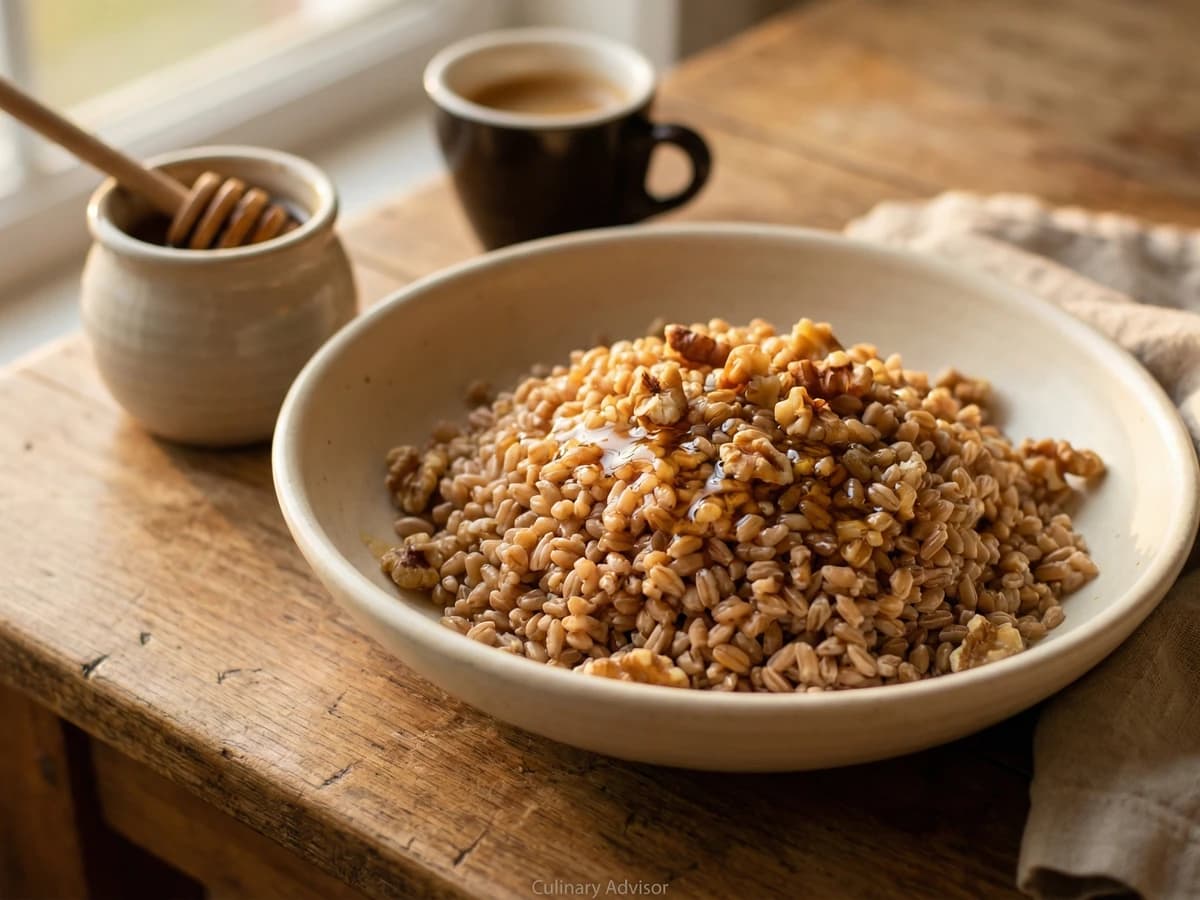
The grain that built Rome, simmered until tender with a pleasant resistance, finished with nothing but good honey and walnuts you have toasted yourself. Three ingredients. No pretense.
Chef Graziella
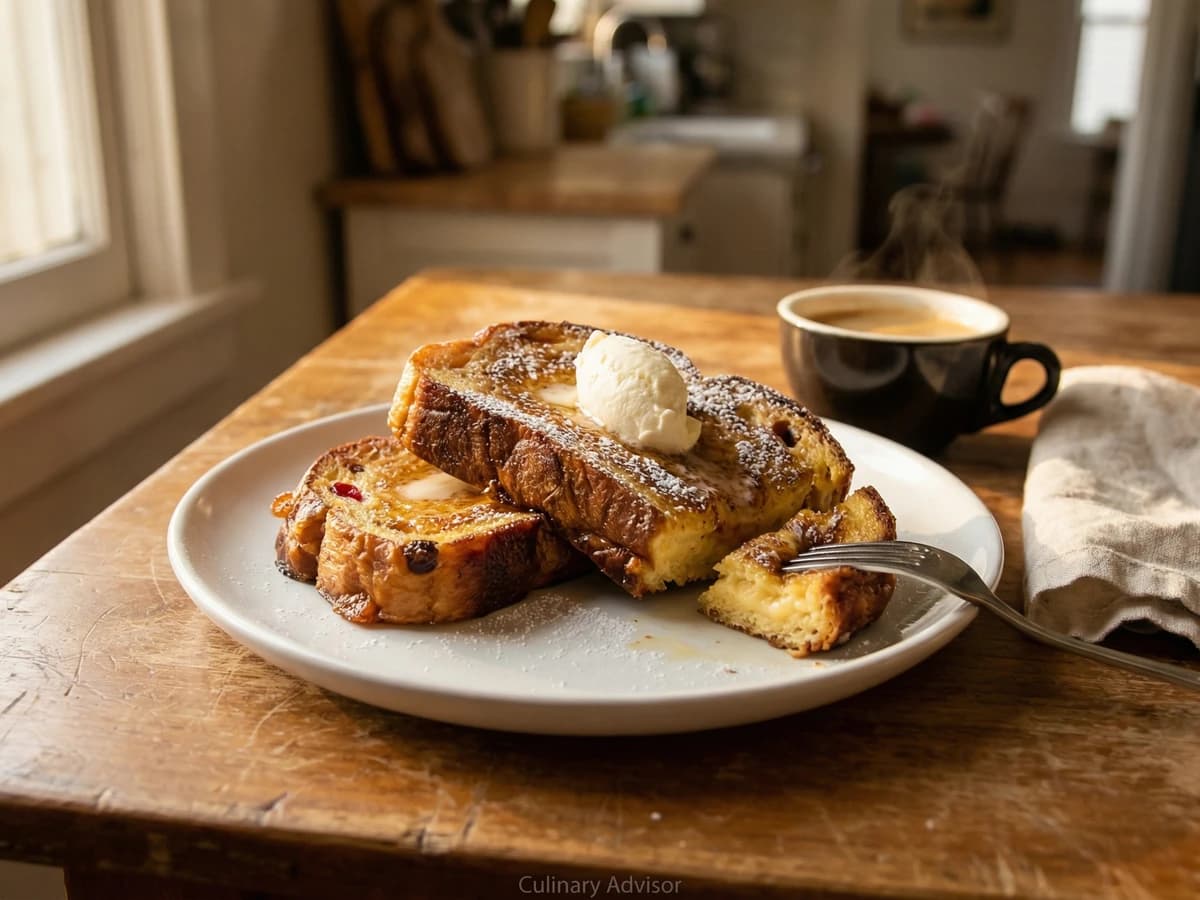
Day-old panettone reborn in a simple egg custard, griddled in butter until the edges turn golden and the candied citrus begins to caramelize. This is what Milanese grandmothers do with Christmas leftovers.