
Chef Graziella
Caponata Siciliana
The great sweet-sour eggplant dish of Sicily, where each vegetable is fried separately then united in a tomato sauce sharpened with vinegar and softened with a little sugar. This is not a recipe to rush.
A cooking platform built around craft, culture, and the stories behind what we eat.
Created by
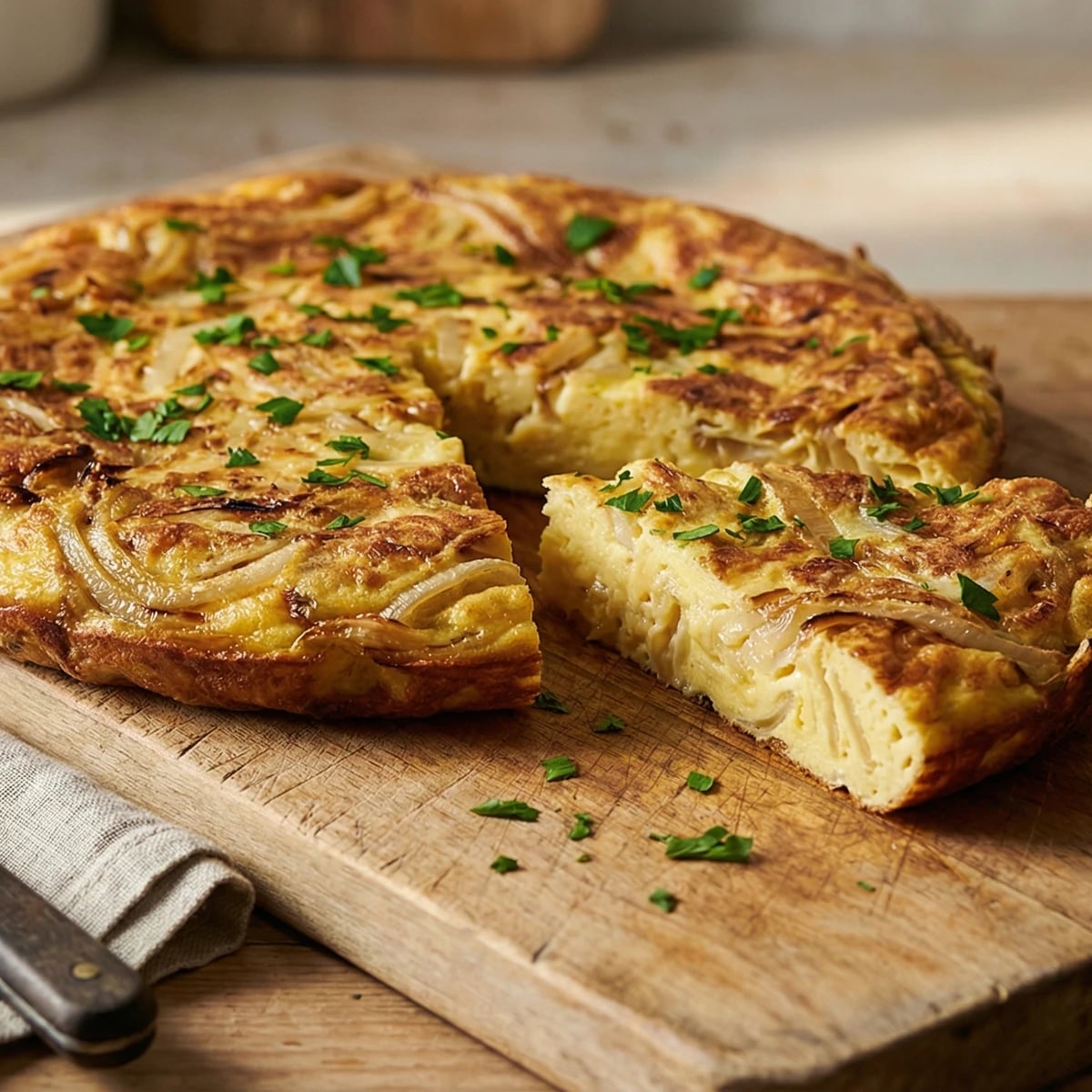
Piedmontese farmhouse cooking in its purest form. Two pounds of onions become sweet and golden through patience, then bind with eggs into something that needs nothing more.
The frittata is not a French omelet. It is not folded, not runny, not pale. It is an Italian creation: flat, set throughout, cooked slowly until the eggs are tender and the filling has given everything it has to give. When the filling is onions, cooked properly, you have one of the most satisfying dishes in the Italian repertoire.
In Piedmont, where the winters are cold and the cooking is honest, onion frittata has fed farm families for centuries. It costs almost nothing. It uses ingredients every kitchen has. And when made with attention, it tastes like something far more complicated than its ingredient list suggests.
The secret is time. You cannot rush onions. High heat makes them bitter and burnt at the edges. Low heat, sustained for 40 minutes, transforms them into something sweet, soft, and golden. This is the foundation. Skip this step or hurry it, and you will have eggs with crunchy onion bits. That is not a frittata. That is failure.
Frittata di cipolle belongs to the cucina povera tradition of Piedmont, where farmers' wives transformed humble ingredients into sustaining meals. The dish appears in regional cookbooks from the 19th century, though it was surely made for generations before anyone thought to write it down. In the countryside around Turin and Alba, it remains standard fare for a light supper or a packed lunch in the fields.
Quantity
2 pounds
sliced thin
Quantity
4 tablespoons
Quantity
2 tablespoons
Quantity
8
at room temperature
Quantity
1/2 cup
freshly grated
Quantity
2 tablespoons
chopped fine
Quantity
1/2 teaspoon, plus more for onions
Quantity
to taste
freshly ground
| Ingredient | Quantity |
|---|---|
| yellow onionssliced thin | 2 pounds |
| unsalted butter | 4 tablespoons |
| extra virgin olive oil | 2 tablespoons |
| large eggsat room temperature | 8 |
| Parmigiano-Reggianofreshly grated | 1/2 cup |
| fresh flat-leaf parsleychopped fine | 2 tablespoons |
| fine sea salt | 1/2 teaspoon, plus more for onions |
| black pepperfreshly ground | to taste |
Slice the onions thin and even. Uniformity matters. Thick pieces will remain crunchy while thin ones burn. Use a sharp knife and take your time. Two pounds of onions will seem like a mountain. They will cook down to almost nothing. This is correct.
In a 10-inch skillet with sloped sides, melt the butter with the olive oil over medium-low heat. Add the onions and a generous pinch of salt. The salt draws moisture from the onions and helps them soften. Stir to coat every strand with fat. Reduce heat to low. Cook for 35 to 45 minutes, stirring occasionally, until the onions are completely soft, golden, and sweet. They should melt on your tongue.
While the onions cook, crack the eggs into a large bowl. Add the Parmigiano-Reggiano, parsley, half teaspoon of salt, and several grinds of pepper. Beat with a fork until the yolks and whites are combined but not frothy. You want a unified mixture, not foam.
When the onions are done, let them cool for five minutes in the pan. They should not be so hot that they scramble the eggs on contact. Add the onions to the egg mixture and stir thoroughly. Every strand should be distributed throughout.
Return the same skillet to medium-low heat. Add a thin film of olive oil if the pan seems dry. Pour in the egg and onion mixture, spreading the onions evenly with a fork. Cook without stirring. After two minutes, reduce heat to the lowest setting. Let the frittata set slowly, about 8 to 10 minutes. The edges will pull away from the pan. The top will still be slightly wet.
You have two choices. The traditional method: place a flat plate over the skillet, invert the frittata onto it, then slide it back into the pan to cook the other side for two minutes. The modern method: place the skillet under a hot broiler for one to two minutes until the top is set and barely golden. Both work. The flip produces a more even result. The broiler is easier.
Slide the frittata onto a cutting board or serving plate. Let it rest for five minutes. The eggs continue cooking from residual heat and the texture settles. Cut into wedges. Serve warm or at room temperature. A frittata is not served hot from the pan. It is patient food for patient people.
1 serving (about 210g)
Culinary guides, cultural storytelling, and the editorial depth that makes cooking meaningful.
Discover Culinary Explorer
Chef Graziella
The great sweet-sour eggplant dish of Sicily, where each vegetable is fried separately then united in a tomato sauce sharpened with vinegar and softened with a little sugar. This is not a recipe to rush.

Chef Graziella
The crown jewel of Roman Jewish cooking, where globe artichokes are trimmed with surgical precision, fried twice until their leaves open like chrysanthemums, and served crackling and golden. This is what respect for a vegetable looks like.

Chef Graziella
The great spring dish of the Roman table, where artichokes stuffed with wild mint and garlic surrender to a slow braise until they yield completely. The perfumed cooking liquid is not sauce. It is the point.

Chef Graziella
Roman eggs and artichokes, cooked slowly until golden on the outside and barely set within. A springtime secondo that proves the magnificence of vegetables treated with respect.