
Chef Graziella
Abbacchio a Scottadito
Roman lamb chops grilled over scorching heat, seasoned with nothing but salt, rosemary, and fire. You eat them with your hands, straight from the grill, burning your fingers because you cannot wait.
A cooking platform built around craft, culture, and the stories behind what we eat.
Created by
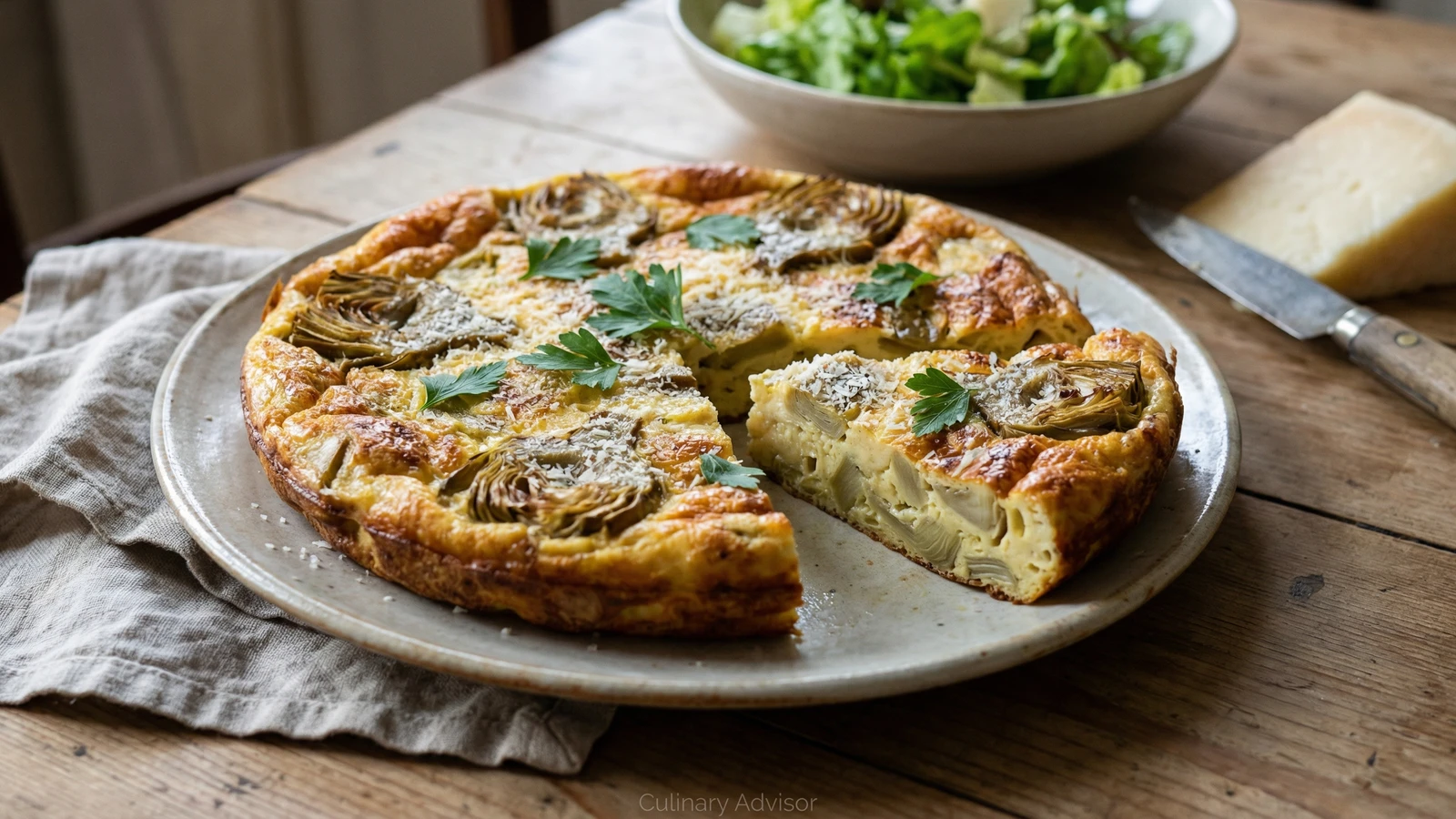
Roman eggs and artichokes, cooked slowly until golden on the outside and barely set within. A springtime secondo that proves the magnificence of vegetables treated with respect.
The frittata is not an omelet. Americans confuse the two because both involve eggs in a pan, but the technique and intention are entirely different. An omelet is French, cooked fast over high heat, folded, and served immediately. A frittata is Italian, cooked slowly over low heat, flat as a cake, and served at any temperature. The omelet is about the egg. The frittata is about what you put in it.
In Rome, when the first artichokes arrive in early spring, this is what home cooks make. The artichokes must be cleaned properly, which takes time. Americans often skip this step and wonder why their artichokes taste of hay and fiber. There is no shortcut. You remove the tough outer leaves. You trim the tops. You scrape out the choke. You drop the hearts in lemon water so they do not turn gray. Then, and only then, do you have something worth cooking.
Pecorino Romano is the cheese of Rome, not Parmigiano-Reggiano. They are not interchangeable. Pecorino is sharper, saltier, with a distinctive tang from sheep's milk. When you taste this frittata, you taste Rome.
The frittata belongs to the cucina povera tradition, where eggs stretched scarce ingredients into a full meal. Roman Jews, confined to the Ghetto for centuries, developed some of the city's most celebrated artichoke preparations, including carciofi alla giudia. The frittata di carciofi emerged from this same resourcefulness, transforming a few spring artichokes and a handful of eggs into a dish substantial enough for a family dinner.
Quantity
4 (about 1 1/2 pounds)
Quantity
1
halved
Quantity
3 tablespoons
Quantity
2
lightly crushed
Quantity
1/4 cup
Quantity
8
Quantity
1/2 cup
freshly grated
Quantity
2 tablespoons
chopped
Quantity
1/2 teaspoon
Quantity
to taste
freshly ground
| Ingredient | Quantity |
|---|---|
| medium artichokes | 4 (about 1 1/2 pounds) |
| lemonhalved | 1 |
| extra virgin olive oil | 3 tablespoons |
| garlic cloveslightly crushed | 2 |
| dry white wine | 1/4 cup |
| large eggs | 8 |
| Pecorino Romanofreshly grated | 1/2 cup |
| flat-leaf parsleychopped | 2 tablespoons |
| kosher salt | 1/2 teaspoon |
| black pepperfreshly ground | to taste |
Fill a bowl with cold water and squeeze in the juice of one lemon half. Working with one artichoke at a time, snap off the dark outer leaves until you reach the pale yellow-green heart. Cut off the top third, where the leaves are tough and pointed. Trim the stem, leaving about one inch attached, and peel away the fibrous outer layer. Cut the artichoke in half lengthwise. If there is a fuzzy choke, scrape it out with a spoon. Slice each half into thin wedges, about one-quarter inch thick. Drop the slices immediately into the lemon water. Repeat with the remaining artichokes.
Drain the artichoke slices and pat them thoroughly dry. In a 10-inch nonstick or well-seasoned skillet, warm the olive oil over medium heat. Add the crushed garlic and let it sizzle gently until fragrant, about one minute. Remove and discard the garlic. Add the artichoke slices in a single layer. Cook without stirring for 3 minutes to develop some color on the bottom. Stir, then continue cooking until the artichokes are tender when pierced with a knife, 8 to 10 minutes more. Add the wine and let it evaporate completely. Season with a pinch of salt.
While the artichokes cook, crack the eggs into a large bowl. Add the Pecorino Romano, parsley, salt, and several grinds of black pepper. Beat with a fork until the yolks and whites are just combined. Do not overbeat. You want streaks of white visible in the mixture. Overbeaten eggs produce a rubbery frittata.
Reduce the heat to low. Spread the artichokes evenly across the bottom of the pan. Pour the egg mixture over them. Let it sit undisturbed for one minute, then use a spatula to gently lift the edges, tilting the pan to let uncooked egg flow underneath. Continue this for 2 to 3 minutes until the bottom is set but the top remains wet.
Position a rack about 6 inches from the broiler element and preheat the broiler. When the frittata is nearly set but still slightly wet on top, transfer the skillet to the oven. Broil for 2 to 3 minutes, watching carefully, until the top is golden and puffed. The eggs should be just set, not dry. They will continue cooking from residual heat.
Let the frittata rest in the pan for 3 minutes. Run a spatula around the edges and underneath to loosen it. Slide onto a cutting board or serving plate. Cut into wedges. Serve warm or at room temperature. In Rome, this is a secondo, the main course, not a breakfast food. It belongs on the dinner table with a simple salad and good bread.
1 serving (about 170g)
Culinary guides, cultural storytelling, and the editorial depth that makes cooking meaningful.
Discover Culinary ExplorerChef Graziella
Roman lamb chops grilled over scorching heat, seasoned with nothing but salt, rosemary, and fire. You eat them with your hands, straight from the grill, burning your fingers because you cannot wait.

Chef Graziella
Roman milk-fed lamb cut like a chicken, braised with wine, rosemary, and anchovy until the meat surrenders to the fork. The anchovy disappears. The flavor does not.

Chef Graziella
The true sauce of Amatrice: guanciale rendered to gold, tomatoes barely simmered, pecorino melted into silk. Three ingredients that tolerate no substitution and no addition.

Chef Graziella
Three ingredients expose every flaw and reward every success. The silky emulsion of pecorino and pasta water, studded with cracked black pepper, is Rome's gift to cooks who understand that simple does not mean easy.