
Chef Graziella
Crespelle ai Funghi Trifolati
Delicate Italian crepes wrapped around mushrooms sautéed in the trifolati manner, where olive oil, a breath of garlic, and fresh parsley create something far greater than the sum of their parts.
A cooking platform built around craft, culture, and the stories behind what we eat.

Created by
Humble eggs, tender potatoes, and sweet onions cooked slowly in good olive oil. This is breakfast the Italian way, where three ingredients become a complete meal.
Afrittata is not an omelet with pretensions. It is something else entirely. The omelet is French, cooked quickly, folded, served with a trembling center. The frittata is Italian, cooked slowly, set firmly, cut into wedges, often eaten at room temperature. Different intentions require different techniques.
The foundation of this frittata is the same principle that governs all Italian cooking: flavor builds from the bottom. The potatoes and onions must cook slowly in olive oil until they are completely tender, sweet, and golden. Only then do you add the eggs. Americans rush this step because they are impatient. Then they wonder why their frittata tastes flat.
I have seen recipes calling for cream, milk, herbs, peppers, cheese of five different kinds. This is not a frittata. This is a garbage disposal. The beauty of frittata con patate e cipolle is its restraint. Eggs. Potatoes. Onions. A little Parmigiano if you like. What you keep out is as significant as what you put in.
The frittata appears in Italian cookbooks as early as the 15th century, though the technique is certainly older. The word derives from friggere, to fry. Contadine across every region made frittata from whatever vegetables the garden offered that morning. Potatoes came later, after the New World imports arrived, but the combination of patate e cipolle became a standard of Roman and Neapolitan home cooking by the 19th century.
Quantity
6
at room temperature
Quantity
1 pound
peeled and sliced 1/8-inch thick
Quantity
1 large
halved and sliced thin
Quantity
1/4 cup
Quantity
1/2 cup
freshly grated
Quantity
1 teaspoon, plus more for seasoning
Quantity
to taste
freshly ground
| Ingredient | Quantity |
|---|---|
| large eggsat room temperature | 6 |
| Yukon Gold potatoespeeled and sliced 1/8-inch thick | 1 pound |
| yellow onionhalved and sliced thin | 1 large |
| extra virgin olive oil | 1/4 cup |
| Parmigiano-Reggianofreshly grated | 1/2 cup |
| kosher salt | 1 teaspoon, plus more for seasoning |
| black pepperfreshly ground | to taste |
In a 10-inch nonstick or well-seasoned cast iron skillet, warm the olive oil over medium-low heat. Add the potato slices and onion, spreading them into an even layer. Season with half a teaspoon of salt. Cook slowly, turning occasionally with a spatula, until the potatoes are completely tender and the onions are soft and golden. This takes 20 to 25 minutes. Do not rush. If you hear aggressive sizzling, your heat is too high.
While the vegetables cook, crack the eggs into a bowl. Add the remaining half teaspoon of salt, several grinds of black pepper, and the grated Parmigiano. Beat with a fork until the yolks and whites are just combined. Do not overbeat. You want to see some variation in color. No cream. No milk. The eggs are enough.
When the potatoes are tender and the onions are golden, pour the beaten eggs evenly over the vegetables. Use your spatula to gently distribute the potatoes and onions so they are suspended throughout the egg mixture. Reduce the heat to low.
Let the frittata cook undisturbed over low heat. The edges will begin to set and pull away from the pan. The surface will remain wet. This takes 8 to 10 minutes. Shake the pan occasionally. The frittata should slide freely. If it sticks, your pan was not properly prepared or your heat is too high.
Position your oven rack six inches below the broiler and preheat it. When the frittata is set around the edges but still wet on top, slide the skillet under the broiler. Watch it constantly. In 2 to 3 minutes, the top will puff slightly and turn golden with brown spots. The center should be just set, not dry. Remove immediately.
Let the frittata rest in the pan for 5 minutes. Run a spatula around the edges and slide it onto a cutting board or serving plate. Cut into wedges. Serve warm or at room temperature. A frittata that must be eaten immediately is a frittata made incorrectly. It should hold its shape and its warmth for an hour or more.
1 serving (about 215g)
Culinary guides, cultural storytelling, and the editorial depth that makes cooking meaningful.
Discover Culinary ExplorerChef Graziella
Delicate Italian crepes wrapped around mushrooms sautéed in the trifolati manner, where olive oil, a breath of garlic, and fresh parsley create something far greater than the sum of their parts.

Chef Graziella
Thin Italian crepes wrapped around fresh ricotta brightened with garden herbs. A dish that proves breakfast can be civilized, that morning can begin with restraint and grace rather than excess.
Chef Graziella
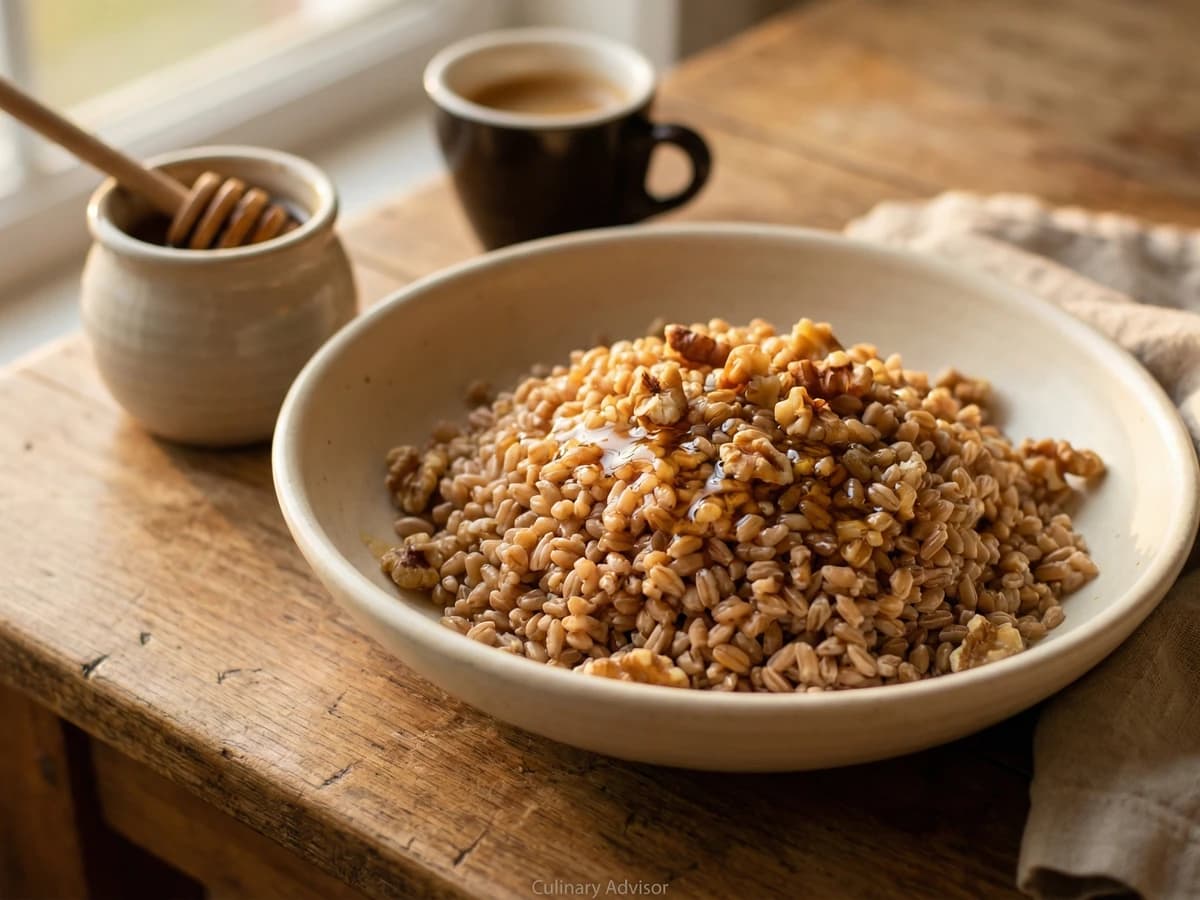
The grain that built Rome, simmered until tender with a pleasant resistance, finished with nothing but good honey and walnuts you have toasted yourself. Three ingredients. No pretense.
Chef Graziella
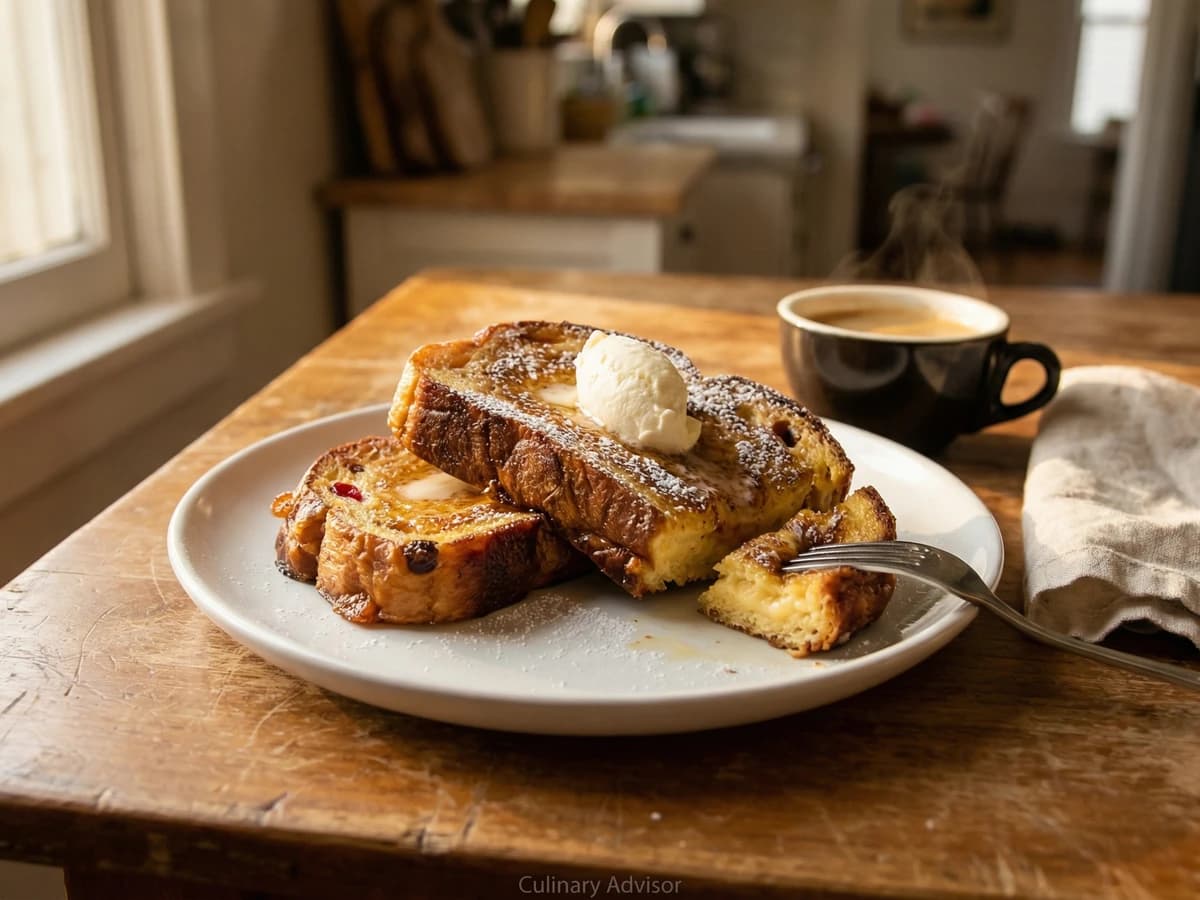
Day-old panettone reborn in a simple egg custard, griddled in butter until the edges turn golden and the candied citrus begins to caramelize. This is what Milanese grandmothers do with Christmas leftovers.