
Chef Lupita
Arroz a la Oaxaqueña
Oaxaca's red rice, stained with tomato and fried in lard, steamed with carrots, ejotes, black beans, and epazote. The side that anchors a Oaxacan family meal and earns its place beside the main.
A cooking platform built around craft, culture, and the stories behind what we eat.
Created by
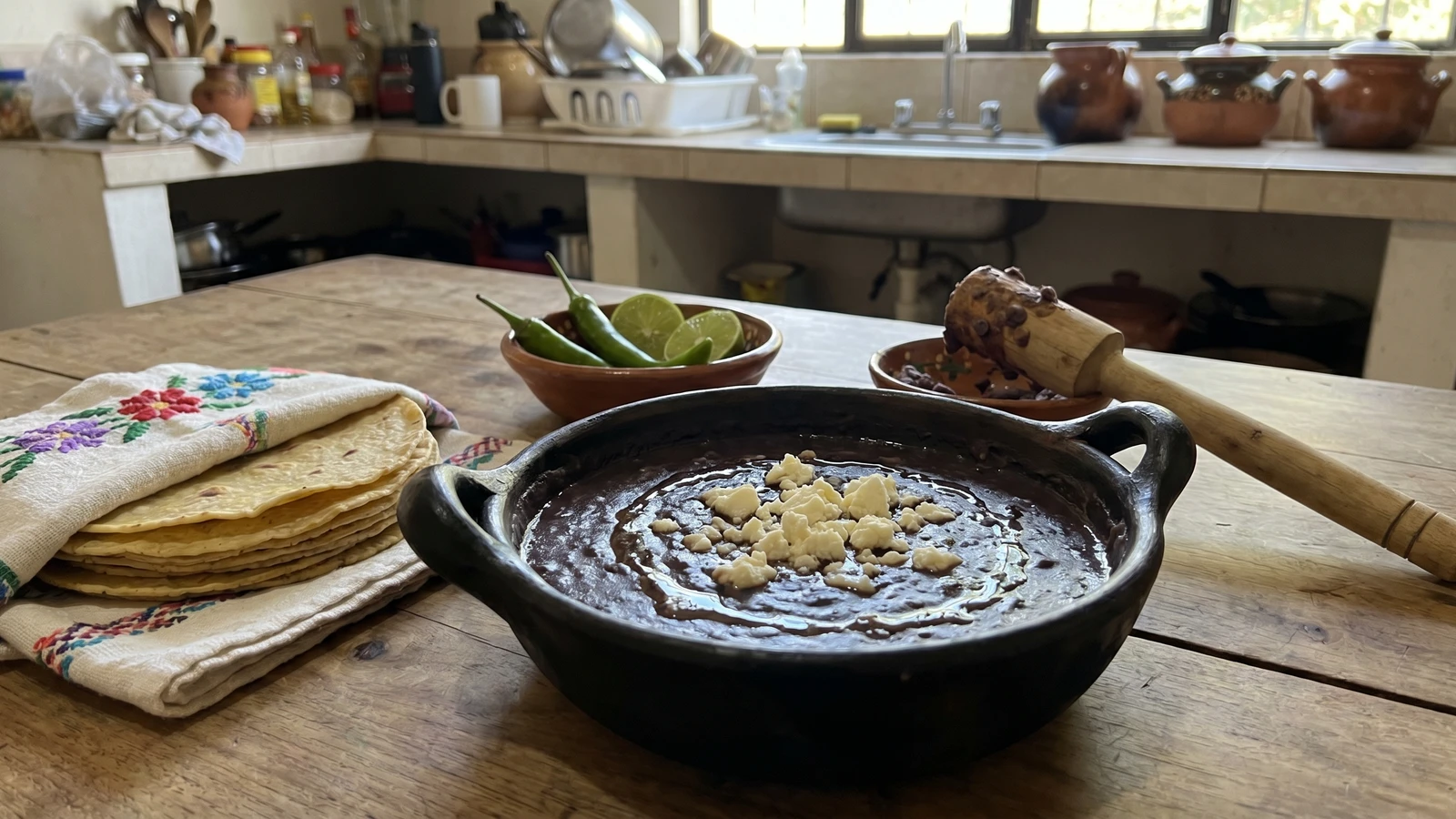
Chiapas' everyday black beans, cooked with epazote and refried in manteca de cerdo until glossy, dense, and ready for cochito horneado, thick corn tortillas, and a table that knows the value of fat.
Chiapas, from Los Altos around San Cristobal de las Casas down toward Chiapa de Corzo, keeps black beans close to the center of the table. These are the beans beside cochito horneado, beside thick hand-pressed tortillas, beside a bowl of chile amashito for the person who wants bite. The dish is daily food, but daily does not mean careless.
The bean is black. The herb is epazote. The fat is manteca de cerdo. That is the architecture. In the Mercado Jose Castillo Tielemans, I watched women judge cooked beans by how the broth clung to the spoon before they ever thought about refrying them. If the bean broth is thin, the refrito will be weak. If the lard is stingy, the beans will look tired. No me vengas con atajos.
My mother was from Jalisco, so her beans leaned another direction. In Chiapas, the black bean rules, and the women who perfected this did it by cooking the same pot all week: frijoles de olla on Monday, refritos on Tuesday, tucked into tortillas the next morning. Saber cocinar es saber vivir. You learn economy by paying attention to the pot.
Black beans, maize, squash, and chile were part of the Maya milpa system in Chiapas long before the Spanish conquest, and the region's preference for black beans still connects daily cooking to that older agricultural base. Epazote, a Mesoamerican herb used with beans for aroma and digestion, remained in the pot after the 16th-century arrival of pigs introduced manteca de cerdo as a household cooking fat. Refried beans in Chiapas are not a restaurant garnish; they are a practical evolution of frijoles de olla, cooked once and transformed across several meals.
Quantity
1 pound
preferably small Mexican black beans, rinsed and picked over
Quantity
8 cups, plus more as needed
Quantity
1/2 medium
left in one piece
Quantity
3
peeled and lightly crushed
Quantity
2 large sprigs
Quantity
1 1/2 teaspoons, plus more to taste
Quantity
6 tablespoons
divided
Quantity
1/2 medium
finely chopped
Quantity
1
finely grated or minced
Quantity
1
lightly bruised, for perfuming the lard
Quantity
1 to 1 1/2 cups
Quantity
for serving
crumbled
Quantity
for the table
Quantity
for serving
warmed on a comal
| Ingredient | Quantity |
|---|---|
| dried black beanspreferably small Mexican black beans, rinsed and picked over | 1 pound |
| water | 8 cups, plus more as needed |
| white onionleft in one piece | 1/2 medium |
| garlic clovespeeled and lightly crushed | 3 |
| fresh epazote | 2 large sprigs |
| kosher salt | 1 1/2 teaspoons, plus more to taste |
| manteca de cerdo (pork lard)divided | 6 tablespoons |
| white onionfinely chopped | 1/2 medium |
| garlic clovefinely grated or minced | 1 |
| fresh chile amashito (optional)lightly bruised, for perfuming the lard | 1 |
| reserved black bean cooking liquid | 1 to 1 1/2 cups |
| queso crema de Chiapas or queso fresco (optional)crumbled | for serving |
| fresh chile amashito with lime and salt (optional) | for the table |
| hand-pressed corn tortillaswarmed on a comal | for serving |
Spread the black beans on a tray and pick out stones, broken beans, and anything that does not belong in the pot. Rinse them under cool water until the water runs clear. Do not skip this because beans come from fields, sacks, and market bins. Si no conoces el mercado, no conoces la cocina.
Put the beans in a clay olla or heavy pot with 8 cups water, the onion half, and the crushed garlic. Bring to a boil, then lower to a steady simmer. After the first foam settles, add the epazote. Cook uncovered or partially covered for 1 hour and 30 minutes to 2 hours, adding hot water if the beans start to peek above the liquid. The beans are ready when they are creamy inside and the broth is dark, almost inky.
When the beans are tender, stir in 1 1/2 teaspoons salt and simmer 10 minutes more so the seasoning reaches the center of the beans. Remove and discard the epazote stems and the onion half. Save at least 1 1/2 cups of the bean cooking liquid. That broth is not waste. It is the body of the refrito.
Set a wide clay cazuela or heavy skillet over medium heat and melt 4 tablespoons manteca de cerdo. Add the finely chopped onion and cook until it softens and turns golden at the edges, 7 to 9 minutes. Add the minced garlic and the bruised chile amashito, if using, and stir for 30 seconds. The chile perfumes the fat. It does not need to turn the whole pot into a dare.
Scoop the cooked beans into the hot lard with a slotted spoon. They will hiss when they touch the fat. Mash with a bean masher, potato masher, or the back of a wooden spoon, adding the reserved bean broth a ladle at a time. You are building a thick paste, not soup. Keep mashing until some beans disappear completely and others stay half-broken for texture.
Cook the mashed beans 10 to 12 minutes, stirring and scraping the bottom so they do not catch. Add the remaining 2 tablespoons manteca de cerdo and keep working the beans until they turn glossy and the spoon leaves a clean trail through the pan for a few seconds. Taste for salt. The beans should be rich, earthy, and deep, with epazote in the background.
Spoon the beans into a warm clay cazuelita and smooth the top with the back of the spoon. Scatter queso crema de Chiapas or queso fresco over the surface if using. Serve with hand-pressed corn tortillas from the comal and fresh chile amashito with lime and salt at the table. Flour tortillas belong to the north. Here the tortilla is corn. Cada estado, su propia cocina.
1 serving (about 300g)
Culinary guides, cultural storytelling, and the editorial depth that makes cooking meaningful.
Discover Culinary ExplorerChef Lupita
Oaxaca's red rice, stained with tomato and fried in lard, steamed with carrots, ejotes, black beans, and epazote. The side that anchors a Oaxacan family meal and earns its place beside the main.
Chef Lupita
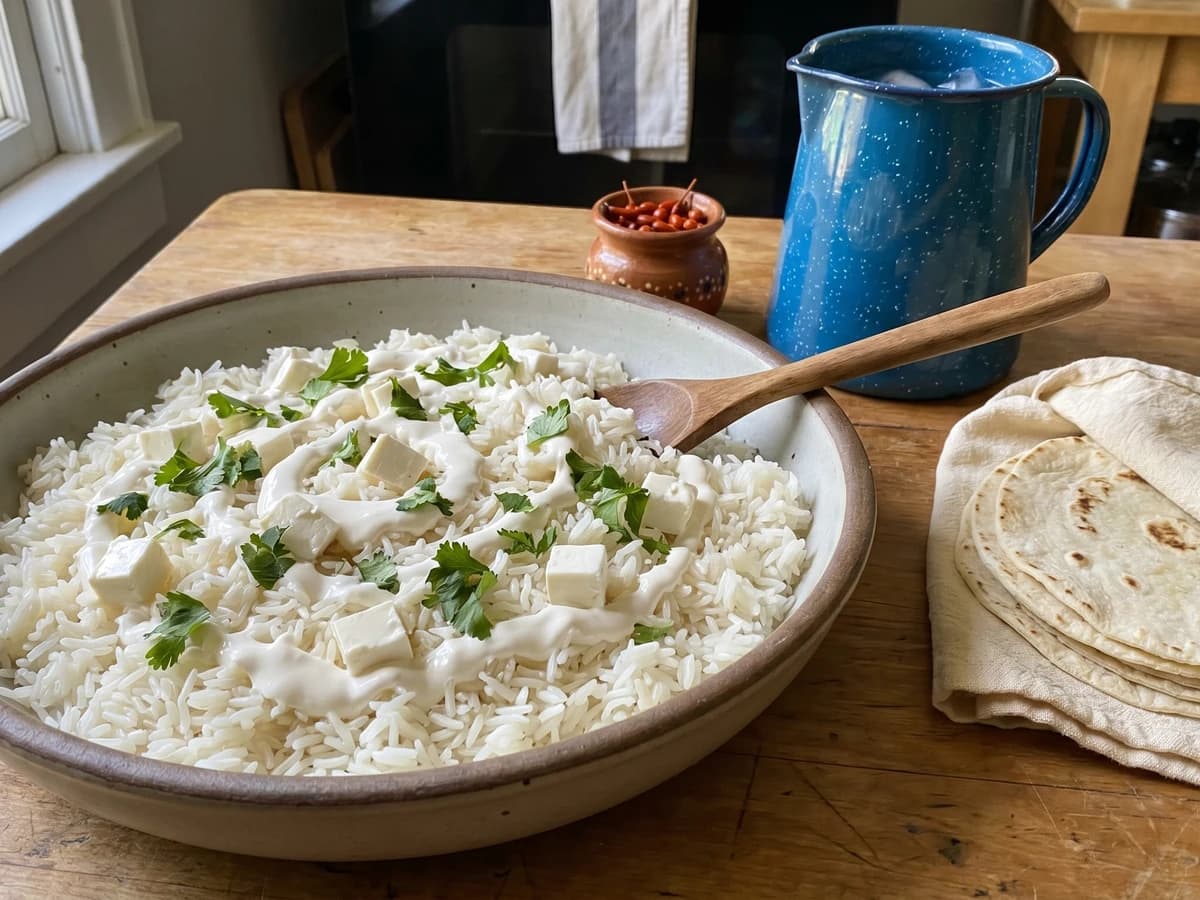
Sinaloa's home-cook white rice topped with cold cubes of cream cheese that soften into the warm grain, finished with crema and a sprinkle of chiltepin at the table. The trick that makes a side dish feel like a small luxury.
Chef Lupita
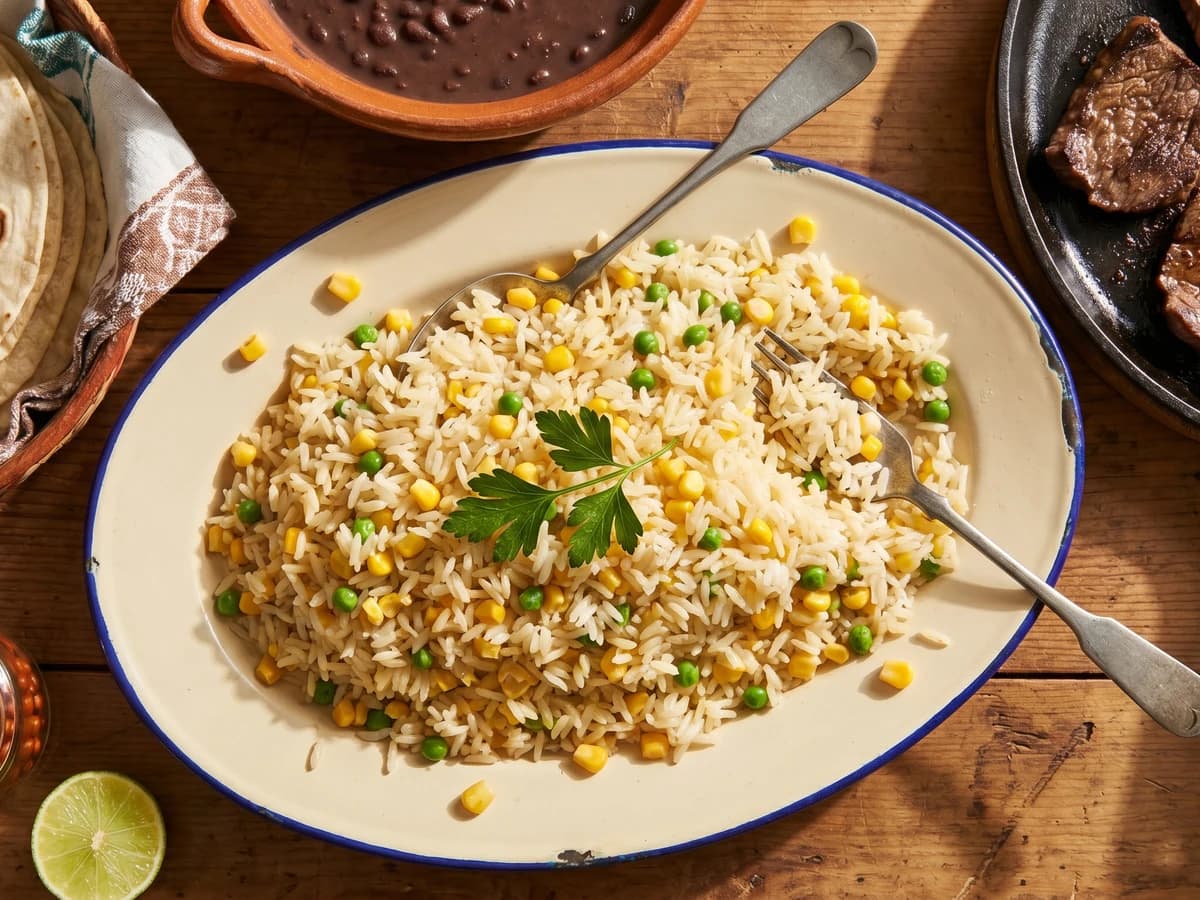
Sonora's white rice, toasted in butter and steamed with sweet corn and tender peas. The clean, quiet partner to a plate of carne asada, not the red rice of central Mexico.

Chef Lupita
Yucatán's white rice with sweet corn kernels, toasted in lard with garlic and onion. The quiet base that holds up against the peninsula's bold achiote-stained stews.