
Chef Lupita
Arroz a la Oaxaqueña
Oaxaca's red rice, stained with tomato and fried in lard, steamed with carrots, ejotes, black beans, and epazote. The side that anchors a Oaxacan family meal and earns its place beside the main.
A cooking platform built around craft, culture, and the stories behind what we eat.
Created by
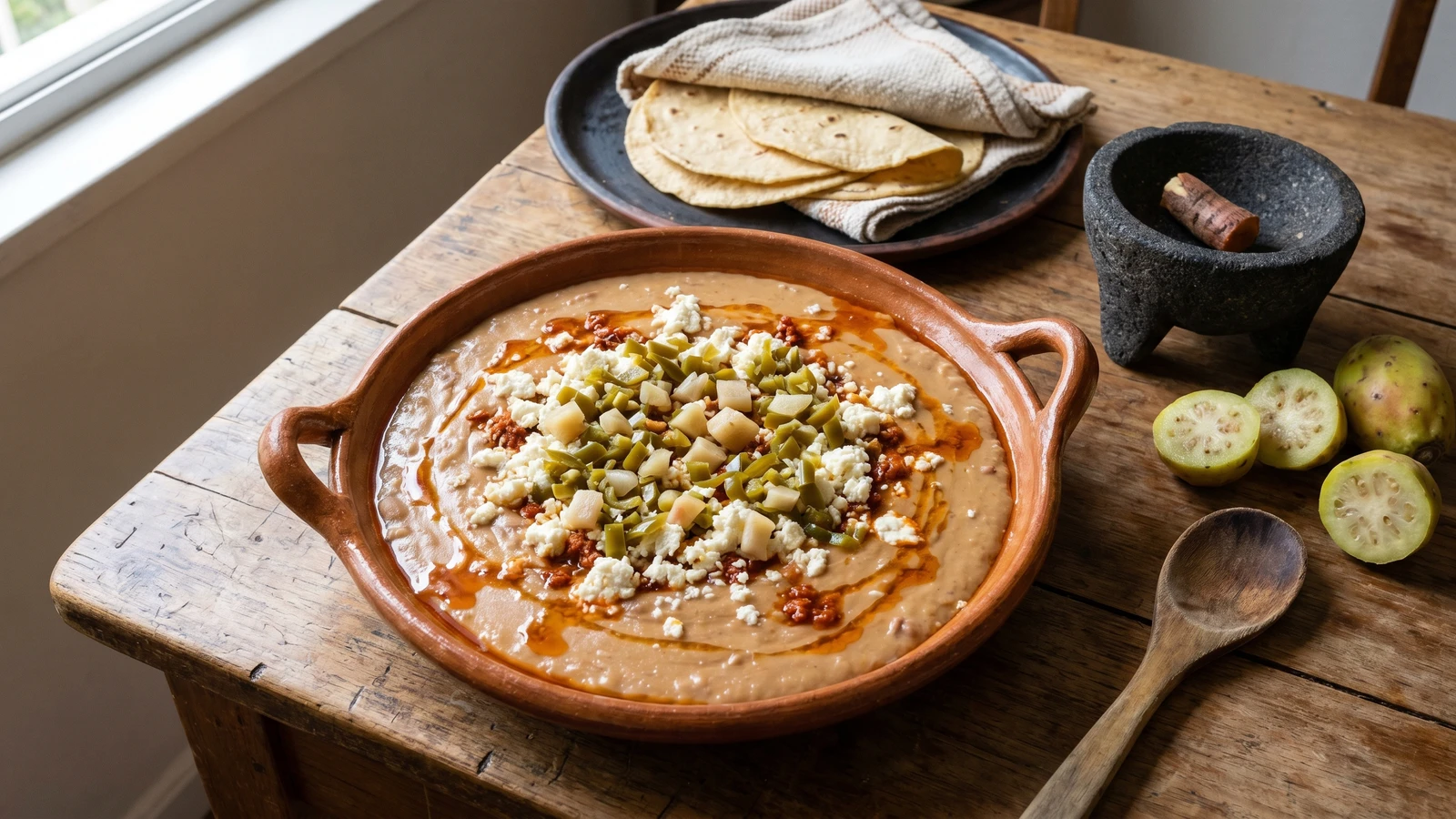
Aguascalientes bayos refried in manteca with chorizo de Calvillo, xoconostle, chilcuague, jalapeños en escabeche, and queso ranchero. The hidrocálido fiesta bean, not the Sinaloan one.
Aguascalientes sits in the Bajío, small on the map and stubborn at the table. These frijoles puercos are hidrocálidos: bayos cooked until tender, then refried in manteca with chorizo de Calvillo, jalapeños en escabeche, queso ranchero, xoconostle, and a little chilcuague. Not black beans. Not pintos. Frijoles bayos. Así se hace y punto.
People hear frijoles puercos and run straight to Sinaloa. That is laziness. Sinaloa has its version, often softer, richer, sometimes with different add-ins. Aguascalientes builds the plate from the Bajío: the bayo bean, the pork fat, the sharp xoconostle that cuts through the richness, the local habit of setting a clay cazuela in the middle of the table so everyone eats from the same work.
I learned a version like this from a señora near the Mercado Terán, and she watched my hand when I added the bean broth. Too much and the beans go soupy. Too little and they sit heavy like paste. The trick is not force. It is patience, frying and folding until the fat and bean become one thing. Saber cocinar es saber vivir.
Frijoles puercos are often associated nationally with Sinaloa, but the name describes a family of regional refried bean dishes enriched with pork fat, chorizo, and cheese rather than one fixed recipe. In Aguascalientes and the wider Bajío, frijol bayo has long been favored because it cooks creamy while keeping an earthy flavor that stands up to manteca and cured pork. Xoconostle was used across central Mexico as an acidulant before imported vinegars were common, and chilcuague, documented in the Florentine Codex, remains tied to the Sierra Gorda and neighboring Bajío cooking as a small but serious seasoning.
Quantity
1 pound
picked over and rinsed
Quantity
10 cups, plus more as needed
Quantity
1/2 medium
Quantity
3
peeled
Quantity
1 sprig
Quantity
2 teaspoons, plus more to taste
Quantity
1/2 cup
Quantity
10 ounces
casing removed
Quantity
1
finely chopped
Quantity
2
minced
Quantity
1
peeled, seeded, and finely diced
Quantity
1/2 teaspoon
finely ground
Quantity
1/3 cup
finely chopped
Quantity
2 tablespoons
Quantity
6 ounces, plus more for serving
crumbled
Quantity
for serving
| Ingredient | Quantity |
|---|---|
| dried frijol bayopicked over and rinsed | 1 pound |
| water | 10 cups, plus more as needed |
| white onion | 1/2 medium |
| garlic clovespeeled | 3 |
| fresh epazote | 1 sprig |
| kosher salt | 2 teaspoons, plus more to taste |
| manteca de cerdo | 1/2 cup |
| chorizo de Calvillo or good Mexican fresh chorizocasing removed | 10 ounces |
| small white onionfinely chopped | 1 |
| garlic clovesminced | 2 |
| small xoconostlepeeled, seeded, and finely diced | 1 |
| dried chilcuague rootfinely ground | 1/2 teaspoon |
| jalapeños en escabechefinely chopped | 1/3 cup |
| escabeche brine from the jalapeños | 2 tablespoons |
| queso rancherocrumbled | 6 ounces, plus more for serving |
| warm hand-pressed corn tortillas (optional) | for serving |
Put the frijoles bayos in a heavy pot with the water, half onion, 3 garlic cloves, and epazote. Bring to a steady simmer, then lower the heat and cook until the beans are tender, about 1 hour 45 minutes to 2 hours. Salt them only when they have softened. The broth should taste full and earthy, not flat. These are bayos, not pintos and not negros. The Bajío knows the difference.
Remove the onion, garlic, and epazote. Drain the beans, saving at least 2 cups of their cooking broth. Do not throw that broth away. It is the body of the dish. A dry refried bean is what happens when somebody cooks from a can and calls it tradition.
Heat a wide clay cazuela or heavy skillet over medium heat. Add the manteca de cerdo and let it melt until glossy. Crumble in the chorizo de Calvillo and fry until the fat turns red-orange and the meat smells of chile, vinegar, and pork. La manteca es el sabor. No me vengas con atajos.
Add the chopped white onion and cook until it softens and turns translucent at the edges, about 5 minutes. Stir in the minced garlic, diced xoconostle, ground chilcuague, chopped jalapeños en escabeche, and escabeche brine. Cook for 3 minutes. The xoconostle gives sharp Bajío acidity, and the chilcuague leaves a small electric warmth on the tongue. That is not the same thing as dumping hot sauce into beans.
Add the cooked bayos to the cazuela by the cupful, mashing as you go with a wooden spoon or bean masher. Add reserved bean broth a little at a time until the beans are thick, glossy, and spreadable. Keep frying and folding for 12 to 15 minutes. You should hear a slow sizzle, not a dry scrape. The fat has to enter the bean, not sit on top of it.
Lower the heat and fold in the crumbled queso ranchero until it softens into pockets through the beans. Do not boil it hard or the cheese tightens. Taste for salt. The chorizo, brine, and cheese all carry salt, so taste like a cook, not like a person afraid of the spoon.
Spoon the frijoles into a warm clay cazuela and scatter a little more queso ranchero on top. Serve family-style with warm corn tortillas. No cheddar. No sour cream. No flour tortillas here. This is Aguascalientes, not a norteño plate and not Sinaloa's frijoles puercos. Cada estado, su propia cocina.
1 serving (about 300g)
Culinary guides, cultural storytelling, and the editorial depth that makes cooking meaningful.
Discover Culinary ExplorerChef Lupita
Oaxaca's red rice, stained with tomato and fried in lard, steamed with carrots, ejotes, black beans, and epazote. The side that anchors a Oaxacan family meal and earns its place beside the main.
Chef Lupita
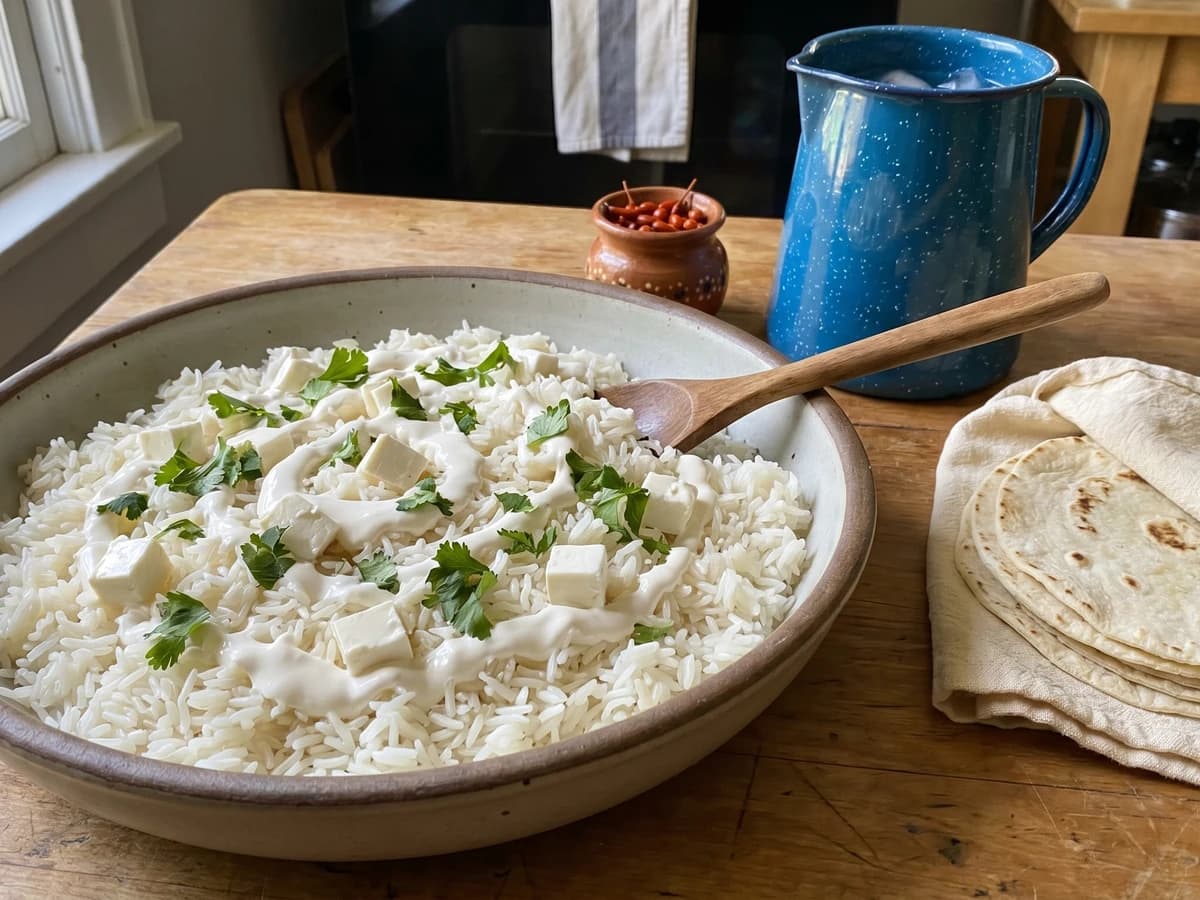
Sinaloa's home-cook white rice topped with cold cubes of cream cheese that soften into the warm grain, finished with crema and a sprinkle of chiltepin at the table. The trick that makes a side dish feel like a small luxury.
Chef Lupita
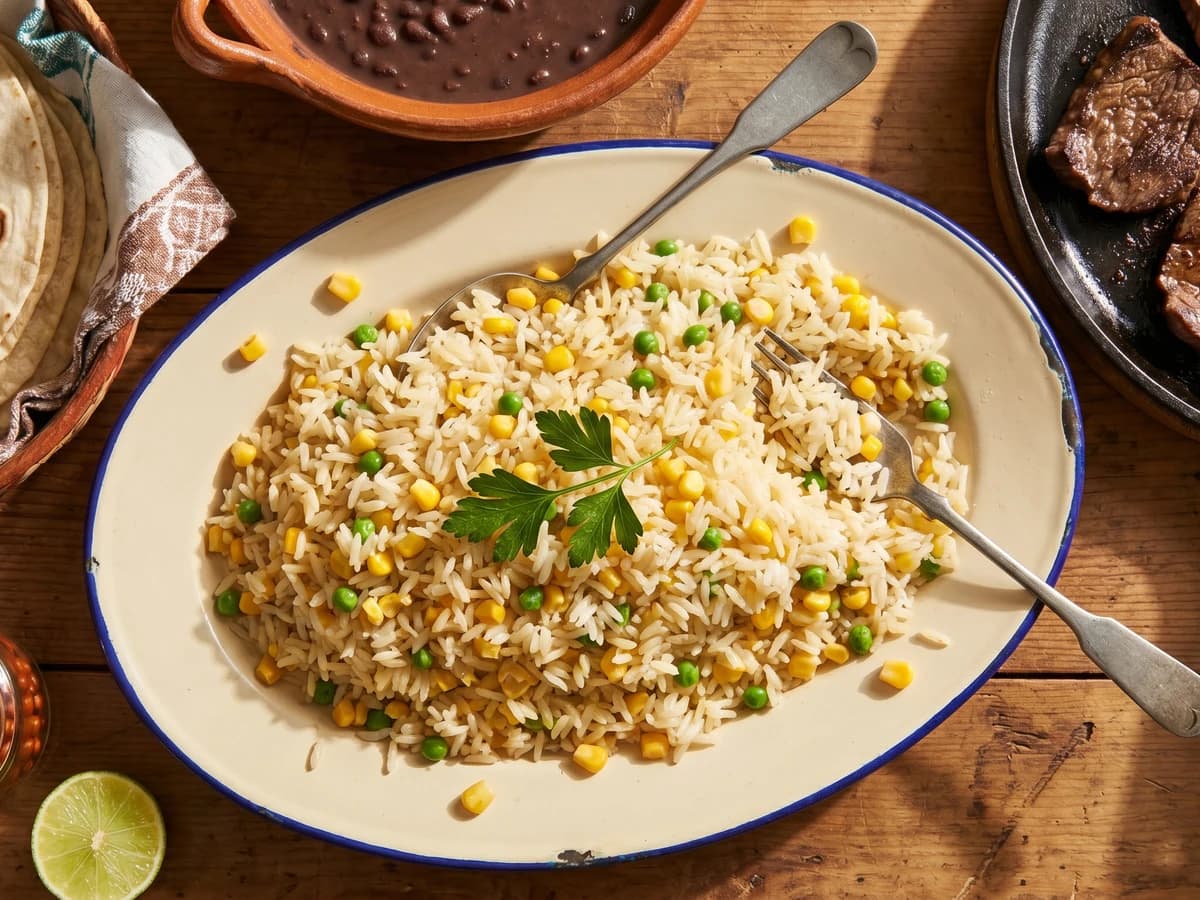
Sonora's white rice, toasted in butter and steamed with sweet corn and tender peas. The clean, quiet partner to a plate of carne asada, not the red rice of central Mexico.

Chef Lupita
Yucatán's white rice with sweet corn kernels, toasted in lard with garlic and onion. The quiet base that holds up against the peninsula's bold achiote-stained stews.