
Chef Lupita
Arroz a la Oaxaqueña
Oaxaca's red rice, stained with tomato and fried in lard, steamed with carrots, ejotes, black beans, and epazote. The side that anchors a Oaxacan family meal and earns its place beside the main.
A cooking platform built around craft, culture, and the stories behind what we eat.

Created by
Jalisco's everyday pot of peruano or flor de mayo beans, cooked slowly in clay with onion, epazote, and manteca until the broth turns clear, reddish, and useful.
Jalisco and the western Bajio live on these beans. Not black beans. Not refried paste. Frijoles de la olla from the west are usually peruano, flor de mayo, or bayo, pale beans that cook into a clear reddish broth and sit on the table next to tortillas, salsa, and whatever else the day allowed.
In Guadalajara, in Los Altos, in the kitchens between Jalisco and Michoacan, the olla is not decoration. It is economy. A clay pot of beans becomes lunch today, refritos tomorrow, enfrijoladas the day after that. My mother kept flor de mayo in a tin with a tight lid and wrote in her notebook: "no los apures". Do not rush them. She was right.
The manteca matters. You start the onion in manteca de cerdo so the fat perfumes the broth from the beginning. The epazote goes in late enough to stay green and sharp, not cooked into bitterness. No me vengas con atajos. This is the region's spine, and a western table without a pot of beans is not ready to feed anyone. Saber cocinar es saber vivir.
Beans have been cultivated in Mesoamerica for thousands of years alongside corn and squash, forming the nutritional base of the milpa long before the Spanish arrived. The pale beans common in western and central Mexico, including flor de mayo, bayo, and peruano types, became especially tied to Jalisco, Michoacan, Guanajuato, and neighboring Bajio states through regional seed saving and market preference. Cooking them in clay ollas remained the household standard because the porous clay holds steady heat and gives the broth a rounded mineral taste that metal pots do not copy.
Quantity
1 pound
picked over and rinsed
Quantity
2 quarts, plus more as needed
Quantity
2 tablespoons
Quantity
1/2 medium
finely chopped
Quantity
2
lightly crushed
Quantity
1 small
Quantity
1 1/2 teaspoons, plus more to taste
Quantity
for serving
Quantity
for serving
Quantity
for serving
crumbled
| Ingredient | Quantity |
|---|---|
| dried peruano, flor de mayo, or bayo beanspicked over and rinsed | 1 pound |
| water | 2 quarts, plus more as needed |
| manteca de cerdo | 2 tablespoons |
| white onionfinely chopped | 1/2 medium |
| garlic cloveslightly crushed | 2 |
| fresh epazote sprig | 1 small |
| kosher salt | 1 1/2 teaspoons, plus more to taste |
| warm corn tortillas (optional) | for serving |
| salsa de molcajete (optional) | for serving |
| queso fresco (optional)crumbled | for serving |
Spread the beans on a tray and pick through them with your hands. Remove pebbles, cracked beans, and anything that does not belong. Rinse well. Preguntale a las senoras del mercado: old beans take forever and never soften properly, so buy from a vendor with turnover.
Cover the beans with plenty of cool water and soak 8 hours or overnight. This is not fancy work. It is planning. The beans hydrate evenly, cook more predictably, and give you a cleaner broth.
Drain the soaked beans. In a clay olla or heavy pot, melt the manteca over medium-low heat. Add the chopped onion and cook for 5 minutes, until translucent and sweet-smelling but not browned. Add the garlic and cook 1 minute more. La manteca es el sabor, and here it carries the onion through the whole pot.
Add the drained beans and 2 quarts fresh water. Bring to a gentle simmer, then lower the heat so the surface barely moves. Cover partially and cook until the beans are tender, 1 1/2 to 2 hours depending on age. Add hot water as needed to keep the beans covered by about an inch. Do not boil them hard. Broken skins and muddy broth are what happens when the cook gets impatient.
When the beans are almost tender, add the epazote and salt. Simmer 20 minutes more, until the broth is clear reddish-brown and the beans are creamy inside but still whole. Taste the broth, not only the bean. It should taste seasoned, warm, and complete.
Turn off the heat and let the beans rest 15 minutes in the pot. Remove the epazote if the sprig is large. Ladle beans and plenty of broth into bowls. Serve with warm corn tortillas, salsa de molcajete, and a little queso fresco if your table uses it. The broth is the point. Do not drain it like pasta. Asi se hace y punto.
1 serving (about 275g)
Culinary guides, cultural storytelling, and the editorial depth that makes cooking meaningful.
Discover Culinary ExplorerChef Lupita
Oaxaca's red rice, stained with tomato and fried in lard, steamed with carrots, ejotes, black beans, and epazote. The side that anchors a Oaxacan family meal and earns its place beside the main.
Chef Lupita
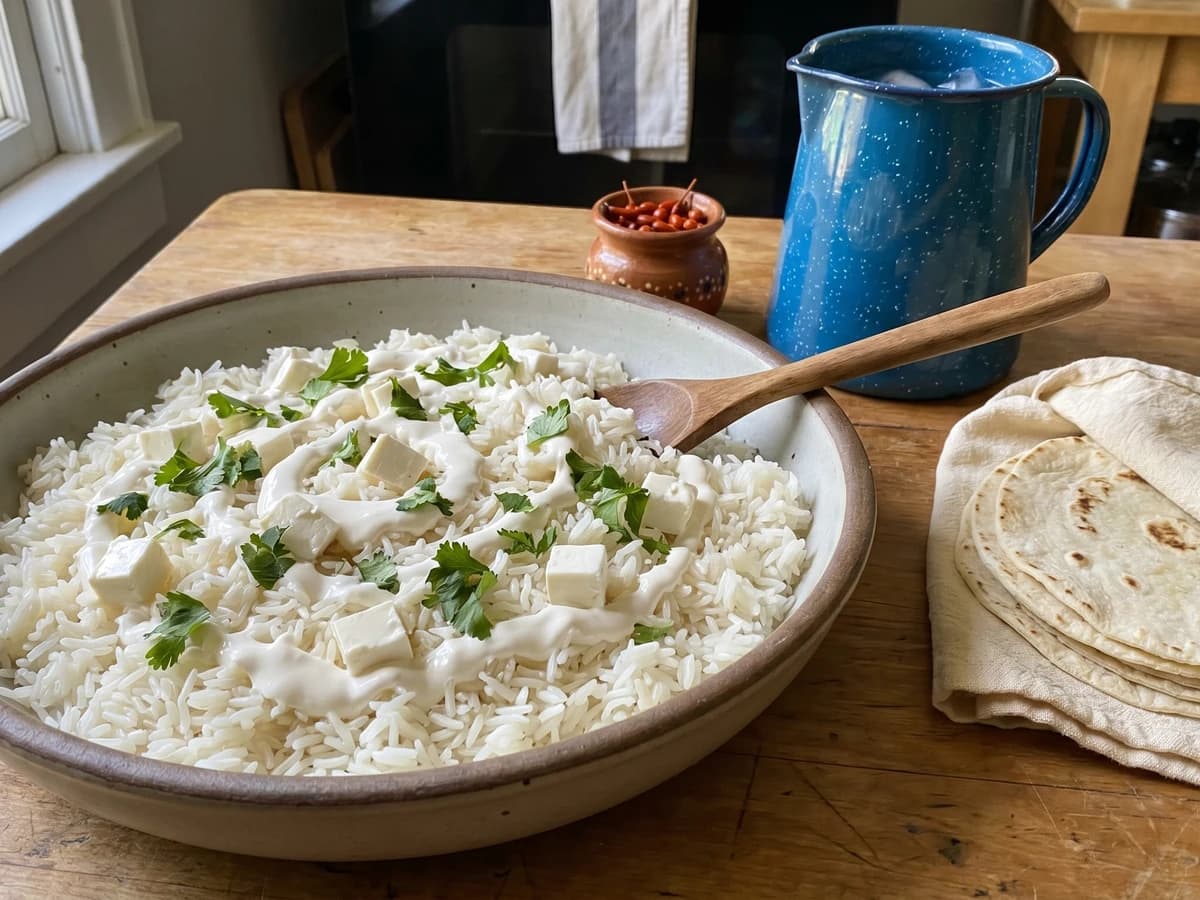
Sinaloa's home-cook white rice topped with cold cubes of cream cheese that soften into the warm grain, finished with crema and a sprinkle of chiltepin at the table. The trick that makes a side dish feel like a small luxury.
Chef Lupita
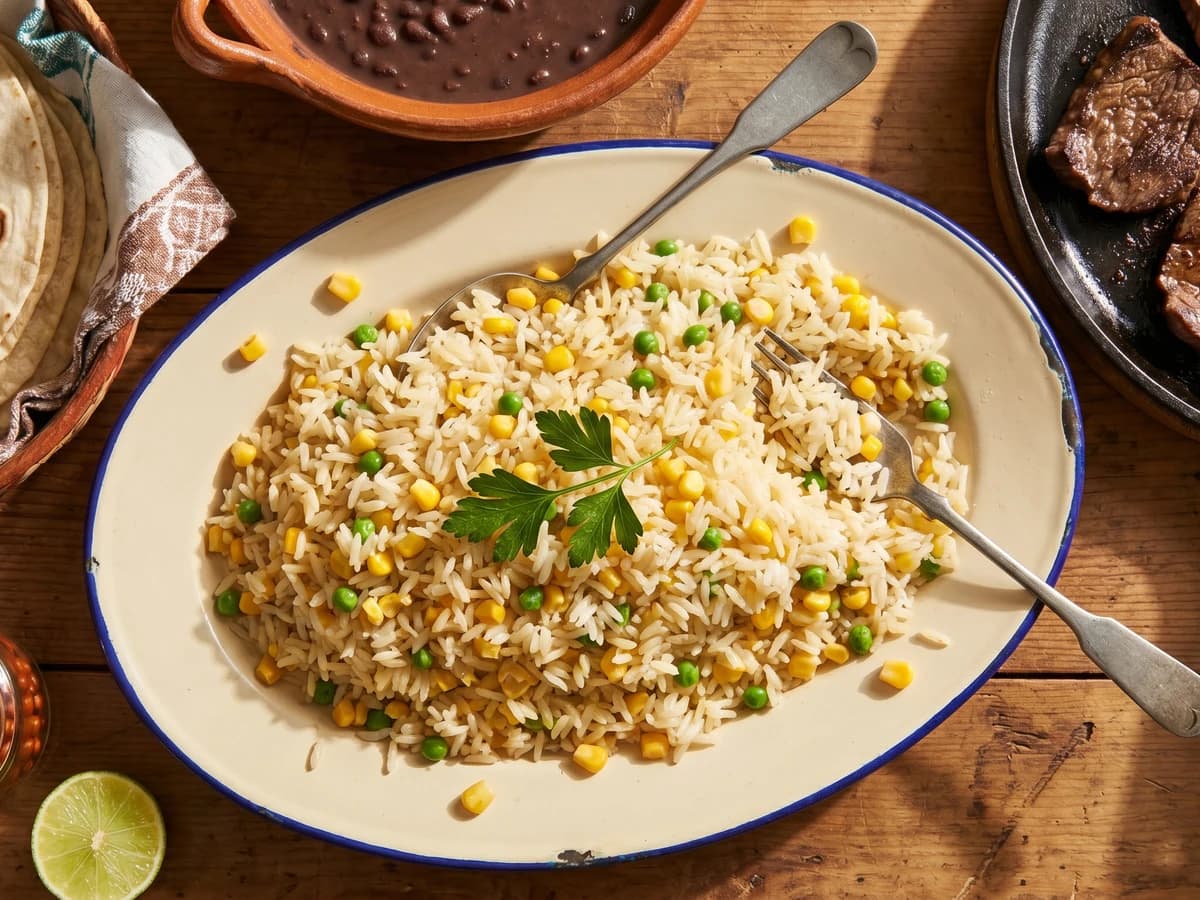
Sonora's white rice, toasted in butter and steamed with sweet corn and tender peas. The clean, quiet partner to a plate of carne asada, not the red rice of central Mexico.

Chef Lupita
Yucatán's white rice with sweet corn kernels, toasted in lard with garlic and onion. The quiet base that holds up against the peninsula's bold achiote-stained stews.