Culinary Explorer

A cooking platform built around craft, culture, and the stories behind what we eat.
Discover Culinary Explorer
Frijoles Borrachos Norteños

Frijoles Borrachos Norteños

Created by

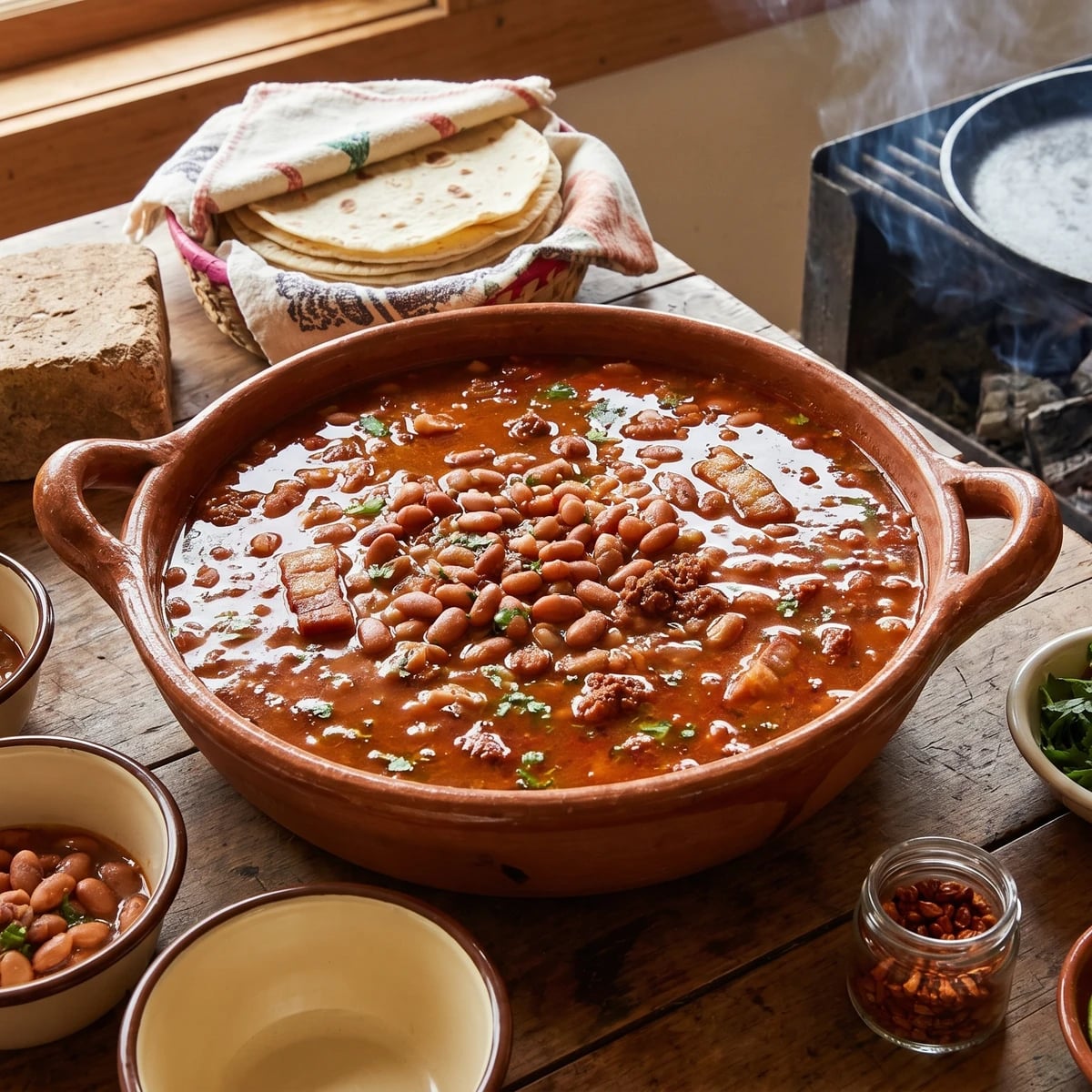
The drunken bean pot of northern Mexico. Pintos simmered with tocino and chorizo, finished with a full bottle of Mexican lager that thickens the broth and rounds the salt of the meat. The pot that sits next to every carne asada from Monterrey to Hermosillo.

Side Dishes
Mexican
BBQ
Outdoor Dining
Game Day
20 min
Active Time
2 hr 30 min cook2 hr 50 min total
Yield8 to 10 servings

These beans are from the north. Not Mexico City, not Oaxaca, not Yucatan. From Nuevo León and Coahuila, from Sonora and Chihuahua, from the ranch country where carne asada is a weekend ritual and the bean pot sits on the corner of the parrilla the entire afternoon. If you are looking for the cooking of the south, this is not that pot. Cada estado, su propia cocina.

Frijoles borrachos are the drunken cousin of frijoles charros. Same base, same tocino, same chorizo, but instead of finishing with broth or water, you pour in a full bottle of Mexican lager. The beer thickens the broth as it reduces, the malt rounds the salt of the cured pork, and the bitterness from the hops cuts the fat in a way water never could. You taste the beer in the finished pot, but only as a low hum behind the chorizo. If you taste raw beer, you did not simmer it long enough.

The chile is chiltepin. The tiny wild bush chile that grows on the hillsides of Sonora, harvested by hand, sold in tiny jars in every northern mercado. A few crumbled chiltepin do more work than a whole jalapeño. If you cannot find chiltepin, a crumbled chile de árbol gets you close. Not the same, but close. A substitution is a compromise, not an upgrade.

My mother did not cook these. She was from Jalisco and her bean pot was a pot of frijoles de la olla with epazote, period. I learned frijoles borrachos in Monterrey, watching a señora named Coco tend a cazuela the size of a washtub on the side of her son's parrillada in the suburb of San Pedro. She told me the rule that has not failed me since: the beans cook in water until they are tender, the beer goes in at the end. Pour the beer too early and the alcohol stops the beans from softening. La cocina no es decoración, es trabajo, and that order matters.

Frijoles borrachos and their teetotaling sibling frijoles charros emerged from the cattle-ranch and mining-camp cooking of northeastern Mexico in the late 19th and early 20th centuries, when ranch cooks fed working crews from a single bean pot supplemented with whatever cured pork was on hand. The dish's name traces to the charro horseman culture of Nuevo León and Coahuila, and the addition of beer reflects northern Mexico's deep brewing tradition: Cervecería Cuauhtémoc was founded in Monterrey in 1890 and made lager a household staple across the region long before it became national. The pinto bean itself, rather than the black bean dominant in the south, is the northern bean of choice because pinto thrives in the dryer, higher-altitude soils of the Bajío and the Sierra Madre Oriental.

The technique, the tradition, and the story behind every dish.

Discover Culinary Explorer

Ingredients

dried pinto beans

Quantity

1 pound

picked over and rinsed

cold water

Quantity

10 cups

white onion

Quantity

1 medium

half left whole, half finely diced

head of garlic

Quantity

1

halved crosswise

garlic cloves

Quantity

3

finely minced

manteca de cerdo (pork lard)

Quantity

2 tablespoons

thick-cut tocino (slab bacon)

Quantity

6 ounces

cut into 1/4-inch lardons

fresh Mexican chorizo

Quantity

8 ounces

casings removed

Roma tomatoes

Quantity

3

finely diced

fresh chile serrano

Quantity

2 to 3

finely chopped, seeds and all

dried chiltepin

Quantity

4 to 6

crumbled (or 1 chile de árbol, crumbled)

Mexican lager (Tecate, Pacífico, or Carta Blanca)

Quantity

1 bottle (12 ounces)

kosher salt

Quantity

1 tablespoon, plus more to taste

dried Mexican oregano

Quantity

1 teaspoon

fresh cilantro

Quantity

1/2 cup, plus more for serving

chopped

hand-pressed flour tortillas (optional)

Quantity

for serving

warmed

lime wedges (optional)

Quantity

for serving

Equipment Needed

  • Heavy 6-quart bean pot or Dutch oven
  • Wide cast iron or heavy skillet for the sofrito
  • Wooden spoon
  • Ladle for serving

Instructions

  1. 1

    Cook the beans first

    Place the pinto beans in a heavy 6-quart pot with the 10 cups of cold water, the whole onion half, and the halved garlic head. Bring to a boil over high heat, then lower to a steady simmer. Cook uncovered for 1 hour and 30 minutes to 2 hours, until the beans are tender all the way through but still hold their shape. Add hot water as needed to keep the beans submerged by an inch. Do not salt the beans yet. Salt early and the skins toughen and the beans will not soften properly.

    If your beans are old, they will fight you. Beans more than a year old can simmer for three hours and still feel chalky. Buy from a vendor with turnover, not from the back of the pantry.
  2. 2

    Render the tocino

    While the beans cook, heat the lard in a wide skillet over medium. Add the tocino lardons and cook, stirring occasionally, until the fat renders and the edges turn crisp and deep brown, about 8 to 10 minutes. La manteca es el sabor, and the tocino fat is going straight into the bean pot.

  3. 3

    Brown the chorizo

    Push the tocino to one side of the skillet and crumble the chorizo into the open space. Cook, breaking it up with a wooden spoon, until the chorizo releases its red-orange fat and the meat is fully cooked through, about 6 minutes. Do not drain the fat. Every bit of it belongs in the beans.

  4. 4

    Build the sofrito

    Add the diced onion to the skillet and cook until translucent, about 4 minutes. Add the minced garlic, chile serrano, and chiltepin. Cook for another minute, stirring constantly, until the kitchen smells sharp and the garlic stops looking raw. Add the diced tomatoes and a generous pinch of salt. Cook for 5 to 6 minutes more, until the tomatoes break down and the mixture turns into a loose, dark sofrito with the fat pooling at the edges.

  5. 5

    Marry the sofrito and the beans

    Fish out the spent onion half and the garlic husks from the bean pot and discard them. Scrape the entire skillet, every drop of rendered fat, the tocino, the chorizo, the tomato sofrito, into the beans. Stir gently so you do not crush the beans. The broth will turn a brick-red color almost immediately.

  6. 6

    Pour the beer

    Pour the entire bottle of lager into the pot. The whole thing. Do not save half for the cook, save another bottle for that. The beer is the recipe. Stir once, add the salt and the oregano, crumbling the oregano between your fingers as you drop it in. Bring back to a gentle simmer.

    Use a Mexican lager you would actually drink. Tecate, Pacífico, or Carta Blanca are the bottles you see in every norteño kitchen. Avoid dark beer here. It turns the broth bitter and muddies the chorizo color.
  7. 7

    Simmer drunk

    Simmer uncovered for 20 to 25 minutes, stirring occasionally. The beer will reduce, the alcohol will cook off, and the broth will thicken into something glossy and brick-colored that coats the back of a spoon. Taste for salt now, not before. The tocino and chorizo carry their own salt and they need time to give it up.

  8. 8

    Finish with cilantro

    Stir in the 1/2 cup of chopped cilantro off the heat. Let the pot rest for 5 minutes. Serve in deep bowls or small jarritos with warm flour tortillas on the side and lime wedges for the table. In the north, these beans go next to carne asada, not under it. Asi se hace y punto.

Chef Tips

  • Use thick-cut slab bacon (tocino), not the thin breakfast strips. The lardons need body to render slowly and still hold their shape in the finished pot. Thin bacon disappears into the broth and you lose the bite.
  • Mexican chorizo is fresh and soft, sold in casings or in bulk. It is not Spanish chorizo. Spanish chorizo is cured and firm and will not break down into the sofrito the way the dish needs. If your supermarket sells only Spanish chorizo, find a Mexican carnicería or skip the chorizo entirely. Wrong chorizo is worse than no chorizo.
  • The beer matters and the timing matters more. A Mexican lager, added at the end, is correct. A dark beer added at the beginning is wrong. Do not improvise the order. No me vengas con atajos.
  • These beans are better the next day. The fat solidifies on top overnight in the refrigerator, the flavors deepen, and a quick reheat with a splash of water brings the broth back to where it should be.

Advance Preparation

  • The beans can be cooked through step 1 one day ahead and refrigerated in their cooking liquid. Pick up at step 2 on serving day.
  • The finished pot can be made up to 3 days ahead and reheated gently with a splash of water to loosen the broth. Recetas probadas y garantizadas, and like most bean dishes, this one only gets better with a night in the refrigerator.
  • Frijoles borrachos freeze well for up to 2 months. Thaw in the refrigerator overnight and reheat slowly on the stovetop.

Frequently Asked Questions

Nutrition Information

1 serving (about 285g)

Calories
420 calories
Total Fat
21 g
Saturated Fat
7 g
Trans Fat
0 g
Unsaturated Fat
13 g
Cholesterol
40 mg
Sodium
920 mg
Total Carbohydrates
37 g
Dietary Fiber
8 g
Sugars
2 g
Protein
19 g

Note: Chef personas and recipes are created with AI assistance. Cook with care: follow safe food-handling practices, check doneness with a thermometer when needed, and adapt for allergies and your kitchen.

Where cooking meets culture.

Culinary guides, cultural storytelling, and the editorial depth that makes cooking meaningful.

Discover Culinary Explorer

More from Noroeste Side Dishes

Browse the full collection