Culinary Explorer
A cooking platform built around craft, culture, and the stories behind what we eat.
Fries Roggebrood
Created by Chef Joost
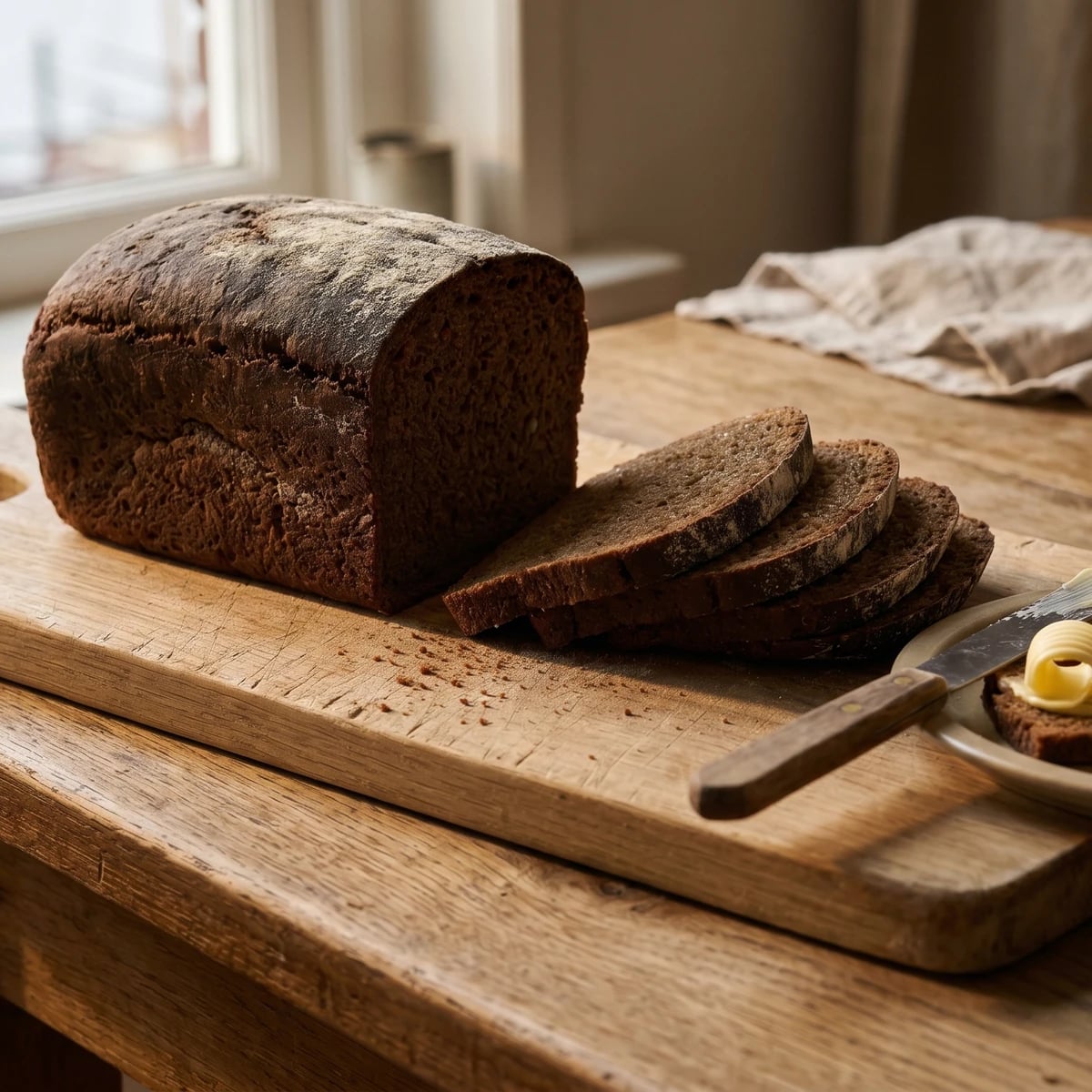
Friesland's dark rye bread is not baked so much as persuaded: coarse grain, sourdough, salt, and time, ending in thin slices beside cheese, butter, or a bowl of snert.
In my grandmother's second notebook, the breads are the quiet pages. No ribbons of cinnamon, no feast-day shine, only the serious loaves that kept a household honest when money was thin and weather was not. Fries roggebrood belongs to that family: firm, almost black, sliced thin enough to bend, and eaten beside soup or cheese with the calm authority of something older than appetite.
The name already tells you its place. Fries is Frisian, from the northern province with its own language and its own kitchen; roggebrood is rye bread, but don't imagine a springy loaf from a bakery window. This is brea, bread, in the Frisian sense: grain made durable. Coarse rye is scalded first so it swells and binds, then soured gently, packed like clay, sealed, and left in a low oven for hours. The darkness comes from time, not trickery.
But let me tell you a secret: the hard part is doing less. Don't knead it. Don't rush it. Don't cut it the day it comes from the oven, unless you enjoy crumbs and disappointment. Hou het altijd simpel, always keep it simple. Give the rye water, salt, a living sourdough, and a night's rest after baking. The bread will teach you patience by refusing every other method.
Ingredients
coarse cracked rye or coarse rye meal
Quantity
500g
boiling water
Quantity
300ml
fine rye flour
Quantity
200g
| Ingredient | Quantity |
|---|---|
| coarse cracked rye or coarse rye meal | 500g |
| boiling water | 300ml |
| fine rye flour | 200g |
Where cooking meets culture.
Culinary guides, cultural storytelling, and the editorial depth that makes cooking meaningful.
Discover Culinary Explorer