
Chef Graziella
Parmigiana di Melanzane
The original eggplant parmesan of Naples: fried eggplant layered with tomato sauce, fresh mozzarella, and basil. A vegetable side dish meant to accompany, not to dominate the plate.
A cooking platform built around craft, culture, and the stories behind what we eat.
Created by
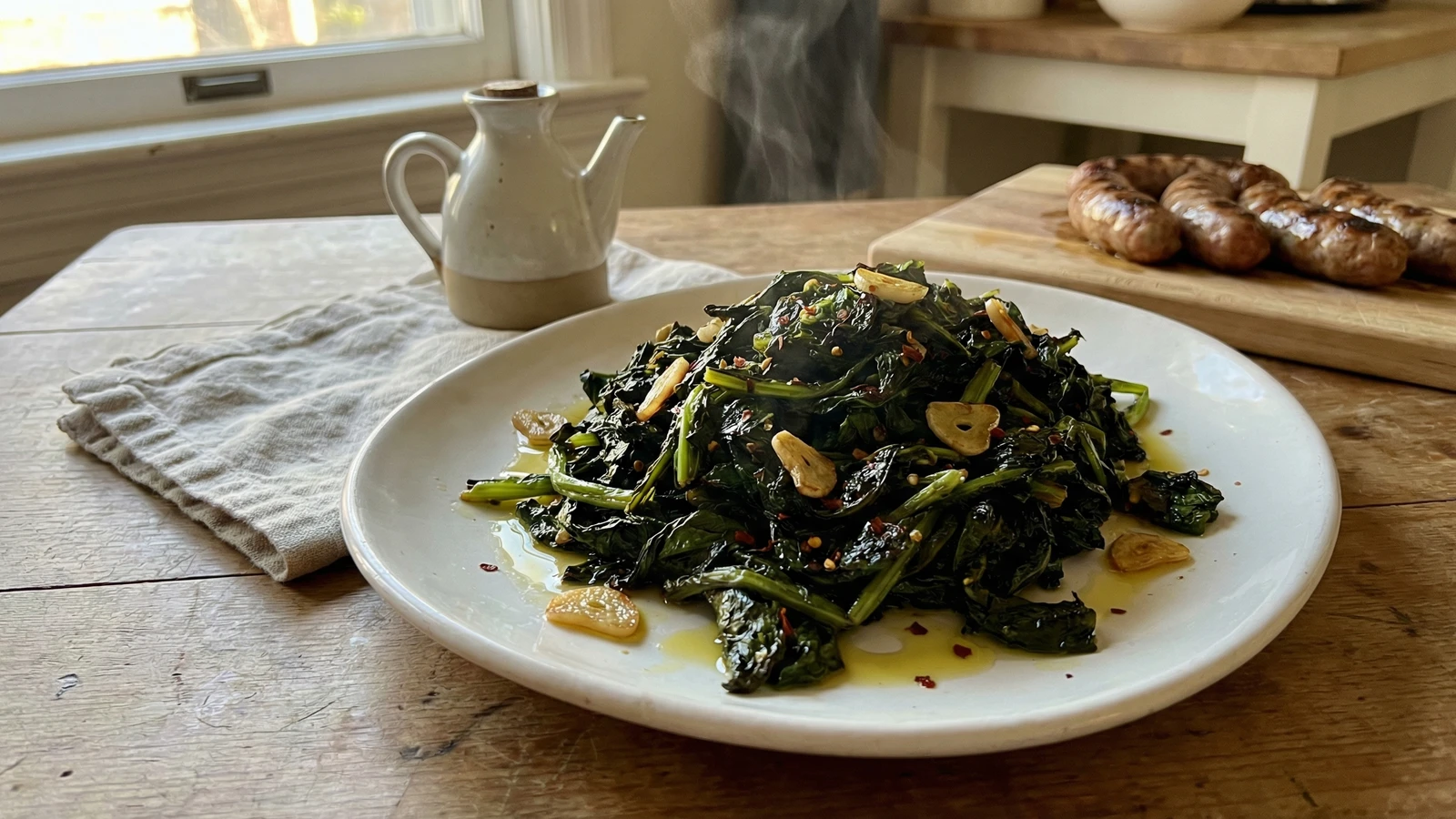
The bitter greens of Naples, sautéed with garlic and dried chili until the edges char and the stems surrender. Four ingredients. Absolute honesty.
Friarielli are not broccoli rabe, though Americans use the terms interchangeably. True friarielli are a variety specific to Campania, harvested before the florets fully form, with a bitterness that is somehow sweeter, more vegetal than their American cousins. If you cannot find authentic friarielli, broccoli rabe will do. But you should know the difference exists.
This is contorno in its purest form: a vegetable cooked simply to accompany something else. In Naples, that something else is almost always sausage. The combination of fatty, fennel-scented pork and bitter, garlicky greens is one of those marriages that seems inevitable once you have tasted it. Each component makes the other better.
The technique requires attention but not skill. You must watch the garlic. You must let the greens char without stirring them into submission. What you keep out matters: no onion, no tomato, no cheese. The Neapolitans understood that these greens need nothing but heat and fat and a whisper of fire.
Friarielli have grown in the volcanic soil around Naples since at least the 16th century, thriving in the mild winters of Campania. The classic pairing with sausage, salsiccia e friarielli, became street food in Naples by the 19th century, sold from carts to workers who ate them stuffed into bread. The dish remains so emblematic of Naples that friarielli rarely appear on menus elsewhere in Italy.
Quantity
1 1/2 pounds
Quantity
1/4 cup
Quantity
3
sliced thin
Quantity
1 small, crumbled, or 1/4 teaspoon red pepper flakes
Quantity
to taste
| Ingredient | Quantity |
|---|---|
| friarielli or broccoli rabe | 1 1/2 pounds |
| extra virgin olive oil | 1/4 cup |
| garlic clovessliced thin | 3 |
| dried peperoncino | 1 small, crumbled, or 1/4 teaspoon red pepper flakes |
| kosher salt | to taste |
Examine the friarielli. The thick lower stems are woody and unpleasant. Cut them away, keeping only the tender upper stalks, leaves, and florets. You will lose perhaps a third of the weight. This is correct. Rinse thoroughly in several changes of cold water to remove any grit. Shake dry but do not spin them bone dry. A little water clinging to the leaves helps them cook.
Bring a large pot of well-salted water to a rolling boil. Add the trimmed friarielli and cook for 2 minutes. They should be bright green and barely tender. Drain immediately and spread on a clean kitchen towel to cool. Do not shock in ice water. This is not French cooking.
In a large skillet, preferably cast iron, warm the olive oil over medium heat. Add the sliced garlic and the crumbled peperoncino. Cook, stirring occasionally, until the garlic is pale gold and fragrant, about 90 seconds. Watch carefully. The garlic must not brown or it becomes bitter and acrid.
Increase the heat to medium-high. Add the blanched friarielli to the skillet and toss immediately to coat with the oil. Spread them in a single layer and let them sit, undisturbed, for 2 minutes. You want some char on the edges. Toss again, spread again, and cook another 2 minutes. The leaves should be slightly crisp at the edges, the stems tender when pierced with a knife.
Season with salt and taste. The bitterness of the greens, the heat of the peperoncino, the sweetness of the garlic, and the salt should balance. Transfer to a warm serving plate and drizzle with a thread of fresh olive oil if you wish. Serve immediately alongside grilled sausages, as tradition demands.
1 serving (about 125g)
Culinary guides, cultural storytelling, and the editorial depth that makes cooking meaningful.
Discover Culinary ExplorerChef Graziella
The original eggplant parmesan of Naples: fried eggplant layered with tomato sauce, fresh mozzarella, and basil. A vegetable side dish meant to accompany, not to dominate the plate.

Chef Graziella
Fried zucchini dressed with vinegar and torn mint, a Neapolitan preparation that proves frying need not be heavy when acid provides the counterpoint.
Chef Juliette
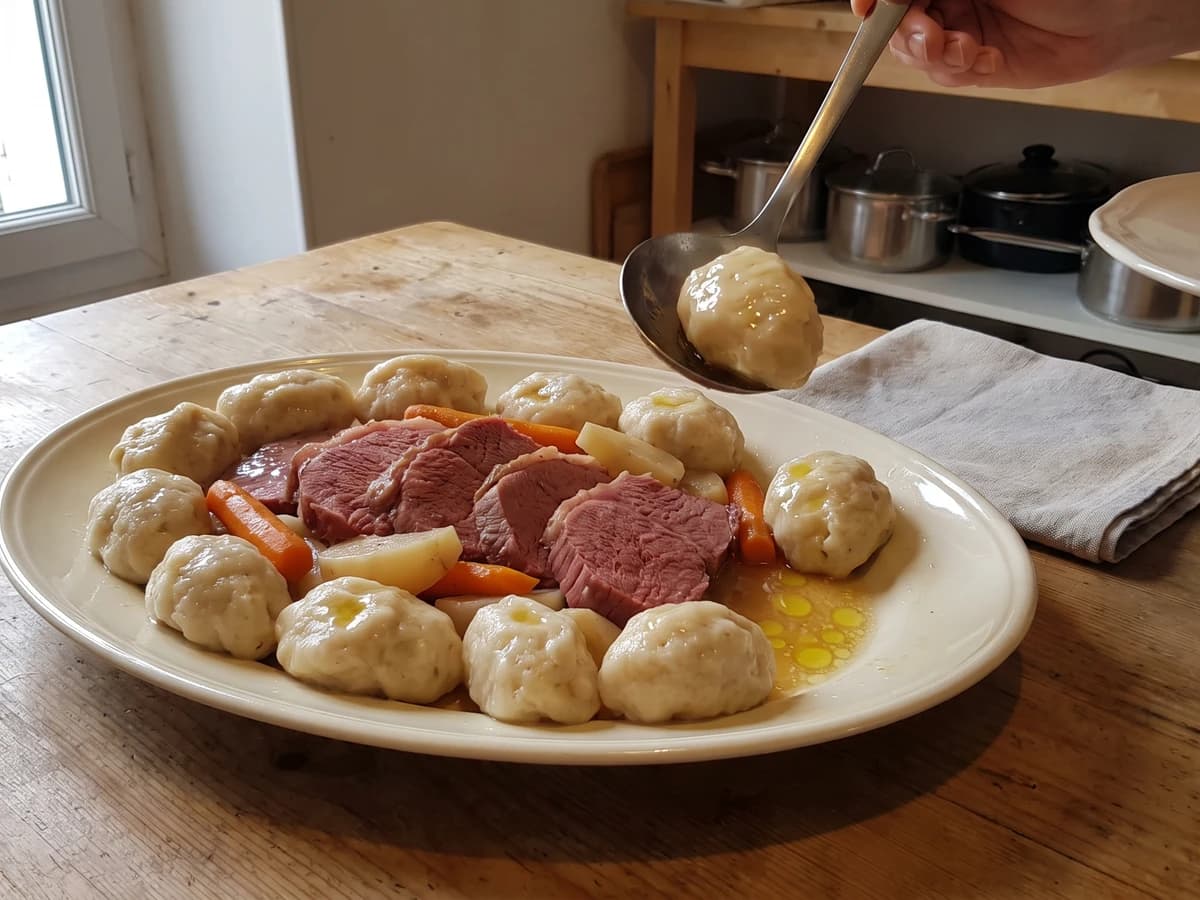
Boulettes au suif, poached beside salt beef, turn equal weights of flour and finely chopped suet into tender, rich dumplings. Keep the beef liquor at a bare tremble and the old garnish works beautifully at home.

Chef Juliette
Bread, flour, frangipane, and rice become four cool, supple panades for binding forcemeats, each changing body and flavor while preserving tenderness. The finest Mousselines need none, and knowing that distinction is the lesson.