
Chef Graziella
Asparagi e Uova alla Veneta
The Venetian celebration of spring, where prized white asparagus meets butter-fried eggs and the yolk becomes the only sauce you need. This is restraint as philosophy.
A cooking platform built around craft, culture, and the stories behind what we eat.
Created by
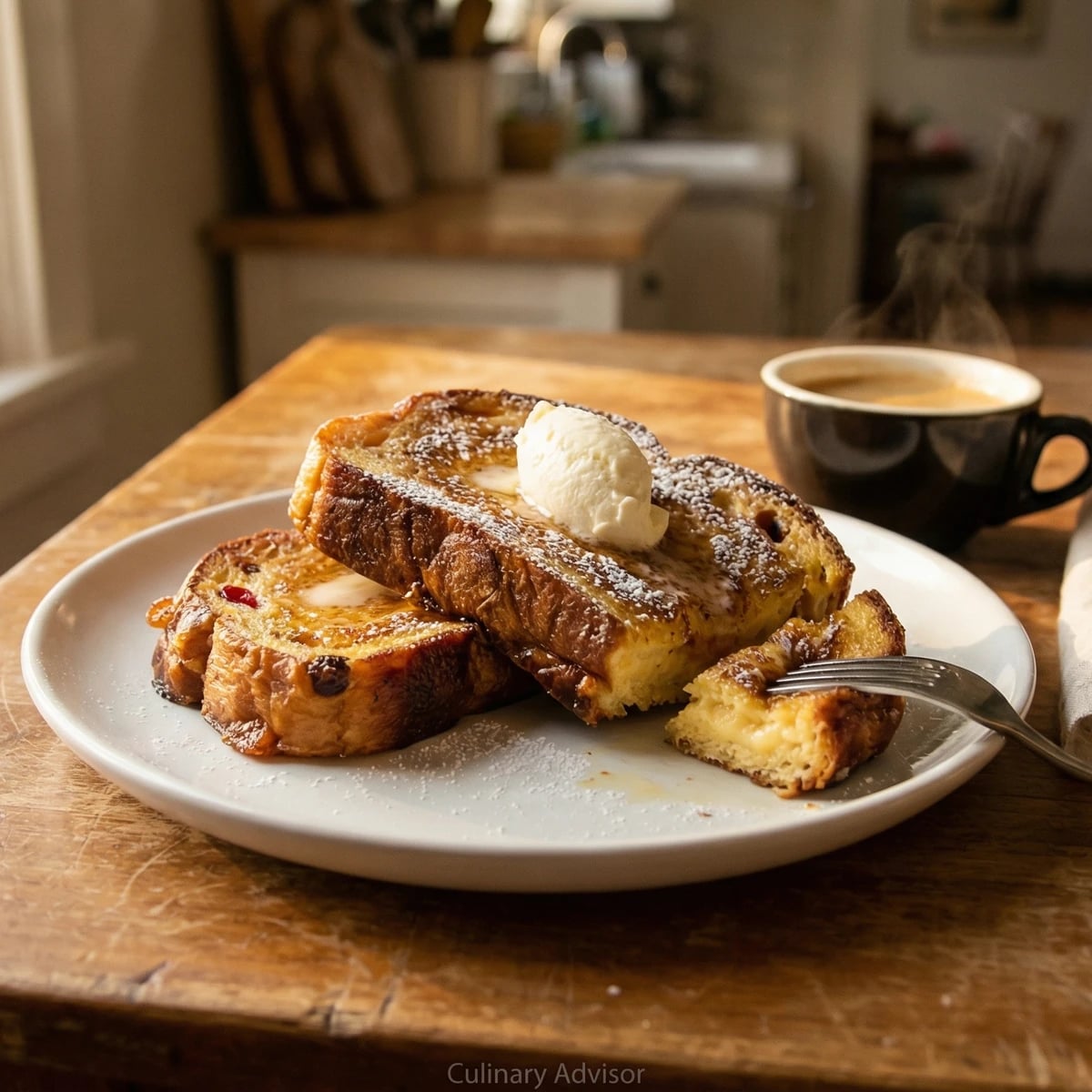
Day-old panettone reborn in a simple egg custard, griddled in butter until the edges turn golden and the candied citrus begins to caramelize. This is what Milanese grandmothers do with Christmas leftovers.
Italians do not waste bread. This has always been true. When the great domed panettone of Christmas morning sits on the counter a day or two later, slightly dry and losing its soft crumb, you do not throw it away. You transform it.
This is not an Italian recipe in the classical sense. The French claim pain perdu, the Romans made something similar two thousand years ago, and Americans have turned French toast into a vehicle for syrup and whipped cream. What I offer you here is restraint. The panettone is already sweet, already studded with candied orange and citron, already perfumed with butter. It needs only a simple custard and proper technique.
The egg mixture is barely sweetened. The milk is whole, not cream. You soak briefly because the bread is delicate, not dense like brioche. You cook in butter over moderate heat, allowing the sugars in the fruit to caramelize against the pan. The result is a breakfast that honors the panettone itself rather than burying it under nonsense.
What you serve with it matters. A dusting of powdered sugar, perhaps. A spoonful of mascarpone if you must. Never maple syrup, which obliterates everything it touches. The candied fruit provides all the sweetness you need.
Panettone emerged from Milan in the 15th century, though the legends surrounding its creation are almost certainly invented. What is true: by the 20th century, Milanese bakers had perfected this enriched bread with its distinctive dome and long fermentation. Italian immigrants brought panettone to America, where the tradition of transforming day-old slices into French toast became a Christmas morning ritual in homes from Brooklyn to San Francisco.
Quantity
1 (about 2 pounds)
preferably day-old
Quantity
4
Quantity
1 cup
Quantity
1 teaspoon
Quantity
1
finely grated zest
Quantity
1 tablespoon
Quantity
1/4 teaspoon
Quantity
4 tablespoons
divided
Quantity
for dusting
Quantity
for serving
| Ingredient | Quantity |
|---|---|
| panettonepreferably day-old | 1 (about 2 pounds) |
| large eggs | 4 |
| whole milk | 1 cup |
| pure vanilla extract | 1 teaspoon |
| orangefinely grated zest | 1 |
| granulated sugar | 1 tablespoon |
| fine sea salt | 1/4 teaspoon |
| unsalted butterdivided | 4 tablespoons |
| powdered sugar | for dusting |
| mascarpone cheese (optional) | for serving |
Cut the panettone into slices approximately one inch thick. A day-old panettone is ideal because it has dried slightly and will absorb the custard without becoming sodden. Fresh panettone works but requires a lighter hand with soaking. You should have 8 good slices from a standard panettone.
In a wide, shallow bowl, whisk together the eggs, milk, vanilla, orange zest, sugar, and salt. The mixture should be completely smooth with no streaks of egg white visible. The sugar is minimal because the panettone brings its own sweetness. The orange zest echoes the candied citrus already in the bread.
Place a large cast iron skillet or heavy nonstick pan over medium heat. Add one tablespoon of butter and let it melt and foam. When the foam subsides but before the butter browns, you are ready to cook. The heat must be moderate. Too high and the exterior burns before the custard sets. Too low and the bread becomes greasy.
Dip each panettone slice into the custard, letting it sit for only 10 to 15 seconds per side. The bread is porous and tender; it absorbs quickly. Immediately place the soaked slices in the hot buttered pan. Do not crowd them. Cook undisturbed until the bottom is deep golden brown and the candied fruit pieces touching the pan have begun to caramelize, about 3 minutes.
Carefully flip each slice with a spatula. Add another half tablespoon of butter to the pan if it looks dry. Cook the second side until equally golden, another 2 to 3 minutes. The center should be custardy but set, not liquid. Transfer to a warm plate and repeat with remaining slices, adding butter as needed.
Dust the finished slices lightly with powdered sugar passed through a fine sieve. Serve at once. A small spoonful of mascarpone on the side is acceptable. Fresh berries in summer. Nothing else is necessary. The panettone speaks for itself. Do not drown this in maple syrup. The Canadians can keep it.
1 serving (about 295g)
Culinary guides, cultural storytelling, and the editorial depth that makes cooking meaningful.
Discover Culinary Explorer
Chef Graziella
The Venetian celebration of spring, where prized white asparagus meets butter-fried eggs and the yolk becomes the only sauce you need. This is restraint as philosophy.

Chef Graziella
The magnificent ring-shaped Easter bread of Naples, its enriched dough wrapped around cubes of sharp cheese and salami, crowned with eggs that bake in their shells. This is what Neapolitan families bring to the table on Easter morning.

Chef Graziella
Delicate Italian crepes wrapped around mushrooms sautéed in the trifolati manner, where olive oil, a breath of garlic, and fresh parsley create something far greater than the sum of their parts.

Chef Graziella
Delicate Italian crepes wrapped around spinach and ricotta, blanketed with bechamel and baked until the top turns golden and the edges bubble. This is Florentine home cooking at its most elegant.