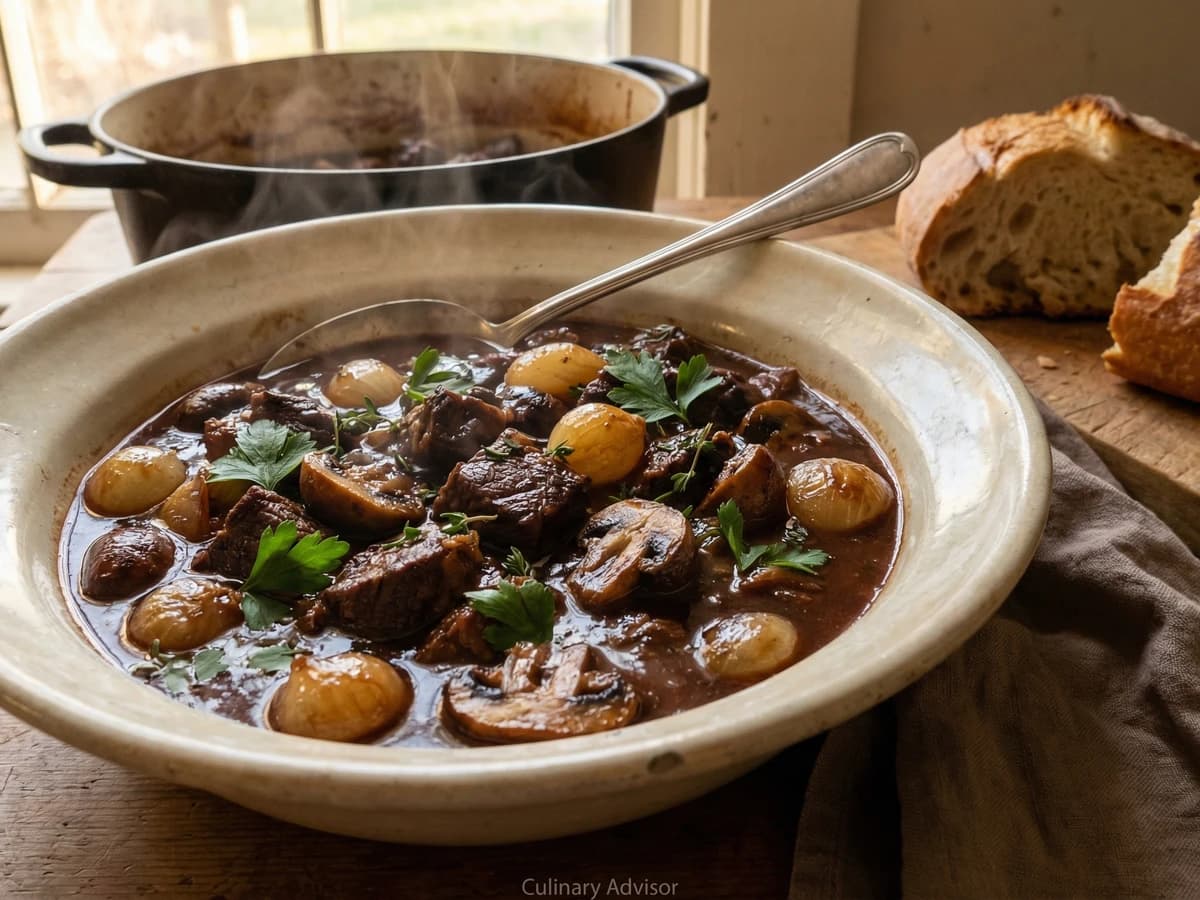
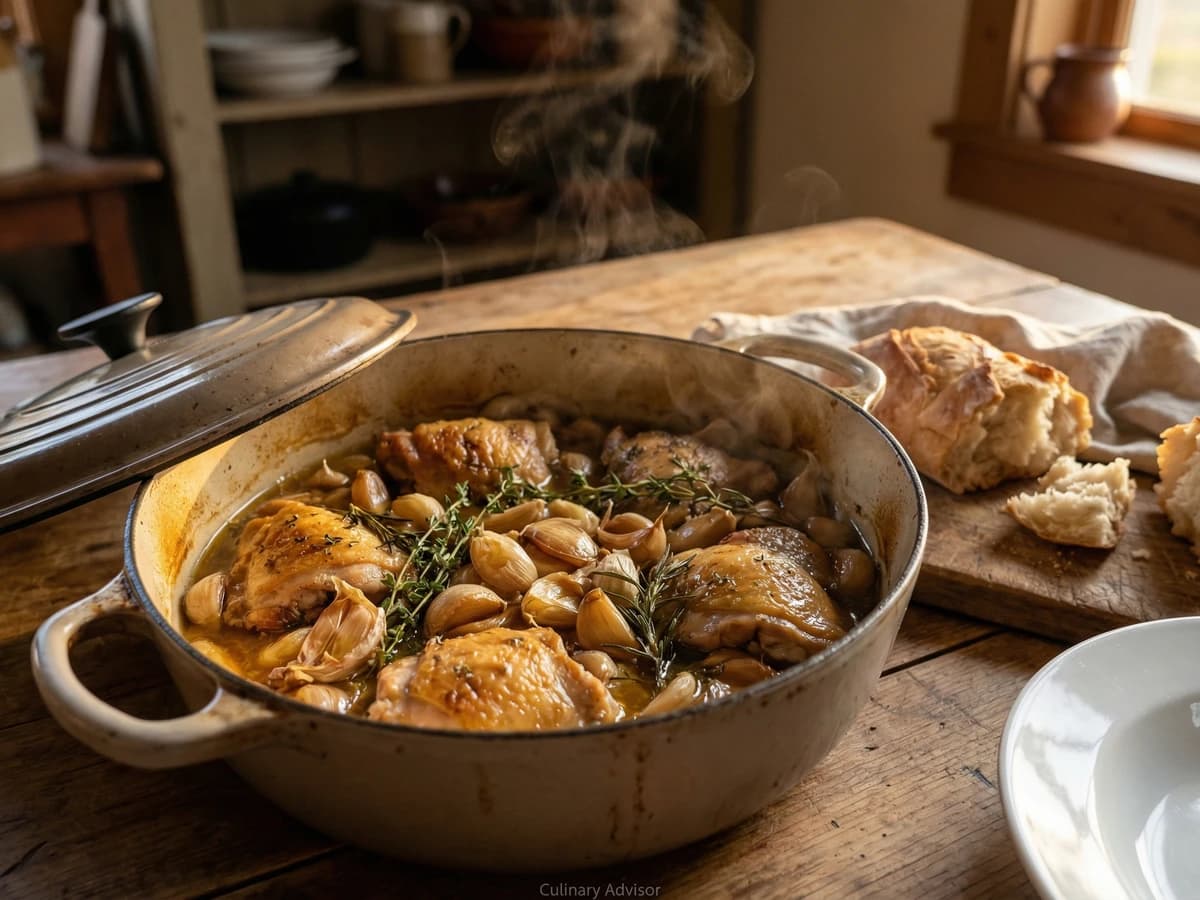
Slow-cooked onions transformed into something impossibly sweet, swimming in honest beef broth, topped with crusty bread and bubbling Gruyère that stretches from bowl to spoon in long, satisfying strands.
Soups & Stews
French
Dinner Party
Comfort Food
30 min
Active Time
1 hr 45 min cook•2 hr 15 min total
Yield6 servings
This soup asks one thing of you: patience. The onions need time to release their hidden sweetness, to turn from sharp and pungent to soft, mahogany, almost jammy. There are no shortcuts here. The transformation happens slowly, over low heat, and you cannot rush it.
I learned to make this soup in Paris, in a cramped kitchen where the cook had been making it the same way for forty years. She told me the secret was not the wine or the stock, though those matter. The secret is staying at the stove. Stirring. Watching. Letting the onions tell you when they are ready.
Good beef stock changes everything. If you have made your own from roasted bones, you will taste the difference in every spoonful. The body, the depth, the way it coats your tongue. Store-bought will work, but homemade stock is the kind of small effort that turns a simple soup into something that makes people go quiet at the table.
Every meal is a meaningful choice. When you buy onions from a farmer who grew them in your own soil, when you take the time to caramelize them properly, when you use bread from a real baker and cheese with character, you are making a statement about what food can be.
The technique, the tradition, and the story behind every dish.
•Heavy-bottomed Dutch oven or large pot (6-quart minimum)
•Oven-safe soup crocks or bowls
•Sturdy baking sheet
•Wooden spoon for stirring and scraping
Instructions
1
Prepare the onions
Halve each onion through the root, then slice into thin half-moons about a quarter-inch thick. Uniformity matters here. Thin slices caramelize evenly; thick ones will stay crunchy while others turn to mush. You will have what seems like far too many onions. They will cook down to almost nothing.
Yellow onions have the best balance of sweetness and depth. Sweet onions like Vidalias caramelize too quickly and lack complexity.
2
Begin the slow caramelization
Melt the butter with the olive oil in your heaviest pot over medium heat. Add all the onions, the salt, and the pepper. Stir to coat every slice in fat. The pot will be full to the brim. This is correct. Cover and cook for fifteen minutes, stirring once halfway through. The onions will release their water and collapse.
3
Uncover and continue cooking
Remove the lid. The onions should be soft and swimming in their own liquid. Reduce heat to medium-low. Now begins the real work. Cook uncovered for forty-five minutes to an hour, stirring every five to ten minutes. You are waiting for all the moisture to evaporate and for the natural sugars to concentrate and brown.
Do not walk away. The difference between caramelized and burnt is a matter of minutes. Watch the edges of the pot where onions can scorch.
4
Watch for the transformation
The onions will progress through stages: pale gold, then amber, then a deep mahogany brown. When fond (the caramelized bits) starts sticking to the bottom, add a splash of water and scrape it up with a wooden spoon. This deglazing adds depth. You may do this three or four times. The onions are ready when they are deeply browned, jammy, and sweet enough to eat by the spoonful.
5
Deglaze with wine
Pour in the white wine. It will sizzle and steam. Scrape up every bit of fond from the bottom of the pot. Let the wine cook down until nearly evaporated, about three minutes. The alcohol will burn off, leaving only the wine's acidity and fruit to brighten the onions.
6
Add the stock and simmer
Pour in the beef stock. Add the thyme sprigs and bay leaves. If using cognac, add it now. Bring to a gentle simmer and cook uncovered for twenty to thirty minutes. The flavors need time to marry. Taste and adjust the salt. The soup should taste deeply savory with a hint of sweetness from the onions.
If your stock is unsalted, you will need more salt than you expect. Season gradually and taste often.
7
Toast the bread
While the soup simmers, slice the baguette into rounds about three-quarters of an inch thick. You need enough to cover each bowl. Arrange on a baking sheet and toast under the broiler until golden on both sides, watching carefully. Day-old bread is ideal here: sturdy enough to hold up under the cheese without dissolving into the broth.
8
Assemble and broil
Position your oven rack about six inches from the broiler. Set oven-safe bowls or crocks on a sturdy baking sheet. Ladle hot soup into each bowl, filling about three-quarters full. Float one or two toasts on top of each. Pile the grated Gruyère generously over the bread, letting it spill onto the edges of the bowl.
9
Broil until bubbling
Slide the baking sheet under the broiler. Watch closely. In three to five minutes, the cheese will bubble, melt over the edges, and develop golden-brown spots. The soup beneath will be simmering around the edges. Remove carefully. The bowls will be extremely hot. Let rest for two minutes before serving.
Warn your guests. The bowls stay hot for a long time, and the first bite is always hotter than you expect.
Chef Tips
•Homemade beef stock transforms this soup from good to unforgettable. Roast beef bones until deeply browned before simmering. The effort is worth every minute.
•True Gruyère from Switzerland has a nutty, slightly sweet flavor that no substitute can match. Avoid pre-shredded cheese, which contains anti-caking agents that prevent proper melting.
•If you cannot find a good baguette, any crusty bread with a tight crumb will work. Avoid soft sandwich bread, which will turn to mush.
•This soup reheats beautifully. Store the broth and onions separately from the bread and cheese, then assemble and broil just before serving.
•A splash of sherry vinegar stirred in at the end brightens the soup without making it taste acidic. Start with half a teaspoon and taste.
Advance Preparation
•Caramelized onions can be made up to five days ahead and refrigerated. The flavor deepens as they sit.
•Complete soup without bread and cheese can be refrigerated for three days or frozen for three months.
•Toast bread rounds ahead and store in an airtight container at room temperature for up to two days.
Frequently Asked Questions
Nutrition Information
1 serving (about 425g)
Calories
620 calories
Total Fat
32 g
Saturated Fat
16 g
Trans Fat
0 g
Unsaturated Fat
14 g
Cholesterol
85 mg
Sodium
1550 mg
Total Carbohydrates
54 g
Dietary Fiber
6 g
Sugars
13 g
Protein
28 g
Where cooking meets culture.
Culinary guides, cultural storytelling, and the editorial depth that makes cooking meaningful.