
Chef Margarida
Amêijoas à Bulhão Pato
The clam dish that made a poet immortal, nothing but garlic, wine, and coentros meeting the brine of the sea. Ten minutes from pan to table. Bread mandatory.
A cooking platform built around craft, culture, and the stories behind what we eat.
Created by
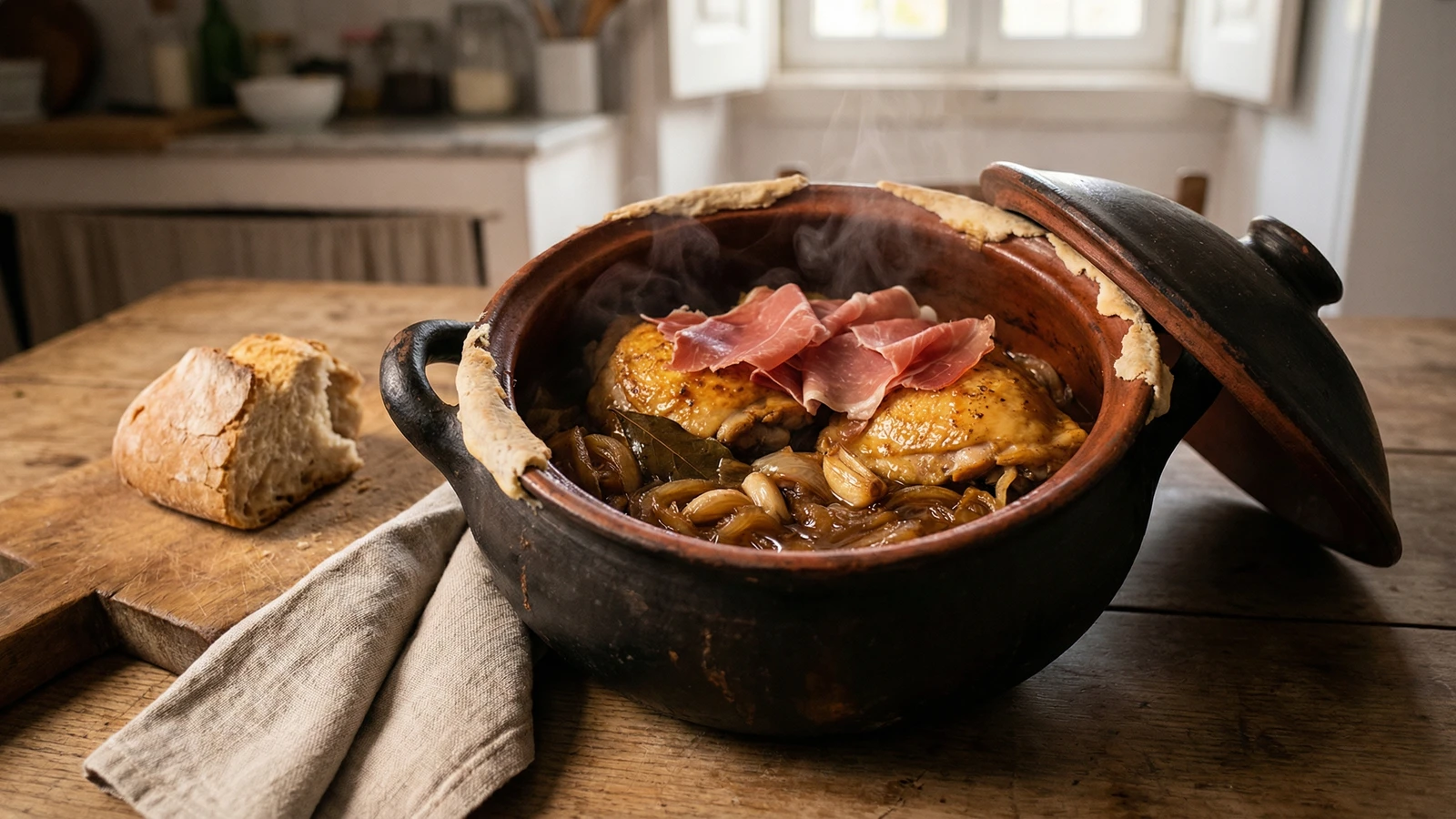
Chicken sealed in a clay pot with presunto and white wine, cooked low and slow until the meat surrenders from the bone. The pot does the work. Your only job is patience.
There's a moment when you break the seal on a púcara that I live for. That first rush of steam, carrying two hours of wine and garlic and presunto into the room. Everyone at the table goes quiet. That's when you know you've done something right.
This is not a complicated dish. It's a patient one. You layer everything into the clay pot, you seal it, you walk away. The oven and the pot do the rest. The chicken braises in its own juices and the rendered fat of the presunto, the wine turns to vapor and bastes everything from within, and slowly, steadily, the meat becomes so tender it practically falls apart when you look at it.
I learned this from a grandmother in Bairrada during one of my documentation trips. She'd been making it the same way for sixty years. Her púcara was blackened from decades of use, the lid worn smooth where her hands had lifted it thousands of times. She told me the secret was doing nothing. "Não mexas," she said. Don't touch it. Don't open it. Don't worry about it. The pot knows what it's doing.
At Mesa da Avó, we serve this with the pot sealed, breaking it open at the table. It's theater, yes, but it's also truth. The seal keeps everything inside, and opening it becomes an event. This is how food was meant to be shared: together, around a table, with that first cloud of steam rising between you.
Frango na púcara emerged from the Bairrada region of central Portugal, where clay cooking vessels have been made for centuries. The technique of sealing the pot with flour paste dates to a time before reliable oven thermostats, when cooks needed to trap every bit of moisture during long, slow cooking. The dish exemplifies the Portuguese genius for transforming simple ingredients through patient technique rather than elaborate preparation.
Quantity
1 (about 1.5 kg)
cut into 8 pieces
Quantity
150g
sliced thin
Quantity
4 tablespoons
Quantity
2 medium
sliced into rings
Quantity
6
smashed
Quantity
2
Quantity
1 cup
Quantity
1 tablespoon
Quantity
1 teaspoon
Quantity
1/2 teaspoon
Quantity
1 teaspoon
Quantity
freshly ground, to taste
Quantity
1/4 cup
mixed with water to form paste, for sealing
| Ingredient | Quantity |
|---|---|
| whole chickencut into 8 pieces | 1 (about 1.5 kg) |
| presuntosliced thin | 150g |
| extra virgin olive oil (azeite) | 4 tablespoons |
| onionssliced into rings | 2 medium |
| garlic clovessmashed | 6 |
| bay leaves | 2 |
| dry white wine | 1 cup |
| brandy or aguardente | 1 tablespoon |
| sweet paprika (pimentão doce) | 1 teaspoon |
| piri-piri or dried malagueta pepper (optional) | 1/2 teaspoon |
| sea salt | 1 teaspoon |
| black pepper | freshly ground, to taste |
| flour (optional)mixed with water to form paste, for sealing | 1/4 cup |
Season the chicken pieces generously with salt, pepper, and paprika. Let them sit at room temperature while you prepare everything else. This isn't optional. Cold chicken from the fridge will cook unevenly and the seasoning won't penetrate.
Drizzle the olive oil into the bottom of your clay pot. Arrange half the onion rings across the bottom, then scatter half the garlic and tuck in the bay leaves. Lay half the presunto slices over the aromatics. This is your foundation. The presunto will render its fat and flavor into everything above it.
Arrange the chicken pieces in a single layer over the presunto. Don't crowd them. They need room for heat to circulate. Top with the remaining onion, garlic, and presunto. If using piri-piri or malagueta, tuck it in now. Everything should be snug but not packed.
Pour the white wine and brandy over everything. Don't stir. The layers are intentional. The wine will find its way down through the aromatics and create steam that bastes the chicken from within.
If you have a proper púcara with a tight-fitting lid, simply cover it firmly. For a true seal, mix flour with just enough water to make a thick paste and press it around the rim where lid meets pot. This traps every wisp of steam inside. Place the sealed pot into a cold oven, then set it to 160°C (320°F). This matters: the pot must heat gradually with the oven to prevent cracking.
Let the chicken cook undisturbed for 2 hours. Don't open it. Don't check it. Don't peek. The whole point is that the pot becomes its own sealed world where the chicken braises in its own juices and the wine and the rendered fat from the presunto. Trust the process. After 2 hours, the meat will be falling from the bone.
Bring the pot to the table still sealed. Break the flour seal at the table if you made one, the theater is part of it. The first rush of steam should fill the room with wine and garlic and presunto. Serve directly from the pot with crusty bread to soak up the juices. The sauce doesn't need thickening. It's perfect as it is: thin, fragrant, soaked into every piece of meat.
1 serving (about 300g)
Culinary guides, cultural storytelling, and the editorial depth that makes cooking meaningful.
Discover Culinary ExplorerChef Margarida
The clam dish that made a poet immortal, nothing but garlic, wine, and coentros meeting the brine of the sea. Ten minutes from pan to table. Bread mandatory.

Chef Margarida
Rice and beans, the combination that kept Portuguese families alive through hard times. Poor food that proves poverty breeds genius. Every spoonful is survival made delicious.

Chef Margarida
Portugal's greatest celebration of the sea: rice swimming in saffron broth, piled high with prawns, clams, mussels, and crab. Malandrinho, wet, abundant, the dish that brings families to the table.

Chef Margarida
The octopus rice of Portugal's coast, where the sea meets the pot and everything becomes one. Malandrinho style: loose, creamy, and deeply savory with every spoonful tasting of the Atlantic.