Chef Klaus
Allgäuer Kaspressknödel
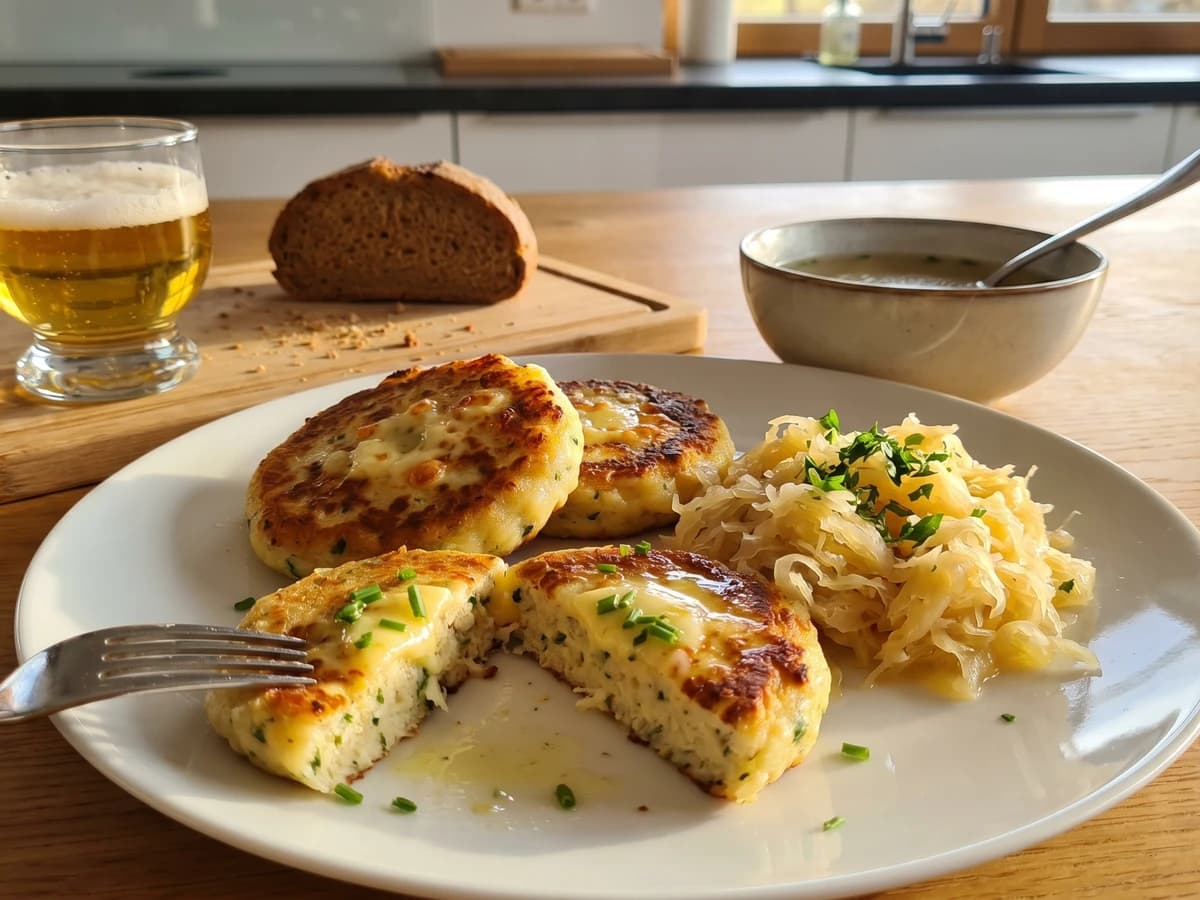
Pressed bread dumplings from the Alpine south, fried until the cheese catches at the edges and the middle stays soft enough for broth, kraut, or a weekday plate.
A cooking platform built around craft, culture, and the stories behind what we eat.

Created by
The Franconian Sunday Kloß is half thrift and half technique: raw potato pressed bone-dry, cooked potato binding it, and browned bread hidden in the middle.
Fränkische Kartoffelklöße belong beside the Sunday roast in Franconia, especially when there is a dark pan sauce that needs catching. They are also weeknight food if you've planned like a sensible person and boiled the cooked potatoes ahead. The plate isn't precious: a Kloß, a ladle of sauce, red cabbage if it's the season, and everyone knows why they sat down.
Germany argues about potato dumplings properly. In Bavaria you meet more cooked-potato Knödel, in Thuringia the raw-potato Klöße go pale and almost glassy, and in Franconia the useful middle holds strong: about two-thirds raw grated potato to one-third cooked. Im Norden anders, im Süden anders. A German dumpling is not one national object with one rule.
The rule here is simple and it decides everything: press the raw grated potato until it feels almost too dry to become dough. Leave water in it and the Kloß goes grey, slack, and sour in the pot; press it dry and the starch can bind instead of swimming away. Keep the settled potato starch from the pressing water and put it back. Weggeworfen wird nichts.
Toast the bread cubes well, too. They sit in the center so the dumpling cooks evenly and gives you that little crisp, buttery middle. Das braucht seine Zeit. Erst verstehen, dann kochen.
Potatoes became a German staple only after the eighteenth century, pushed in Prussia by Frederick the Great's potato orders in the 1750s and taken up across regions at different speeds. Franconian potato dumplings grew into the Sunday roast table of northern Bavaria, where raw-and-cooked potato Klöße sit between Bavarian cooked-potato Knödel and Thuringian raw Klöße. The browned bread cubes in the middle are not decoration; they come from a kitchen that used stale rolls properly and wasted nothing.
Quantity
1.2kg
peeled
Quantity
600g
peeled
Quantity
2 rolls or 3 slices
cut into 1cm cubes
Quantity
40g
Quantity
1 teaspoon, plus more for cooking water
Quantity
2 tablespoons
Quantity
a small pinch
Quantity
1 tablespoon
for the holding water
| Ingredient | Quantity |
|---|---|
| floury potatoes for gratingpeeled | 1.2kg |
| floury potatoes for boilingpeeled | 600g |
| stale white rolls or day-old white breadcut into 1cm cubes | 2 rolls or 3 slices |
| butter | 40g |
| fine salt | 1 teaspoon, plus more for cooking water |
| potato starch (optional) | 2 tablespoons |
| freshly grated nutmeg | a small pinch |
| white vinegar or lemon juicefor the holding water | 1 tablespoon |
Boil the 600g potatoes in salted water until they fall apart when pressed with a fork, then drain them hard and let them stand uncovered for a few minutes. Floury potatoes matter here because they break dry and mealy; waxy potatoes stay slick and make a dough that fights you.
Melt the butter in a pan and fry the bread cubes until they are crisp and golden on all sides. They go in the middle of the dumpling, so pale bread turns soggy there; browned bread keeps its bite and gives the Kloß its little center.
Fill a bowl with cold water and the vinegar or lemon juice, then grate the 1.2kg raw potatoes finely into it. The acid slows the greying while you work, but it won't save wet dough; it only buys you time.
Lift the grated potato into a clean cloth and wring it over a bowl until no more liquid runs easily and the potato feels almost crumbly. This is the step. Water left in the raw potato makes the dumplings loose and grey because the starch disperses into the pot instead of binding the dough.
Let the pressed potato water sit for 10 minutes, then pour off the brown liquid and keep the white starch settled at the bottom. Scrape that starch into the pressed raw potato. Weggeworfen wird nichts, and this starch is the glue you earned by pressing properly.
Rice or mash the cooked potatoes very smooth, then mix them with the pressed raw potato, the recovered starch, salt, and a small pinch of nutmeg. Work it briefly with your hands until it holds together; long kneading wakes up the starch and makes the dough rubbery. If it feels wet after a proper pressing, add potato starch one tablespoon at a time.
Wet your hands, divide the dough into 8 pieces, and flatten each one slightly. Put a few toasted bread cubes in the middle, close the dough around them, and roll gently into smooth balls. Sealed dumplings matter because cracks invite water in, and water is already the enemy here.
Bring a wide pot of salted water to a boil, then lower it until the surface only trembles. Slide in the dumplings and cook 20 to 25 minutes, until they float and feel set when lifted with a spoon. Boiling beats the starch loose and breaks the Klöße open; trembling water cooks them through without bullying them.
Lift the Klöße out with a slotted spoon and let them drain for a minute on a warm plate. Serve them with roast gravy, mushroom sauce, or browned butter and onions. Nicht aus dem Glas: if there is sauce on the table, make it from the pan or the mushrooms, not from a packet. Schön ist, was schmeckt.
1 serving (about 380g)
Culinary guides, cultural storytelling, and the editorial depth that makes cooking meaningful.
Discover Culinary ExplorerChef Klaus
Pressed bread dumplings from the Alpine south, fried until the cheese catches at the edges and the middle stays soft enough for broth, kraut, or a weekday plate.

Chef Klaus
The Bavarian potato salad that works because warm waxy slices drink hot broth first, then oil last, until the bowl turns glossy without mayonnaise.

Chef Klaus
White cabbage shaved thin, wilted with hot caraway vinegar, and finished with crisp Speck fat: the Bavarian salad that belongs beside bread, sausages, and roast pork.

Chef Klaus
The south's sweet-sour white cabbage, cooked from fresh Kraut rather than sauerkraut, soft enough for roast pork and sharp enough to wake the plate.