
Chef Juliana
Açaí com Farinha de Tapioca
You don't need a blender trick or a sweet shop bowl. Thick unsweetened açaí, crunchy farinha de tapioca, and the discipline to read the label solve this Belém spoon plate.
A cooking platform built around craft, culture, and the stories behind what we eat.
Created by
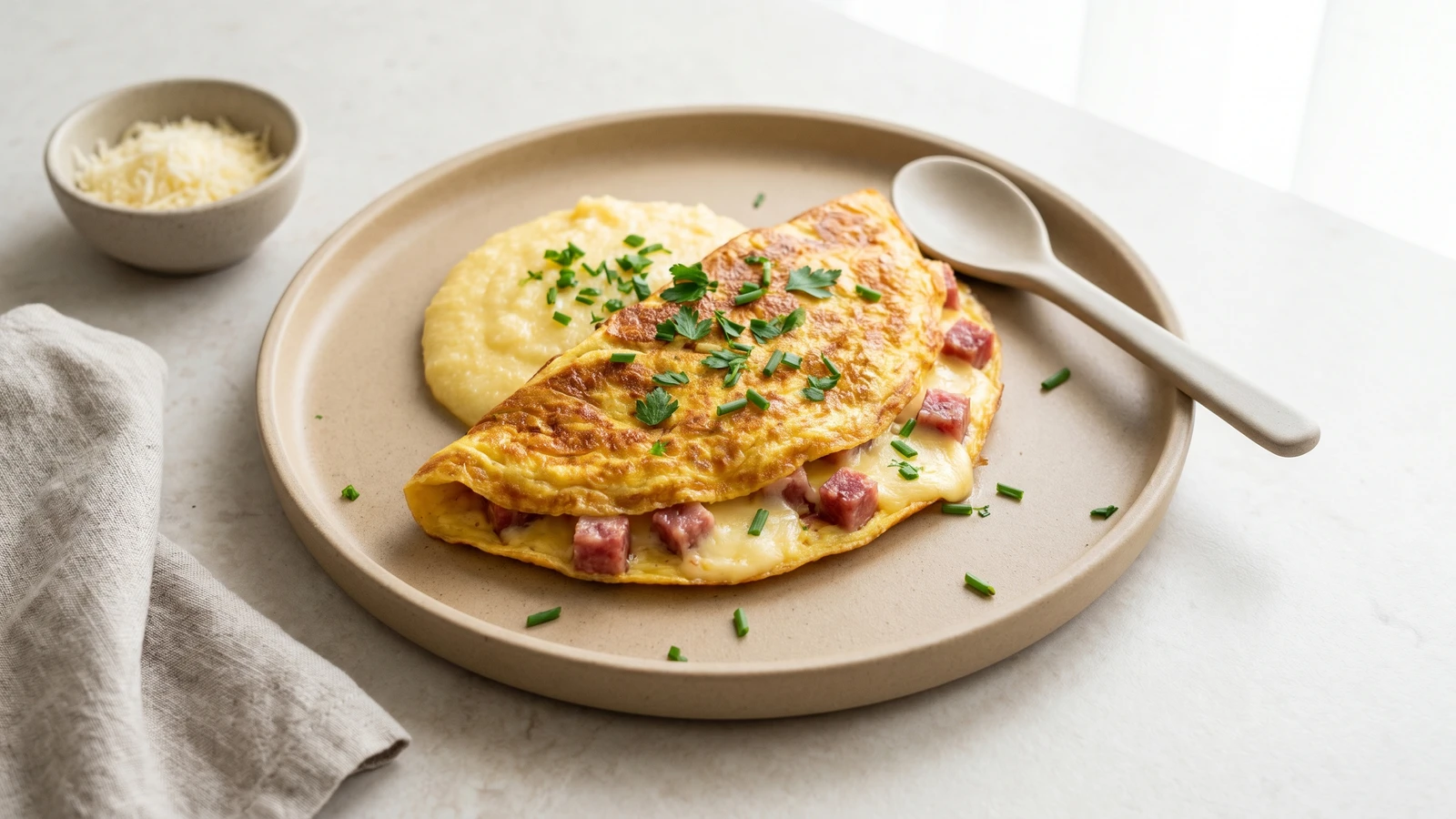
You don't need brunch courage here. Beat eggs, brown a little salame, melt queijo colonial, and fold it once. With polenta on the side, dinner is solved.
You look at a pan of eggs and hear that little voice, isso não é pra mim. I know it. I had the same voice in my own kitchen, standing there with my cheap caderno and a lot of ruined onions behind me. But eggs are not a personality test. Cozinhar não é dom, é um aprendizado. Anota aí.
This is the kind of food that gets people into the kitchen because it pays you back fast. A few eggs, a little salame, some queijo colonial, one pan, and you have comida de verdade in less than half an hour. Breakfast, yes. But put it beside polenta, rice and beans, and something green, and suddenly it has walked right into the pê-efe, the everyday plate that quietly keeps a country itself.
The method is simple, but simple doesn't mean careless. Brown the salame first so it gives its fat and flavor to the pan. Let the onion murchar until sweet and soft, then garlic only until you smell it, because burnt garlic is bitter and unforgiving. Beat the eggs just until even, pour them into a hot pan, and lower the heat so the bottom sets before the top turns rubbery.
This is a recipe that works because it tells you what to watch for. Glossy top, set edges, cheese softening, one confident fold. No packet, no powder pretending to be flavor. Just a Tuesday pan doing its job.
Fortaia belongs to the Italian-colony cooking of southern Brazil, especially Rio Grande do Sul and Santa Catarina, where Italian immigration grew after 1875 in farming communities that kept eggs, salame, cheese, and polenta close at hand. The name is linked to northern Italian frittata traditions, adapted in colônia kitchens with local queijo colonial and salame. In many families it is breakfast food, but it also works as a quick main dish beside polenta, rice, beans, and greens.
Quantity
6
Quantity
1/2 cup
grated
Quantity
1/3 cup
cut into small cubes
Quantity
1 tablespoon
Quantity
1 small
finely chopped
Quantity
1 small clove
minced
Quantity
1/4 teaspoon, plus more to taste
Quantity
1/8 teaspoon
Quantity
1 tablespoon
chopped
Quantity
2 cups
for serving
| Ingredient | Quantity |
|---|---|
| large eggs | 6 |
| queijo colonial or meia-cura cheesegrated | 1/2 cup |
| salame colonialcut into small cubes | 1/3 cup |
| lard, oil, or butter | 1 tablespoon |
| onionfinely chopped | 1 small |
| garlicminced | 1 small clove |
| salt | 1/4 teaspoon, plus more to taste |
| black pepper | 1/8 teaspoon |
| parsley or chives (optional)chopped | 1 tablespoon |
| cooked polenta (optional)for serving | 2 cups |
Crack the eggs into a bowl and beat with a fork until the whites and yolks are even, with no clear streaks left. Stir in the cheese, salt, pepper, and parsley or chives if using. Don't beat until foamy. Foam makes the eggs puff and collapse, and a gente wants tender, steady eggs, not drama.
Set a 26 cm skillet over medium heat and add the lard, oil, or butter. Add the salame and cook for 2 to 3 minutes, stirring now and then, until the edges darken a little and the fat in the pan smells savory. This is where the flavor starts. If the pan is too hot, the salame burns before it gives anything useful back.
Add the onion to the same pan and cook until it goes soft and see-through, about 3 minutes. Add the garlic and cook for 30 seconds, just until you smell it. That's enough. Garlic is small and bossy, and if it burns it will drag the whole fortaia with it.
Spread the salame and onion evenly in the pan, lower the heat to medium-low, and pour in the egg mixture. Tilt the pan so the eggs reach the edges. Let it sit for 1 minute, then gently pull the set edges toward the center with a spatula so the loose egg can run underneath. Stop when the bottom is set, the edges look firm, and the top is still glossy. That shine is your warning not to overcook.
When the top is still a little moist but no longer running like raw egg, loosen the fortaia around the edges and fold it in half. Cook for 1 to 2 minutes more, just until the cheese softens and the center finishes from the stored heat. If you wait until it looks completely dry in the pan, it will be rubber on the plate.
Slide the fortaia onto a plate and cut it into wedges. Serve with warm polenta, or with rice, beans, and couve if that's what you have. The pê-efe is not precious: rice, beans, something good from the pan, something green. That's dinner solved.
1 serving (about 270g)
Culinary guides, cultural storytelling, and the editorial depth that makes cooking meaningful.
Discover Culinary ExplorerChef Juliana
You don't need a blender trick or a sweet shop bowl. Thick unsweetened açaí, crunchy farinha de tapioca, and the discipline to read the label solve this Belém spoon plate.

Chef Juliana
You don't need a shop to make a thick açaí bowl. You need real frozen pulp, a ripe banana, and the discipline to stop blending before it becomes juice.

Chef Juliana
You don't need boxed cereal to get breakfast on the table. Fine cassava farinha, milk, salt, and steady stirring turn into a warm Amazonian bowl that actually carries you.

Chef Juliana
If you think two ingredients can't feed you, anota aí. Good farinha d'água, cold water, and salt make a bowl that's plain, Brazilian, and smarter than the packet.