Chef Thomas
All-Butter Shortbread Fingers
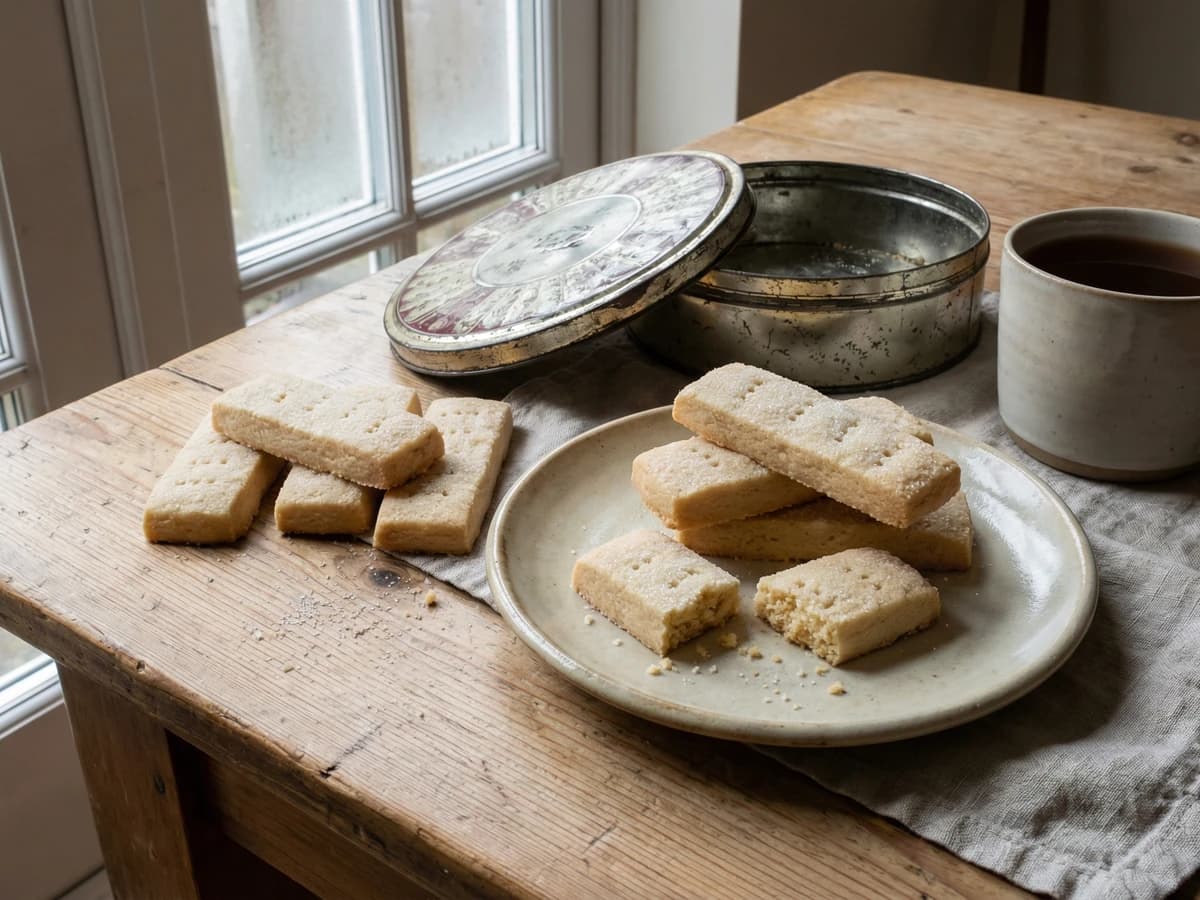
The plainest biscuit in the tin and the hardest one to stop eating, three ingredients and a slow oven turning good butter into something quietly perfect with a cup of tea.
A cooking platform built around craft, culture, and the stories behind what we eat.
Created by Chef Thomas
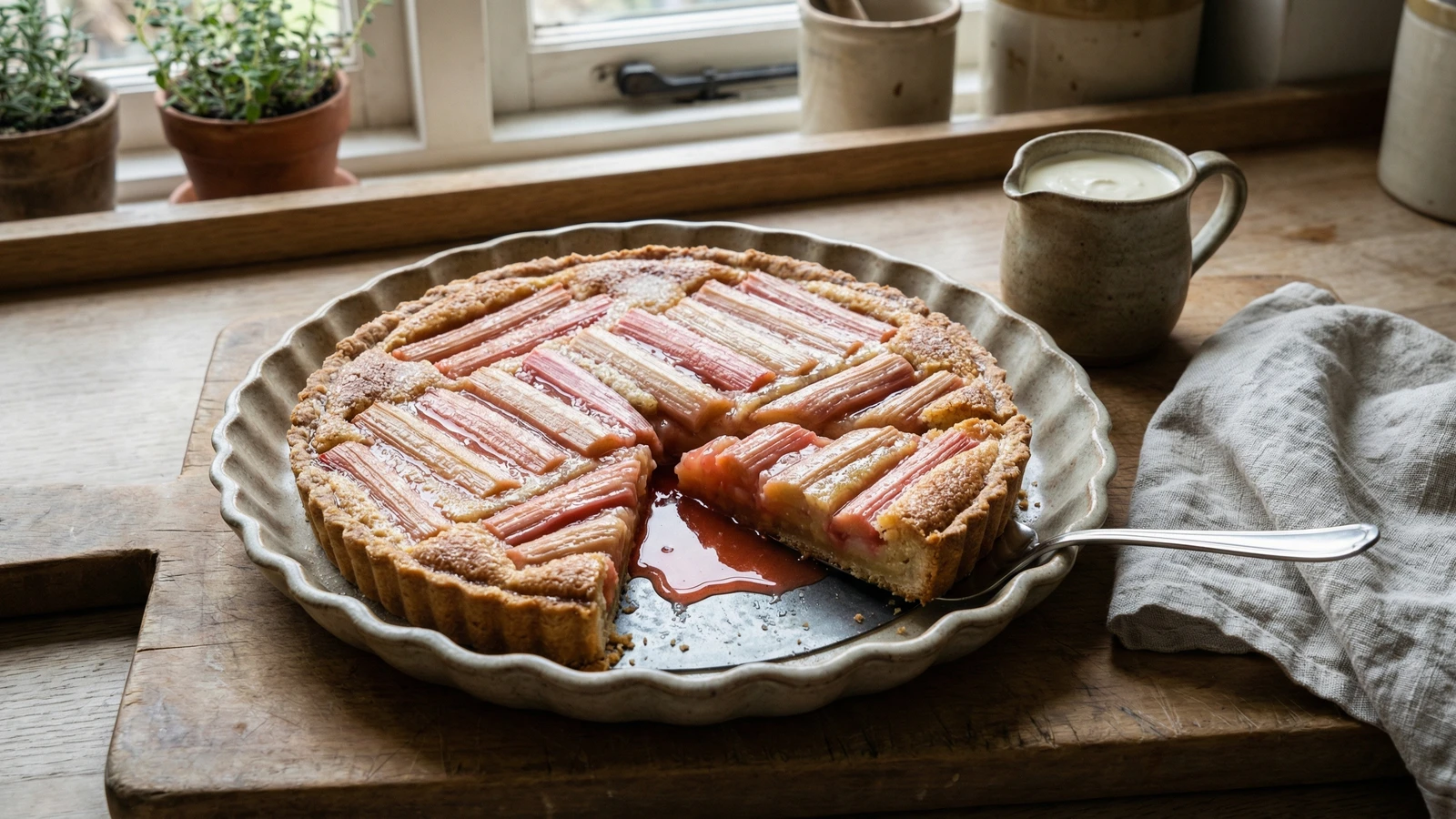
Forced pink rhubarb laid into a buttery shortcrust and baked until the juices turn syrupy and the kitchen smells of January doing its best to feel like spring.
It's January. The garden is doing nothing. The market has root vegetables and a great deal of cabbage, and you've eaten enough soup to last you. Then, on a stall near the back, a bundle of forced rhubarb appears. Long pink stalks the colour of a winter sunrise, grown by candlelight in dark sheds in the Yorkshire Triangle, and it feels like someone has slipped you a secret.
This is the first proper tart of the year. Not the rhubarb you'll get in April, which is greener and tougher and wants stewing into submission. Forced rhubarb is something else entirely. Tender enough to soften in twenty minutes, sharp enough to need sugar but not too much, pink enough to make the pastry case look like it's holding a stained glass window. The Yorkshire growers have been doing this since Victorian times and you can taste the patience in it.
A recipe is a conversation, not a contract. Use whatever good shortcrust you trust, and if you have a favourite ratio for pastry, use that instead. The rhubarb is the point. Vanilla and orange zest sit alongside it the way good company sits alongside someone you love: present, but not crowding the room.
Serve it warm, with cold double cream poured straight from the jug, or with thick Greek yoghurt if you want the sharpness to ring louder. I wrote it down in the notebook the first time I made one this winter: rhubarb, January, the kitchen smelling of sugar and orange peel, the rain coming down sideways outside. Right food, right evening.
Quantity
200g
Quantity
100g
cubed
Quantity
50g
Quantity
1
Quantity
2-3 tablespoons
Quantity
pinch
Quantity
600g
Yorkshire Triangle if you can get it
Quantity
100g, plus extra for the top
Quantity
1
split, seeds scraped
Quantity
zest of 1
Quantity
1 tablespoon
Quantity
to serve
| Ingredient | Quantity |
|---|---|
| plain flour | 200g |
| cold unsalted buttercubed | 100g |
| icing sugar | 50g |
| large egg yolk | 1 |
| cold water | 2-3 tablespoons |
| fine sea salt | pinch |
| forced pink rhubarbYorkshire Triangle if you can get it | 600g |
| golden caster sugar | 100g, plus extra for the top |
| vanilla podsplit, seeds scraped | 1 |
| unwaxed orange | zest of 1 |
| cornflour | 1 tablespoon |
| double cream or thick yoghurt (optional) | to serve |
Tip the flour, icing sugar and salt into a bowl. Add the cold butter and rub it in with your fingertips until the mixture looks like rough sand with a few larger flecks of butter still showing. Don't overdo it. Those flecks are what make the pastry shatter properly when baked. Stir in the egg yolk and just enough cold water to bring it together into a rough ball. Flatten into a disc, wrap, and rest in the fridge for at least half an hour.
Trim the rhubarb and wipe the stalks with a damp cloth. Forced rhubarb doesn't need peeling. Cut into batons roughly the length of your little finger, on a slight diagonal so they sit prettily in the tart. Toss them in a wide bowl with the caster sugar, vanilla seeds, orange zest and cornflour. Leave them to sit for ten minutes. The sugar will start to draw out the juices and the colour will deepen from pale pink to something altogether more serious.
Heat the oven to 190C/170C fan. Roll the pastry out on a lightly floured surface to about the thickness of a pound coin. Lift it carefully into a 23cm loose-bottomed tart tin, pressing it gently into the corners. Trim the edges, leaving a small overhang in case of shrinkage. Prick the base all over with a fork.
Line the pastry case with a sheet of baking parchment and fill with baking beans or dried pulses. Bake for fifteen minutes, then lift out the parchment and beans and return the case to the oven for another five minutes. The pastry should look pale gold and dry to the touch, no longer raw underneath. This is the step most people skip and most people regret. A soggy bottom is not a tradition we need to preserve.
Lay the rhubarb batons into the warm pastry case in whatever pattern pleases you. Tight rows work. So does a loose, scattered look. Pour any juices that have collected in the bowl over the top. Scatter a little extra caster sugar across the surface. The rhubarb should sit snugly but not be crammed in.
Slide the tart back into the oven and bake for twenty-five to thirty minutes. You're looking for rhubarb that has softened and turned glossy, with the juices bubbling at the edges and reducing to a thick syrup. The pastry should be deep gold. Trust your nose. When the kitchen starts to smell of warm sugar and something faintly floral, you're nearly there. Let the tart cool in the tin for at least twenty minutes before lifting it out. Warm, not hot, is when it tastes best.
1 serving (about 130g)
Culinary guides, cultural storytelling, and the editorial depth that makes cooking meaningful.
Discover Culinary ExplorerChef Thomas
The plainest biscuit in the tin and the hardest one to stop eating, three ingredients and a slow oven turning good butter into something quietly perfect with a cup of tea.
Chef Thomas
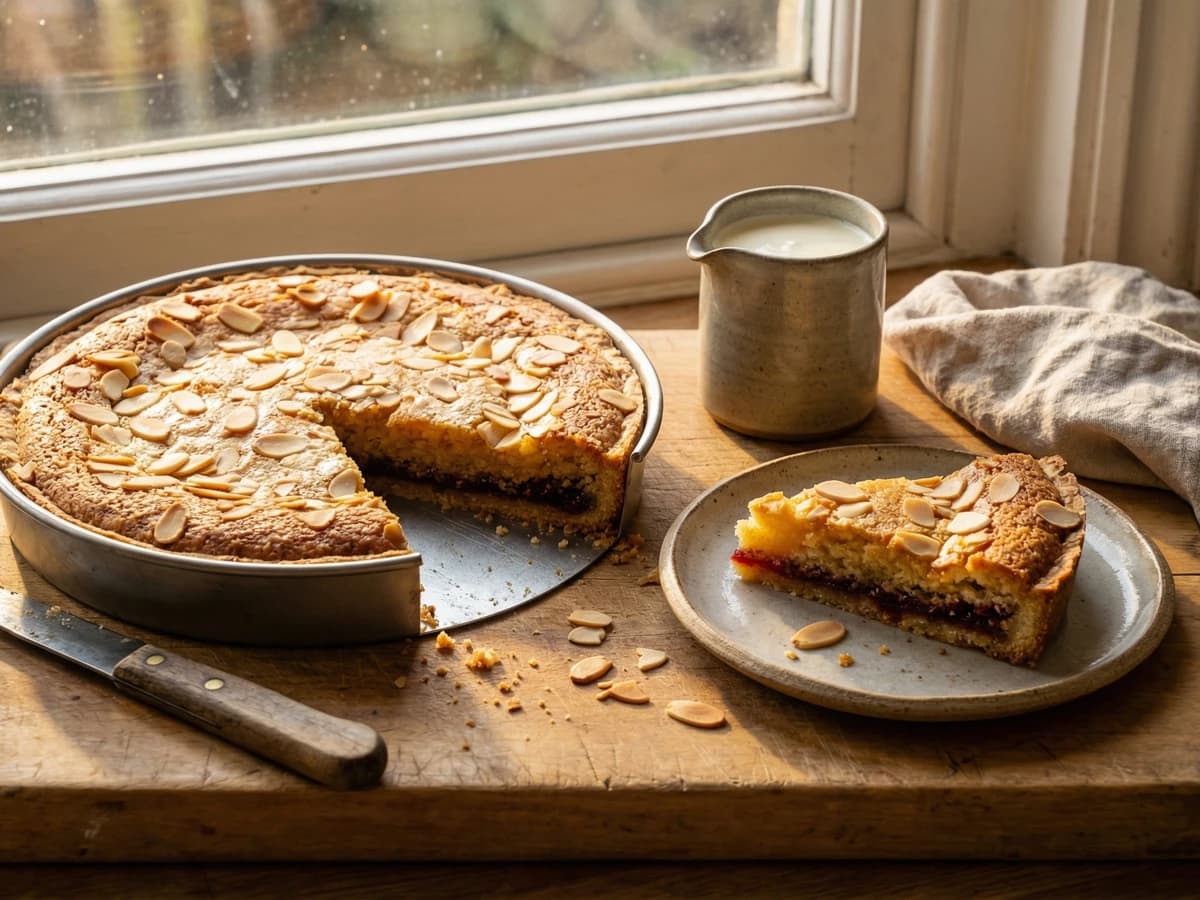
A proper Bakewell tart with buttery shortcrust, a thick layer of raspberry jam, and almond frangipane baked golden under a scattering of flaked almonds. No icing. No nonsense.
Chef Thomas
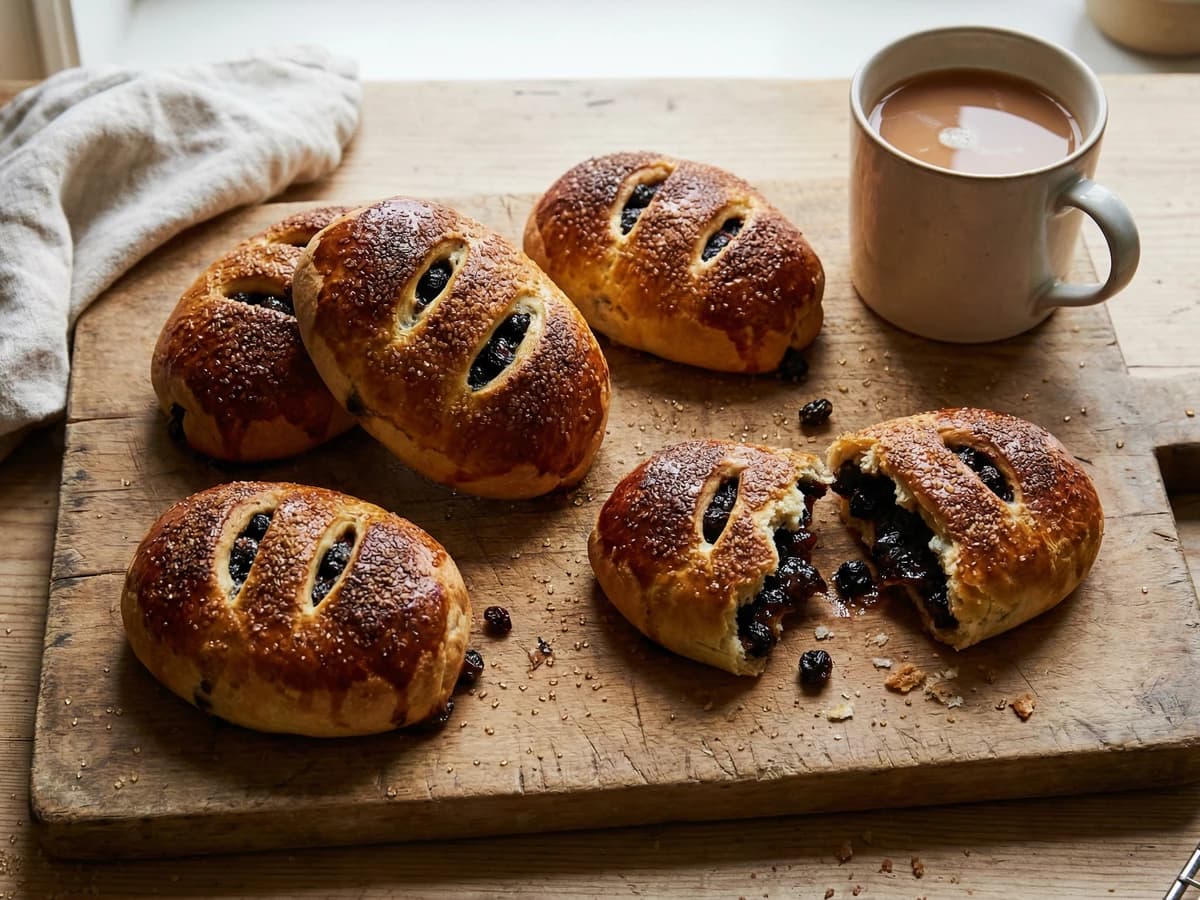
Oval pastries filled with rum-soaked currants and spice, baked until the tops crackle with sugar. The kind of thing to make on a wet Sunday afternoon when you want the kitchen to smell of something.
Chef Thomas
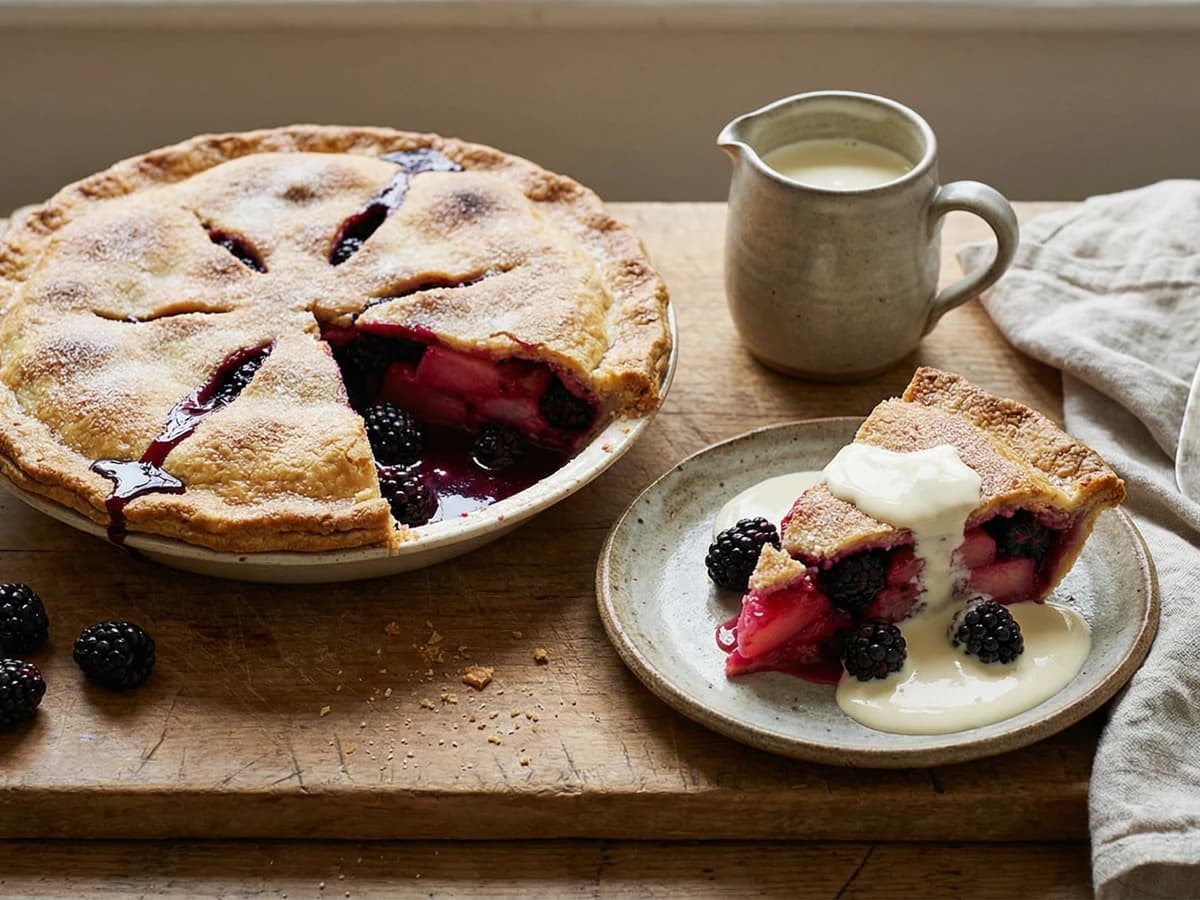
A proper hedgerow pie of Bramley apples and blackberries under a sugar-crusted pastry lid, the kind of pudding that turns a Sunday in September into something you'll remember.