
Chef Dean
Almond Butter Cookies
Buttery, sandy-textured cookies crowned with whole blanched almonds, delivering old-fashioned elegance through honest technique and quality butter. The kind of cookie that earns its place on holiday platters.
A cooking platform built around craft, culture, and the stories behind what we eat.
Created by
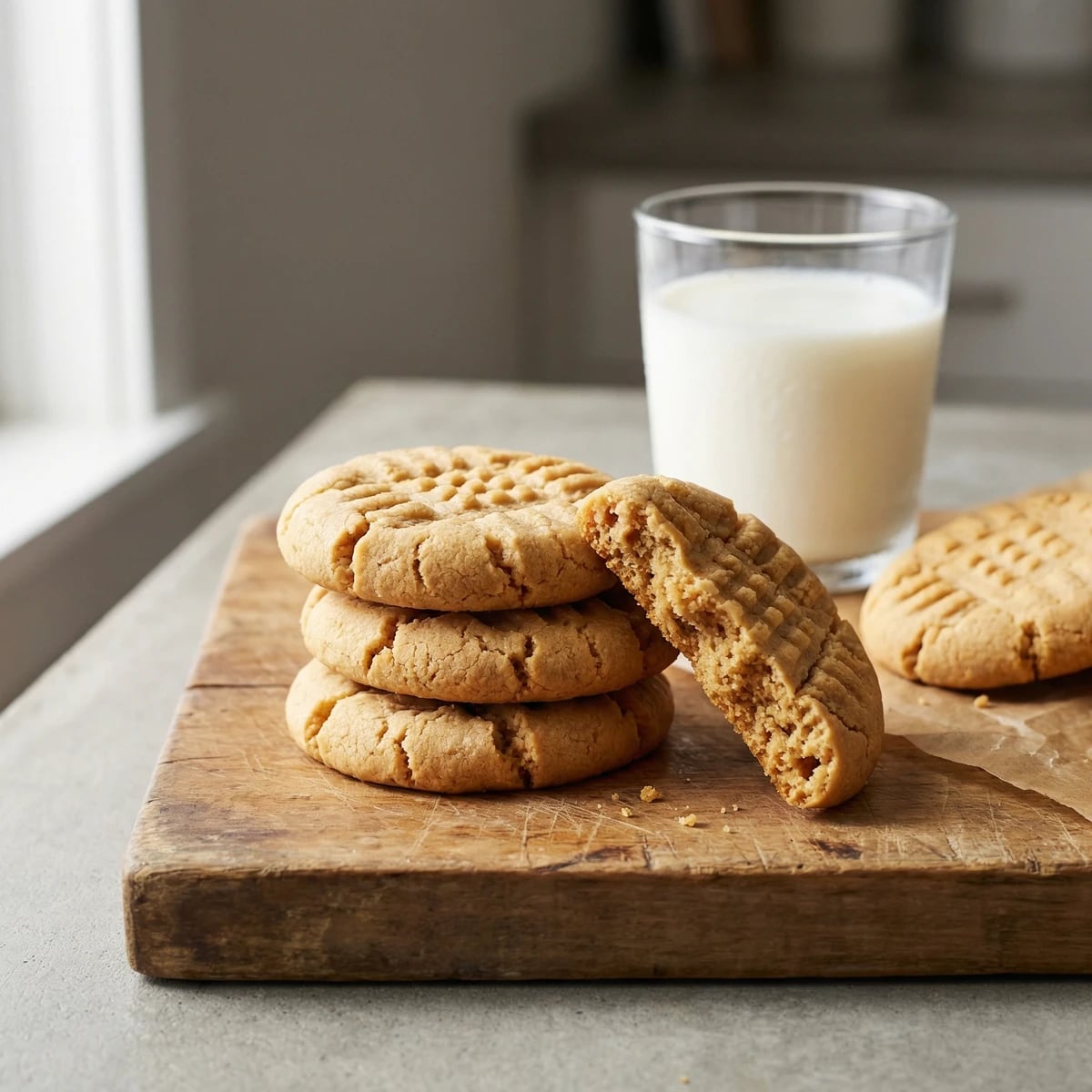
Just three ingredients transform into impossibly tender cookies with an intense peanut flavor no flour-based recipe can match. The crackled tops and soft centers happen naturally when you trust the simplest formula in American baking.
This cookie shouldn't work. Three ingredients. No flour. No leavening. No butter. And yet it produces one of the most satisfying cookies in the American repertoire, with a concentrated peanut flavor that flour-based versions can only dream of achieving.
The recipe likely emerged during World War II rationing, when home bakers discovered that peanut butter's protein and fat could stand in for flour's structure. What began as necessity became revelation. The cookie spread through community cookbooks and church socials, passed hand to hand by women who understood that simplicity and greatness aren't mutually exclusive.
I've served these to pastry chefs who trained in Paris. They take one bite and ask for the recipe, expecting complexity. When I tell them it's three ingredients, they don't believe me. That disbelief is part of the magic. These cookies prove that technique matters less than understanding your ingredients. Peanut butter provides structure, fat, and flavor. Sugar adds sweetness and encourages that characteristic crackled top. The egg binds everything together and creates lift.
Make them once and you'll memorize the formula: equal parts peanut butter and sugar, one egg. That's the whole trick. The rest is just following through.
Quantity
1 cup
not natural style
Quantity
1 cup
Quantity
1 large
Quantity
1/2 teaspoon
Quantity
1 teaspoon
| Ingredient | Quantity |
|---|---|
| creamy peanut butternot natural style | 1 cup |
| granulated sugar | 1 cup |
| egg | 1 large |
| fine sea salt | 1/2 teaspoon |
| pure vanilla extract | 1 teaspoon |
Position a rack in the center of your oven and preheat to 350°F. Line two baking sheets with parchment paper. The parchment matters here because these cookies stick more readily than butter-based versions.
In a medium bowl, combine the peanut butter, sugar, egg, salt, and vanilla. Stir vigorously with a wooden spoon or stiff spatula until the mixture forms a smooth, cohesive dough. This takes about two minutes of determined mixing. The dough will look slightly oily and smell intensely of roasted peanuts. This is correct.
Roll level tablespoons of dough into balls between your palms. The dough is soft but not sticky. Place the balls two inches apart on your prepared sheets, giving them room to spread. You should fit twelve cookies per standard sheet.
Dip a fork in granulated sugar and press gently into each ball, flattening it to about half an inch thick. Rotate the fork ninety degrees and press again to create the classic crosshatch pattern. Dip the fork in sugar between each cookie to prevent sticking. The pattern isn't just decorative. It ensures even baking and creates those characteristic ridges that become slightly crisp while the centers stay tender.
Bake one sheet at a time for 10 to 12 minutes, until the edges are set and the tops show deep cracks across the surface. The centers will look slightly underdone. This is what you want. The cookies continue cooking on the hot pan after they leave the oven. Overbaking produces dry, crumbly results that stick to your teeth rather than melting on your tongue.
Let the cookies rest on the baking sheet for five full minutes. They are extremely fragile when hot. After five minutes, transfer to a wire rack to cool completely. The texture transforms as they cool, moving from soft and delicate to tender but sturdy enough to pick up without breaking. Resist the temptation to eat them immediately. They're good warm, but they're better at room temperature when the texture has fully set.
1 serving (about 45g)
Culinary guides, cultural storytelling, and the editorial depth that makes cooking meaningful.
Discover Culinary Explorer
Chef Dean
Buttery, sandy-textured cookies crowned with whole blanched almonds, delivering old-fashioned elegance through honest technique and quality butter. The kind of cookie that earns its place on holiday platters.

Chef Dean
Chewy oat and coconut cookies inspired by the iconic Australian biscuit, adapted for American pantries with that unmistakable golden syrup backbone and perfectly crisp edges giving way to soft, butterscotch centers.

Chef Dean
Chewy, golden oatmeal cookies studded with tender dried apples and perfumed with cinnamon, capturing the essence of autumn apple pie in a form you can hold in your hand.

Chef Dean
Soft, buttery cookies studded with rainbow sprinkles and perfumed with vanilla and almond extract. These taste exactly like a slice of birthday cake, no candles required.