
Chef Thomas
A British BLT
Back bacon crisped in a hot pan, a ripe tomato that actually tastes of something, crisp lettuce and real butter on proper toast. A sandwich that earns its place in the notebook.
A cooking platform built around craft, culture, and the stories behind what we eat.
Created by Chef Thomas
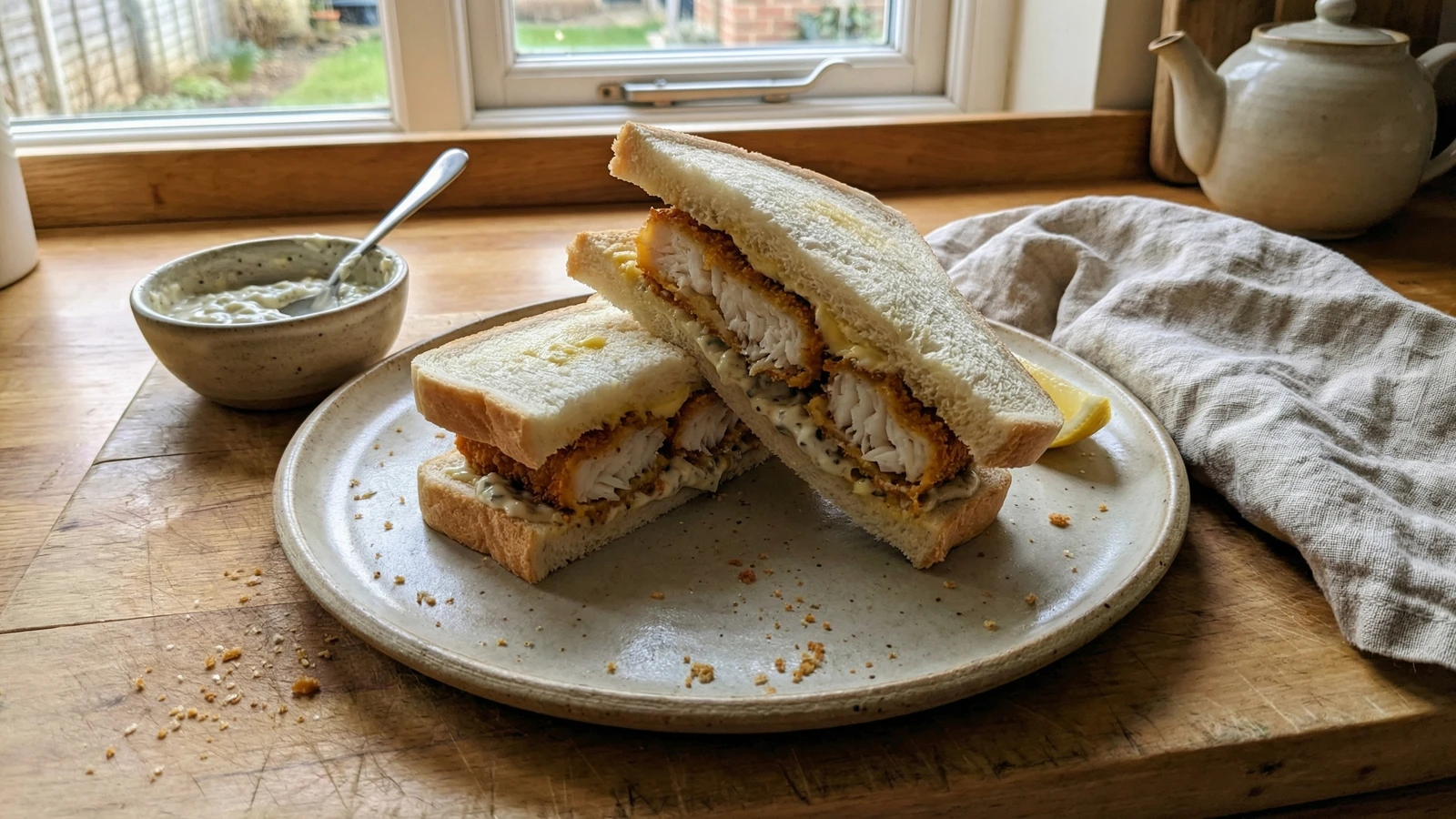
Homemade fish fingers in soft buttered white bread with a sharp tartare sauce. The kind of sandwich that bridges the gap between who you were at eight and who you are now, without apology.
The smell of fish fingers frying is one of those kitchen smells that lands somewhere between memory and appetite. You know it before you see it. The breadcrumbs going golden in hot oil, the fish turning from translucent to opaque inside its crust. It doesn't matter how old you are. That smell takes you back to a kitchen you once stood in, waiting.
The sandwich is the thing, though. Soft white bread, real butter, the fish fingers still hot enough from the pan that the butter starts to melt where they sit. Something sharp to cut through it: ketchup if you're feeling loyal to your younger self, a quick tartare sauce if you want to meet the dish halfway between comfort and cooking. Both are right. Your kitchen, your rules.
I make these with fresh fish now. A piece of cod or haddock from the fishmonger, cut into thick fingers, dredged and fried until the coating is properly crisp and the fish inside is just cooked through. Ten minutes of real work. The kind of dinner that makes you wonder why you ever complicate things. I won't pretend the frozen sort don't have their own charm, but there's a difference between a fish finger made from a slab of reconstituted something and one made from a piece of fish you chose yourself, held in your hand, pressed with your thumb to check the firmness. Sourcing is the first and most important skill.
I wrote it down in the notebook last winter: fish fingers, white bread, tartare sauce, Tuesday. We're only making dinner. But sometimes dinner is the best thing that happens all day.
Quantity
400g
skinned, cut into thick fingers
Quantity
3 tablespoons
Quantity
1
beaten
Quantity
100g
Quantity
to taste
Quantity
for frying
Quantity
4 slices
Quantity
for spreading
softened
Quantity
3 tablespoons
Quantity
3
finely chopped
Quantity
1 tablespoon
roughly chopped
Quantity
a squeeze
Quantity
small handful
chopped
Quantity
a few leaves
| Ingredient | Quantity |
|---|---|
| cod or haddock filletskinned, cut into thick fingers | 400g |
| plain flour | 3 tablespoons |
| large eggbeaten | 1 |
| fresh white breadcrumbs | 100g |
| fine sea salt | to taste |
| sunflower or vegetable oil | for frying |
| soft white bread | 4 slices |
| buttersoftened | for spreading |
| good mayonnaise | 3 tablespoons |
| cornichonsfinely chopped | 3 |
| capersroughly chopped | 1 tablespoon |
| lemon juice | a squeeze |
| flat-leaf parsleychopped | small handful |
| Little Gem lettuce (optional) | a few leaves |
Pat the fish dry and cut it into thick fingers, roughly the width of two of your own. Don't be dainty. Thin strips dry out in the pan and you lose the whole point, which is that moment of biting through the crust to the soft, flaking fish inside. Season them with a little salt and set them on a plate.
Stir the mayonnaise, chopped cornichons, capers, lemon juice, and parsley together in a small bowl. Taste it. It should be sharp and briny, a proper counterpoint to the richness of the fried fish. If it needs more lemon, add more lemon. Set it aside. This takes two minutes and is worth every one of them.
Set out three shallow dishes: flour in the first, beaten egg in the second, breadcrumbs in the third. Take each piece of fish through in order. Flour first, shaking off the excess. Then egg, letting the surplus drip away. Then breadcrumbs, pressing them on gently so the coating sticks. Lay the breaded fingers on a clean plate. Don't stack them or the crumbs go soggy where they touch.
Pour enough oil into a large frying pan to come about a centimetre up the sides. Set it over a medium heat. When the oil shimmers and a breadcrumb dropped in sizzles immediately, the pan is ready. Lay the fish fingers in, leaving space between them. Don't crowd the pan or the temperature drops and the crumbs absorb oil instead of crisping. Fry for three to four minutes on each side, turning once, until the coating is deep golden and the fish is cooked through. You'll know. The crust goes from pale to golden to the colour of a good biscuit, and the kitchen starts to smell like something you remember. Lift them onto kitchen paper for a moment.
Butter the bread generously. Not a scrape. Proper butter, corner to corner, the way you'd want someone to butter it for you. Spread tartare sauce on two of the slices. Lay the fish fingers on top, three or four per sandwich, close together so every bite gets fish. Add a leaf or two of lettuce if you like the cool crunch against the hot crust. Press the top slice down gently, cut in half, and eat it standing up if you want to. Nobody's watching. There are few better feelings than putting a warm plate in front of someone, but eating this over the kitchen sink on a tired Wednesday comes close.
1 serving (about 330g)
Culinary guides, cultural storytelling, and the editorial depth that makes cooking meaningful.
Discover Culinary ExplorerChef Thomas
Back bacon crisped in a hot pan, a ripe tomato that actually tastes of something, crisp lettuce and real butter on proper toast. A sandwich that earns its place in the notebook.

Chef Thomas
Salted anchovies pressed into hot buttered toast, sharp with lemon and cayenne, the kind of thing you eat standing at the kitchen counter with a glass of cold wine and nothing else planned.

Chef Thomas
Oysters wrapped in smoky bacon, grilled until the fat crisps and the sea-sweetness swells inside, set on hot buttered toast. The old savoury course, brought back to the table where it belongs.

Chef Thomas
English asparagus, steamed until just tender and laid across thick buttered toast with warm butter pooling beneath it. A dish that belongs to May and asks almost nothing of you except good ingredients and a few minutes of attention.