Culinary Explorer

A cooking platform built around craft, culture, and the stories behind what we eat.
Discover Culinary Explorer
Fish and Chips

Fish and Chips

Created by Chef Thomas

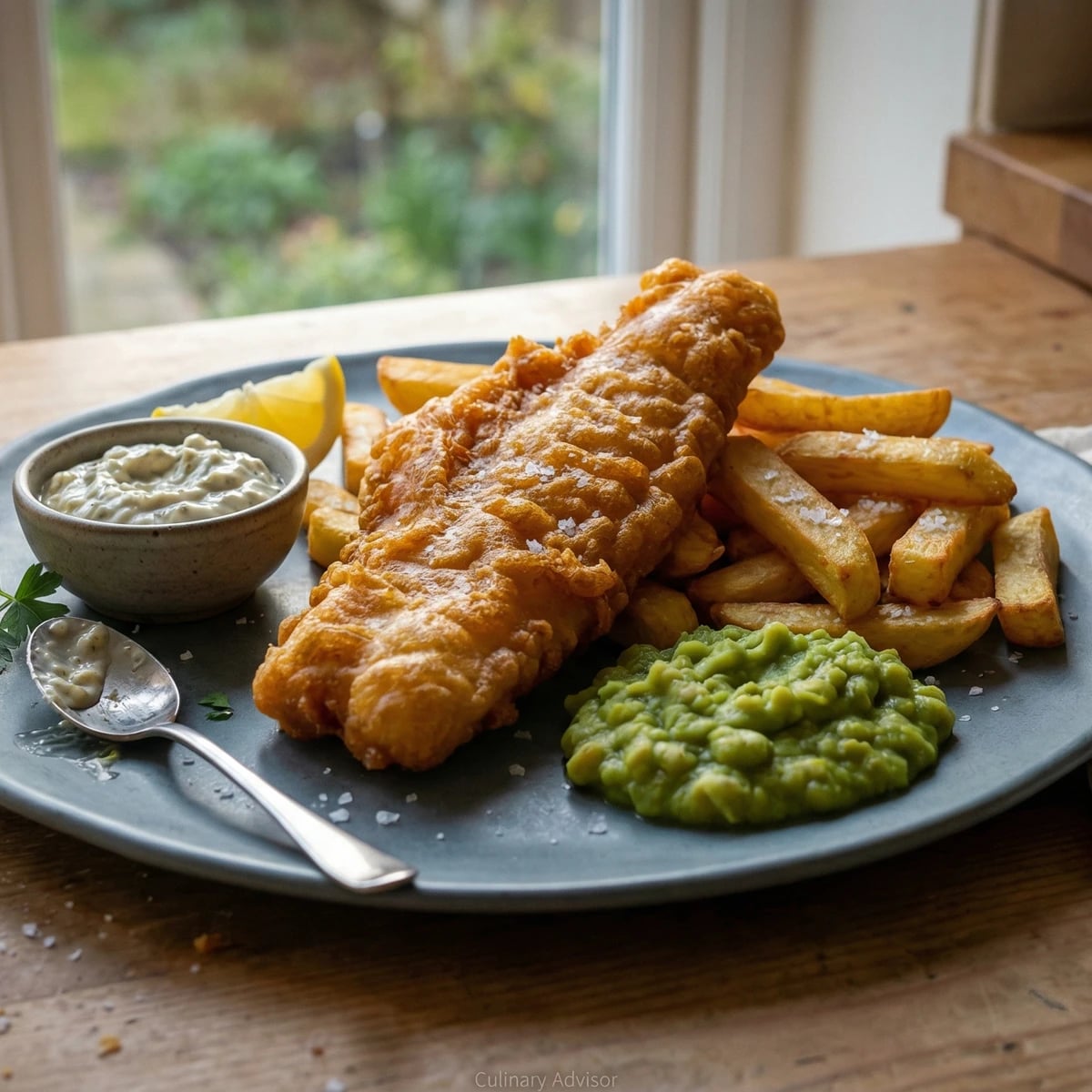
Fresh cod or haddock in crisp, golden beer batter with proper twice-cooked chips, mushy peas, and a sharp homemade tartare sauce. The Friday evening ritual, done right in your own kitchen.

Main Dishes
British
Weeknight
Comfort Food
30 min
Active Time
45 min cook1 hr 15 min total
Yield4 servings

Friday evening. The oil is hot, the kitchen windows have fogged over, and something golden is about to come out of the pan. There's a particular satisfaction in making fish and chips at home that has nothing to do with improving on the chip shop. The chip shop is its own institution and I wouldn't touch it. But this is different. This is yours: your kitchen, your batter, your chips cut the way you like them, fish from the fishmonger who told you what came in this morning.

The fish matters more than anything else here. A thick fillet of haddock or cod, properly fresh, with that clean sea smell and firm flesh that holds together in the batter without complaint. If the fish isn't right, no amount of crunch will save you. Go to the fishmonger. Ask what's good. The market decides.

The chips want to be thick and cooked twice: once in cooler oil to soften them through, then again at a proper heat to give them that golden, shattery crust around a fluffy middle. Maris Piper potatoes, if you can find them. They have the right balance of starch and moisture for the job. The batter is just flour, salt, and cold lager, whisked together and used straight away. The beer gives it lift. The cold keeps it light. Don't think about it too hard. We're only making dinner.

I wrote it down in the notebook years ago: Friday. Fish. Good chips. Vinegar. Rain on the window. It hasn't changed, and I see no reason it should.

The technique, the tradition, and the story behind every dish.

Discover Culinary Explorer

Ingredients

cod or haddock fillets

Quantity

4 (about 175g each)

skinned and pin-boned

self-raising flour

Quantity

175g, plus extra for dusting

cornflour

Quantity

25g

cold lager

Quantity

250ml

fine sea salt

Quantity

to taste

Maris Piper potatoes

Quantity

1kg

peeled

sunflower or groundnut oil

Quantity

for deep frying

marrowfat peas

Quantity

1 x 300g tin

unsalted butter

Quantity

knob

good mayonnaise

Quantity

4 tablespoons

capers

Quantity

1 tablespoon

rinsed and finely chopped

gherkins

Quantity

2 small

finely chopped

flat-leaf parsley

Quantity

small handful

finely chopped

lemon

Quantity

1

malt vinegar

Quantity

to serve

Equipment Needed

  • Deep heavy saucepan (at least 20cm) or deep-fat fryer
  • Kitchen thermometer
  • Slotted spoon or spider strainer
  • Wire rack or kitchen paper for draining

Instructions

  1. 1

    Par-boil the chips

    Cut the potatoes into thick chips, roughly the width of your index finger. Not thin fries. Proper chips. Rinse them under cold running water until it runs clear, washing away the surface starch, then put them in a large pan of cold salted water. Bring to a gentle boil and cook for six or seven minutes, until the edges are tender but the centres still hold firm. A knife should meet slight resistance in the middle. Drain carefully, they'll be fragile, and spread them out on a clean tea towel or a wire rack to cool and dry. This step is what separates good chips from forgettable ones.

    Don't skip the rinsing. The starch on the surface is what makes chips stick together and go soggy. Cold water, a good rinse, and patience.
  2. 2

    Make the tartare sauce

    While the chips cool, chop the capers and gherkins finely. Stir them into the mayonnaise with the parsley and the juice of half the lemon. Taste it. It should be sharp and punchy, with enough acid to cut through the richness of the batter. If it tastes polite, add more lemon. Set it aside. It improves as it sits, the flavours settling into each other.

  3. 3

    Mix the batter

    Tip the self-raising flour, cornflour, and a generous pinch of salt into a large bowl. Pour in the cold lager and whisk until smooth. The batter should be the consistency of double cream: thick enough to coat the back of a spoon, thin enough to drip off in a steady ribbon. Don't overwork it. A few small lumps are fine and will sort themselves out. The lager must be cold. If you can chill the bowl too, so much the better. Cold batter, hot oil. That's the principle behind every crisp coating you've ever bitten into.

    Make the batter just before you need it. It loses its lift if it sits around. The bubbles in the beer are doing the work, and they won't wait.
  4. 4

    First fry the chips

    Heat the oil in a deep, heavy pan or a deep-fat fryer to about 130C. If you don't have a thermometer, drop in a single chip: if it sinks gently and bubbles appear lazily around the edges, you're there. Fry the chips in two batches for five or six minutes. They should be cooked through and pale, barely coloured at all. Lift them out with a slotted spoon and drain on kitchen paper. They'll look unfinished. That's right. They'll have their moment.

  5. 5

    Warm the mushy peas

    Tip the marrowfat peas into a small saucepan with their liquid. Warm them gently over a low heat, stirring now and then. When they're hot through, drain off most of the liquid, leaving just enough to keep them loose and spoonable. Stir in the butter and a squeeze of lemon. Season with salt. Crush a few against the side of the pan with the back of a wooden spoon if you like, but they don't need much help. Keep them warm with a lid on while you fry the fish.

  6. 6

    Fry the fish

    Bring the oil up to 180C. This matters. Too cool and the batter soaks up oil and goes heavy. Too hot and it scorches before the fish cooks through. Pat the fillets dry with kitchen paper, then dust them in a light coating of flour, shaking off the excess. This gives the batter something to cling to. Dip each fillet into the batter, let the excess drip off for a moment, then lower it carefully into the hot oil, laying it away from you. Fry two fillets at a time, no more, or the oil temperature drops and everything suffers. Seven or eight minutes, turning once, until the batter is a deep, uneven gold and the fish inside is just cooked: firm when pressed gently, flaking at the thickest point. Lift out and drain on kitchen paper.

    Lower the fish in gently, holding the tail end for a second or two before letting go. This stops the batter from pooling and sticking to the bottom of the pan.
  7. 7

    Second fry the chips

    While the fish rests for a moment on the paper, bring the oil back to 180C and return the chips to the pan in batches. Two or three minutes this time, until they're golden and properly crisp, the colour of a good sunset. You'll hear the sound change: the bubbling quietens as the moisture leaves the surface. Drain on fresh kitchen paper and season immediately with fine sea salt while they're still hot and glistening. Don't wait. Salt sticks to hot chips. It slides off cold ones.

  8. 8

    Serve everything together

    Put it all on warm plates. The fish, golden and crackling. A pile of chips. A generous spoonful of mushy peas. The tartare sauce on the side, or in a small bowl for the table. Cut the remaining lemon half into wedges and tuck one alongside. Put the malt vinegar on the table for those who want it. This is Friday evening. There are few better feelings than putting a warm plate of fish and chips in front of someone and watching them reach for the vinegar before you've even sat down.

Chef Tips

  • Go to the fishmonger. I know it's easier to pick up a packet from the supermarket, but a fishmonger will sell you thicker, fresher fillets and tell you what's best that day. Haddock has a slightly sweeter flavour than cod and holds together beautifully in batter. Either works. Ask what's freshest and trust them.
  • A kitchen thermometer takes the guesswork out of the oil temperature. If you don't have one, use the chip test: a chip dropped into 130C oil will sink and bubble gently. At 180C, it will bob and fizz immediately. The difference between these two temperatures is the difference between soggy and crisp.
  • Season the chips the moment they come out of the oil. Salt needs heat and moisture to stick. A chip that's been sitting for two minutes on kitchen paper won't hold the salt the same way. Do it while they're still glistening.
  • Malt vinegar, not balsamic, not wine vinegar, not lemon alone. Malt vinegar on hot chips is non-negotiable. It's sharp, slightly sweet, and it smells like every good Friday evening you've ever had.

Advance Preparation

  • The tartare sauce can be made a day ahead and kept covered in the fridge. It improves overnight as the flavours settle.
  • The chips can be par-boiled and given their first fry up to four hours ahead. Spread them on a tray and leave at room temperature until you're ready for the final fry.
  • The batter must be made fresh, just before frying. It relies on the carbonation in the beer for its lift, and that won't wait.

Frequently Asked Questions

Nutrition Information

1 serving (about 600g)

Calories
1150 calories
Total Fat
59 g
Saturated Fat
8 g
Trans Fat
0 g
Unsaturated Fat
49 g
Cholesterol
90 mg
Sodium
1330 mg
Total Carbohydrates
100 g
Dietary Fiber
9 g
Sugars
3 g
Protein
47 g

Note: Chef personas and recipes are created with AI assistance. Cook with care: follow safe food-handling practices, check doneness with a thermometer when needed, and adapt for allergies and your kitchen.

Where cooking meets culture.

Culinary guides, cultural storytelling, and the editorial depth that makes cooking meaningful.

Discover Culinary Explorer

More from Weeknight Suppers & Simple Fish

Browse the full collection