
Chef Takumi
Agar Jelly with Anko and Fruit (あんみつ, Anmitsu)
Anmitsu looks like a tray of small tasks, but the work is calm: dissolve the kanten fully, chill the pieces clean, then let fruit, anko, and kuromitsu do the speaking.
A cooking platform built around craft, culture, and the stories behind what we eat.

Created by
Neri yōkan looks severe, almost scholarly. Then you make it and learn the truth: bean paste, kanten, sugar, steady stirring, and patience while it sets.
Neri yōkan is a confection that frightens people by looking too perfect. A dark block, smooth as lacquer, cut into clean slices and served in silence beside tea, can seem like work for a specialist. It isn't. The whole thing rests on one plain fact: kanten, the firm-setting agar we use in wagashi, must be fully dissolved before the bean paste goes in.
That is the detail that decides it. If the kanten is only half dissolved, the yōkan sets weakly or grainy, no matter how carefully you stir later. Boil it in water until the liquid loses its cloudiness, then add sugar, then the koshi-an, smooth strained azuki paste. The sugar strengthens the set and gives the block its keeping power. The bean paste gives it depth. Nothing hidden.
This is special-occasion food, but not fussy food. We make it ahead because it asks for time more than cleverness, and because a clean slice of yōkan is better after the block has rested and settled into itself. Serve it in thin batons, never heavy slabs, with green tea. Leave it room on the plate. Sweetness needs quiet around it.
Yōkan began in Japan as a temple food adapted from a Chinese sheep broth jelly, its name preserving the older meaning even after Buddhist kitchens remade it without meat. The firm style now called neri yōkan developed after kanten became widely available in the Edo period, giving confectioners a shelf-stable sweet suited to travel and formal gifting. By the late Edo and Meiji periods, famous wagashi houses in Kyoto and Tokyo were known for refined blocks of yōkan cut and wrapped for presentation.
Quantity
500g
Quantity
6g
Quantity
300ml
Quantity
120g
Quantity
1 pinch
Quantity
as needed
for lightly wetting the mold
| Ingredient | Quantity |
|---|---|
| koshi-an (smooth strained sweet azuki bean paste) | 500g |
| powdered kanten (agar) | 6g |
| water | 300ml |
| granulated sugar | 120g |
| fine sea salt | 1 pinch |
| neutral oil or water (optional)for lightly wetting the mold | as needed |
Lightly wet a small loaf mold, nagashikan, or straight-sided container with water, then drain off any puddle. A wet mold helps the set yōkan release cleanly without leaving an oily surface. If your container is not metal, line it with a smooth strip of parchment and keep the corners neat, because every crease will print itself on the finished block.
Put the water and powdered kanten in a small heavy saucepan and whisk while cold. Set it over medium heat and bring it to a steady boil, stirring often, then boil for 2 minutes. The liquid should look clearer and slightly thicker. Kanten needs real boiling to dissolve; a gentle warming leaves hard specks that no amount of later stirring will repair.
Add the sugar and salt, then stir until the sugar has fully dissolved and the mixture turns glossy. Sugar is not only sweetness here. It helps the yōkan keep its firm, clean bite and gives it the keeping quality that made it a gift sweet.
Lower the heat and add the koshi-an in several spoonfuls, stirring hard after each addition until no pale streaks remain. Use a wooden spatula and scrape the bottom and corners of the pan. Bean paste is thick and will settle if ignored, and settled paste scorches before a polite cook has time to apologize.
Cook over low heat for 12 to 18 minutes, stirring steadily, until the mixture is thick, glossy, and falls from the spatula in heavy folds rather than running like soup. Drag the spatula across the bottom of the pan; the line should close slowly. This cooking drives off extra water, so the finished yōkan cuts cleanly instead of slumping.
Pour the hot mixture into the prepared mold and tap the mold gently on the counter to settle it. Smooth the top with a wet spatula, then let it cool at room temperature until no longer warm. Cover and refrigerate for at least 4 hours, or overnight. Kanten sets as it cools, but the rest gives the block a cleaner texture and calmer slice.
Unmold the yōkan and wipe a sharp knife with a damp cloth. Cut thin slices, wiping the blade between cuts so each face stays smooth and dark. Serve one or two slices per person with unsweetened green tea. The bitterness of the tea is not decoration; it gives the sweet its proper balance.
1 serving (about 85g)
Culinary guides, cultural storytelling, and the editorial depth that makes cooking meaningful.
Discover Culinary ExplorerChef Takumi
Anmitsu looks like a tray of small tasks, but the work is calm: dissolve the kanten fully, chill the pieces clean, then let fruit, anko, and kuromitsu do the speaking.

Chef Takumi
A cool square of almond-scented milk, set softly and served with mikan in thin syrup, is dinner-party food without theater. The only stern demand is restraint with the fragrance.

Chef Takumi
Azuki bar asks for patience twice: once while the beans soften, and once while the frozen bar yields. That hardness is not a flaw. It is the character of the thing.
Chef Takumi
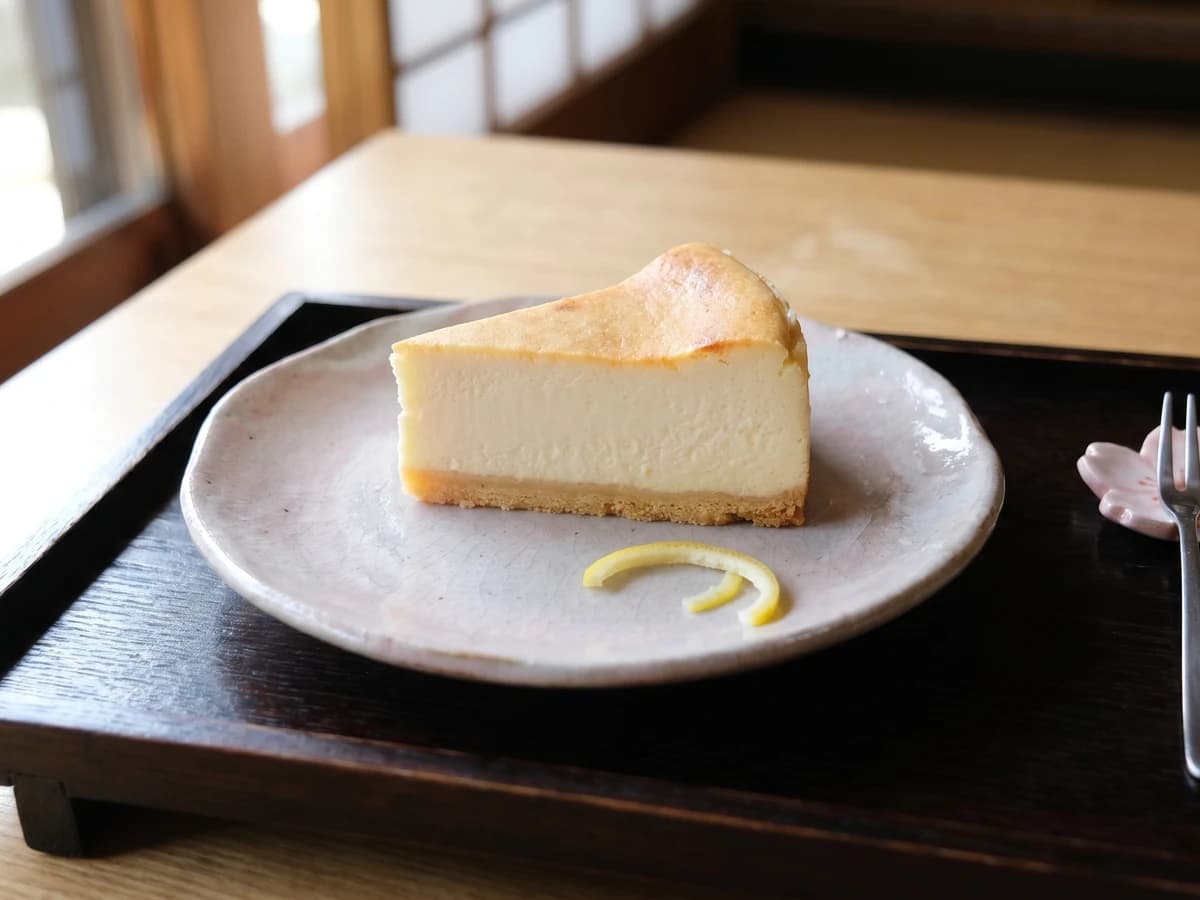
A Japanese baked cheesecake is not trying to float away. It is dense, smooth, and quietly tart, with a clean slice doing the work of decoration.