
Chef Lupita
Berenjenas a la Veracruzana
Veracruz's Gulf coast eggplant stew, built with jitomate, green olive, caper, bay leaf, and chile jalapeno en escabeche, the Spanish port pantry meeting the Mexican home pot.
A cooking platform built around craft, culture, and the stories behind what we eat.
Created by
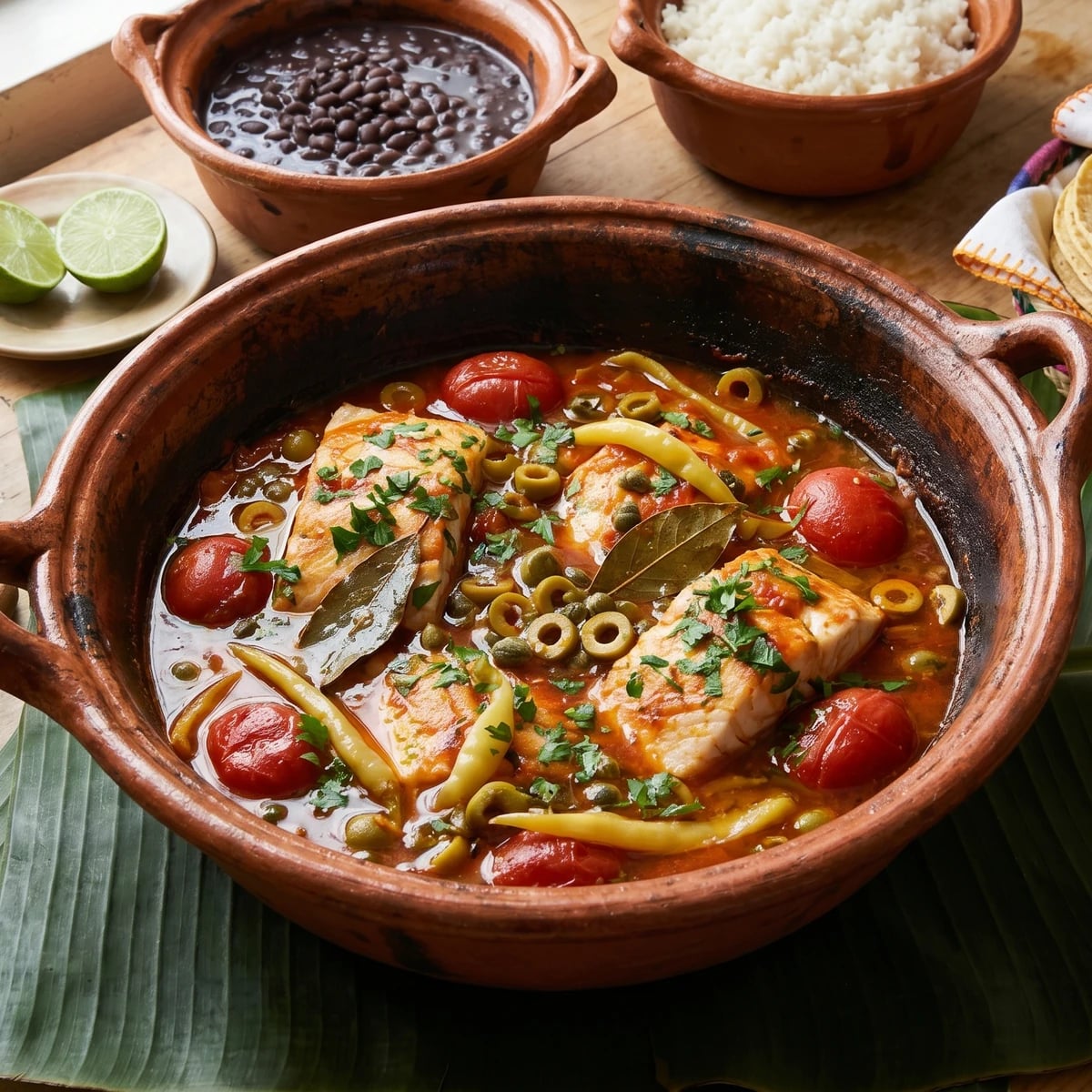
Veracruz's Gulf fish dressed in jitomate, aceituna verde, alcaparra, chile guero, and hoja de laurel, a port-city sauce that knows exactly where Spain ended and Mexico took over.
Veracruz, especially the port, Boca del Rio, and the kitchens along the Sotavento coast, owns this sauce. Most people know huachinango a la veracruzana, but robalo, snook, is just as right when the fishmonger has firm white fillets from the Gulf. This is comida jarocha: tomato, olive, caper, chile guero, bay leaf, and olive oil speaking in the same cazuela.
Veracruzana sauce grew from the port of Veracruz, where Spanish olive oil, olives, capers, and wine entered a Gulf kitchen already built around fish, tomato, chile, and herbs. The dish is most famously attached to huachinango a la veracruzana, but robalo, mero, and other firm white Gulf fish appear in home versions across Veracruz. Its identity is coastal and colonial-era at the same time: Mediterranean pantry ingredients made Mexican by jitomate, chile guero, Mexican oregano, and the daily work of fish-market cooks.
Quantity
4 fillets, 6 ounces each
skinless, pin bones removed
Quantity
1 1/2 teaspoons
divided
Quantity
1/2 teaspoon
Quantity
3 tablespoons
Quantity
1 medium
thinly sliced
Quantity
4
thinly sliced
Quantity
2 pounds
peeled if desired and chopped
Quantity
1/2 cup
pitted and halved
Quantity
2 tablespoons
rinsed
Quantity
4
sliced lengthwise
Quantity
2 tablespoons
Quantity
2
Quantity
1 teaspoon
crushed between your fingers
Quantity
1/2 teaspoon
Quantity
1/2 cup
Quantity
1 tablespoon
chopped
Quantity
for serving
Quantity
for serving
Quantity
for serving
Quantity
for serving
| Ingredient | Quantity |
|---|---|
| robalo (snook) filletsskinless, pin bones removed | 4 fillets, 6 ounces each |
| kosher saltdivided | 1 1/2 teaspoons |
| freshly ground black pepper | 1/2 teaspoon |
| extra-virgin olive oil | 3 tablespoons |
| white onionthinly sliced | 1 medium |
| garlic clovesthinly sliced | 4 |
| ripe jitomate de bola or Roma tomatoespeeled if desired and chopped | 2 pounds |
| green olives, preferably manzanillapitted and halved | 1/2 cup |
| capersrinsed | 2 tablespoons |
| chile guero en vinagresliced lengthwise | 4 |
| brine from chile guero en vinagre | 2 tablespoons |
| bay leaves | 2 |
| dried Mexican oreganocrushed between your fingers | 1 teaspoon |
| dried thyme | 1/2 teaspoon |
| dry white wine or light fish broth | 1/2 cup |
| flat-leaf parsleychopped | 1 tablespoon |
| lime halves (optional) | for serving |
| black beans (optional) | for serving |
| white rice (optional) | for serving |
| warm corn tortillas (optional) | for serving |
Pat the robalo fillets dry. Season both sides with 3/4 teaspoon salt and the black pepper. Let them sit while you build the sauce, no longer than 20 minutes. Fish needs seasoning, not a long cure. If the fillets are wet, they will leak water into the cazuela and thin the sauce.
Warm the olive oil in a wide clay cazuela or heavy skillet over medium heat. Add the onion and cook until it softens and turns glossy, about 5 minutes. Add the garlic and cook for 1 minute more. Do not brown the garlic. Veracruzana is bright, not bitter.
Add the chopped jitomate and the remaining 3/4 teaspoon salt. Cook, stirring often, until the tomatoes collapse and the oil begins to show at the edges, 10 to 12 minutes. This is where the sauce gets body. If you rush it, the tomato tastes raw and watery. No me vengas con atajos.
Stir in the olives, capers, chile guero, chile brine, bay leaves, Mexican oregano, thyme, and white wine or fish broth. Simmer 8 to 10 minutes, until the sauce looks glossy and smells like tomato, olive oil, and bay leaf together. Taste before adding more salt. The olives and capers already brought their own.
Nestle the fillets into the sauce in one layer. Spoon some sauce over the top, cover, and cook gently for 6 to 8 minutes, depending on thickness. The fish is ready when it turns opaque and flakes under light pressure but still looks moist at the center. Robalo is delicate. Boil it hard and you have punished good fish for no reason.
Remove the bay leaves. Scatter the parsley over the cazuela and bring it to the table family-style. Serve with black beans, white rice, warm corn tortillas, and lime halves. The sauce should be generous enough to drag a tortilla through it. Así se hace y punto.
1 serving (about 390g)
Culinary guides, cultural storytelling, and the editorial depth that makes cooking meaningful.
Discover Culinary Explorer
Chef Lupita
Veracruz's Gulf coast eggplant stew, built with jitomate, green olive, caper, bay leaf, and chile jalapeno en escabeche, the Spanish port pantry meeting the Mexican home pot.

Chef Lupita
Veracruz's Sierra pot of chicken, fresh corn, chile ancho, chipotle meco, and masa stirred into broth until it turns thick and silky, the bowl that keeps a family fed without ceremony.

Chef Lupita
Veracruz's Gulf-coast chiles rellenos bring poblano chiles, sweet crab, shrimp, white fish, and a tomato sauce sharpened with olives, capers, and chile guero.

Chef Lupita
Veracruz's Los Tuxtlas palm flower stew, built from foraged chochos, roasted jitomate de bola, chile chipotle seco, chile ancho, and acuyo, the red pot you eat with black beans and hot corn tortillas.