
Chef Remy
Alligator Sauce Piquante
Chunks of tender gator swimming in a brick-red tomato sauce with enough heat to make you reach for your sweet tea, spooned over rice the way the old Cajun trappers ate it after a long day on the bayou.
A cooking platform built around craft, culture, and the stories behind what we eat.
Created by Chef Remy
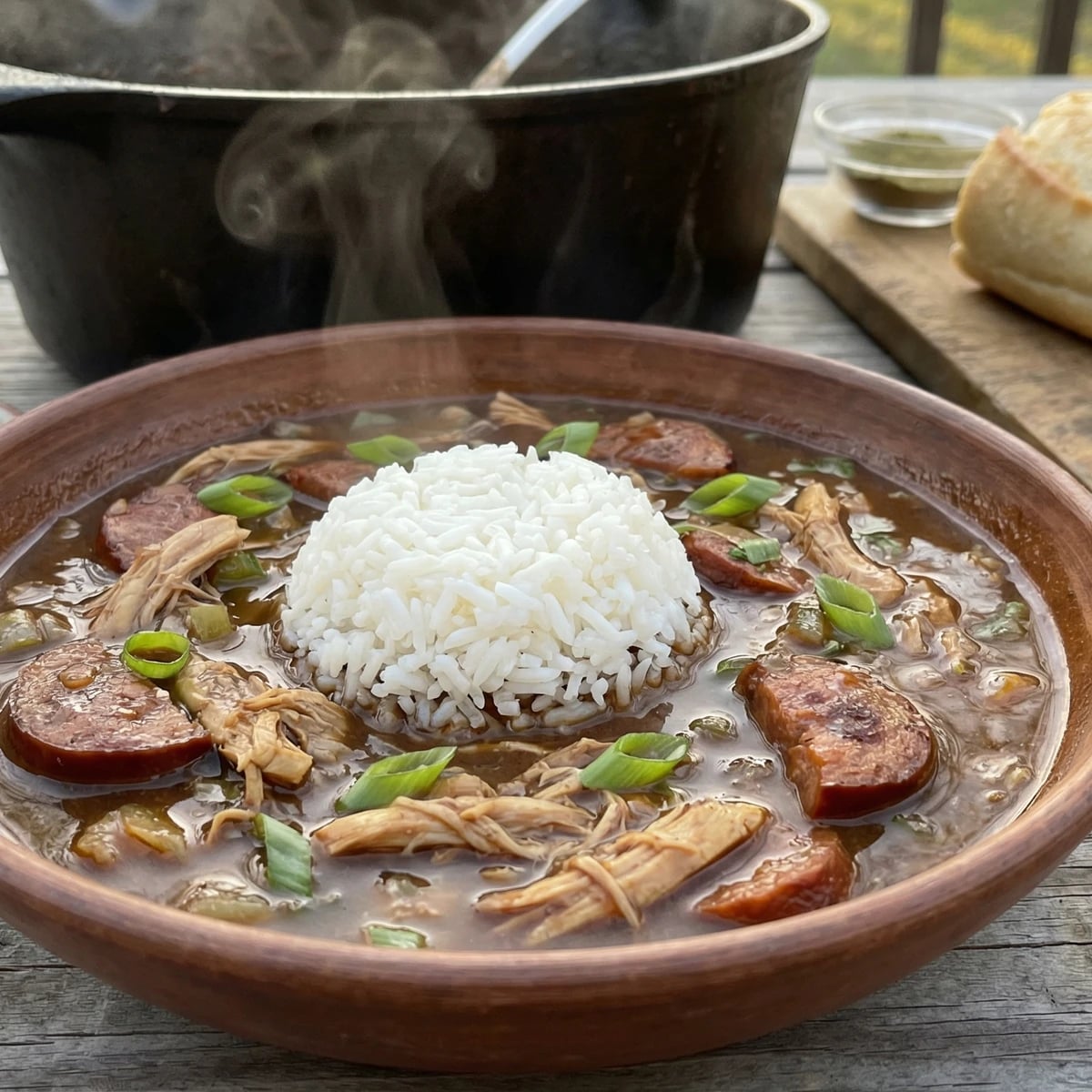
Bone-in chicken and smoky andouille swimming in a mahogany roux so dark it looks like melted chocolate, ladled over rice and finished with earthy sassafras file powder the way my grandmother Evangeline taught me.
The roux makes the gumbo. That's the truth of it. You stand at that stove stirring flour and oil for forty-five minutes, watching the color deepen from blond to peanut butter to the color of dark chocolate. Your arm will ache. Your kitchen will smell like roasted nuts and something ancient. That's how you know you're doing it right.
File gumbo is the original, the one that came before okra found its way into Louisiana pots. The Choctaw people taught the Acadians about sassafras leaves, ground them into powder, and showed them how this earthy dust thickens a broth like nothing else can. You add it at the table, never in the pot while it's cooking. Heat turns file stringy and unpleasant. But stir it into a steaming bowl and it transforms everything: silky texture, that distinctive flavor somewhere between root beer and sage and something you can't quite name.
At Lagniappe, we serve file gumbo every day of the week. It's the dish that regulars order without looking at the menu, the one that tourists come back for years later saying they still dream about it. The secret isn't complicated. It's dark roux, good stock, quality andouille, and chicken with the bone still in it. Season at every stage. Taste as you go. Trust your instincts.
Quantity
3 pounds
Quantity
2 tablespoons
divided
Quantity
1 pound
sliced into 1/2-inch half-moons
Quantity
3/4 cup
Quantity
1 cup
Quantity
2 cups
diced
Quantity
1 1/2 cups
diced
Quantity
1 cup
diced
Quantity
6 cloves
minced
Quantity
2 quarts
warmed
Quantity
3
Quantity
1 teaspoon
Quantity
1 teaspoon
freshly ground
Quantity
1/2 teaspoon, or to taste
Quantity
1 teaspoon, plus more to taste
Quantity
1 tablespoon
Quantity
4 cups
Quantity
1/2 cup
sliced thin
Quantity
for tableside seasoning
| Ingredient | Quantity |
|---|---|
| bone-in, skin-on chicken thighs | 3 pounds |
| Cajun seasoningdivided | 2 tablespoons |
| andouille sausagesliced into 1/2-inch half-moons | 1 pound |
| vegetable oil | 3/4 cup |
| all-purpose flour | 1 cup |
| yellow oniondiced | 2 cups |
| celerydiced | 1 1/2 cups |
| green bell pepperdiced | 1 cup |
| garlicminced | 6 cloves |
| chicken stockwarmed | 2 quarts |
| bay leaves | 3 |
| dried thyme | 1 teaspoon |
| black pepperfreshly ground | 1 teaspoon |
| cayenne pepper | 1/2 teaspoon, or to taste |
| kosher salt | 1 teaspoon, plus more to taste |
| Worcestershire sauce | 1 tablespoon |
| cooked white rice | 4 cups |
| green onionssliced thin | 1/2 cup |
| file powder | for tableside seasoning |
Pat the chicken thighs completely dry with paper towels. Moisture is the enemy of browning. Season generously on both sides with one tablespoon of Cajun seasoning, pressing it into the meat. Let them sit at room temperature while you prep your vegetables. This is your first layer of flavor, and it matters.
Heat a large Dutch oven or heavy-bottomed pot over medium-high heat. Add two tablespoons of the vegetable oil. When it shimmers and just begins to smoke, add the chicken thighs skin-side down. Do not crowd the pot. Work in batches if needed. Let them cook undisturbed for five to six minutes until the skin is deeply golden and releases easily from the pan. Flip and brown the other side for three minutes more. The kitchen should smell like roasting chicken and warm spices. Transfer to a plate and set aside.
Add the andouille slices to the same pot. Cook over medium-high heat, stirring occasionally, until the edges caramelize and the fat renders out, about five minutes. You want deep color on those sausage pieces. The rendered fat is pure flavor. Remove the andouille to the plate with the chicken but leave every drop of that beautiful fat in the pot.
Reduce heat to medium. Add the remaining vegetable oil to the pot. When it's hot, whisk in the flour all at once. Now begins the meditation. Stir constantly with a wooden spoon or flat-edged spatula, scraping the bottom and edges of the pot with every stroke. The roux will progress from white to blond to peanut butter to milk chocolate. Keep going. You want the color of dark chocolate, about 40 to 45 minutes. It should smell like roasted pecans, not burning. If you see black specks, you've gone too far and must start over.
When your roux reaches that deep chocolate color, immediately add the onion, celery, and bell pepper. The vegetables will sizzle and pop angrily. This is good. Stir vigorously to coat everything in the roux. The temperature of the roux will drop and stop the cooking. Continue stirring for eight to ten minutes until the vegetables are soft and the onions turn translucent. The mixture should look like dark, glossy mud.
Add the minced garlic along with the remaining tablespoon of Cajun seasoning, the dried thyme, black pepper, and cayenne. Stir constantly for one minute until the garlic becomes fragrant and the spices bloom. Your kitchen should smell intensely of Louisiana right now.
Pour in the warm chicken stock slowly, about one cup at a time, stirring constantly to incorporate. The roux will resist at first, then gradually loosen into a silky, mahogany-colored liquid. Add the bay leaves, Worcestershire sauce, and one teaspoon of salt. Bring to a simmer, stirring occasionally to prevent the roux from settling and scorching on the bottom.
Nestle the browned chicken thighs into the gumbo, submerging them in the liquid. Cover partially and reduce heat to maintain a lazy simmer, with bubbles rising gently every few seconds. Cook for one hour and fifteen minutes to one hour and thirty minutes, until the chicken is fall-off-the-bone tender and the flavors have married into something greater than their parts.
Remove the chicken thighs to a cutting board. Discard the skin and bones, then shred the meat into generous bite-sized pieces using two forks. Return the shredded chicken and the reserved andouille to the pot. Simmer uncovered for another fifteen minutes to let the sausage warm through and the gumbo thicken slightly.
Taste your gumbo. This is the moment of truth. Adjust salt, add more cayenne if you want heat, a splash more Worcestershire if it needs depth. Remove the bay leaves. Stir in the sliced green onions and remove from heat. The gumbo should be rich, deeply flavored, and silky on the tongue.
Mound a generous scoop of white rice in the center of each deep bowl. Ladle the gumbo around the rice, making sure everyone gets plenty of chicken and andouille. Serve the file powder at the table and instruct your guests to stir in about half a teaspoon per bowl, then taste and add more if desired. The file thickens the broth and adds that distinctive earthy, almost mystical flavor that defines this style of gumbo. Never add file to the whole pot while it's hot, or it becomes stringy and unpleasant.
1 serving (about 450g)
Culinary guides, cultural storytelling, and the editorial depth that makes cooking meaningful.
Discover Culinary Explorer
Chef Remy
Chunks of tender gator swimming in a brick-red tomato sauce with enough heat to make you reach for your sweet tea, spooned over rice the way the old Cajun trappers ate it after a long day on the bayou.

Chef Remy
Briny Gulf oysters swimming in a silky cream broth perfumed with celery and green onions, the kind of refined Creole cooking that made New Orleans famous, where simplicity becomes sophistication.

Chef Remy
Fork-tender beef chunks swimming in a dark roux gravy with potatoes and carrots, seasoned bold the way we do it in Louisiana, the kind of stew that makes you close your eyes and forget your troubles.

Chef Remy
Humble butter beans transformed by smoky tasso ham, the holy trinity, and patient simmering into a velvety stew that warms you from the inside out, the kind of bowl that makes you want seconds before you've finished firsts.