Culinary Explorer

A cooking platform built around craft, culture, and the stories behind what we eat.
Discover Culinary Explorer
Fidget Pie

Fidget Pie

Created by Chef Thomas

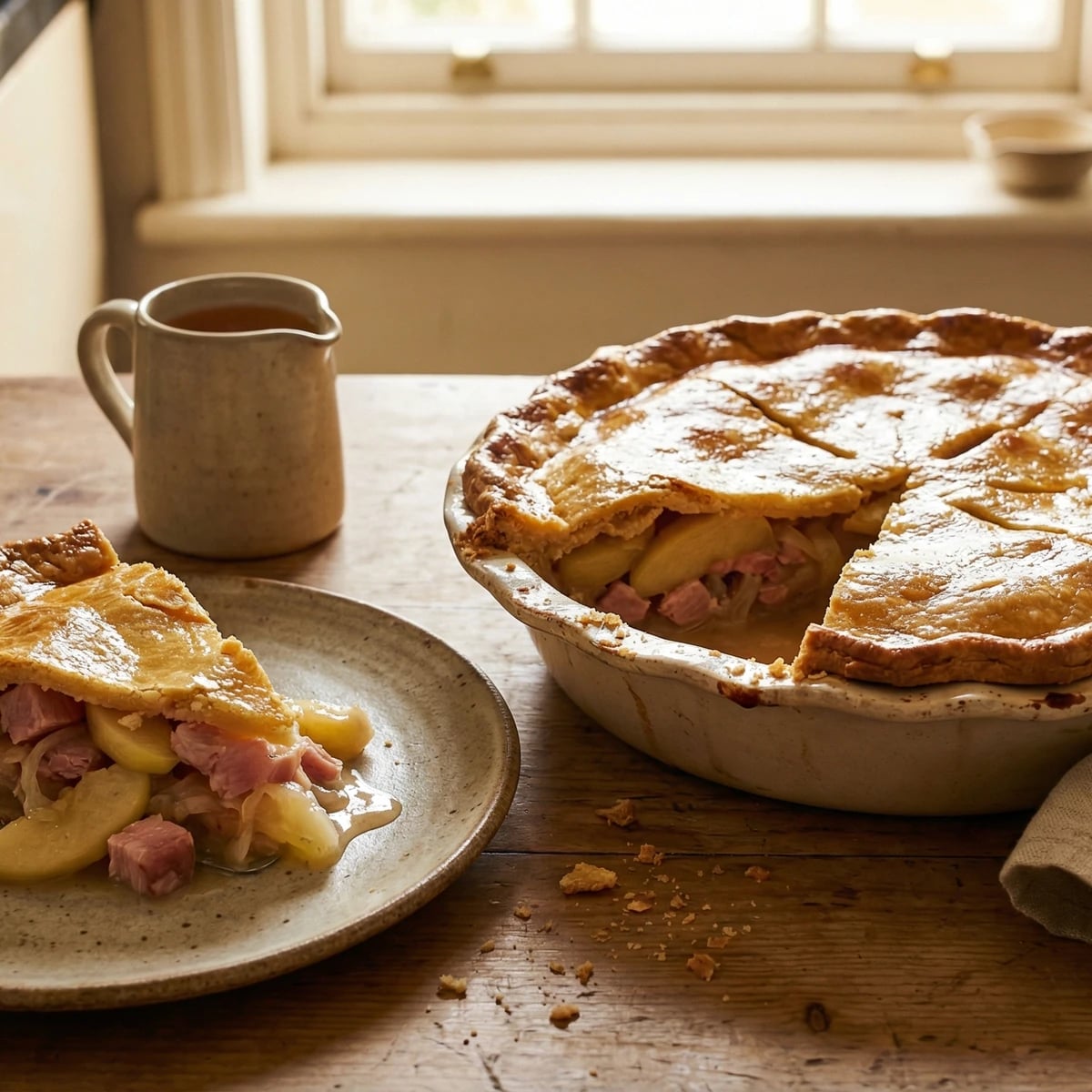
A Shropshire harvest pie where salt gammon meets sharp Bramley apples and sweet onions under a butter crust, with a splash of cider holding it all together. The kind of cooking that trusts the calendar.

Main Dishes
British
Special Occasion
Comfort Food
40 min
Active Time
50 min cook1 hr 30 min total
Yield4-6 servings

September. The Bramleys are falling off the tree faster than I can use them, which is the best problem a kitchen can have. The air has turned. Not cold yet, but the evenings draw in earlier and the kitchen light goes amber by six. This is fidget pie weather.

It's a Shropshire dish, old and unfashionable, the kind of thing that was packed into baskets and carried to the fields at harvest time. Gammon, apples, onions, cider, pastry. Nothing clever. The name probably comes from "fitchett," an old word for a side of bacon, though nobody seems entirely sure and it hardly matters. What matters is that it works: the salt of the gammon against the sharp collapse of Bramley apple, sweetened onions binding the two together, and a good crust holding the lot in place while the cider turns to a thin, cidery sauce underneath.

I make it every year when the apples come in. The notebook says: "Fidget pie. First Bramleys. Kitchen smelled of cider and nutmeg. Ate too much." That's the whole review. I've cooked more sophisticated things in thirty years of writing about food, but few that felt as right as this one does on the right evening. A recipe is a conversation, not a contract, and this one has been going on for centuries between orchards and kitchens and people who needed feeding.

It asks very little of you. Make a simple pastry. Pile everything in. Trust the oven. There are few better feelings than carrying a golden pie to the table and cutting into it while someone watches.

The technique, the tradition, and the story behind every dish.

Discover Culinary Explorer

Ingredients

plain flour (pastry)

Quantity

250g

cold unsalted butter

Quantity

125g

cubed

fine sea salt (pastry)

Quantity

pinch

cold water

Quantity

3-4 tablespoons

unsmoked gammon

Quantity

300g

cut into rough 2cm pieces

Bramley apples

Quantity

2 large (about 400g)

onions

Quantity

2 medium

halved and sliced

plain flour (filling)

Quantity

1 tablespoon

dry cider

Quantity

150ml

fresh parsley

Quantity

small bunch

roughly chopped

fresh thyme leaves

Quantity

1 teaspoon

nutmeg

Quantity

generous grating

fine sea salt

Quantity

to taste

black pepper

Quantity

to taste

butter

Quantity

knob

egg

Quantity

1

beaten, for glazing

Equipment Needed

  • 23cm deep pie dish, ceramic or enamel
  • Rolling pin
  • Pastry brush

Instructions

  1. 1

    Make the pastry

    Tip the flour and salt into a large bowl. Add the cold butter and rub it in with your fingertips until the mixture looks like rough breadcrumbs. Some larger flakes of butter are fine; they'll give the pastry its flake. Add the cold water a tablespoon at a time, cutting it in with a butter knife until the dough just comes together. Don't overwork it. Gather it into a flat disc, wrap in cling film, and rest it in the fridge for at least thirty minutes. The pastry needs to be cold when it goes into the oven. That's not optional.

    Cold hands and a light touch. If your hands run warm, rinse them under cold water first. The butter must stay cold or the pastry will be tough rather than short.
  2. 2

    Prepare the filling

    Peel, core and slice the Bramleys into pieces roughly the thickness of a pound coin. They'll break down in the oven, which is what you want. Toss the gammon pieces, apple slices and onions together in a bowl. Add the tablespoon of flour and turn everything through it with your hands. This thickens the juices as the pie cooks. Scatter in the parsley, thyme, a generous grating of nutmeg, and some pepper. Go easy on the salt; the gammon brings its own. Taste a sliver of the raw apple. If it's very sharp, you're in good hands. That sourness is what makes the pie work.

    Bramleys are the apple here, not an alternative. They collapse into a soft, tart sauce around the gammon that no eating apple can replicate. This is what they were bred for.
  3. 3

    Assemble the pie

    Set the oven to 190C/170C fan. Roll out two thirds of the pastry on a floured surface and use it to line a deep pie dish, roughly 23cm across. Let it hang over the edges a little. Pile the filling in, mounding it slightly in the centre so the lid has something to sit on. Dot the top with a few small pieces of butter. Pour the cider over slowly, letting it find its way down through the filling. Roll out the remaining pastry for the lid, lay it over, and crimp the edges firmly with a fork or your fingers, whatever comes naturally. Cut a small slit in the top to let the steam out. Brush with beaten egg.

    Don't skip the steam hole. A sealed pie traps moisture and the pastry turns soggy instead of crisp. One decisive cut in the centre is enough.
  4. 4

    Bake until golden

    Bake for forty-five to fifty minutes, until the pastry is a deep, committed gold, not pale, not merely done, but properly bronzed and smelling of butter and cider and something faintly sweet from the apples inside. The filling will be bubbling gently through the steam hole. Let the pie rest for ten minutes before you cut into it. The first slice will be untidy. They always are. The filling will be soft and savoury, the apple melted into a sauce that clings to the gammon, the onions sweet and yielding. This is honest food. It doesn't need to be neat.

Chef Tips

  • The gammon wants to be unsmoked for this. Smoked gammon shoulders the Bramleys aside, and the whole point of the pie is the balance between salt meat and sour apple. Let them share the stage.
  • A dry cider from the West Country or the Welsh borders is right here. Nothing sweet, nothing fizzy from a can. The cider should taste like apples that have had time to think about things. A rough scrumpy is ideal if you can find it. Drink the rest with the pie.
  • If you're short on time, a good bought shortcrust will do. I won't pretend I haven't done it. But homemade pastry, cold butter, light hands, thirty minutes in the fridge, is a different thing entirely. You'll taste the difference.
  • This pie reheats well the next day. Cover loosely with foil and warm through in a moderate oven. The pastry won't be quite as crisp, but the filling will have deepened overnight. Second-day pie has its own quiet virtues.

Advance Preparation

  • The pastry can be made a day ahead and kept wrapped in the fridge. Bring it out fifteen minutes before rolling so it's firm but not rigid.
  • The filling can be assembled several hours ahead and kept covered in the fridge. Don't add the cider until you're ready to assemble, or the flour will lose its thickening power.
  • The assembled, unbaked pie can sit in the fridge for a few hours before baking if you want to get ahead. Add five minutes to the baking time if it goes in cold.

Frequently Asked Questions

Nutrition Information

1 serving (about 280g)

Calories
555 calories
Total Fat
29 g
Saturated Fat
16 g
Trans Fat
0 g
Unsaturated Fat
10 g
Cholesterol
125 mg
Sodium
845 mg
Total Carbohydrates
54 g
Dietary Fiber
4 g
Sugars
9 g
Protein
20 g

Note: Chef personas and recipes are created with AI assistance. Cook with care: follow safe food-handling practices, check doneness with a thermometer when needed, and adapt for allergies and your kitchen.

Where cooking meets culture.

Culinary guides, cultural storytelling, and the editorial depth that makes cooking meaningful.

Discover Culinary Explorer

More from British Pies & Savoury Bakes

Browse the full collection