Chef Lupita
Acúmara Tatemada al Comal
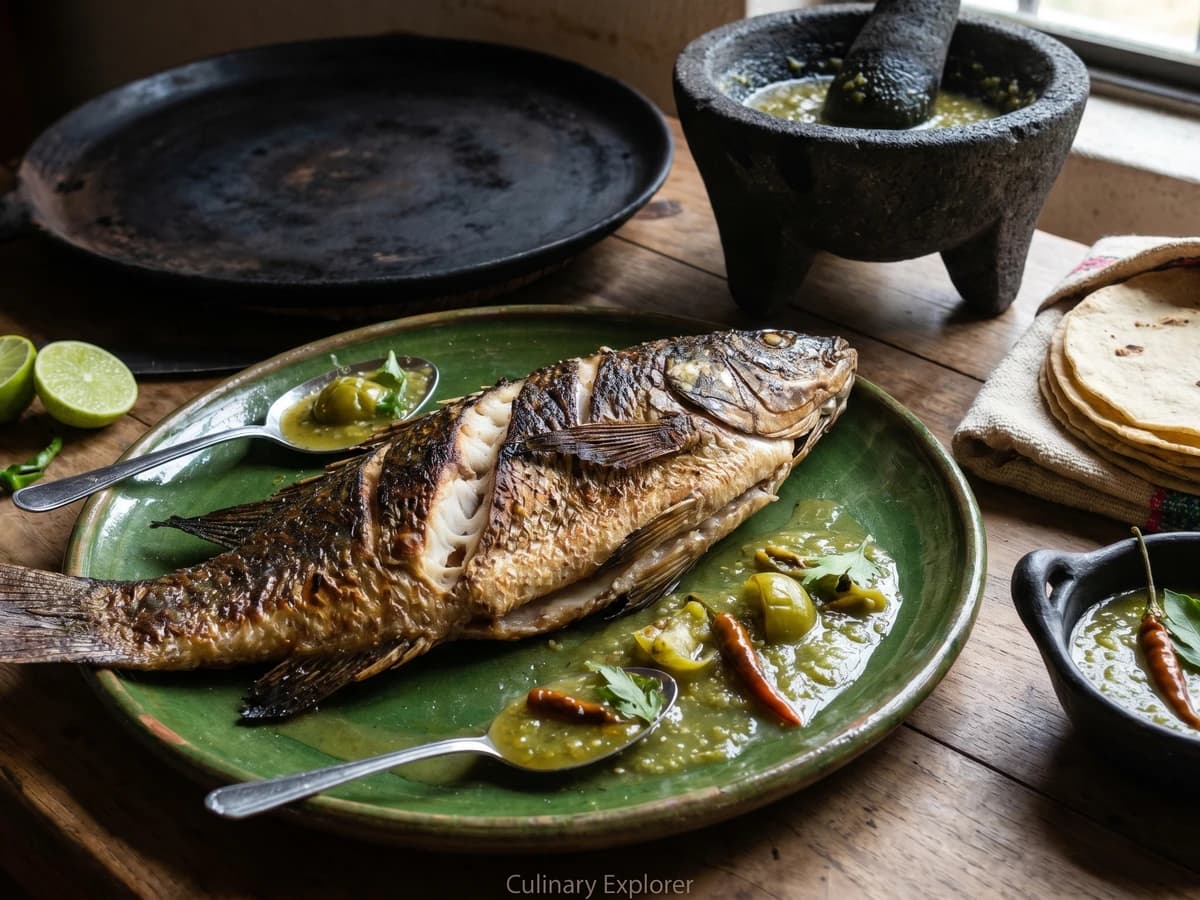
Michoacán's Lake Pátzcuaro acúmara, a whole kurucha from the lago tatemada on a comal de leña and served with chile perón atápakua, corn tortillas, and P'urhépecha discipline.
A cooking platform built around craft, culture, and the stories behind what we eat.

Created by
The dry pasta course of central Mexican comida corrida. Thin fideo toasted in lard, simmered in tomato and chipotle until every drop is absorbed, finished with crema, queso fresco, and avocado at the table.
Fideo seco is a central Mexican dish. Ciudad de México, Puebla, Tlaxcala, the Bajío. It is the segundo, the dry course that comes between the soup and the main, the anchor of comida corrida in the fondas where working people have been eating their midday meal for a hundred years. If you grew up in central Mexico, this is the smell of the kitchen at two in the afternoon.
The technique is simple to describe and easy to ruin. You toast the dry fideo in lard until it turns the color of an almond skin. Not pale gold. Not brown. Almond skin. Then you fry a puree of roma tomato, white onion, garlic, and chipotle in adobo directly into the noodles until the color deepens and the mixture pulls away from the pan. Then you add warm broth and a sprig of epazote and you walk away. The noodles drink everything. What comes out of the pan is glossy, dry to the spoon, smoky from the chipotle, and rich from the lard that started the whole thing. La manteca es el sabor. Use oil and you have made fideo. Use lard and you have made fideo seco.
My mother wrote this recipe down twice in her notebook because she made it twice a week. Once for the family on Tuesdays, once on Fridays before lent for the neighbors who would stop in. Hers had a note in the margin: 'no le pongas crema hasta la mesa.' Don't put the crema on until it is on the table. She was right. Crema added to the pan turns the dish heavy and weeps as it sits. Crema added at the table sits in cool ribbons on the hot fideo and that contrast is half the pleasure. Saber cocinar es saber vivir.
This is humble food. It is also exact food. The fideo is cheap, the tomatoes are cheap, the chipotle comes from a can. But the toasting matters. The frying matters. The resting matters. No me vengas con atajos.
Fideo arrived in Mexico with the Spanish in the 16th century, descended from the noodle traditions Sephardic Jews and Arabs brought to the Iberian peninsula, where the word 'fideo' itself derives from the Andalusian Arabic 'fidaws.' Mexican cooks adopted the thin coiled noodles and transformed them by toasting in fat, a treatment foreign to the Mediterranean original but consistent with the Mesoamerican habit of toasting seeds, chiles, and grains on the comal before grinding or simmering. The pairing with tomato and chipotle is purely Mexican, and the format of fideo seco as a distinct dry second course belongs to the 19th and 20th-century comida corrida tradition of central Mexico, where a multi-course midday meal at a working-class price became the rhythm of urban life in cities like Puebla and Ciudad de México.
Quantity
2 packages (7 ounces each)
Quantity
3 tablespoons
Quantity
1.5 pounds
Quantity
1/2 medium, plus 2 tablespoons finely diced for serving
Quantity
3
peeled
Quantity
2 to 3, plus 1 tablespoon of the adobo sauce
Quantity
1 sprig
Quantity
2.5 cups
warm
Quantity
1.5 teaspoons, plus more to taste
Quantity
1
sliced
Quantity
1/2 cup
Quantity
1/2 cup
crumbled
Quantity
for serving
Quantity
for serving
| Ingredient | Quantity |
|---|---|
| thin fideo noodles | 2 packages (7 ounces each) |
| manteca de cerdo (pork lard) | 3 tablespoons |
| ripe roma tomatoes | 1.5 pounds |
| white onion | 1/2 medium, plus 2 tablespoons finely diced for serving |
| garlic clovespeeled | 3 |
| chiles chipotles in adobo | 2 to 3, plus 1 tablespoon of the adobo sauce |
| fresh epazote | 1 sprig |
| chicken brothwarm | 2.5 cups |
| kosher salt | 1.5 teaspoons, plus more to taste |
| ripe avocado (optional)sliced | 1 |
| Mexican crema (optional) | 1/2 cup |
| queso fresco (optional)crumbled | 1/2 cup |
| chopped cilantro (optional) | for serving |
| lime wedges (optional) | for serving |
Quarter the tomatoes and place them in a blender with the half onion, garlic, chipotles, and the spoonful of adobo. Blend on high until completely smooth. You should have a deep red puree the color of brick. Taste it. It should be smoky, slightly sweet from the tomato, and warm with chipotle heat. If your tomatoes are pale and out of season, the puree will taste flat. The mercado decides what season this dish belongs to, not the calendar.
Melt the lard in a wide cazuela or heavy 12-inch skillet over medium heat. La manteca es el sabor. When it shimmers, add the dry fideo noodles in a single layer. Stir constantly with a wooden spoon for four to six minutes. The noodles will turn from pale yellow to a deep golden brown, the color of toasted almonds. This is the step. Skip it and you have wet pasta. Toast it properly and you have fideo seco.
When the noodles are evenly toasted, pour the tomato-chipotle puree directly over them. It will sputter and hiss. Stir to coat every strand. Let the puree fry into the noodles for about three minutes, until the color deepens and the mixture pulls away from the sides of the pan. Frying the puree before adding broth is what makes the flavor concentrate. Raw tomato puree tastes raw. Fried tomato puree tastes like central Mexico.
Pour in the warm chicken broth and add the salt and the sprig of epazote. Stir once. Bring to a low simmer. Now leave it alone. Lower the heat to medium-low and cook uncovered for ten to twelve minutes. The noodles will drink the broth and the dish will go from soupy to glossy to almost dry. That is the seco in fideo seco. The texture should be moist but with no liquid pooling at the bottom of the pan when you tilt it.
Turn off the heat. Cover the cazuela with a lid or a clean kitchen towel and let it rest for five minutes. The noodles finish absorbing the last of the moisture and the flavors settle. Pull out the spent epazote sprig. Taste for salt. The fideo should taste of toasted noodle, fried tomato, and the quiet smoke of chipotle in the background, not the front. Así se hace y punto.
Bring the cazuela to the table. Top with the avocado slices, drizzle the crema in lazy ribbons across the surface, crumble the queso fresco generously over everything, and scatter the cilantro and the reserved raw onion on top. Serve with lime wedges. Each person squeezes lime at the table. This is the segundo plato of comida corrida, served between the soup and the meat. Fideo seco is not a side dish. It is a course.
1 serving (about 365g)
Culinary guides, cultural storytelling, and the editorial depth that makes cooking meaningful.
Discover Culinary ExplorerChef Lupita
Michoacán's Lake Pátzcuaro acúmara, a whole kurucha from the lago tatemada on a comal de leña and served with chile perón atápakua, corn tortillas, and P'urhépecha discipline.

Chef Lupita
Puebla's weekday adobo of pork shoulder braised in a thick guajillo and ancho sauce sharpened with vinegar, cumin, and clove. The deep red of a market spice stall, the dish a poblana cooks without thinking.

Chef Lupita
Loreto's pit-roasted clams, planted hinge-up in beach sand and tatemadas under a fast fire of dried romerillo brush, the resinous Baja desert shrub that gives this dish its smoke.

Chef Lupita
Oaxaca's eighth mole, the silky, almond-and-cinnamon almendrado, served over poached chicken. Mild, sweet, restrained, and a quiet rebuttal to anyone who thinks Mexican food has to be hot to be Mexican.