Chef Lupita
Acúmara Tatemada al Comal
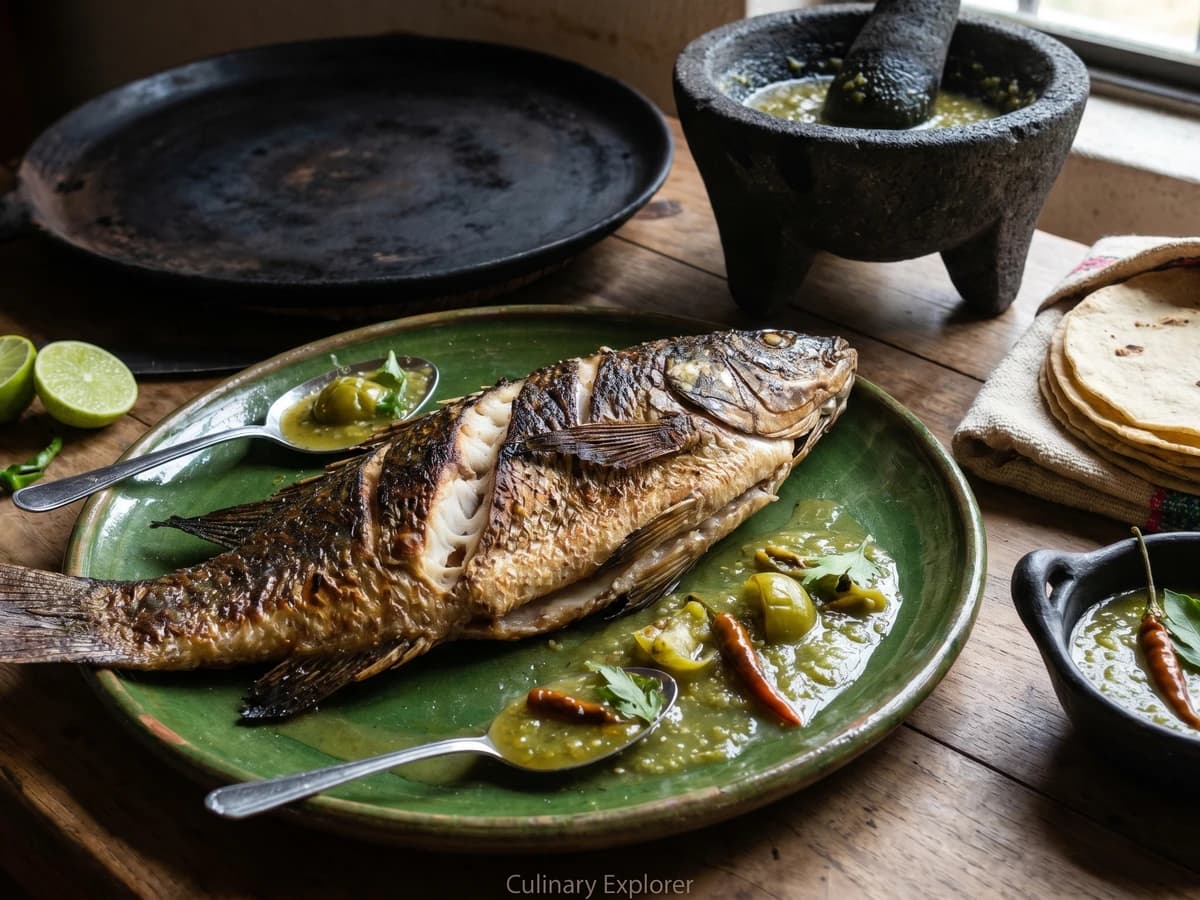
Michoacán's Lake Pátzcuaro acúmara, a whole kurucha from the lago tatemada on a comal de leña and served with chile perón atápakua, corn tortillas, and P'urhépecha discipline.
A cooking platform built around craft, culture, and the stories behind what we eat.

Created by
Veracruz's dry fideo is thin pasta toasted until golden, then braised in jitomate, chipotle, ancho, laurel, olives, and capers until the broth disappears into the noodles.
Veracruz, especially the port and the kitchens along the Gulf coast, knows how to make a pantry dish taste like a place. Fideo seco jarocho is not Italian pasta wearing a Mexican hat. It is a sopa seca, thin noodles toasted in fat, then cooked until the jitomate, garlic, chile chipotle, chile ancho, and laurel disappear into the strands.
The Veracruz signal is in the sauce. Jitomate de bola from the market, garlic, bay leaf, a little chile chipotle for smoke, and the Spanish old port memory of olives and capers if your family uses them. Some homes leave them out. Fine. But when I see that little jar of capers on a Veracruz counter, I know the cook is telling me where I am.
The women who perfected this dish did it on weeknights, with children asking when dinner would be ready and a pot of black beans already waiting. The fideo has to be toasted evenly before the liquid touches it. That is the whole technique. If you rush it, the noodles go pale and soft. If you respect the cazuela, they come out separate, sauced, and serious. Cada estado, su propia cocina.
Fideo came to Mexico through Spanish colonial kitchens, where wheat pasta entered soups and dry preparations during the 16th and 17th centuries. Veracruz, as the main Gulf port of New Spain, absorbed Mediterranean ingredients earlier and more visibly than many inland regions, which is why tomato sauces with olives, capers, bay leaf, and garlic became part of the state's cooking. Fideo seco belongs to the Mexican family of sopas secas, dishes cooked until the liquid is absorbed, a technique also used for arroz rojo and dry noodle dishes across central and coastal Mexico.
Quantity
4 medium
ripe, cored and quartered
Quantity
1/4 medium
for blending
Quantity
3
peeled
Quantity
1
stemmed and seeded
Quantity
1
stemmed and seeded
Quantity
1 1/2 teaspoons, plus more to taste
Quantity
3 tablespoons
Quantity
8 ounces
broken into 1-inch pieces
Quantity
1/2 medium
finely chopped
Quantity
2
Quantity
1 teaspoon
Quantity
2 1/2 cups
warm
Quantity
2 tablespoons
Quantity
1 tablespoon
rinsed
Quantity
1/3 cup
Quantity
1/2 cup
crumbled
Quantity
2 tablespoons
chopped
Quantity
for serving
Quantity
for serving
| Ingredient | Quantity |
|---|---|
| jitomates de bolaripe, cored and quartered | 4 medium |
| white onionfor blending | 1/4 medium |
| garlic clovespeeled | 3 |
| dried chile chipotlestemmed and seeded | 1 |
| dried chile anchostemmed and seeded | 1 |
| kosher salt | 1 1/2 teaspoons, plus more to taste |
| vegetable oil or pork lard | 3 tablespoons |
| fideo nests or thin vermicellibroken into 1-inch pieces | 8 ounces |
| white onionfinely chopped | 1/2 medium |
| bay leaves (hojas de laurel) | 2 |
| dried Mexican oregano | 1 teaspoon |
| chicken broth or vegetable brothwarm | 2 1/2 cups |
| chopped green olives (optional) | 2 tablespoons |
| capers (optional)rinsed | 1 tablespoon |
| Mexican crema (optional) | 1/3 cup |
| queso fresco (optional)crumbled | 1/2 cup |
| fresh cilantro (optional)chopped | 2 tablespoons |
| lime halves (optional) | for serving |
| black beans (optional) | for serving |
Heat a dry comal over medium. Toast the chile chipotle and chile ancho for 15 to 25 seconds per side, just until they soften and smell deep. Do not blacken them. Burned chile turns the whole pot bitter, and this is a quick dish, so there is no time to hide mistakes.
Put the toasted chiles in a bowl and cover with hot water for 10 minutes. Drain them and blend with the jitomates, the quarter onion, garlic, and salt until smooth. The sauce should be brick red, not watery pink. If the jitomates are weak, the fideo will be weak. Start at the market, not the stove.
Heat the oil or lard in a wide clay cazuela or heavy skillet over medium. Add the broken fideo and stir constantly until the noodles turn an even golden brown, 4 to 6 minutes. Some pieces will darken faster than others. Keep them moving. This toasting is the flavor of fideo seco. No me vengas con atajos.
Add the chopped onion to the toasted fideo and cook for 2 minutes, stirring so the onion softens without burning the pasta. Add the bay leaves and Mexican oregano. The smell should shift from toasted wheat to tomato and laurel. That is the Veracruz part beginning to speak.
Pour the blended jitomate sauce into the cazuela. It will hiss and tighten around the noodles. Cook for 4 to 5 minutes, stirring gently, until the raw tomato smell is gone and the sauce darkens slightly. Frying the sauce before adding broth gives the fideo body. Skip it and the dish tastes boiled.
Add the warm broth, olives, and capers if using. Stir once, taste for salt, then lower the heat and cover. Cook for 10 to 12 minutes, until the noodles are tender and the liquid has been absorbed. The bottom should be moist but not soupy. Fideo seco means dry fideo, not pasta swimming in tomato water.
Turn off the heat and let the cazuela rest, covered, for 5 minutes. Fluff the fideo gently with a fork. Spoon Mexican crema over the top, scatter queso fresco and cilantro, and serve with lime halves and black beans. Bring the cazuela to the table. La cocina no es decoración, es trabajo.
1 serving (about 300g)
Culinary guides, cultural storytelling, and the editorial depth that makes cooking meaningful.
Discover Culinary ExplorerChef Lupita
Michoacán's Lake Pátzcuaro acúmara, a whole kurucha from the lago tatemada on a comal de leña and served with chile perón atápakua, corn tortillas, and P'urhépecha discipline.

Chef Lupita
Puebla's weekday adobo of pork shoulder braised in a thick guajillo and ancho sauce sharpened with vinegar, cumin, and clove. The deep red of a market spice stall, the dish a poblana cooks without thinking.

Chef Lupita
Loreto's pit-roasted clams, planted hinge-up in beach sand and tatemadas under a fast fire of dried romerillo brush, the resinous Baja desert shrub that gives this dish its smoke.

Chef Lupita
Oaxaca's eighth mole, the silky, almond-and-cinnamon almendrado, served over poached chicken. Mild, sweet, restrained, and a quiet rebuttal to anyone who thinks Mexican food has to be hot to be Mexican.